
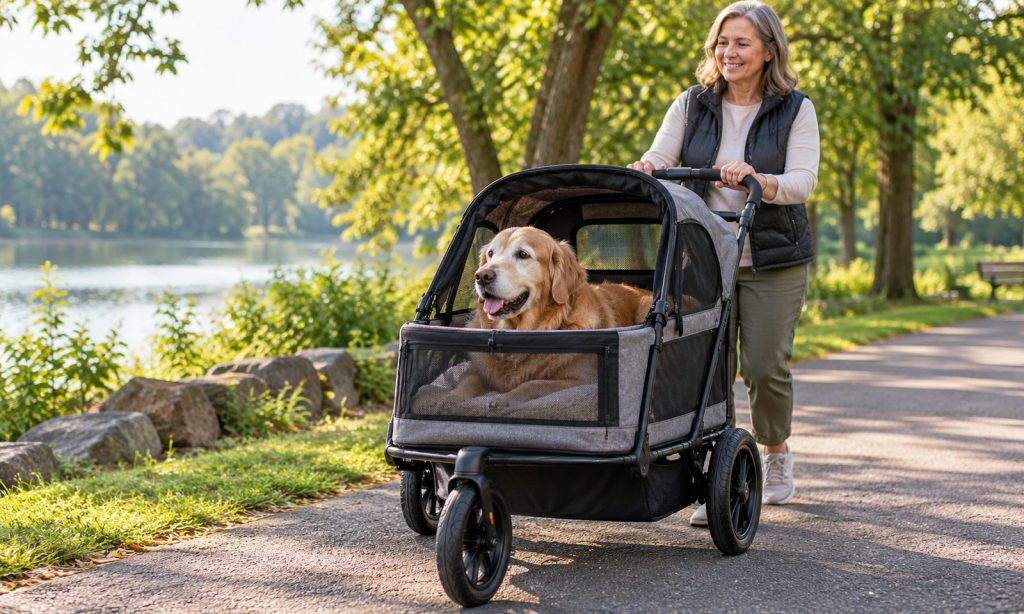
A senior dog may still love fresh air, new smells, and company on a neighborhood walk. Distance may become difficult. A stroller can help you include your dog in outings while limiting the amount of walking they need to do. It should fit your dog’s body, support safe entry and exit, and handle the places you plan to visit. How to choose the right dog stroller for senior dogs includes knowing when a stroller helps. A mobility change may need veterinary attention. For many households, a dog stroller for senior dogs can make short outings more manageable. This guide walks through measurements, cabin layout, wheels, safety features, weather protection, and a gradual introduction plan. You will have a practical checklist to compare designs and decide whether a stroller suits your dog’s needs.
When a dog stroller may help an older dog
A stroller can make outdoor time possible when your dog tires quickly. It can also offer a break during a longer trip. Some families use one for crowded events, travel, or recovery periods when a veterinarian has approved limited activity. The dog can ride for part of the outing and walk for short stretches if that is comfortable and allowed.
A stroller is a transportation aid. It does not diagnose pain, treat arthritis, or replace a tailored exercise plan. Ask your veterinarian before changing activity. This is especially important with a new limp, weakness, breathing difficulty, recent surgery, or diagnosed condition. Your veterinarian can help you decide how much walking is appropriate and whether lifting or ramp access creates any risk.
How to choose the right dog stroller for senior dogs begins with your routine. Note the usual route, surface, distance, weather, stairs, car storage, and places where you need to turn. This makes it easier to choose a dog stroller for senior dogs around real daily needs. You can skip features you may never use.
Measure your dog before comparing strollers
Start with your dog’s current weight, then measure their length and height while they stand naturally. Measure from the nose to the tail base for body length. Measure from the floor to the shoulder top for standing height. Check the cabin’s usable interior dimensions, not only the outer frame or listed weight capacity.
A first step in how to choose the right dog stroller for senior dogs is checking usable cabin space. Your dog should be able to lie down comfortably and change position without being wedged against the sides. If they prefer to sit upright, confirm the canopy provides enough headroom. A dog that cannot settle may become anxious or sore, even if the stated weight limit is high enough.
Leave space for a thin familiar blanket or supportive pad if the stroller manufacturer permits it. Do not fill the cabin so much that it blocks ventilation or makes the floor unstable. If your dog has trouble standing, ask your veterinarian or rehabilitation professional which resting position and support are suitable.
Check the weight limit and balance
Choose a frame rated above your dog’s current weight, while also accounting for bedding and any items stored inside the cabin. The dog should sit within the designed seating area, not hang over a side. Follow the maker’s instructions about one dog versus multiple pets. A crowded cabin can shift the balance or block airflow.
If you are still unsure how to choose the right dog stroller for senior dogs, start with your dog’s current weight. Recheck fit if it changes. The right dog stroller for senior dogs should feel stable when your dog settles, turns, or shifts their weight. A model that technically meets the weight limit may still be too narrow or difficult to steer.
Make entry and exit manageable
How to choose the right dog stroller for senior dogs includes manageable entry and exit. Getting into the stroller can be the hardest part for a dog with stiff joints or limited balance. Compare the opening height and door width. Check whether the entry is at the front, rear, or side. A low opening can help. Your dog should not have to climb over a tall lip or twist sharply.
Some designs use a ramp or a removable panel. Check that the ramp locks securely, reaches the ground at a gentle angle, and has a surface that gives paws grip. Measure the space needed to deploy it. If you are also adapting your home for mobility, our guide to choosing a safe dog ramp angle explains why slope and traction matter.
Do not lift a large or painful dog by yourself just because the stroller opening is convenient. Ask your veterinary team about safe lifting and whether a support harness or second person is appropriate. If your dog resists being handled, stop and seek advice rather than forcing them into the cabin.
Choose wheels for your usual route
Small swivel wheels often turn easily on smooth sidewalks and store compactly. Larger wheels tend to roll more steadily across cracks, packed paths, and uneven pavement. Wheel type alone does not guarantee a smooth ride. If you can, test how the frame handles bumps and turns.
How to choose the right dog stroller for senior dogs includes matching wheels to your usual route. For neighborhood sidewalks, maneuverability may matter most. For parks with gravel or grass, look for wheels suited to those surfaces and a frame that does not wobble. A dog stroller for senior dogs should also fit through the narrowest gate, doorway, elevator, or store aisle you expect to use.
Check the brakes before each trip, especially on sloped driveways or when loading your dog. Confirm that the stroller stays still while parked. A leash attached to the handle is not a substitute for the stroller’s parking brake or the dog’s interior safety tether.
Look for a stable, supportive cabin
Another point in how to choose the right dog stroller for senior dogs is cabin support. The cabin floor should remain level and firm as the stroller moves. A sagging hammock floor can make it harder for a dog to settle and stand. Look for a base that does not tilt when your dog shifts position. If your dog needs extra support, ask whether a removable mat can be used without covering the stroller’s openings or interfering with its restraints.
A low center of gravity and a wide wheelbase may help the stroller feel steady, but actual stability depends on the full design and load. Read the manual for instructions on weight placement. Keep bags in their intended storage areas, and avoid hanging heavy items from the handle because that can affect balance.
The best fit is one your dog can enter, ride in, and leave without repeated awkward movement. When comparing the dog stroller for senior dogs options, think about your dog’s balance as much as the cabin’s size.
Check restraint, ventilation, and visibility
When working out how to choose the right dog stroller for senior dogs, include restraint and ventilation in your checklist. A secure interior tether can reduce the chance that a dog jumps out when the canopy opens. It should attach to a well-fitted harness rather than put pressure on the neck. Use the tether as directed, and keep enough slack for comfortable resting while preventing an escape. Do not leave a dog unattended in a stroller.
Mesh panels on more than one side can support airflow and let your dog see what is around them. Make sure fabric, blankets, or accessories do not cover those panels. A canopy can provide shade, but it should not trap heat. Avoid long outings in hot or humid weather, and bring water when appropriate.
A clear view can reassure some dogs, while others settle better with partial coverage. Look for panels that open and close securely. Practice in a quiet place first so you can learn what helps your dog feel calm.
Match the stroller to your own handling needs
How to choose the right dog stroller for senior dogs also depends on who will operate it. You will be steering, braking, lifting the folded frame, and placing it in storage. Check handle height, grip comfort, turning radius, and the stroller’s folded dimensions. If you have limited hand strength or back discomfort, a heavy frame or awkward latch may make the stroller hard to use safely.
Compare the total weight with your ability to lift it into a vehicle. Look for a folding mechanism you can operate without pinching fingers or balancing the frame in midair. If you plan to transport it by car, check whether it fits in the trunk with your other essentials.
Storage baskets can be useful, but keep supplies light and secure. Avoid hanging shopping bags from the handle. The stroller’s center of balance can change, particularly when your dog is near the upper weight limit.
Introduce the stroller gradually
Let your dog investigate the open stroller while it is parked and the brakes are on. Reward calm interest with praise or a treat if your dog can have one. Keep the first session short. Do not push the stroller toward a dog that is trying to move away.
When your dog is comfortable near it, invite them to step inside without closing the canopy. If the entry is difficult, use a ramp only if the design and your dog’s condition make it safe. You can find gentle confidence-building ideas in our guide to helping a timid dog learn a new ramp.
Next, practice closing the canopy briefly, then move the stroller a few feet on a smooth surface. Watch your dog’s posture, breathing, and willingness to remain inside. Stop if they pant, tremble, try to escape, or seem distressed. Gradually increase the time only when they remain relaxed.
Before a public outing, practice braking, turning, and stopping at home. Keep your dog secured with the recommended harness attachment. Bring familiar bedding if it does not block ventilation, and offer rest breaks. If your dog is not settling after repeated calm practice, a stroller may not be the right option for them.
Care, weather, and regular safety checks
After each trip, remove debris and check the wheels, brakes, frame, seams, and fasteners. Clean the cabin as instructed and let it dry fully before storing it. A damaged tether, loose wheel, or unreliable brake should be repaired before the next use.
Weather affects comfort. In warm weather, use shade, airflow, shorter outings, and frequent checks. In cold or wet conditions, keep the cabin dry and avoid heavy coverings that reduce ventilation. Never leave your dog in a parked vehicle or unattended stroller in direct sun.
A stroller can help your dog join you outdoors, but it should not become a reason to overlook a health change. Contact a veterinarian if mobility declines suddenly or your dog shows pain, weakness, unusual fatigue, coughing, or trouble breathing.
Frequently Asked Questions
Can a senior dog ride in a stroller every day?
It depends on your dog’s health, comfort, and activity plan. Ask your veterinarian how much walking and riding are suitable, especially if your dog has pain or a recent diagnosis.
How do I know if the stroller is large enough?
Compare your dog’s measurements with the usable cabin dimensions. Your dog should be able to lie down and change position without being pressed against the sides.
Should I use a collar or harness tether?
Use the attachment method specified by the stroller maker, and avoid placing restraint pressure on the neck. A properly fitted harness is often a more comfortable attachment point, but ask your veterinarian if your dog has specific needs.
Are bigger wheels always better?
No. Larger wheels may handle rougher surfaces more steadily, while smaller wheels can turn easily on smooth paths. Match them to your route and test the stroller’s stability.
What if my dog refuses to get in?
Pause and return to calm, reward-based introductions. Do not force your dog inside. If fear or physical difficulty continues, ask your veterinarian or a qualified trainer for help.
Final Words
The right answer to how to choose the right dog stroller for senior dogs depends on your dog’s measurements, mobility, temperament, and usual surfaces. Prioritize easy entry, a stable floor, secure restraint, airflow, reliable brakes, and handling you can manage. Introduce it slowly and watch your dog closely on every trip. If you are comparing dog stroller options for senior dogs, use your checklist to assess fit and daily practicality. A stroller should support enjoyable outings while your veterinarian guides any health or exercise decisions.









