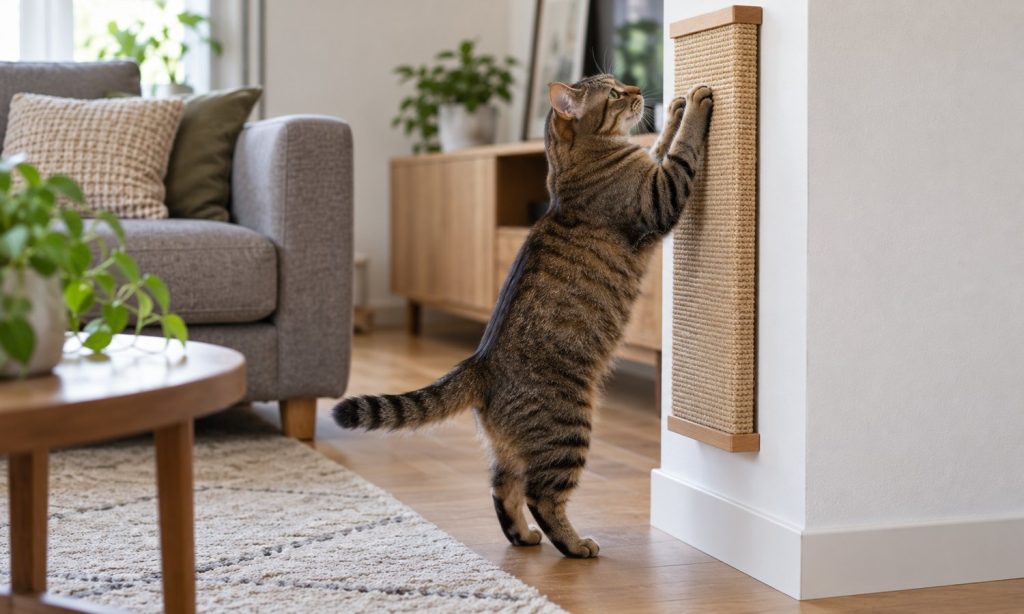
Apartment living makes a cat scratch pad’s footprint and placement almost as important as its texture. A useful pad gives your cat a satisfying place to scratch near a couch, doorway, or wall they already target, while keeping walkways clear and avoiding bulky furniture. The options below include slim mounted panels, door-frame pads, flexible carpet surfaces, and cardboard designs that can also serve as lounges. We compared each for the kind of small-space setup it supports, the product dimensions and mounting details available, and the trade-offs to check before ordering. The goal is a reliable scratch zone that feels intentional, not another obstacle in a narrow room.
Quick Picks
| Pick | Best for | Surface | Buy | |
|---|---|---|---|---|
| LHRHTK Cat Corner Scratcher | Best compact wall pad | Wall, door, or couch corner | Check price | Jump to Review |
| FUKUMARU L-Shaped Cardboard Scratch Pad | Best dual-purpose footprint | Floor, wall, or couch edge | Check price | Jump to Review |
| Door-Frame Carpet Scratch Pad | Best for narrow door trim | Door frame or slim vertical strip | Check price | Jump to Review |
| Lahas Sisal Wall-Corner Scratcher | Best sisal corner fit | Wall corner or flat floor use | Check price | Jump to Review |
| LESISSMER Printed Wall Scratch Board | Best decorative wall pad | Floor or mounted wall | Check price | Jump to Review |
| Flexible Double-Sided Carpet Corner Pad | Best flexible placement | Corner, stair rail, couch, or floor | Check price | Jump to Review |
| Markarbarka L-Shaped Cardboard Scratcher 2-Pack | Best two-location set | Wall or floor in two rooms | Check price | Jump to Review |
How to Choose the Best Cat Scratch Pad for Apartments
A good apartment scratch pad meets your cat’s preferred scratching style and fits a specific spot without blocking daily movement. Start by observing what your cat scratches, then match the pad’s material, reach, and mounting method to that location and your lease or wall type.
Match the pad to your cat’s preferred surface and posture
Cats may prefer sisal, carpet, or corrugated cardboard, and many scratch vertically while others crouch over a horizontal surface. Watch whether your cat reaches up a door frame, claws at a rug, or digs into a couch cushion. Put the replacement surface close to that habit. A compact vertical pad can redirect door or furniture scratching, while an L-shaped cardboard unit gives a cat a choice of orientations. If the cat ignores the texture, try a different material rather than buying several of the same style.
Measure the spot and account for installation
Measure the usable wall, trim, or floor area and allow room for your cat to stretch, pivot, and approach. Note door swings, narrow hallways, and furniture that needs to remain accessible. Mounted pads save floor space but must stay firmly attached under a cat’s repeated pulling. Adhesive strips can be convenient, though paint and textured surfaces vary; screws require permission and suitable wall construction. In rentals, confirm what your lease allows and consider a floor-standing or movable scratcher when drilling is not appropriate.
Think about cleanup, wear, and more than one scratching zone
Cardboard tends to wear down and shed small pieces, while carpet and sisal have different cleaning and replacement needs. Place the pad where debris is easy to vacuum and inspect it for loose edges or fasteners. In a multi-room apartment, a second smaller pad near another scratch target may work better than one large unit tucked away. Offer the new surface consistently and reward your cat for using it; never punish scratching, which is a normal behavior. If your cat targets furniture, a cat-friendly couch guide can help with fabric and construction choices. For vertical climbing and play in a compact home, see our small-apartment cat tree guide. Cats that need a broader stretch surface may also benefit from a larger scratching post.
1. LHRHTK Cat Corner Scratcher

What We Like
- 19.6 × 7.8-inch surface adds a scratch zone with little floor footprint.
- Can be placed beside doors or couch corners where scratching already happens.
- Vertical orientation supports a reaching stretch.
What We Don’t Like
- A single narrow panel may feel small for cats that prefer a long full-body stretch.
- Wall installation needs a suitable, stable surface.
For an apartment where every patch of floor has a job, this narrow wall-mounted pad gives scratching a designated place without adding a freestanding tower. Its listed scratching area is 19.6 by 7.8 inches, so it fits beside a doorway, along a wall, or near a couch corner that a cat has already adopted. Placing a scratch surface close to the target matters: a pad hidden in another room is less likely to redirect a habit. Its upright format may suit cats that like to reach upward while scratching.Think of it as a spot-specific redirect rather than an all-purpose scratching station; a second surface may be needed if your cat scratches elsewhere.
The product listing describes the pad as suitable for wall, door, or couch placement and identifies an easy-mount design, but it does not specify a load rating or installation hardware in the returned details. Check the mounting method and the surface before buying, especially in a rental. Measure the exact spot, leave room for the cat to brace and extend, and avoid placing it where a swinging door or foot traffic could startle the cat. The neutral gray look is understated, while the modest width favors targeted scratching rather than sprawling.Before installing, consider how the cat approaches the area and whether nearby objects leave enough room to extend without bumping into furniture. without taking over your main living area
My Recommendation
Choose this when you need a slim, targeted surface beside a familiar scratch location and can mount it securely. Its listed 19.6-inch length gives a cat more room than a tiny patch, but the 7.8-inch width still makes it a focused panel. Measure first and confirm the attachment method suits your wall or furniture. Pair it with a second option if scratching happens in another room. Pair it with a second option if scratching happens in another room. It keeps the main living area more open.
2. FUKUMARU L-Shaped Cardboard Scratch Pad

What We Like
- Large L-shaped format can stand vertically, lie flat, or form a lounge-like nook.
- 26.8-inch length and 1.6-inch cardboard thickness are listed.
- Corrugated cardboard gives cats a familiar shreddable texture.
What We Don’t Like
- Its full 26.8 × 16.6 × 11.5-inch footprint is substantial for a very small room.
- Cardboard sheds and needs periodic cleanup or replacement.
This L-shaped corrugated scratcher is the most furniture-like pick in the group, yet its shape can make one footprint serve several purposes. The listing gives dimensions of 26.8 by 16.6 by 11.5 inches and describes vertical, horizontal, and prone arrangements. Set upright, it offers a panel along a wall or couch; laid down, it can double as a lounge surface. The 1.6-inch cardboard thickness is also specified, which helps shoppers compare it with thin disposable pads. The format may be useful if your cat scratches and then likes to settle beside the scratch zone.If the cat likes the shape, it can combine scratching with a resting spot and reduce the need to choose between separate pieces.
The trade-off is that versatile does not mean tiny: measure the floor area and the clearance needed around it before committing. The product is made from corrugated cardboard and advertised as recyclable, so expect loose fibers over time and consider where crumbs will collect. A stable setup is essential; check that it does not rock, slide, or tip when the cat pushes against an edge. If you want a scratcher that disappears against a wall, a slim panel is a better fit. This is a practical choice when you can give a cat a little more space and want one piece to work as scratcher and resting surface.Keep the board away from damp areas and vacuum as needed; cardboard performance changes as the fluted surface becomes compressed or torn.
My Recommendation
Pick the FUKUMARU if you have room for a larger L-shaped piece and want flexibility to use it upright or flat. It suits a cat that scratches and lounges in the same area. Check its dimensions against your available floor space, and plan to vacuum around cardboard as it wears. It is best for a cat already comfortable with cardboard and for homes that can accommodate the full assembled shape.
3. Door-Frame Carpet Scratch Pad

What We Like
- Compact 7.8 × 15.7-inch size is stated in the listing.
- Double-sided carpet surface avoids cardboard debris.
- Mounting height can be adjusted, with Velcro or screw options described.
What We Don’t Like
- Only covers a narrow section of a door frame at a time.
- The listing does not include hanging toys; holes are for toys you supply.
A door frame can be valuable scratch territory in a small home because it puts the scratch surface right beside a path the cat already uses. This pad measures 7.8 by 15.7 inches, according to its listing, and uses double-sided carpet rather than corrugated board. Its narrow shape is suited to trim or another vertical strip where a wider panel would crowd a room. The listing says it can be positioned at different heights and attached with Velcro or screws, giving renters and homeowners a choice to investigate before installation.Its slim profile is especially useful when a full post would narrow a hall or block access to a room.
The product also has holes intended for hanging toys, but the toys themselves are not included. That feature is optional; the essential question is whether your cat likes carpet as a scratching texture. A carpet-lover may use it readily, while a cat that prefers sisal or cardboard might need a gradual introduction and an additional surface. Check whether adhesive will hold on your specific trim and whether a screw option is acceptable before mounting. Keep it clear of door hardware and make sure the pad lies flat rather than leaving an edge the cat can snag. This is a focused solution for a recurring door-frame habit, not a broad scratching station.Let the cat inspect it before adding dangling toys, and check attachments after initial use so the panel remains flush against the trim.
My Recommendation
Consider this if your cat targets door trim and you want a slim carpet surface instead of cardboard. Its stated dimensions make it easy to plan around a narrow entryway. Confirm which mounting method works on your door frame, and add a toy only if it helps your cat approach the pad. A second pad may be needed if your cat scratches both sides of the entryway. A second pad may be needed if your cat scratches both sides of the entryway. Check trim clearance before mounting.
4. Lahas Sisal Wall-Corner Scratcher

What We Like
- Two sisal-covered boards are designed to meet at a corner.
- Listed dimensions are 9.85 × 17.13 inches.
- Can also be placed flat on a floor or sofa.
What We Don’t Like
- The listing calls it a good size for kittens and small cats, so large adults may want more reach.
- Screws and wall fixings require suitable installation.
Some apartments have a corner that stays empty even when the floors are crowded. This two-board design uses that vertical nook as a scratching place, with sisal surfaces meeting around the corner. Its listed dimensions are 9.85 by 17.13 inches, and the product information says it can also lie flat on the floor or sofa. A sisal texture gives shoppers a different option from the cardboard and carpet pads elsewhere in this list. That can be useful when a cat has shown a clear preference for rope-like scratching material.The corner format uses wall height rather than floor area, a helpful distinction when planning a small room.
The product listing specifically describes its size as suitable for kittens and small cats, which is a meaningful limitation for larger cats or anyone wanting a long stretch. Check the dimensions carefully and consider your cat’s body length and scratching posture. Wall fixings and screws are included according to the listing; installation should be secure and appropriate for the wall material. If you are renting or cannot drill, its floor-use option may be more practical, though it then occupies floor or sofa space. The sisal may shed a little as claws work through it, so position it where cleanup is easy and inspect it periodically.Because the listed size is modest, place it at a height and angle that matches your cat’s natural reach instead of assuming it will suit every body size.
My Recommendation
This is a good candidate when your cat likes sisal and you have a usable wall corner. Its compact size keeps the footprint down, but the listing positions it for kittens and smaller cats; choose a larger surface if your adult cat needs a long, forceful stretch. Verify the mounting plan before ordering. For larger cats, compare the reach needed with a longer panel before settling on this compact model.
5. LESISSMER Printed Wall Scratch Board

What We Like
- 16.7 × 11 × 1-inch board is sized for a relatively small spot.
- Four hook-and-loop adhesive strips are listed for mounting.
- Water-based ink and recyclable corrugated board are described.
What We Don’t Like
- Printed surface may not suit every room’s style.
- Adhesive mounting may not work on every wall finish.
If a scratch pad will sit in the middle of a carefully arranged room, appearance may matter alongside function. The LESISSMER board pairs a printed design with a 16.7 by 11 by 1-inch corrugated scratch surface. The listing says it can be placed on the floor or mounted on a wall and includes four hook-and-loop adhesive strips. A low-profile board can fit beside a couch or on an open wall without the visual mass of a cat tree. Water-based ink and recyclable cardboard are also specified in the product information.That makes it easier to coordinate with an existing room than a bulky stand-alone scratcher. This format can help keep the main walkway open.
The adhesive system makes it especially important to test the wall and follow the manufacturer’s removal instructions. Paint, wallpaper, texture, and humidity can affect how a strip behaves, so renters should be cautious and consider floor placement instead. The board’s 11-inch width is more generous than some narrow door-frame pads but still shorter than a large vertical panel. Rotate or move it if your cat scratches one spot heavily, and replace it once the corrugated surface is worn down. This option favors a small, attractive target that can move between floor and wall, rather than a permanent heavy-duty installation.The board is still a consumable cardboard surface, so check it periodically for loose layers and replace it when claws no longer catch securely.
My Recommendation
Choose this for a small visible spot where you want a decorative scratch surface and the flexibility to use it on the floor or wall. The included adhesive strips are convenient, but confirm compatibility with the surface first. Cats that need a longer or sturdier stretch may prefer a larger mounted panel. Watch how your cat uses the board and move it closer to the preferred scratch location if needed.
6. Flexible Double-Sided Carpet Corner Pad

What We Like
- Double-sided carpet provides a reusable texture on either face.
- Listing describes Velcro or screw installation.
- Flexible placement includes corners, stair rails, furniture edges, and floor.
What We Don’t Like
- The product details supplied no dimensions to compare against a specific spot.
- Claims about adhesive hold should be checked against the actual wall material.
This flexible carpet pad is aimed at apartments where the best scratching spot might be a corner, couch edge, stair rail, or narrow wall section rather than an open floor. Its double-sided carpet construction offers the same general texture whichever face is presented, and the listing describes use on the floor as well as on vertical or curved surfaces. It also mentions Velcro strips or screws for attachment. That range of possible placements is useful when you are trying to redirect scratching without adding a freestanding piece of furniture.The flexible placement can help you test which nearby location your cat will use before committing to a permanent setup.
The product details returned for this review do not state its overall dimensions, so measure the intended location and confirm size before ordering. The same goes for attachment: a removable adhesive can be convenient, but wall paint and surface texture affect hold and removal. If your cat is large or leans hard into a scratch, secure the pad so it cannot shift or peel away. Double-sided carpet is easy to understand, but cats vary in whether they prefer carpet, sisal, or cardboard. Treat the first few days as a test: place it where scratching already occurs and observe whether the cat uses it before covering multiple walls.A removable configuration is useful in a small home, but reposition it carefully and avoid leaving a loose edge where claws or paws can catch.
My Recommendation
This is worth considering when you need a pad that can wrap around a corner or move between furniture and floor. Because a verified size was not included in the available product details, confirm measurements and mounting instructions before purchase. Secure it carefully if your cat scratches with strong force. Check the attachment again after the first few scratching sessions to make sure the panel stays put. Check the attachment again after the first few scratching sessions to make sure the panel stays put. Move it if needed.
7. Markarbarka L-Shaped Cardboard Scratcher 2-Pack
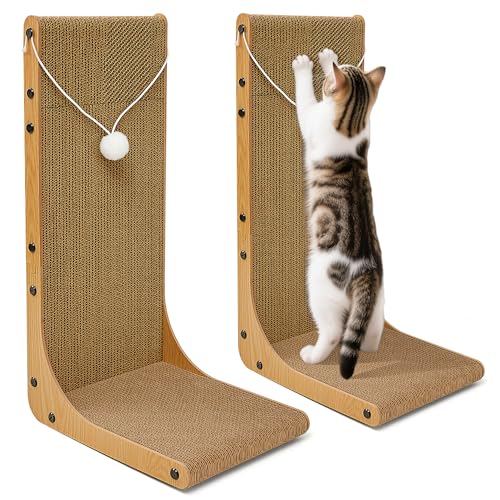
What We Like
- Two L-shaped scratchers support placement in separate high-use areas.
- 23.6-inch panels are described, with reversible surfaces.
- Toy balls and vertical or horizontal arrangements are included in the listing.
What We Don’t Like
- Requires assembly and more than one placement footprint.
- Cardboard can shed as the scratch surface wears.
The Markarbarka set is the only two-piece option in this group, which makes it practical if a cat scratches in more than one room. Each L-shaped board is listed as 23.6 inches long and can be set vertically or horizontally. The product details also describe a reversible panel that can be flipped for a fresh surface and toy balls for added play. Rather than carrying one pad back and forth, you could place one near a couch and another in a separate high-traffic area, provided both locations have enough clearance.Using two targets can help distribute scratching and keep one favorite location from becoming the only option.
The two-pack needs more room overall than a single adhesive wall panel, and assembly is required. Check the intended configuration and stability before letting a cat put weight against it; a scratcher that shifts will be ignored or can become unsafe. Corrugated cardboard is recyclable according to the listing, but it is a consumable surface and may leave bits to sweep up. The toy balls are a bonus rather than the core reason to choose it, so do not assume they will interest every cat. This set makes most sense when you already know your cat enjoys cardboard and wants a designated target in multiple spots.The stated 23.6-inch length gives a useful comparison point, but still check the complete assembled footprint and leave a clear path around each unit.
My Recommendation
Get the two-pack if your cat scratches in more than one room and you have space for two L-shaped units. Reversible cardboard can extend use, while the second board helps put a target near each habit. Confirm the assembly footprint and keep both units stable on your chosen surfaces. This is a sensible way to cover two established scratch zones without buying two unrelated styles. This is a sensible way to cover two established scratch zones without buying two unrelated styles. Keep each route accessible.
Frequently Asked Questions
Where should I put a cat scratch pad in a small apartment?
Start near the exact furniture edge, doorway, or wall your cat already scratches. Leave enough approach space and keep it clear of a door swing or busy walkway.
Are wall-mounted scratch pads safe for rental walls?
It depends on the attachment system, wall finish, and lease terms. Check the installation instructions and test adhesive cautiously; use screws only where permitted and appropriate.
Which material is best for an apartment scratcher?
Choose the texture your cat already enjoys. Cardboard is familiar and often recyclable but can shed; carpet and sisal offer different feels and may be easier to keep tidy.
Can one scratch pad stop a cat from scratching furniture?
It may help redirect scratching when placed beside the preferred target, but one pad cannot guarantee a change. Offer a stable surface your cat likes and reinforce its use.
How many scratch pads does an indoor cat need?
There is no single number for every home. More than one well-placed surface can help if your cat scratches in multiple rooms or prefers different orientations.
Final Verdict
For a tight apartment, first choose the scratching material and location your cat already prefers, then measure before buying. The LHRHTK panel is a compact targeted option; the door-frame carpet pad fits a narrow strip; and the FUKUMARU or Markarbarka boards offer more cardboard surface when you have room. Secure any mounted pad properly and put it close to the habit you want to redirect.
Affiliate disclosure: This article contains Amazon affiliate links. If you purchase through them, PetAdvisorPro may earn a commission. As an Amazon Associate I earn from qualifying purchases.