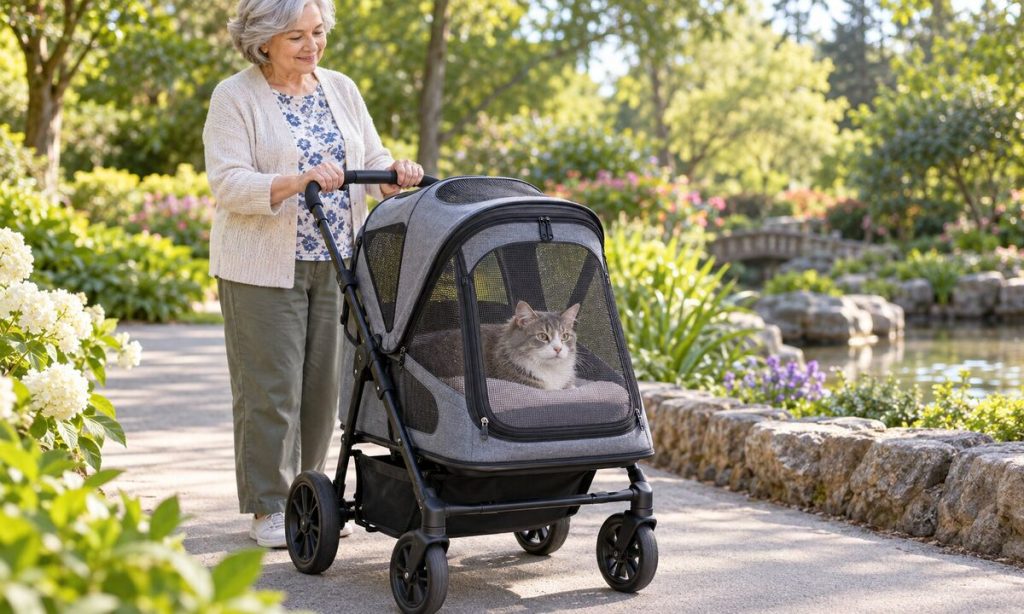
Choosing the right cat stroller for senior cats starts with your cat’s comfort, movement, and tolerance for change. An enclosed ride may help an older cat enjoy fresh air or travel a short distance without walking the whole route. It does not suit every cat, and it cannot replace veterinary care for new pain or mobility changes. Before comparing designs, think about how your cat enters a carrier, how much lifting you can manage, and where you expect to use the stroller. The most useful features are often simple: a low entry, a stable cabin, secure closures, good airflow, and wheels that suit your usual paths. If you are also comparing models, our cat stroller for senior cats guide covers the buying side. This article focuses on fit, safety, and helping your cat feel at ease.
Start with your cat, not the stroller
A stroller can make an outing easier for a cat who tires quickly, avoids rough ground, or no longer enjoys being carried. Yet age alone does not tell you whether a stroller is a good fit. Some senior cats remain curious and relaxed outdoors. Others find passing dogs, traffic, new smells, or movement overwhelming. A useful choice matches your cat’s body and temperament, as well as your own ability to lift, steer, fold, and store the stroller.
Notice how your cat moves at home. Does your cat hesitate at a raised threshold, need a wide opening, or prefer a familiar bed underfoot? Does your cat settle in an enclosed carrier, or become distressed when confined? These everyday clues can help you prioritize stroller features. If mobility has changed recently or your cat seems painful, arrange a veterinary check before planning longer outings. A stroller may reduce walking, but it does not identify or treat the cause of a change.
Choose a cabin that fits comfortably
Measure your cat and the usable interior
Measure your cat while they are resting in a natural position. Note body length from chest to rump, approximate shoulder height, and the space your cat uses when curled or stretched. Compare those measurements with the stroller’s interior floor and cabin height, rather than relying on the frame’s outside dimensions. Your cat should be able to turn around, sit or lie in a normal posture, and settle without being pressed against the mesh.
Check the manufacturer’s weight limit, but do not treat it as a comfort measurement. A cabin may support your cat’s weight and still be too narrow or short. Also consider the padding, seams, and floor shape. A flat, stable base is generally easier for an older cat to stand on than a sagging hammock-like surface. A removable, washable liner can help with fur, muddy paws, or an occasional accident.
Make entry and lifting manageable
A low, wide opening can be easier than lifting a senior cat over a tall rim. Some strollers open at the front; others have a top panel or a removable cabin. Choose the access point that lets you support your cat’s chest and hindquarters without twisting their body or awkwardly reaching into a deep basket. A removable carrier can be useful if it detaches securely and is comfortable to carry, but it adds a transfer step and may weigh more than expected.
Think about your own reach and strength. If you have to lift your cat from floor level, check the opening height and whether the stroller can be locked in place while loading. A stroller with a basket that sits high may reduce bending for you but require a more difficult lift for your cat. Ask another person to help with loading if needed. Do not encourage a cat with sore joints to jump in or out.
Check security, airflow, and visibility
Look for secure closures and a contained cabin
Cats can move quickly when startled. Mesh panels should be intact, zippers should close fully, and the cabin should attach firmly to the frame. Check for gaps near corners, loose seams, or openings that a cat could push through. A safety tether may provide an additional backup when used with a properly fitted harness, if the stroller’s instructions allow it. It should not be clipped to a collar, and it should not be so short that it pulls or restricts comfortable movement.
Before each trip, inspect the closures and attachment points. Keep the canopy closed outdoors, even if your cat is calm at home. Do not leave the stroller unattended, and do not let a cat ride loose in a vehicle inside a stroller cabin. A stroller is for controlled walking outings; car travel requires a suitable carrier or restraint secured according to its instructions.
Balance ventilation with shade
Mesh panels can provide airflow and let your cat see the surroundings, but ventilation should remain adequate when a canopy or shade panel is closed. Check how much of the cabin stays open in the configurations you expect to use. Avoid covering every mesh panel with a blanket, especially in warm or humid weather. A familiar light cover can reduce visual stimulation for some cats, but leave enough airflow and check your cat often.
A canopy helps shield the cabin from direct sun or light drizzle. It does not make a stroller safe in extreme heat, cold, heavy rain, or strong wind. Choose mild weather and a short route for early outings. Watch for panting, open-mouth breathing, agitation, unusual stillness, or attempts to escape. End the trip and move your cat to a comfortable, secure place if they appear distressed or overheated.
Match wheels, brakes, and frame to your route
Small, lightweight wheels can work on smooth sidewalks and indoor floors. Larger wheels and better suspension may make uneven paths feel less jarring, though they can add bulk. Consider the surfaces you actually use: sidewalk cracks, park paths, ramps, door thresholds, or gravel. A heavy all-terrain frame may be difficult to lift into a car or carry upstairs. A very light frame may be harder to steer over rough ground.
Test the handle height and grip if you can. The stroller should roll straight without pulling, and you should be able to steer it without leaning forward. A reliable parking brake matters when loading your cat or pausing on a slight slope. Check that the brakes engage both sides if the design requires it. Practice stopping and turning before your cat rides in the stroller.
If the stroller folds, see how it locks when open and how much room it takes in storage. A compact fold helps when you travel by car, but a difficult folding mechanism may become frustrating after every outing. Check the total weight, not just the advertised frame weight, and consider whether the wheels or cabin need to be removed before folding.
Decide whether a stroller is the right travel setup
A stroller can help with a supervised neighborhood outing or a longer walk where your cat can rest in a protected cabin. It is not automatically a good option for a veterinary appointment. A traditional carrier may be easier to carry into the clinic, place on an exam table, and secure in a car. If a stroller includes a removable carrier, confirm that the carrier can be detached without jostling your cat and that it has appropriate restraint and ventilation for the trip.
For cats who dislike confinement, try a stationary carrier at home before adding wheels or outdoor movement. Leave it open in a quiet room with familiar bedding, and let your cat explore at their own pace. Avoid forcing a cat into the stroller simply because it is already purchased. A guide to cat leash and harness outings can help you think through a different form of supervised outdoor access, though a stroller may be more appropriate when walking is difficult.
Introduce the stroller in small, calm steps
Let the stroller become familiar before you roll it outside. Set it up indoors with the wheels locked, cabin open, and a washable blanket that smells like home. Give your cat time to look, sniff, or walk away. You can place a favorite toy or a small treat nearby if your cat is comfortable with those. Do not use food to lure a frightened cat into a situation they are trying to avoid.
-
Start with the parked stroller in a quiet room. Let your cat approach voluntarily and reward calm investigation in a way they enjoy.
-
When your cat chooses to enter, close the canopy briefly only if they remain relaxed. Open it again before they become upset.
-
Practice securing the cabin and gently moving the stroller a short distance indoors. Keep the surface smooth and the pace slow.
-
Try a brief outdoor pause near home, then return inside. If your cat remains settled on several short sessions, gradually extend the outing.
Keep early trips brief and predictable. Choose a quiet time of day, avoid dogs and crowds, and stay close to home so you can return quickly. Do not assume a cat who is silent is comfortable; freezing or hiding can also signal stress. Look for relaxed posture, normal breathing, and willingness to observe. If your cat repeatedly vocalizes, pants, crouches, tries to escape, or refuses to settle afterward, stop and reconsider whether stroller outings are enjoyable for them.
Plan for comfort during an outing
Use a level, familiar route and avoid sudden turns, fast pushes, curbs, and bumps. Keep one hand on the handle and maintain control of the stroller. Pause in a quiet, shaded place rather than leaving the cabin in direct sun. Bring water for outings that last long enough to need it, and offer it during a calm break. Our guide to offering water to cats while traveling explains how to practice with a familiar drinking setup.
A soft, non-slip liner can make the floor feel more secure. Keep bulky items out of the cabin so your cat has room to shift position. Storage baskets should not be overloaded; extra weight can change steering and balance. Never hang heavy bags from the handle unless the manufacturer allows it, since this may tip the stroller when your cat gets out.
When you return, let your cat exit in a closed room before you fold or move the stroller. Check paws and fur for dampness, debris, or signs of irritation. Clean removable fabric as directed and allow it to dry fully before the next trip. Store the stroller where it will not block an exit or create a tipping hazard.
Know when to pause and ask your veterinarian
A new reluctance to jump, climb, or walk can have several causes. Do not assume it is a normal part of aging or try to solve it only with equipment. Ask your veterinarian about a change in mobility, pain, balance, breathing, or stamina before increasing activity. This is especially important if symptoms appear suddenly, worsen, or interfere with eating, litter-box use, or normal movement around the home.
If your cat already has a health condition, ask whether outdoor exposure, temperature, duration, and travel are appropriate. Your veterinarian can help you plan around your cat’s individual needs. The stroller should make a suitable outing more comfortable; it should never pressure your cat to tolerate something that causes fear or pain. For home comfort considerations, see our guide to making rest easier for a senior cat.
Frequently Asked Questions
Can a senior cat use a stroller?
Some senior cats enjoy a secure stroller ride, while others find outdoor movement stressful. Consider your cat’s mobility, temperament, and comfort with confinement. Start indoors and keep the first outings short.
Should a cat stroller have a safety tether?
A tether can add backup security when the stroller maker allows it and it attaches to a properly fitted harness. Do not attach a tether to a collar. Check that it does not restrict movement or pull on your cat.
How do I choose the right size cat stroller?
Compare the usable cabin dimensions with your cat’s resting measurements and the listed weight limit. Your cat should be able to turn, sit, and lie down comfortably without being pressed against the mesh.
Are strollers safe for taking cats in a car?
A stroller cabin is not automatically a crash-tested car carrier. Use a suitable carrier or restraint secured according to its instructions for vehicle travel. A removable stroller cabin is appropriate only if it is designed for that purpose.
How can I tell if my cat dislikes stroller rides?
Watch for repeated vocalizing, panting, crouching, frantic movement, escape attempts, or a long period of hiding afterward. Stop the outing and return to a quiet, familiar place. Do not force repeated trips.
Final Words
The right stroller for an older cat is the one that fits comfortably, stays secure, rolls smoothly on your routes, and is manageable for you to use. Prioritize entry height, cabin space, a stable floor, ventilation, brakes, and simple cleaning. Introduce it indoors, watch your cat’s response, and keep early outings short. If mobility or comfort has changed, check with your veterinarian before planning more activity. For model comparisons, the cat stroller for senior cats guide can help you compare options after you know which features suit your cat.