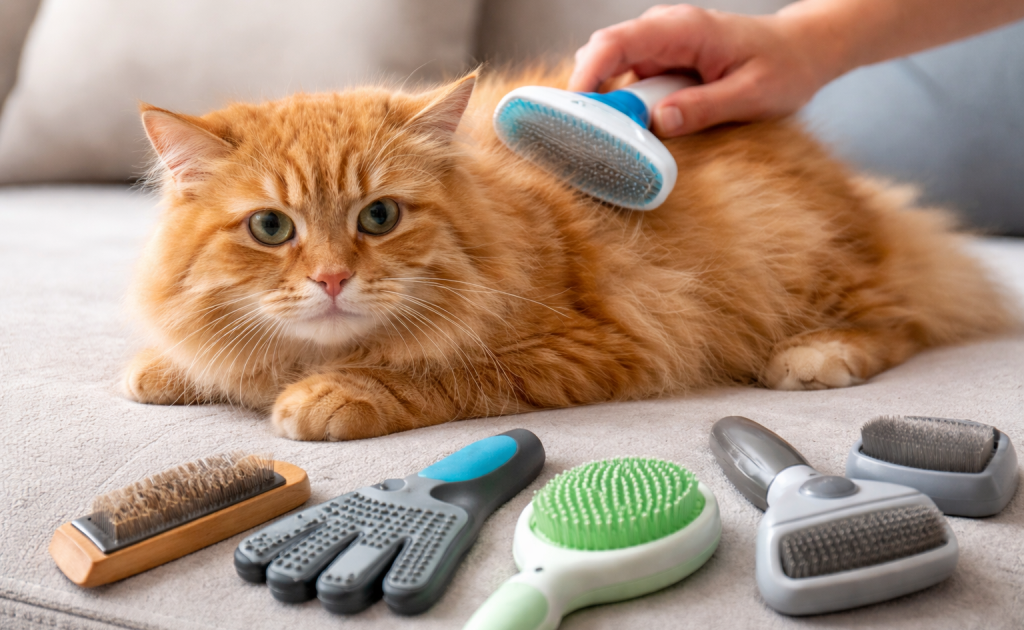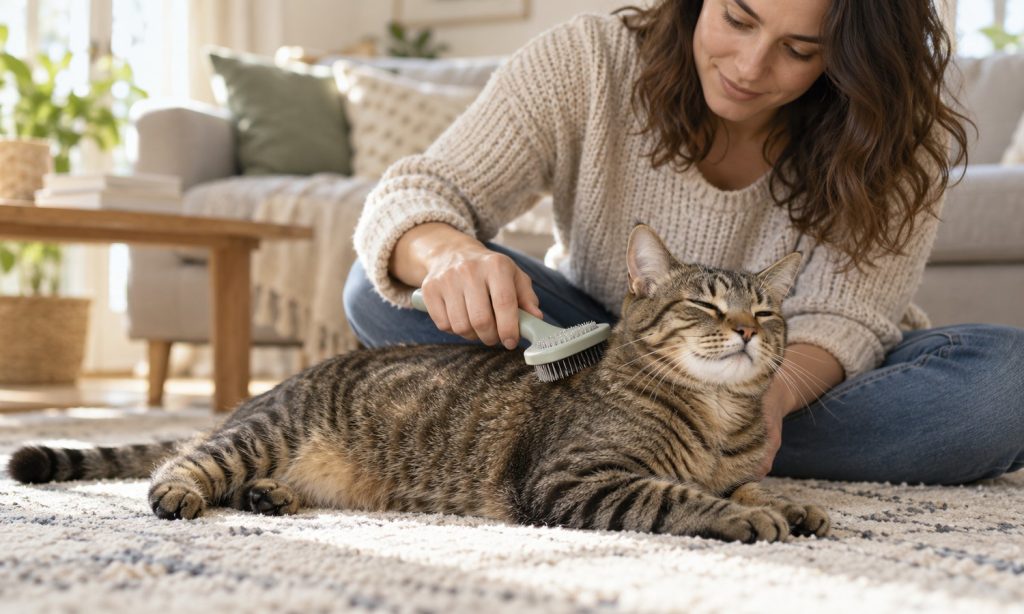
If short cat hair keeps landing on your clothes and furniture, the right brush can make loose-fur cleanup more manageable without turning grooming into a wrestling match. Short coats usually need less frequent brushing than long coats, but a gentle session can remove loose hair and give you a chance to notice coat or skin changes. Start with your cat’s tolerance: soft bristles feel different from metal pins or a toothed deshedding edge. The options below include gentle surface brushes and tools for cats that tolerate more contact. See our guide to brushes for long-haired cats if you also care for a long-coated cat, or our guide to removing cat hair from furniture for home cleanup.
Quick Picks
| Product | Best For | Key Advantage | Buy | |
|---|---|---|---|---|
| SleekEZ Cat Brush for Shedding | Loose fur and versatile coat use | Wooden handle with a compact grip | View on Amazon | Jump to Review |
| Aumuca Cat Brush with Rounded Pins | A self-cleaning pin brush | Rounded tips cover metal pins | View on Amazon | Jump to Review |
| Soft Boar Bristle Cat Brush | Gentle, surface-level brushing | Soft natural bristles | View on Amazon | Jump to Review |
| Self-Cleaning Soft-Tip Cat Brush | Easy fur release and a cushioned grip | Soft rounded pin tips | View on Amazon | Jump to Review |
| Depets Self-Cleaning Slicker Brush | Button-release slicker design | Bent stainless-steel pins | View on Amazon | Jump to Review |
| Swihauk Self-Cleaning Slicker Brush | Lightweight handle with quick cleanup | Rounded plastic pin ends | View on Amazon | Jump to Review |
| MIU COLOR Pet Grooming Tool | A comb-style tool for loose undercoat | Four-inch stainless-steel comb head | View on Amazon | Jump to Review |
How We Chose
We included seven distinct brush designs with verified Amazon product identities, current listing details, and authorized product images. The comparison focuses on brush contact style, hair-release features, handle design, and how each might fit short-coat grooming. Product listings are not independent proof of comfort or effectiveness, so the recommendations emphasize fit and tradeoffs instead of guaranteed results. Prices can change.
1. SleekEZ Cat Brush for Shedding

What We Like
- Wooden handle with a compact grip
- Toothed metal edge collects loose coat
- One tool can be used on several coat lengths
- Also intended for lifting hair from fabric
What We Don’t Like
- Blade-like edge calls for a light touch
SleekEZ uses a toothed metal grooming edge rather than the flexible pins found on a slicker brush. Its listing identifies it for cats with short, medium, and long coats, and also describes use on pet bedding, carpets, and other surfaces where loose fur collects. The handle is shaped as a straightforward grip, so you can work in short passes without managing a bulky head. On a short-coated cat, the useful question is how the edge feels against your individual cat’s skin and coat; product claims alone cannot establish comfort for every animal. Begin with a few gentle strokes in the direction the coat lies, then pause to check how your cat responds.
Unlike a soft bristle brush, a metal edge can gather a visible amount of loose coat, but it can also be too intense if pressed firmly or used repeatedly over the same area. Keep sessions brief and avoid bony areas, irritated skin, and delicate spots such as the belly unless your cat is relaxed and you can use a very light touch. This is a shedding aid, not a detangling blade for cutting through mats. Stop if your cat flinches, turns to bite, or tries to leave. The listing says the tool is made in the United States, but it does not provide a detailed grooming schedule for short-haired cats. If your cat’s shedding changes suddenly or you notice bald patches, sores, or persistent licking, ask a veterinarian instead of increasing brushing pressure. For routine maintenance, a gentler bristle brush may suit cats that dislike a firm metal edge.
My Recommendation
SleekEZ Cat Brush for Shedding is worth considering if you want loose fur and versatile coat use. Choose it only if your cat accepts its contact style, and keep pressure gentle. If you are introducing brushing or your cat is sensitive to pins, start with the soft boar-bristle style instead. This recommendation reflects the listed design and use case, not a claim of hands-on testing.
2. Aumuca Cat Brush with Rounded Pins
What We Like
- Rounded tips cover metal pins
- Release button lifts collected fur
- Angled pin layout reaches into the coat
- Loop strap offers a hanging point
What We Don’t Like
- Pin style can feel too stimulating to some cats
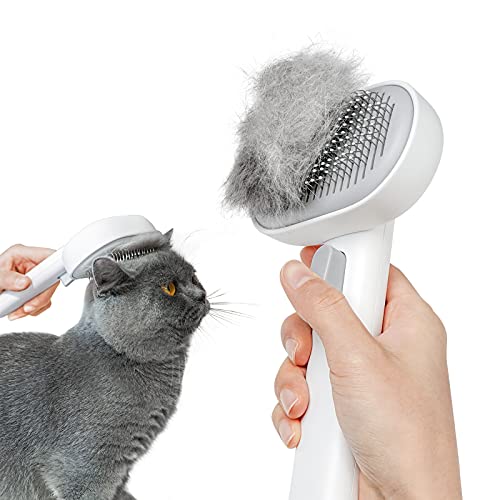
Aumuca’s brush pairs a pin head with rounded tips and a release button that pushes collected hair away from the pins. Those features make cleanup simpler between short grooming passes, and the curved pin layout is intended to move through the coat rather than simply skim its surface. The manufacturer listing describes the brush for short, medium, and long hair, so it can be a flexible household option if you groom more than one pet. For short-haired cats, a pin brush may be most useful when your cat tolerates the sensation and you want to gather loose hair efficiently. Use a relaxed hold and let the bristles contact the coat lightly; rounded ends do not guarantee that every cat will enjoy a pin-style tool.
The self-cleaning mechanism is convenient, but you still need to remove and discard the lifted fur after brushing and keep the head clean. Use short strokes that follow hair growth, especially around shoulders and flanks, and avoid pushing the pins down toward the skin. If your cat has very fine fur, sensitive areas, or a history of reacting to brushes, start with only a few strokes and check for redness or discomfort. This model’s listing mentions 304 stainless-steel pins and an ABS body, while the exact pin stiffness and long-term durability are not established by the API details. Treat claims about suitability as a starting point, not a guarantee. A softer bristle style may be an easier introduction for a cat who has never been groomed. For a cat that accepts the pins, the release button can make routine hair removal less fiddly.
My Recommendation
Aumuca Cat Brush with Rounded Pins is worth considering if you want a self-cleaning pin brush. Choose it only if your cat accepts its contact style, and keep pressure gentle. If you are introducing brushing or your cat is sensitive to pins, start with the soft boar-bristle style instead. This recommendation reflects the listed design and use case, not a claim of hands-on testing.
3. Soft Boar Bristle Cat Brush

What We Like
- Soft natural bristles
- Wooden beech handle
- Short-coat focused listing
- Compact brush head
What We Don’t Like
- Natural bristles may shed at first
This brush uses natural boar bristles set into a beech-wood handle. The listing specifically describes it for short-haired cats and presents the bristles as a gentler alternative to wire pins. That makes it a plausible first brush for a cat that prefers soft contact, or for a quick surface pass that picks up loose hair without the sensation of a metal comb. Its product details give dimensions of 8.66 by 2.36 inches, which offer a useful sense of the head and handle scale. For short hair, the main advantage is the softer brushing feel; it is not designed to separate dense undercoat or open tangles. Take your time and let your cat sniff it before the first session.
Natural bristles can show some shedding when new, according to the listing, and the tool should be kept dry. That care detail matters because a wood-handled brush is not a rinse-under-the-tap grooming tool. Remove trapped hair gently after use and store it where the bristles will not be crushed. The product page claims the bristles can distribute coat oils, but this should be understood as a grooming feature claim rather than a treatment for flaky or greasy skin. If your cat has a skin condition, ask your veterinarian about grooming choices. A soft brush may also collect less loose fur per stroke than a metal shedding tool, so it can take longer during seasonal shedding. Use it as a comfortable routine brush, not as a solution for mats or unusual shedding. If the bristles bother your cat or the coat looks irritated afterward, stop and choose a different grooming approach.
My Recommendation
Soft Boar Bristle Cat Brush is worth considering if you want gentle, surface-level brushing. Choose it only if your cat accepts its contact style, and keep pressure gentle. If you are introducing brushing or your cat is sensitive to pins, start with the soft boar-bristle style instead. This recommendation reflects the listed design and use case, not a claim of hands-on testing.
4. Self-Cleaning Soft-Tip Cat Brush

What We Like
- Soft rounded pin tips
- Push-button hair release
- Silicone grip described as nonslip
- For short and long coats
What We Don’t Like
- Self-cleaning head still needs routine washing
This self-cleaning brush combines soft-tipped pins with a curved silicone handle and a push-button release plate. The listing says it is intended for both short- and long-haired cats and describes the pins as useful for gentle massage while collecting loose hair. For an owner who brushes often, the button can make it easier to lift the gathered coat off the head without picking through each pin. The grip shape may also help if a hard, narrow handle feels awkward during a grooming session. Because short hair does not usually need intensive detangling, use this brush with a light touch and short, calm strokes across the back and sides. It may suit a cat who tolerates pin brushes but whose owner wants cleanup to be quick.
The product information does not specify a separate short-hair head or a veterinary-tested comfort standard, so judge the brush by your cat’s response rather than the word “soft” alone. Pins can still catch skin if you press down or brush too forcefully. Start with a few strokes, reward calm behavior, and stop before your cat becomes restless. The release button removes hair from the pins, but it does not replace cleaning the brush head when it becomes dusty or oily; follow the product care directions and dry it fully after any cleaning. If loose hair is the only goal, a soft bristle brush may be enough for some cats. This option offers more reach than a simple bristle surface, though that may be unnecessary for cats with very close, fine coats. Don’t use it to pull at tight mats; severe mats should be handled with veterinary or professional grooming guidance.
My Recommendation
Self-Cleaning Soft-Tip Cat Brush is worth considering if you want easy fur release and a cushioned grip. Choose it only if your cat accepts its contact style, and keep pressure gentle. If you are introducing brushing or your cat is sensitive to pins, start with the soft boar-bristle style instead. This recommendation reflects the listed design and use case, not a claim of hands-on testing.
5. Depets Self-Cleaning Slicker Brush

What We Like
- Bent stainless-steel pins
- Rounded bead tips
- One-button hair release
- Nonslip handle
What We Don’t Like
- The pin head may be more brush than some short coats need
The Depets brush is a slicker-style tool with bent stainless-steel pins, rounded bead tips, and a button that pushes collected fur off the head. Its listing describes it for short- or long-haired pets and says the pins are angled to reach into the coat. On a short-haired cat, the self-cleaning design can be practical when the goal is to collect loose hair and clear the brush quickly. The handle is described as nonslip, which may make it easier to control the light strokes this style requires. For a cat that already accepts a slicker, the pin head offers more contact than a soft bristle brush. If your cat is new to grooming, consider introducing the tool gradually and keep early sessions short.
Slicker pins are not automatically gentle just because their ends have beads. Avoid pressing the brush into the skin, repeatedly working one spot, or using it on irritated areas. The listing excludes curly-haired, wire-haired, and hairless pets, and the product information does not give a specific short-hair grooming schedule. For short coats, there may be little benefit to lengthy or forceful brushing. The release button can simplify fur removal, but inspect the pin bed periodically and clean it as directed so hair and debris do not build up. If your cat dislikes the sensation, switch to a softer bristle option rather than trying to hold the cat still. This is a utility-focused brush for owners who value quick cleanup; a smaller, less assertive brush may be a better match for tiny cats, kittens, or cats with delicate skin.
My Recommendation
Depets Self-Cleaning Slicker Brush is worth considering if you want button-release slicker design. Choose it only if your cat accepts its contact style, and keep pressure gentle. If you are introducing brushing or your cat is sensitive to pins, start with the soft boar-bristle style instead. This recommendation reflects the listed design and use case, not a claim of hands-on testing.
6. Swihauk Self-Cleaning Slicker Brush

What We Like
- Rounded plastic pin ends
- Push-button release
- TPR handle
- Blue compact body
What We Don’t Like
- Listing focuses broadly on dogs and cats rather than short coats
Swihauk’s slicker brush has a push-button release, rounded plastic ends on its pins, and a lightweight TPR handle. The listing says it can be used on cats with short or long hair, alongside dogs and other small pets. Those details make it a general-purpose grooming option for a home that wants one brush for multiple animals. The release button can make it easier to remove collected hair after each pass, while the handle material may be comfortable to hold. On a short-coated cat, the key is whether the pin head glides without snagging and whether your cat accepts its contact. Use gentle strokes across the coat and avoid repeated passes over the same small area.
The product listing is broad and does not provide specific guidance on the ideal short-haired cat technique or frequency. A slicker head may also be unnecessary if you only need to pick up surface hair. Plastic rounded ends can feel different from steel pins, but they do not eliminate the need to use a light hand. Pause if your cat stiffens, flicks its tail, or moves away; grooming should not become a restraint struggle. The button helps release hair but does not clean or disinfect the brush, so follow the manufacturer’s care directions and let it dry fully if washed. If your cat has skin sensitivity, sores, or a sudden increase in shedding, ask your veterinarian which grooming routine is appropriate. This is best considered a basic, easy-to-clean option rather than a specialist short-coat tool.
My Recommendation
Swihauk Self-Cleaning Slicker Brush is worth considering if you want lightweight handle with quick cleanup. Choose it only if your cat accepts its contact style, and keep pressure gentle. If you are introducing brushing or your cat is sensitive to pins, start with the soft boar-bristle style instead. This recommendation reflects the listed design and use case, not a claim of hands-on testing.
7. MIU COLOR Pet Grooming Tool

What We Like
- Four-inch stainless-steel comb head
- Detachable head
- Protective blade cover included
- Anti-slip handle
What We Don’t Like
- Narrow metal teeth need cautious, gentle use
MIU COLOR’s grooming tool has a four-inch stainless-steel head with evenly spaced teeth, a detachable head, and a protective cover. Its listing describes the tool as suitable for cats and dogs with short, medium, and long hair and says it is meant to remove loose undercoat. For short-haired cats that shed heavily, this comb-style format may help gather hair that a surface brush leaves behind. The narrow head offers more control than a wide brush, though it also concentrates contact in a smaller area. Work in brief strokes with the coat lying naturally, and do not assume that the tool should be used with firm pressure. The cover is useful for storage, while the detachable construction may help with handling and cleanup.
A metal comb can feel too strong for some cats, especially over the belly, legs, or areas with thin fur. Keep the tool parallel to the body, use minimal pressure, and stop if it catches or your cat reacts. Do not drag the teeth through a tight mat, since pulling can hurt and frighten the animal; get help for dense or painful tangles. The product page includes broad shedding-reduction language, but it does not establish a guaranteed percentage or a safe schedule for every cat. Treat it as a targeted grooming implement, not an everyday full-body brush by default. If your cat has a close coat and tolerates only a soft touch, the boar-bristle option in this guide is a gentler starting point. The protective cover should be replaced after use so the metal teeth are not left exposed in a drawer.
My Recommendation
MIU COLOR Pet Grooming Tool is worth considering if you want a comb-style tool for loose undercoat. Choose it only if your cat accepts its contact style, and keep pressure gentle. If you are introducing brushing or your cat is sensitive to pins, start with the soft boar-bristle style instead. This recommendation reflects the listed design and use case, not a claim of hands-on testing.
How to Choose a Brush for a Short-Haired Cat
Begin with your goal. A soft bristle brush is often a comfortable first step for surface hair and gentle handling. Pin brushes can collect more loose coat, but their contact may feel stronger. A comb-style shedding tool can help with loose undercoat on a cat that tolerates it; it is not a license to scrape or force through knots. For any tool, choose a head size you can control around the shoulders and hips, and look for a handle that stays comfortable during short sessions.
Introduce the brush while your cat is relaxed. Let your cat sniff it, offer a treat, and try a few strokes along the back in the direction the fur lies. Pause before your cat becomes irritated. Cats Protection notes that a short-haired cat may prefer a soft brush, while VCA says short coats may need less frequent brushing than long coats. There is no single schedule for every cat; coat density, shedding, age, health, and tolerance matter. Groom gently and check the skin as you go. If you notice bald patches, sores, unusual shedding, or persistent overgrooming, speak with a veterinarian rather than brushing harder.
FAQs
How often should I brush a short-haired cat?
Short-haired cats generally need less frequent brushing than long-haired cats, but shedding, coat density, and tolerance vary. Start with brief sessions once or twice weekly and adjust if your cat enjoys it and loose hair is an issue. Ask your veterinarian if coat changes are sudden or accompanied by skin symptoms.
Is a slicker brush safe for short-haired cats?
It can be appropriate for some cats when used lightly, but pins can irritate skin if pressed or used repeatedly in one place. Choose a softer brush if your cat dislikes pin contact, and stop if you see discomfort.
Can brushing prevent hairballs?
Brushing removes some loose hair before a cat swallows it during self-grooming, but it cannot guarantee that hairballs will not occur. Frequent vomiting, repeated retching, appetite changes, or distress warrant veterinary advice.
Final Verdict
The best grooming brush for short hair cats is the one your cat will calmly accept and that matches the amount of loose coat you need to collect. For a gentler first brush, consider the soft boar-bristle option. If your cat tolerates pins, a self-cleaning design can make cleanup easier; reserve toothed metal tools for careful, light use. Keep sessions short and watch the skin, not just the fur. For background, VCA’s cat grooming and coat-care guidance and Cats Protection’s grooming advice reinforce matching the tool to your cat’s coat and comfort.
As an Amazon Associate, PetAdvisorPro earns from qualifying purchases.