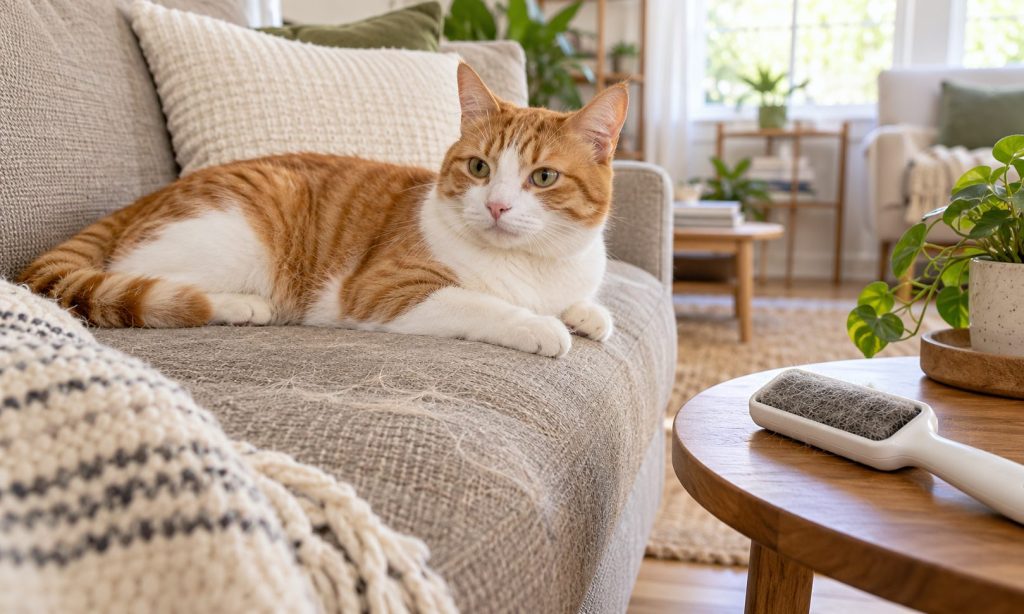
Cat fur behaves differently on a velvet chair, a woven sofa, and a fleece throw. A cat hair remover for furniture may use a reusable fabric surface, a lint roller, a rubber edge, or a vacuum attachment. The right method depends on the upholstery, how deeply fur is embedded, and how often you clean. This guide explains what to check before choosing a tool and how to test it without damaging fabric. It also summarizes common owner experiences: people often find that a tool works well on one surface but poorly on another. Treat those reports as individual experiences, not guarantees. Start with the furniture maker’s care instructions and test any tool in a hidden spot. Testing a small hidden area first helps protect delicate finishes and prevents avoidable damage.
What to look for in cat hair remover for furniture
Match the tool to the fabric
Smooth, tightly woven fabrics may release loose hair with a rubber brush or reusable roller. Textured upholstery can trap fur between threads, so a directional brush may gather it more effectively. Delicate fabric may snag under a rough edge. What to look for in cat hair remover for furniture begins with the upholstery label and a small, inconspicuous test area. Do not assume that a tool safe on a blanket is safe on a sofa.
A vacuum attachment can help with loose surface fur, but it may not lift hair caught in the weave. A rubber tool can create friction that gathers hair, yet too much pressure may stretch or abrade fabric. A sticky roller can be convenient for small spots but may require replacement sheets. Reusable tools reduce consumables but need cleaning between passes.
Choose a suitable size and grip
A wide head covers cushions quickly, while a narrow tool reaches seams, corners, and stair edges. The handle should feel secure without requiring hard pressure. What to look for in cat hair remover for furniture also includes whether the tool can move over curved arms and seams without catching. If you clean several surfaces, consider whether one tool can manage them or whether separate tools are safer for upholstery and blankets.
Check the cleaning method and upkeep
Some tools collect fur in a chamber that you empty. Others need rinsing, brushing, or replacement adhesive sheets. Check how easily hair can be removed from the tool itself. What to look for in cat hair remover for furniture includes maintenance time: a device that clogs quickly may be frustrating on a large sofa. Let washable components dry fully before storing them.
Look for clear instructions on which surfaces to avoid. Do not use a sharp scraper or aggressive bristles unless the upholstery manufacturer allows it. Test gently, move in short strokes, and stop if threads lift, the surface pills, or color transfers to the tool.
How to compare common removal methods
Reusable rollers and fabric brushes
Reusable rollers work by collecting fur as you move them over a surface. Some need a back-and-forth motion; others rely on a textured surface. Owner discussions commonly mention that reusable brushes can be effective on taut upholstery but may need repeated passes on loose or heavily textured fabric. These are anecdotal observations. What to look for in cat hair remover for furniture is whether a tool’s directions match your material and whether it gathers hair rather than pushing it around.
Rubber tools and gloves
Rubber edges or gloves can create friction that bunches loose hair. They may suit broad, durable fabric, but can be too abrasive for delicate upholstery. Use light pressure and clean the surface frequently so gathered fur does not spread back across the cushion.
Vacuum attachments and lint rollers
A vacuum can remove loose hair and dust from a larger area. Check the attachment for smooth edges and suitable suction, especially on lightweight fabric. Lint rollers are handy for small patches, seams, or a quick touch-up. What to look for in cat hair remover for furniture includes balancing speed, consumables, noise, and the kind of fur your cat sheds.
A careful cleaning routine
Read the upholstery care label first. Remove cushions if the manufacturer permits and vacuum loose fur with a soft attachment. Test the chosen remover out of sight, then use short, gentle strokes in one direction. Lift gathered fur between passes. Avoid wetting upholstery unless its care directions permit it. If a spot cleaner is needed, follow the fabric maker’s guidance.
How to choose the right cat hair remover for furniture depends on the surfaces in your home and your tolerance for upkeep. For more detail, compare our cat furniture hair-removal guide. A washable throw can also make routine cleanup easier; see our information on chair covers for cats.
Test safely on different furniture
A removable cushion can help you test a tool on a less visible seam or the underside. Use very light pressure and a few strokes. What to look for in cat hair remover for furniture includes any change to the fabric surface after the test. Stop if fibers lift, the color changes, or the material begins to pill. If you are unsure about a delicate fabric, contact the furniture maker or a professional upholstery cleaner.
Try the same tool on a small, taut section before using it across a loose cushion. A tool may work differently on the seat, arm, and back. What to look for in cat hair remover for furniture includes how the tool behaves at seams and piping, where fabric can catch. Avoid dragging a rough edge across decorative stitching. Pick up loose hair as you go rather than pushing it toward a corner.
Think about hair length and cleaning frequency
Long, fine hair can wrap around a brush or collect along seams. Short hair may cling to a textured weave. What to look for in cat hair remover for furniture includes how easily the collected fur comes off the tool. If you clean a large sofa, a wide brush can save time. For chair seams and narrow corners, a smaller head may offer better control.
Light, frequent passes can keep fur from building up, while a heavily covered surface may need staged cleaning. What to look for in cat hair remover for furniture includes the effort required for repeat use. A reusable device may be practical if it empties quickly. A disposable roller may suit a small area but become inconvenient across several rooms. Choose the routine you can maintain.
Reduce the amount of fur reaching upholstery
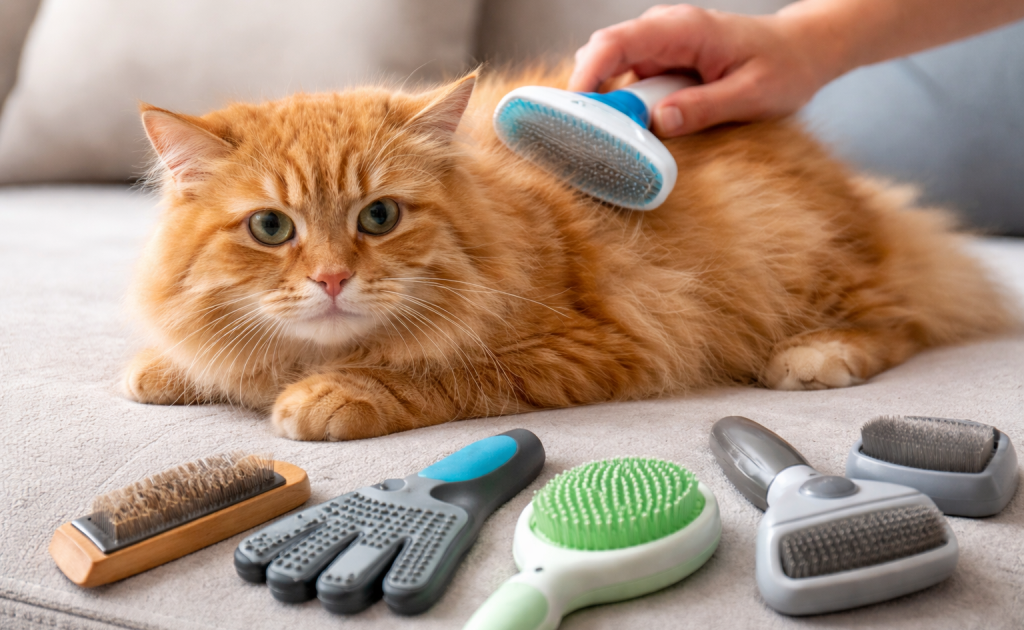
Removing loose coat hair during regular grooming can reduce some fur left on furniture. Cornell’s feline health guidance notes that grooming removes loose hair before it reaches furniture. Brush according to your cat’s coat and tolerance. Do not pull at mats or use a deshedding tool without understanding its use. Ask a veterinarian about sudden shedding, bald patches, or irritated skin.
Washable throws can protect favorite resting spots if the cat accepts them. What to look for in cat hair remover for furniture also includes choosing whether prevention or cleanup is easier in your home. Put a cover on the sofa before hair accumulates and wash it as directed. A cover does not replace cleaning, but it can make the task more manageable.
Owner reports about rollers, rubber brushes, and vacuum attachments vary because furniture fabrics differ. What to look for in cat hair remover for furniture is evidence from your own small test, not a promise that one tool suits every sofa. Treat online accounts as ideas to evaluate carefully. Start gently, follow care labels, and switch methods if the fabric or tool shows damage.
Protect fabric while lifting fur
Keep the upholstery taut if the maker allows you to remove the cushion. Loose fabric can bunch under a roller or rubber edge. What to look for in cat hair remover for furniture includes whether the tool catches when it crosses a seam. Move away from trim and stitching, then clean those areas with a soft attachment or lint roller. Do not use scissors or sharp blades to cut away hair.
Empty a tool often while you work. Collected fur can fall back onto the sofa or clog a roller. What to look for in cat hair remover for furniture includes the time it takes to clear the head. A device that opens easily can be more practical than one that requires picking fur from narrow grooves. Keep the tool clean between use on upholstery, bedding, and clothing.
If the furniture has a protective coating, antique fabric, or a manufacturer-specific cleaning code, follow that guidance first. What to look for in cat hair remover for furniture includes knowing when a tool is unsuitable. If a test area changes texture or sheen, stop. A professional cleaner can advise on delicate upholstery. No hair remover should be expected to work on every fabric without testing.
Protecting Upholstery While Removing Fur
A cat hair remover for furniture should work with the upholstery, not against it. Before treating a whole cushion, test the tool on a hidden area. Use light pressure and short strokes, especially on loose weaves, velvet, or fabric with raised loops. Stop if fibers snag, pills form, or the surface changes texture.
Move in the direction that gathers fur instead of scattering it. On many fabrics, a few slow passes work better than scrubbing back and forth. Remove collected fur from the tool as directed and empty vacuum attachments before they clog. A reusable tool needs cleaning too; hair and dust left on its surface can transfer back to the next chair.
Consider the whole home routine. Washable throws can protect favorite resting spots and make cleanup easier. Regular vacuuming helps control loose fur, while brushing may reduce the amount shed onto furniture. Choose grooming methods that suit your cat’s coat and temperament. Long-haired cats may need more frequent coat care, but sudden mats or a coat that looks unkempt can signal a health or mobility issue.
Avoid pulling at tight mats with a furniture tool or household scissors. Mats close to the skin can be painful, and cat skin is easy to cut. Ask a veterinarian or experienced groomer for help when mats are extensive, the cat resists handling, or the skin looks irritated. If shedding changes suddenly or comes with bald patches, itching, or overgrooming, arrange a veterinary check.
Store reusable tools away from curious cats, especially those with small detachable parts. A simple routine of testing, gentle passes, and regular cleaning protects both the furniture and its fibers. The best method is one you can use consistently without making the cat’s favorite resting place feel like a grooming station.
Frequently Asked Questions
What is the safest tool for delicate upholstery?
Check the fabric care instructions and test a gentle tool in a hidden area before using it broadly.
Do reusable rollers work on every sofa?
No. Their performance depends on fabric texture, hair length, and how tightly the upholstery is stretched.
Can I use a rubber glove to remove cat hair?
Some owners use rubber tools on durable fabric, but test first and avoid excessive friction.
Will a vacuum remove embedded fur?
It may remove loose hair, but deeply caught fur can need another fabric-safe method.
How often should I clean cat hair from furniture?
Use a routine that fits shedding and household needs. Frequent light passes can be easier than a large buildup.
Final Words
Choose a tool for your upholstery, test it gently, and consider how much cleaning and upkeep it requires. Owner reports can suggest methods to try, but your furniture’s care label should guide each test. What to look for in cat hair remover for furniture is a safe fit for the surface, easy handling, and reliable cleanup for your routine. See our cat hair remover for furniture guide for related options and care notes.