
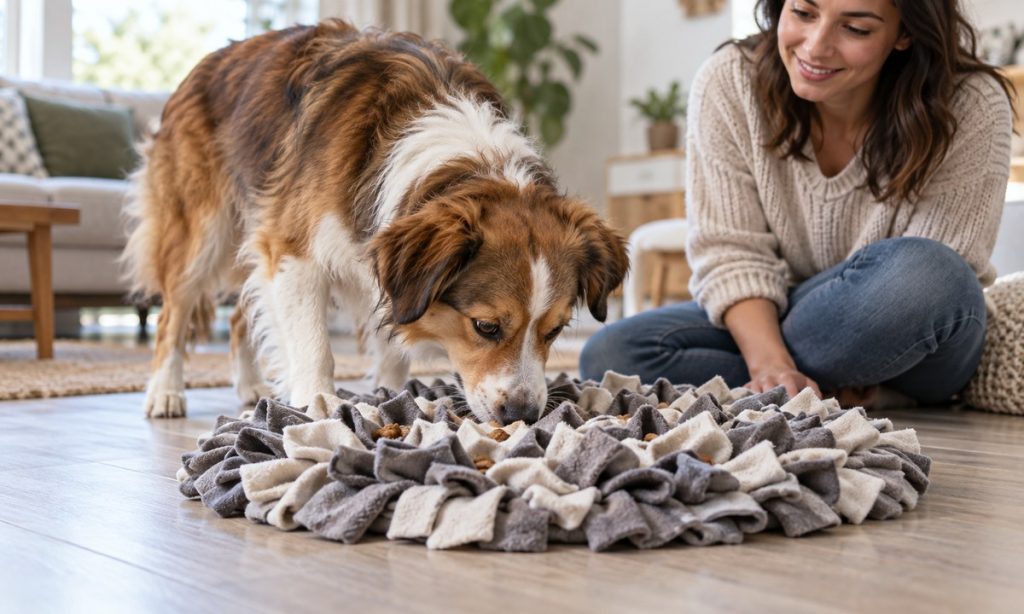
A snuffle mat lets a dog use its nose to search for scattered food or treats. It can add a simple foraging activity to a meal, but the mat should fit the dog’s size, sniffing style, and chewing habits. Before choosing a snuffle mat for dogs, consider how securely its pieces are attached, whether it stays put, how easy it is to wash, and whether your dog can use it without shredding or swallowing fabric. Start with a short, supervised session and use part of the dog’s measured daily food. A mat is an enrichment activity, not a replacement for exercise, training, or human interaction. This guide explains how to assess the design and introduce it safely. For an overview of available styles, see the site’s guide to a snuffle mat for dogs.
Match the mat to your dog
Size and layout
The mat should give your dog room to sniff without forcing the muzzle into tight spaces. A small dog may find a very large mat tiring to search, while a large dog may bunch up a lightweight mat. Look for enough surface area to spread the food and a shape that sits flat on the floor.
Fabric and construction
Check seams, backing, and fabric strips for loose threads or parts that can be pulled off. Avoid a mat with pieces that detach easily or openings that could trap a paw or claw. If your dog chews fabric, tears bedding, or swallows nonfood objects, a fabric mat may not be a safe choice without close professional guidance.
Grip and stability
A nonslip backing can help keep the mat from sliding as the dog searches. Use it on a flat, clean surface, away from stairs or areas where the dog could knock over furniture. If the mat moves despite its backing, supervise closely or choose another form of enrichment.
Think about food and cleaning
Dry kibble or small dry treats are usually easier to remove from fabric than wet food. Use only foods that are already appropriate for your dog. Include treats in the daily calorie plan and avoid scattering foods that could trigger an allergy or upset the stomach.
Look for washing instructions you can follow consistently. Food crumbs and saliva can collect between folds, so shake out the mat after each session and wash it as directed. Let it dry fully before storing. Discard it if the backing cracks, fabric pulls loose, or cleaning cannot remove residue.
Introduce the activity gradually
Begin by placing a few pieces of food on top of the fabric where your dog can see and smell them. Let the dog investigate at its own pace. As the dog understands the game, tuck food into shallow folds. Keep the first session brief and end while the dog is still calm and interested.
Stay nearby and watch how the dog uses the mat. Stop the session if the dog starts chewing, shaking, or pulling at the fabric. Do not leave the mat with a dog that may destroy it. Put it away between supervised sessions and inspect it before reuse.
Adjust difficulty to keep it enjoyable
A good challenge encourages sniffing without making the dog frustrated. If the dog sweeps food off the mat and loses interest, use more visible pieces or a larger surface. If searching is too easy, hide a few pieces in deeper folds while leaving other pieces accessible. Avoid turning food access into a prolonged struggle.
Dogs differ in energy, confidence, and food motivation. Some enjoy a nose-work activity; others prefer training games, walks, or a different puzzle. Rotating activities can help keep enrichment varied. PetAdvisorPro’s guide to dog mental stimulation describes other ways to offer scent work and problem-solving.
Know when to choose another activity
A snuffle mat may not suit a dog that eats fabric, guards food, becomes distressed when searching, or has a medical feeding plan that requires specific timing or access. Ask a veterinarian or qualified trainer for help if the dog’s behavior creates safety concerns. For dogs that can use one calmly, keep the mat part of a broader routine that includes exercise, rest, and interaction.
Watch the dog’s pace and response
A dog that gulps food may sweep through a mat quickly, while a hesitant dog may need the food left visible. Adjust the amount and difficulty so the activity remains calm. If the dog paws aggressively, flips the mat, guards it, or becomes frustrated, end the session and choose a different enrichment activity.
For a multi-dog household, offer the mat in a separate space if dogs compete over food. Pick it up after the session rather than leaving it where another pet can chew it. The goal is a supervised sniffing activity that fits your dog’s behavior and home routine.
Consider a different enrichment activity when needed
Some dogs enjoy a fabric mat, but a treat-dispensing ball, simple scent search, or supervised scatter feed may suit another dog better. Choose an activity that does not encourage tearing, swallowing, or guarding. For a dog with a history of eating fabric, skip the mat and discuss safer enrichment choices with a veterinarian or trainer.
Keep the activity short for puppies, older dogs, or dogs new to scent games. Offer a clear end cue and put the equipment away afterward. Calm interest is a better sign of a suitable challenge than speed or how much food the dog can uncover.
Frequently Asked Questions
Can a snuffle mat replace a walk?
No. It offers a short sniffing and foraging activity, while walks and other exercise meet different needs.
Can I leave my dog alone with a snuffle mat?
Only if you know the dog does not chew or swallow the fabric and the mat remains intact. Supervise new users and dogs that shred materials.
How much food should I put in the mat?
Use part of the dog’s measured daily ration or a small amount of treats included in the daily food plan.
How often should I wash a snuffle mat?
Follow the care instructions and wash it when food or saliva residue builds up. Dry it fully before storing.
What if my dog starts chewing the mat?
End the session and put the mat away. If your dog may have swallowed fabric, contact your veterinarian for advice.
Final Words
Choose a snuffle mat for dogs that stays stable, has secure construction, and can be cleaned thoroughly. Introduce it with easy, visible food, use a measured portion, and supervise until you know how your dog behaves. Put the mat away if your dog chews or tears it. The site’s guide to a snuffle mat for dogs offers related selection context.









