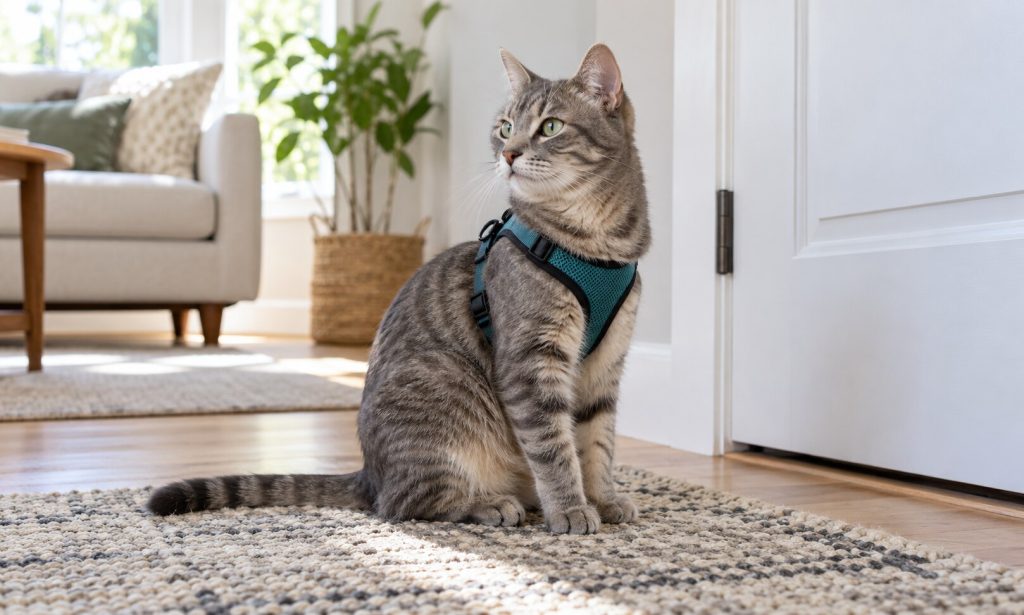
An indoor cat may wear a harness for supervised practice, enrichment, or preparation for a future move or veterinary visit. Some cats accept the feeling quickly; others freeze, hide, or struggle. The goal is not to force a walk but to find a safe fit and let the cat set the pace. When choosing a cat harness for indoor cats, compare adjustability, coverage, weight, fasteners, and how easily you can remove it. This guide offers a step-by-step way to introduce the harness at home, watch your cat’s body language, and decide when a different fit or a pause is needed. Choose a calm time when your cat is relaxed, and make sure doors and windows stay closed during each practice session.
Choose a light, adjustable design
For indoor practice, a harness should be light enough for gradual introduction and adjustable enough to sit securely. Check neck and chest measurements against the maker’s chart. Look for smooth seams, simple closures, and an attachment point that does not press into the spine or shoulders. Avoid dangling straps or hardware that could catch on furniture.
Introduce the harness in small steps
- Leave the harness near a familiar resting spot and allow sniffing.
- Reward calm interest, then briefly touch the cat with the harness.
- Fasten it for a short period while the cat stays indoors.
- Remove it before the cat becomes distressed, then repeat gradually.
- Only add a leash when the cat moves comfortably and remains supervised.
Do not drag, chase, or force the cat to walk. Some cats lie down or move awkwardly at first; pause and allow adjustment. Stop if the cat pants, struggles, hides persistently, or seems distressed. Keep harness sessions away from open doors and windows. Our guide to cat harness fit and use provides related safety checks.
Decide what indoor use means
A harness may support calm training or supervised movement around a secure room. It should not be used to tether a cat unattended. Indoor harness practice does not guarantee that outdoor leash walking will be safe or enjoyable. If your cat shows fear, stop and try again later or ask your veterinarian about behavior support.
For harness designs and fit considerations beyond indoor practice, see our guide to cat harnesses for walking.
Make each indoor session easy to end
Begin when the room is quiet and the cat is relaxed. Keep sessions short, use a reward your cat enjoys, and leave enough time to remove the harness without rushing. Avoid windows, open doors, other pets, and busy household traffic during practice. If the cat startles, you want a calm, contained room rather than an opportunity to bolt.
If you later introduce a leash in a controlled setting, our guide to cat leash fit and training explains related safety checks.
After removing the harness, check the skin and fur for rubbing or pressure marks. Wash or clean the harness according to its care directions and let it dry fully. End practice if the cat pants, hides, struggles, or stops taking a usual reward. An indoor harness is optional enrichment; your cat does not need to accept it to have a safe, fulfilling home life.
Set up the room for safe practice
Choose one quiet room with windows and exterior doors closed, and put away objects that could catch a strap. Keep other pets and busy household activity out of the space. Let the cat approach the harness voluntarily and have a familiar reward ready. If the cat walks away, pause rather than following. A short, calm introduction is more useful than keeping the harness on until the cat stops resisting.
When the harness is fastened, check the fit while the cat moves naturally. Look for straps that shift toward the throat, rub behind the legs, or limit shoulder movement. Allow the cat to sit, stretch, and turn. Remove the harness calmly after a brief session and inspect the fur and skin. If the cat seems relaxed across several sessions, gradually extend the time; only add a leash indoors after the harness itself is accepted.
Keep sessions supervised and remove the harness afterward so it cannot snag on furniture or become tangled. Indoor practice does not mean the cat must go outside, and tolerance of the harness does not guarantee comfort on a leash. End the session if the cat pants, struggles, hides persistently, or stops responding normally. If fear continues, ask your veterinarian for behavior guidance. The harness is an optional training aid, and the cat’s welfare sets the pace.
Frequently Asked Questions
Can all indoor cats learn to wear a harness?
No. Cats differ in temperament and comfort. Training should be voluntary and gradual.
How long should the first session last?
Keep it very brief and end while the cat remains calm. Increase time gradually based on the cat’s response.
Should I leave the harness on at home?
No. Supervise every session and remove the harness afterward to reduce snagging or entanglement risks.
Can a harness replace a carrier?
No. A carrier is the safer way to contain a cat during most travel. A harness can be useful only in controlled situations.
What if my cat freezes?
Remove the harness calmly and try a slower introduction later. Do not pull the cat or force movement.
Final Words
Choose a lightweight harness that fits securely and can be removed quickly. Introduce it indoors in short, positive sessions and supervise throughout. Your cat’s comfort matters more than achieving a walk.