
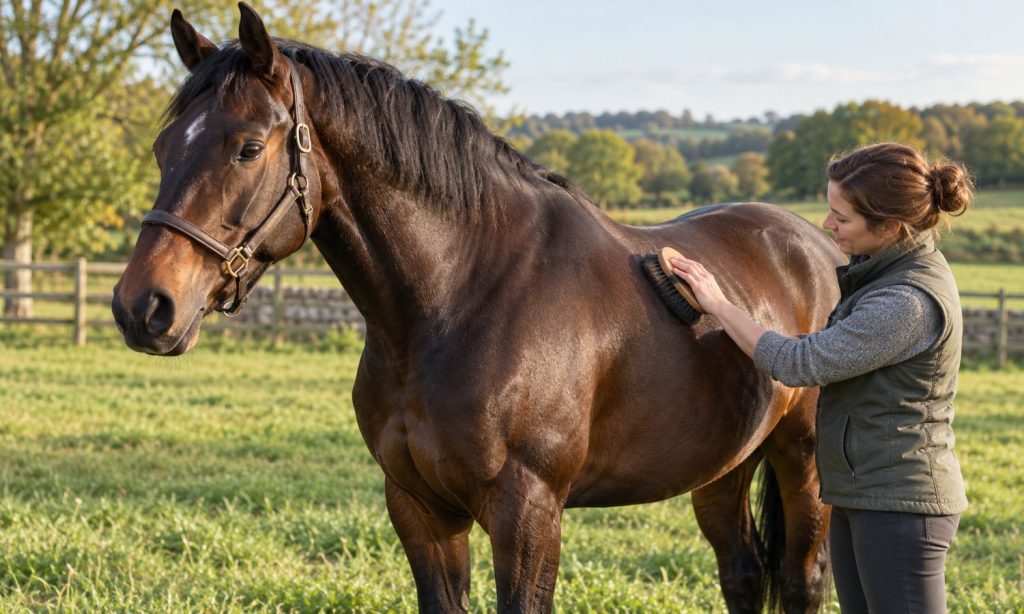
A dull coat can make owners wonder whether a coat supplement is missing from the feed bucket. But shine is not a diagnosis, and supplements cannot correct every cause of rough hair or skin irritation. Seasonal shedding, grooming, parasites, poor-quality forage, inadequate calories, skin disease, or hormonal problems can all affect appearance. Start by checking the horse’s health, current ration, and grooming routine. If you are considering a Best Coat Supplement for Horses, compare the nutrients with what the horse already receives rather than stacking oils, vitamins, and minerals. A balanced diet and veterinary attention to itching, hair loss, sores, or a persistent change usually matter more than a promise of gloss. The best choice is the one that fills a verified nutritional gap without creating an excess.
Look for the reason the coat changed
A horse’s coat naturally changes with season and daylight. Dust, sweat, rain rot, rubbing, parasites, allergies, and grooming habits can also influence texture and shine. A dull coat that appears with weight loss, itching, bald patches, scabs, or a change in behavior deserves attention. Ask a veterinarian to assess persistent or severe skin problems rather than trying a supplement as a treatment.
Check whether the horse has been dewormed according to a veterinary plan, whether tack or blankets are rubbing, and whether the coat is being washed or brushed in a way that dries or irritates the skin. A horse with PPID or another endocrine disorder may have coat changes that need medical evaluation. A supplement should not delay that conversation.
Balance the whole ration first
Hair and skin depend on adequate energy, protein, essential nutrients, and overall health. Forage quality and the amount the horse actually eats are the starting points. Review pasture, hay, concentrate, ration balancer, and every existing supplement. A forage analysis can help identify whether a ration is short in particular nutrients. A horse already receiving a fortified feed may not benefit from another product with overlapping vitamins or minerals.
Protein quality matters because amino acids help build hair and skin tissues. However, adding protein on top of a ration that already meets needs does not automatically create a glossy coat. Fat sources such as flaxseed or oils can increase calories and change the fatty-acid profile, but the overall ration and metabolic history matter. For general fatty-acid label considerations, see the site’s guide to choosing an omega-3 supplement for horses.
Compare common nutrients carefully
Fats and fatty acids
Coat formulas may include flax, rice bran, vegetable oils, or marine oils. These ingredients add fat and calories, and their fatty-acid profiles differ. Compare the amount per daily serving, not just a front-label claim about “omega support.” Ask whether the ingredient fits the horse’s diet and whether it contributes calories the horse needs or does not need. Introduce dietary fat gradually and monitor appetite and manure.
Protein, amino acids, and minerals
Some products add protein, amino acids, zinc, copper, or biotin. These nutrients have roles in normal body function, but more is not always better. Trace minerals can interact, and excessive intake may be harmful. Selenium in particular should not be supplemented casually because the safe range is limited. Check the total ration with a veterinarian or equine nutritionist before combining fortified products.
Biotin is often associated with hoof supplements, but evidence about hoof growth should not be treated as proof that it improves a normal coat. If brittle hooves are also a concern, the separate overview of biotin supplements for horse hooves addresses that different goal.
Read the label and assess quality
Look for a complete ingredient list, the amount of each active nutrient per serving, feeding directions, calories, fat, protein, mineral levels, storage instructions, lot number, and expiration date. A proprietary blend that hides amounts makes it harder to compare products and calculate nutrient totals. Ask the manufacturer about ingredient identity and batch testing. Quality information can support confidence in what is in the container, but it does not establish that a product will change the coat.
Check the serving size for your horse’s weight and how the formula should be introduced. Consider taste and whether the horse reliably eats the full amount. Avoid starting several products at once; if the skin worsens or manure changes, it will be difficult to identify the cause. Keep the label and lot number in case the veterinarian needs to review it.
Set realistic expectations and monitor
Hair growth follows a cycle, so visible changes may take time and can coincide with seasonal shedding, grooming, or improved forage. Before starting a product, take a clear photograph in consistent light and note the ration, skin signs, and grooming routine. Agree with a nutrition professional on when to reassess and what change would count as meaningful. Do not increase the serving beyond directions to speed up a cosmetic result.
Public horse-owner conversations about coat supplements report different experiences. Some owners attribute a shine to added fats or a particular feed, while others point to grooming and balanced nutrition as the bigger factors. Those accounts are anecdotes and cannot establish what caused the change. Coat condition can improve alongside several simultaneous changes, so keep expectations measured and assess health first.
When to contact a veterinarian
Seek veterinary advice for persistent itching, spreading hair loss, open sores, crusting, swelling, discharge, pain, or a sudden coat change with weight loss or lethargy. Skin conditions can be infectious or parasite-related and may need diagnosis and targeted treatment. Do not apply a supplement or topical remedy to a wound or inflamed skin without asking the veterinarian.
If the horse is otherwise healthy and the only concern is a lack of shine, review forage, body condition, grooming, and the total ration first. A veterinarian or qualified equine nutritionist can help identify whether a nutrient gap is plausible and whether a supplement would add value.
Frequently Asked Questions
Can a coat supplement make every horse’s coat shiny?
No. Results depend on the cause of the coat concern and the horse’s diet and health. A supplement will not treat parasites, infection, endocrine disease, or inadequate grooming.
Which nutrients should I look for?
Look at the complete ration before selecting nutrients such as protein, fatty acids, zinc, copper, or biotin. Have a veterinarian or nutritionist review the total intake to avoid excess.
Is adding oil enough to improve a dull coat?
Not necessarily. Oil adds calories and fat but may not address the cause. Review forage, skin health, grooming, and the horse’s overall ration before adding it.
Can too many coat supplements be harmful?
Yes. Combining fortified products can create excessive mineral or vitamin intake. Check the full ration, especially before adding trace minerals such as selenium.
When does coat change need veterinary care?
Persistent itching, sores, spreading hair loss, crusting, pain, or coat changes with weight loss or illness should be evaluated by a veterinarian.
Final Words
Choose a coat supplement only after checking the horse’s skin, grooming, forage, and total nutrient intake. Compare actual serving amounts, calories, and mineral overlap, and avoid assuming that a shiny-coat claim proves a nutritional need. If the horse has irritation, sores, hair loss, or a persistent change, ask a veterinarian to investigate. No matching published PetAdvisorPro page for the exact phrase Best Coat Supplement for Horses was available, but the guide to omega-3 supplements for horses covers one related nutrient category.









