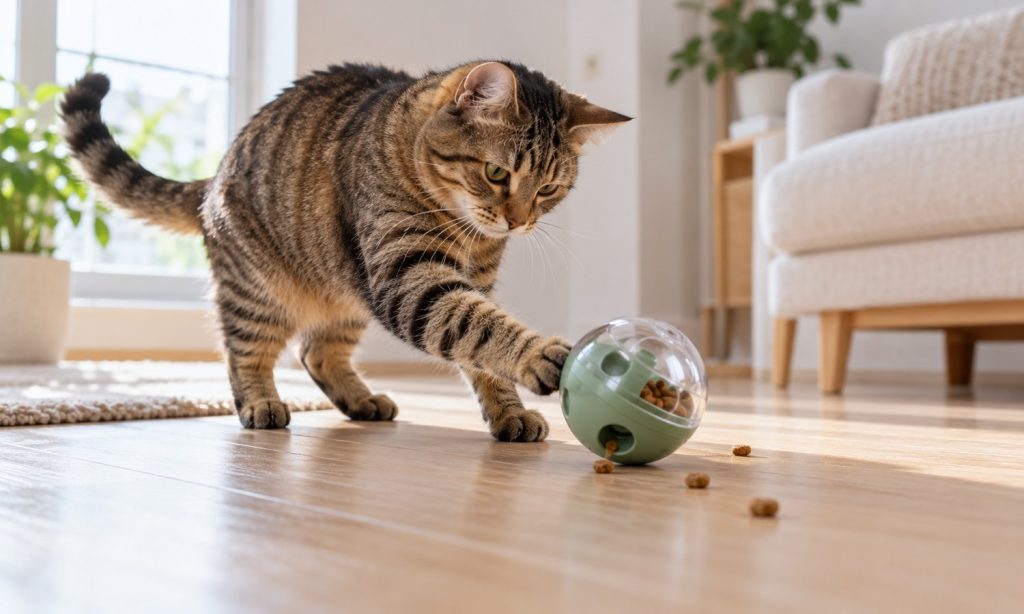
How to choose the right treat dispensing toy for cats begins with matching the design to your cat’s preferences, routine, and environment. The right design fits your cat’s play style, food preferences, coordination, and chewing habits. Some cats enjoy rolling a ball that releases kibble; others prefer a stationary tray or lickable feeder. Before choosing, consider what reward will go inside, how much supervision the toy needs, and whether it is easy to clean. Treat toys are enrichment, not a substitute for meals, water, or interaction. This guide explains how to match mechanism and difficulty to your cat, introduce it gradually, and keep play safe and rewarding. A good choice should invite curiosity while making the food easy to reach and the activity comfortable.
Decide what the toy should do
Treat dispensing toys encourage cats to work for small pieces of food. A rolling toy invites chasing and batting, while a stationary puzzle asks a cat to reach, nudge, or uncover a reward. A lick mat or hollow toy is better suited to soft food. Think about whether your cat seeks movement, uses its paws, likes sniffing, or prefers to lick. The toy should support a behavior your cat already enjoys.
These toys can add variety to a routine, but they do not guarantee exercise or prevent behavior problems. They work best as one part of a comfortable, enriched home with play, resting places, scratching opportunities, and predictable feeding. Choose a simple goal: offer a brief activity, spread a small snack across time, or make a portion of the regular ration more engaging.
Match the mechanism to your cat
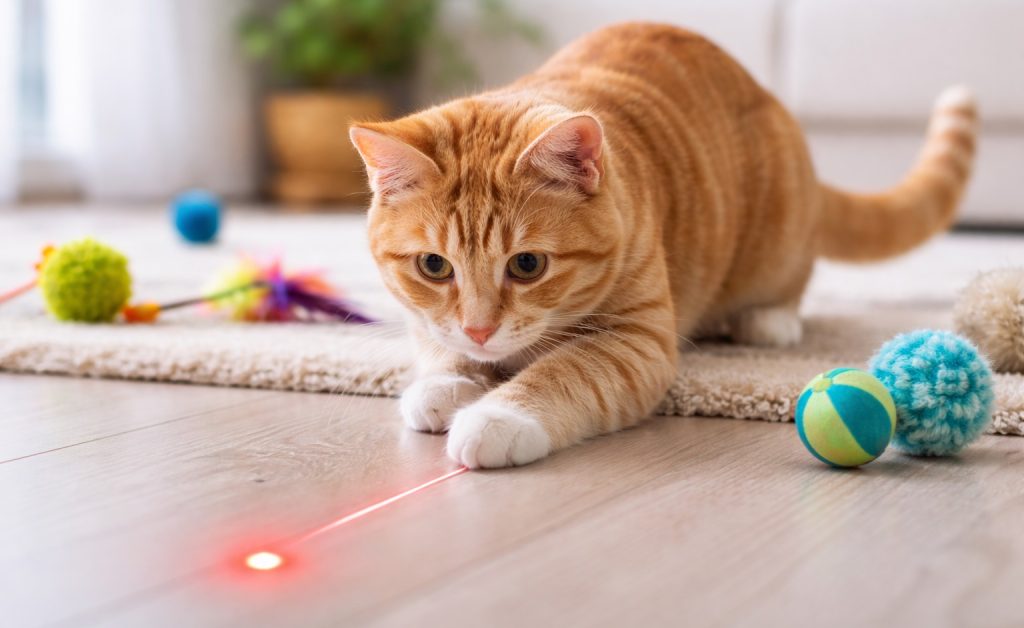
For a cat that chases moving objects, consider a ball or rolling dispenser that releases food through an opening. For a cat that prefers to stay in one spot, look for a stable tray with shallow wells, sliding covers, or easy-to-reach compartments. A curious cat may enjoy a sniffing mat or a design with several routes to a reward. A timid cat may need a quiet toy with visible food.
Watch how your cat interacts with ordinary objects before deciding. Does it push a ball, fish kibble from a dish, or paw under a rug? Those observations are more useful than a label such as “advanced.” Avoid selecting a toy solely because it looks challenging; a complicated mechanism can discourage a cat that has not learned how it works.
Choose a manageable difficulty
Start with a toy that makes food easy to find. Open compartments, wide openings, and low resistance help a beginner understand that moving the toy produces a reward. Some adjustable designs let you enlarge openings or remove covers at first. Increase the challenge gradually only after your cat consistently retrieves food and remains relaxed and interested.
Difficulty is appropriate when the cat can make progress without becoming distressed. A cat that bats the toy away, vocalizes in frustration, or leaves without eating may need an easier setup. If it empties the toy immediately and remains engaged, you might add one small step. The aim is enjoyable exploration, not making food inaccessible.
Check size, stability, and materials
Consider the size of food pieces and toy openings. Kibble should pass through without repeated jamming, while openings should not be so large that the toy empties with one bump unless that is the intended beginner setting. A broad base or nonslip surface helps keep a stationary puzzle from sliding. For a rolling toy, make sure it moves predictably and does not become trapped under heavy furniture.
Inspect edges, seams, and moving parts. Avoid sharp edges, fragile pieces, or openings that could pinch a paw or catch a claw. If your cat chews toys, choose a sturdy material and supervise early sessions. Remove a toy if pieces crack, loosen, or can be chewed off. Follow maker guidance and avoid small detachable parts that could be swallowed.
Match the reward and food format
Check whether the toy is designed for dry kibble, small treats, soft food, or more than one type of reward. Pieces need to fit through the dispensing opening and should not crumble into a blockage. A toy intended for dry food may be difficult to clean after moist food. If you want to use wet food, choose a washable design with smooth, accessible surfaces.
Use a portion of your cat’s regular daily food when practical, and account for treats in the overall feeding plan. A small reward can be enough to make the activity worthwhile. If your cat has a prescribed diet, food allergy, or medical condition, ask your veterinary team which treats or food portions are appropriate before changing what goes in the toy.
Consider household setup
A hard plastic ball may rattle on tile or wood, which some cats enjoy and others avoid. If noise is a concern, use it on a rug or choose a quieter stationary design. Make sure there is enough open floor for a rolling toy to move without striking breakable items. Place stationary feeders where the cat can approach comfortably and is not blocked by another pet or a busy walkway.
In a multi-cat home, offer separate toys or supervise so one cat does not guard the reward or chase another away. A treat activity should not create competition. Some cats prefer solving puzzles alone; give each one enough space and time to engage without pressure.
Introduce it gradually and supervise
Begin by placing a few familiar treats in an easy-to-reach area of the toy. Let your cat investigate voluntarily. You can gently roll or nudge it once to demonstrate how food appears, then give the cat time to try. Keep the first session short and calm. Do not withhold a meal to force interest, and provide the normal feeding routine as usual.
Observe how the cat uses the toy, especially during early sessions. Supervision helps you notice chewing, rough handling, jamming, or frustration. Once you know the design is safe for that cat, decide whether it can be used with less direct attention based on its construction and the manufacturer’s directions. Store toys with string or parts requiring supervision after play.
Cleaning and maintenance
Food residue and saliva can collect in seams and dispensing channels. Choose a toy that you can open and clean thoroughly. Follow the care instructions, wash it as often as needed for the food used, and allow it to dry fully before refilling. If the toy cannot be cleaned properly, reserve it for dry food or choose another style.
Check for wear while cleaning. Replace a cracked toy or one with loose pieces, rough edges, or a mechanism that no longer closes securely. Cleaning also lets you confirm that food is not stuck inside and becoming stale. Keep treats in a closed container and use them according to package directions.
Frequently Asked Questions
Are treat dispensing toys good for cats?
They can provide an opportunity for foraging and play. Choose a safe design suited to the individual cat, and keep meals and water available as normal.
What treats should I put in a dispensing toy?
Use food that fits the opening and is appropriate for your cat. A portion of its regular kibble may work; ask your veterinarian about treats if your cat has dietary restrictions.
How do I get my cat interested?
Begin with visible food and an easy mechanism. Demonstrate once if helpful, then let the cat explore at its own pace without forcing interaction.
Can I leave a treat toy out all day?
That depends on the toy, reward, and your cat. Follow product directions, consider food freshness and chewing behavior, and supervise until you know how your cat uses it safely.
What if my cat ignores it?
Try a different movement, quieter material, or easier access. Some cats prefer sniffing or licking activities over rolling toys, and an ordinary feeding routine is fine.
Final Words
The right treat dispensing toy for cats makes the reward accessible, suits your cat’s preferred way to play, and is sturdy and easy to keep clean. Begin with low effort, watch for relaxed engagement, and adjust the challenge only when your cat is succeeding. Use suitable food in modest portions, supervise early play, and replace worn toys. If a design creates frustration or competition, choose a simpler activity that fits your cat better.