How to choose the right wand toy for cats that play rough begins with matching the design to your cat’s preferences, routine, and environment. Rough play can mean forceful pouncing, grabbing, kicking, or chewing, so inspect the toy as carefully as you watch the game. No wand toy is chew-proof, and string or elastic should never be left available unattended. Think about your cat’s size, preferred attack style, and how you will store the toy between sessions. This guide covers construction, lure choice, play space, supervision, and wear checks so you can make interactive play engaging while reducing avoidable risks. A thoughtful match supports energetic play while helping you spot when a toy needs repair or replacement. The right match should be comfortable for your animal and practical to maintain.
Understand your cat’s play style
Watch what your cat does during play. Some cats stalk slowly and leap; others sprint, swat, grab, and kick once they catch the lure. A cat that bites or chews the attachment needs a different setup from one that mostly chases. Notice whether your cat prefers feathers, fabric, crinkle sounds, or a soft prey-shaped lure. These preferences help narrow the field, but safety and construction come first.
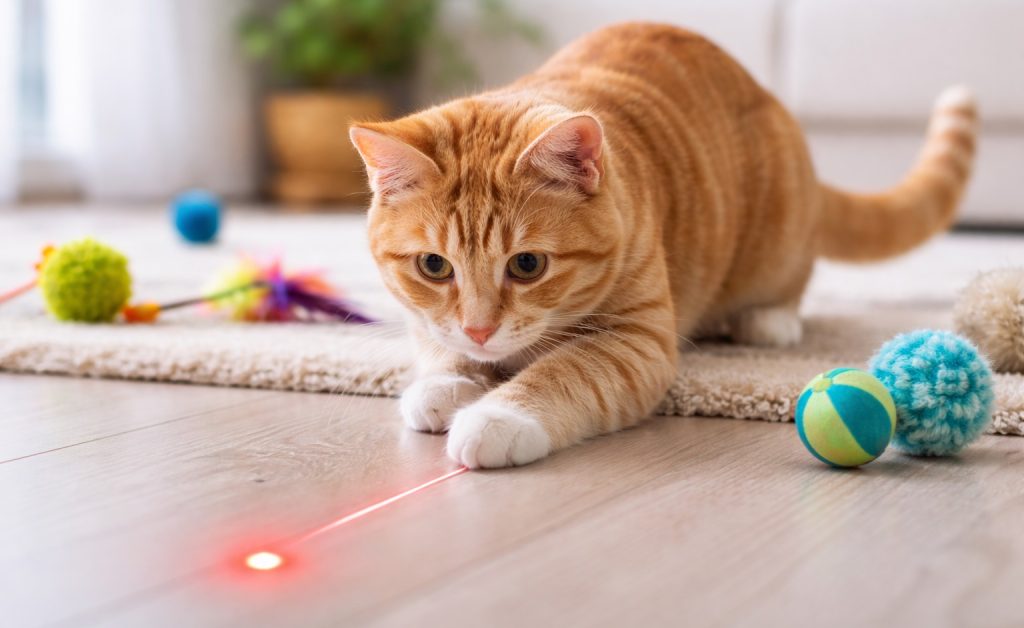
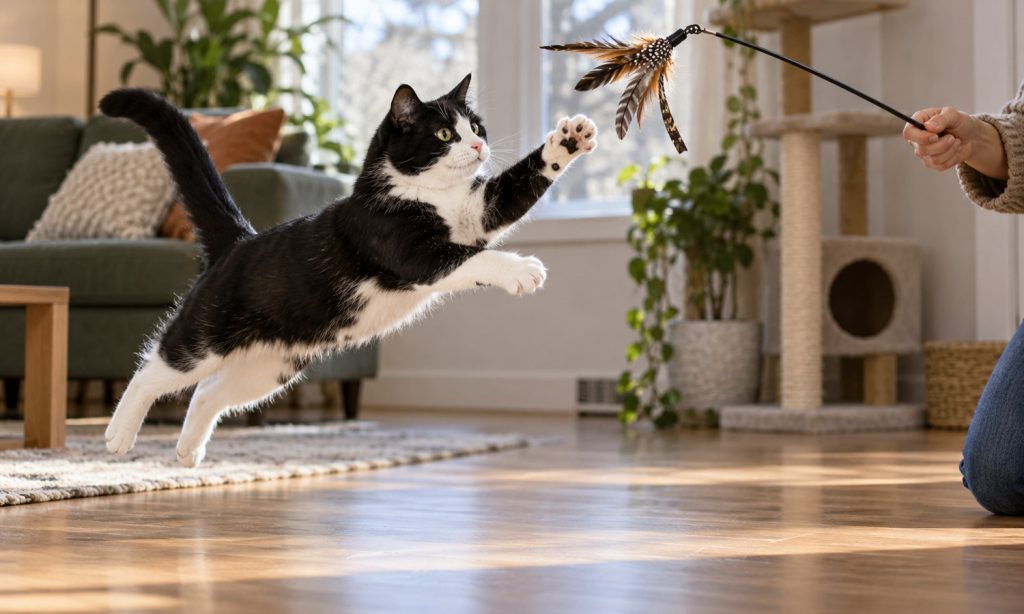
Use the wand to move the lure like prey: let it travel away, pause behind an object, and change direction. Avoid whipping it directly at the cat’s face or making the handle part of the game. Let the cat catch the lure now and then. A short play session that ends with a successful pounce can be more satisfying than keeping the target just out of reach.
Inspect the wand and connections
Check the handle for a comfortable grip, smooth edges, and a length that lets you guide the lure from a safe distance. A very flexible rod may bend under force, while a rigid one can be awkward in a tight room. More important than material claims is the quality of the connection between rod, line, and lure. Look for secure stitching, firmly attached knots or clips, and parts that do not loosen when gently tested.
Examine the line for fraying, cracks, thinning, or stretched elastic. A line that snaps can startle a cat or leave a loose piece within reach. Avoid exposed wire ends, sharp clips, and small detachable decorations. If the design uses a long string, ribbon, or elastic, keep it under direct supervision and put the wand away after play. Swallowed string can cause serious injury and needs prompt veterinary attention.
Choose a lure that suits rough play
For cats that grab and kick, a larger soft lure may be easier to catch than a tiny feather tuft. A fabric or plush attachment can offer a satisfying target, provided seams stay closed and the filling cannot be pulled out. If your cat chews aggressively, a simple, sturdy lure may be safer than one with beads, bells, glued-on eyes, or many delicate pieces.
Feathers and narrow ribbons can be enticing but may shed or tear under repeated biting. Inspect them before and after sessions and remove the toy if pieces come loose. You can rotate interchangeable lures only when the attachment system locks securely and does not create a loose small part. Claims such as “indestructible” should not replace inspection or supervision.
Consider handle length and control
A longer wand can keep your hands farther from a fast-moving cat and can create a wider path for chasing. However, it still needs to be manageable in your room. Check that you can move it without striking furniture, lights, or another person. A compact wand may offer better control in a small apartment, while a longer rod may suit an open room.
Grip and weight affect how long you can play comfortably. A handle that is too heavy or slippery may be difficult to control once your cat accelerates. Look for a shape that feels secure in your hand and a rod that flexes without feeling fragile. The goal is controlled movement, not maximum speed or force.
Set up a safe play area
Choose a clear floor area with traction. Remove breakables and move cords, unstable objects, and obstacles that could cause a collision. Avoid encouraging jumps from high shelves or slippery surfaces. If another pet is nearby, separate play areas so excitement does not turn into competition or an accidental collision.
Keep the lure away from the cat’s eyes and face, and move it across the floor or around low obstacles. Do not use the wand to tease a cat into biting your hand or climbing your body. If play becomes frantic, pause and let the cat settle before resuming. A cat that seems painful, suddenly avoids movement, or changes its play behavior may need veterinary assessment.
Supervise and store it securely
Wand toys are interactive toys for a person and cat to use together. Stay present and focused while the lure is moving. Do not leave the wand on a chair, floor, or in a toy basket where a cat can chew the line or become tangled. After the session, inspect the attachment, then store it in a closed drawer or cupboard that the cat cannot open.
Supervision does not make a damaged toy safe. Stop using it if a line frays, a seam opens, a clip bends, or a lure sheds parts. Keep replacement parts from small children and pets, and follow any manufacturer care directions. If your cat has swallowed string or a toy component, contact a veterinarian promptly rather than waiting for symptoms.
Plan satisfying sessions
Keep the pace responsive to your cat. Many cats prefer short bursts followed by a break. Vary speed and direction, and allow a few successful catches. You can offer an appropriate small food reward or transition to the cat’s normal meal afterward if that fits your routine. Avoid using hands or feet as the prey target; redirect teeth and claws to the lure.
Rotate a few safe toys to keep the activity interesting, but inspect each one before use. Some cats lose interest quickly, which is not a reason to make the play more intense. Stop when your cat disengages, pants, hides, or appears overstimulated. Follow your cat’s signals and keep the activity predictable and positive.
Frequently Asked Questions
Can I leave a wand toy out for my cat?
No. Store it after supervised play, especially if it has string, ribbon, elastic, feathers, or detachable parts.
What is the safest wand toy for a cat that chews?
There is no universally chew-proof wand. Choose simple, securely constructed parts, supervise closely, and remove it if your cat bites through or pulls pieces loose.
How long should I play with a wand toy?
Follow your cat’s interest and energy. Short sessions with breaks and chances to catch the lure work well for many cats.
Should a cat be allowed to catch the lure?
Yes, include successful catches so the game has a satisfying finish. Keep your fingers away from the lure and let the toy absorb the pounce.
What if my cat breaks the wand toy?
Stop using it and remove loose pieces. If you think your cat swallowed string or a component, contact a veterinarian promptly.
Final Words
The right wand toy for cats that play rough balances secure construction with a lure your cat can chase and catch. Check its line, seams, clips, and attachments before every session, keep play supervised, and store it securely afterward. Choose a lure and handle you can control, set up a clear space, and let your cat dictate the pace. Replace damaged parts promptly; no toy is safe once it starts to come apart.