A hoof supplement is a long-term nutrition discussion, not a quick test with an overnight result. Hoof wall grows gradually, and trimming, shoeing, moisture, footing, overall diet, and health can all affect what you see. A consistent record helps you and your veterinarian and farrier compare the same hooves over time and note when the feeding plan changed. If you are reviewing a hoof supplement for barefoot horses, use the product label and your veterinarian’s guidance as the starting point. This guide explains what to photograph and record, how to avoid confusing several changes, and when to report a concerning hoof or lameness sign rather than waiting for a supplement review. Photos and feeding notes make changes easier to compare.
Agree on a goal and baseline
Ask the veterinarian why the supplement is being considered, what change would count as meaningful, and when to review the plan. If a farrier has raised a concern, include that information and ask whether the veterinarian should examine the hoof or review the whole ration. Do not start, stop, or combine supplements without checking how ingredients fit the horse’s existing diet and medications.
Before the first serving, note the current diet, forage, concentrates, supplements, turnout, workload, farrier schedule, and hoof-care routine. Record what prompted the discussion, such as cracking, chipping, slow growth, or difficulty holding a shoe, but do not assume the sign has one cause. Save the supplement label, ingredient list, lot number, and feeding directions.
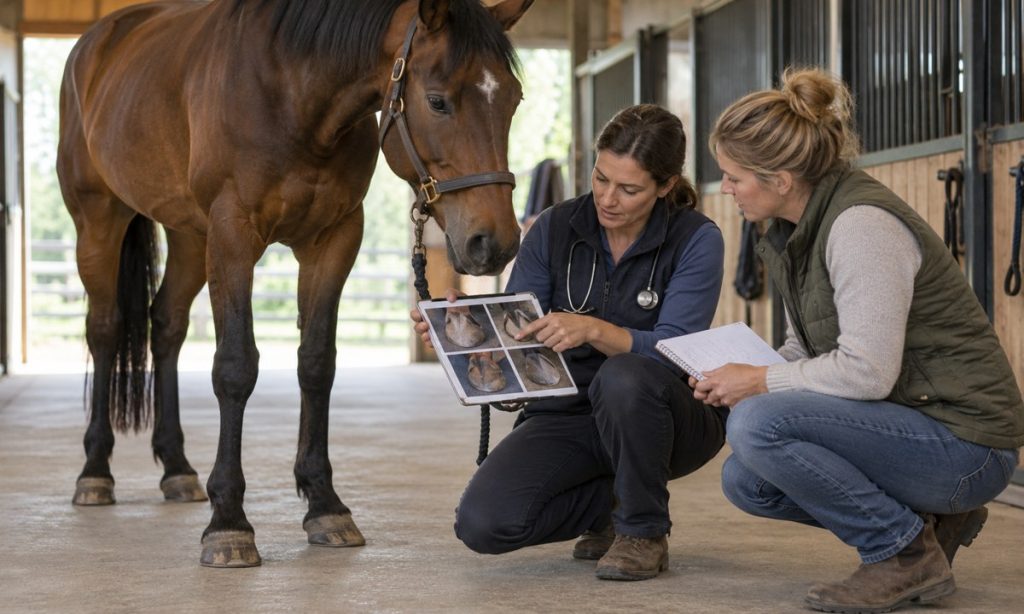
Take baseline photographs before the change if the horse is comfortable and the veterinarian agrees. Use the same lighting, background, distance, and camera angle each time. Photograph each hoof from consistent views, such as the front, side, and sole when safe to do so. Clean the hoof first and avoid cropping away landmarks that help you compare images later.
Track the product and the rest of the ration
Record the date the supplement begins, the amount offered, whether the horse eats it, and any missed servings. Follow the label and veterinarian’s instructions. Do not exceed the label amount or add a second product with overlapping vitamins or minerals just because progress seems slow.
Keep notes on the whole ration, including changes in hay, pasture, concentrates, and other supplements. If the horse is not eating the intended serving, record that rather than assuming it received the full amount. Check whether other people feed the horse and share a simple written instruction so the total amount is clear.
Where practical, keep other parts of hoof care consistent while observing. Continue the regular farrier schedule and record trim or shoeing dates. Do not delay routine hoof care to preserve a “before and after” comparison. If the farrier makes a necessary change, record it and discuss how it affects the monitoring plan.
Use regular photos and observations
At intervals agreed with your veterinarian, repeat the photographs from the same angles. Compare new growth at the coronet, the hoof wall, edges, and any areas of concern. A photo can show changes in appearance, but it cannot assess internal hoof structures, balance, pain, or the cause of a crack. Ask the farrier or veterinarian to interpret images when needed.
Write factual descriptions after routine cleaning: “small chip at outside toe,” “new horizontal line,” or “same crack photographed last month.” Note whether the change is growing out, recurring, or accompanied by sensitivity. Avoid using a single photo to declare that the supplement worked or failed.
Hooves grow slowly; University of Minnesota Extension notes that complete hoof growth can take many months. That means a short trial may not reveal how new horn behaves through a full growth cycle. Ask the veterinarian how long the plan should continue before judging it, and do not keep feeding indefinitely without a review.
Record factors that can affect hoof condition
Note wet or dry weather, muddy turnout, changes in bedding, exercise surface, and time spent in a stall. Record changes in the horse’s weight, appetite, health, medication, and hoof-care products. These factors may influence what the hoof looks or feels like, so a dated note can prevent an unrelated event from being attributed to the supplement.
Public horse-owner discussions about hoof supplements describe varied experiences, including different timelines and simultaneous changes in feeding or farrier work. Those reports are anecdotal and cannot establish that a product caused a result. Use your own consistent records and professional assessment instead of comparing one horse’s photos with another horse’s story.
A simple spreadsheet can include date, supplement amount, feed changes, farrier visit, hoof photographs, hoof observations, weather, and any signs of discomfort. Bring the record to the next veterinary and farrier conversations so both professionals can see the same timeline.
Know when not to wait
Call your veterinarian promptly for sudden lameness, a hot or painful hoof, a penetrating object, a deep crack, swelling, or a marked change in how the horse bears weight. A supplement diary is not a reason to delay assessment. For an embedded object or suspected serious hoof injury, follow the veterinarian’s emergency instructions and do not remove or probe the object unless directed.
If the horse develops a suspected reaction after starting a supplement, stop and contact the veterinarian for instructions. Keep the package and note the amount and time given. Do not substitute another supplement or apply a topical product to a hoof problem without advice.
Review the trend with your care team
At the planned follow-up, bring the label, photos, feeding log, and farrier dates. Ask whether the observed changes fit the original goal, whether the full ration provides the nutrients needed, and whether the plan should continue, change, or stop. Discuss whether additional examination or testing is appropriate.
A useful review weighs the hoof’s appearance, comfort, growth, farrier assessment, overall diet, and health history together. If no clear change is visible, the next step may be reassessment rather than increasing the amount. Follow the veterinarian’s plan and keep routine hoof care in place.
Frequently Asked Questions
How long does it take to see a hoof change?
Hoof growth is gradual and can take many months to grow out. Ask your veterinarian when to review the specific plan.
How should I photograph the hooves?
Use the same lighting, distance, and angles each time, and include clear views of each hoof and the area being tracked.
Should I change farrier schedules while testing a supplement?
No. Keep routine care consistent and record each visit. Do not delay needed trimming or shoeing.
Can photos prove a supplement worked?
No. Photos can document appearance over time but cannot prove cause or assess internal structures and pain.
When should I call the veterinarian sooner?
Call promptly for sudden lameness, pain, heat, a penetrating injury, swelling, or a rapidly worsening hoof problem.
Final Words
Set a clear goal with the veterinarian, record the full ration and farrier schedule, and take repeatable photos over an appropriate period. Hoof growth is slow, and many influences can change what you see, so use the record as context for veterinary and farrier review rather than proof of cause. When considering a hoof supplement for barefoot horses, follow the agreed plan and call promptly about pain or sudden lameness.
References
- Caring for your horse’s hooves, University of Minnesota Extension.
- Trace Mineral Supplementation for Horses, American Association of Equine Practitioners.
- AAEP Care Guidelines for Equine Rescue and Retirement Facilities, American Association of Equine Practitioners.