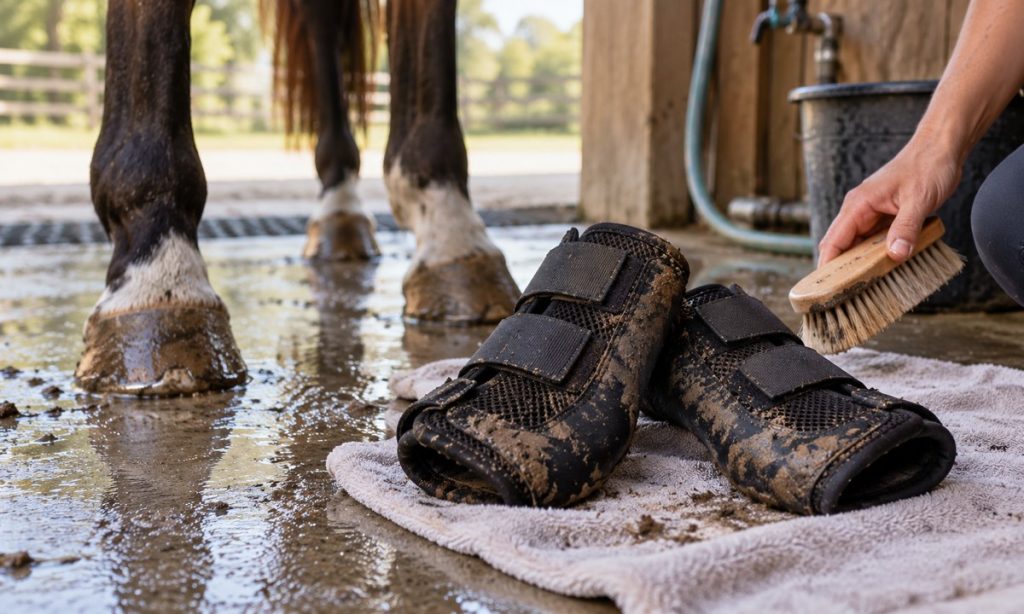
Horse boots that are marketed for suspensory support still need regular cleaning, fit checks, and inspection for wear. A cracked shell, stretched strap, rough seam, or trapped grit can make a boot uncomfortable or unreliable. Boots also vary widely in design, materials, and intended use, so a cleaning method that suits one pair may damage another. If your horse has a diagnosed suspensory problem, ask the veterinarian which equipment is appropriate and how long it should be worn. If you are comparing horse boots for suspensory support, treat product claims as a starting point for a veterinary discussion rather than a substitute for diagnosis or a rehab plan. This guide covers basic care and warning signs that mean the boots should be removed from service.
Identify the boot and follow its instructions
Check the label or maker’s care guide before washing. Boots may include molded shells, neoprene, mesh, leather, fleece, elastic, hook-and-loop fasteners, or removable liners. Care instructions can differ: some fabrics tolerate a gentle machine cycle, while leather, adhesives, foam, and molded parts may be damaged by soaking, detergent, or heat.
Confirm which boot belongs on which leg and how it is intended to sit. Keep left and right boots paired and do not assume that a boot designed for everyday impact protection provides therapeutic support. If the horse is being treated for a ligament or tendon problem, use only the equipment the veterinarian approves and follow the prescribed wearing schedule.
Clean the horse’s legs and the boots
Before putting boots on, make sure the horse’s legs are clean and dry unless the veterinarian has directed otherwise. Sand, hair, dried sweat, or plant material trapped inside can rub during movement. After exercise, remove boots promptly and examine the skin and hair beneath them. Note unusual warmth, swelling, tenderness, rub marks, or dampness; seek veterinary advice if signs concern you.
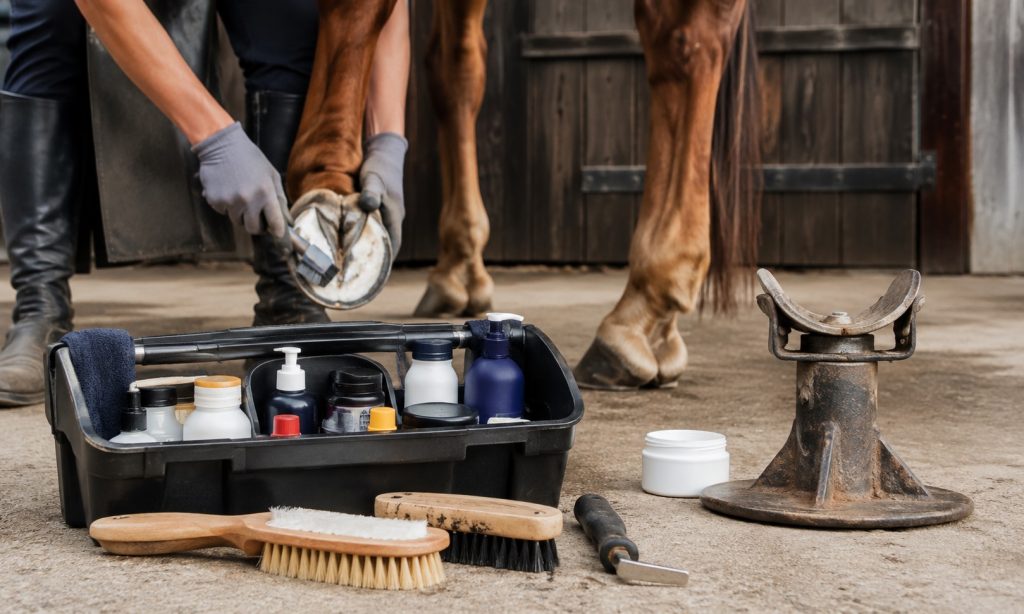
After use, knock off loose dirt and brush away dried mud with a soft brush. Open fasteners fully so grit does not remain caught in the hook-and-loop surface. Rinse or wash only as the manufacturer allows. If soap is permitted, use a mild cleaner and rinse it away from surfaces that contact the horse. Do not use bleach, solvents, stiff wire brushes, or high-pressure spray unless the care guide explicitly permits them.
Remove liners or inserts only if they are designed to come out. Clean them separately according to their instructions. Let all components air-dry completely in a ventilated place, away from direct sun, heaters, radiators, and dryers. Do not store damp boots in a closed container, and do not put a wet boot back on a horse for the next ride.
Inspect structure and closures
When dry, examine the shell or fabric for cracks, holes, torn mesh, delamination, sharp edges, or distortion. Check the inside padding for compressed areas, hard spots, rough seams, stuck hair, grit, or residue. Inspect elastic for stretch or loss of recovery and look for stitching that has started to separate.
Fasteners deserve a close check. Look for worn hook-and-loop surfaces, cracked buckles, loose snaps, damaged straps, or a closure that no longer stays secured. Fasten each boot and gently test it by hand. If it opens or shifts easily, do not rely on it during work. Replace only with a compatible part approved by the maker; an improvised repair may alter the fit or create a pressure point.
Compare the pair for uneven wear. A boot with one strap stretched more than the other, a shell that has taken a set, or padding that has flattened on one side may not sit as intended. Record the date and the area of wear so you can decide whether the issue is recurring.
Check fit before and after use
Fit the boot according to its instructions. It should sit in the intended position, stay stable, and avoid pinching or restricting movement. Too-tight boots can create pressure; a loose or shifting boot can rub or expose the area it is meant to cover. Do not tighten a boot excessively in the belief that a tighter fit provides more ligament support.
Watch the horse walk after fitting, and check again after a short period of movement. Stop if the boot twists, slides, catches, or changes the horse’s stride. After removal, examine the skin for rubs and compare the legs. A red mark, hair loss, swelling, or repeated discomfort warrants a pause and discussion with the veterinarian or qualified fitter.
For a horse returning from a suspensory injury, the veterinarian’s rehabilitation plan takes priority over general boot instructions or another owner’s routine. Boots and bandages can have limitations and may create heat or pressure. Public rider discussions describe conflicting beliefs about how much support different boots provide; those anecdotes are not a clinical assessment. Ask the veterinarian which device, if any, is appropriate for the horse’s diagnosis and exercise stage.
Know when to retire a pair
Stop using boots with a cracked shell, torn material, failed closure, broken stitching, sharp edge, distorted shape, or padding that no longer protects the contact area. Retire a pair if it repeatedly slips or rubs despite correct application. Do not continue using damaged equipment simply because the horse has worn it before.
If the boot was involved in a fall, entanglement, or significant impact, inspect it carefully and follow the manufacturer’s replacement guidance. A clean appearance does not prove that a hidden part remains intact. Keep a replacement pair available if the boots are part of an approved care routine.
Store boots clean and dry
Close fasteners before storage to keep lint and bedding out, and keep each pair together in a dry, ventilated location. Avoid leaving boots in a hot vehicle, direct sun, or a damp tack trunk. Store them away from chemicals, sharp tools, and feed. If there are removable liners, store them dry and paired with the correct boot.
A simple note can track cleaning, fit issues, damage, replacement dates, and veterinary instructions. If several people handle the horse, label the boots and share the approved wearing schedule so the horse is not left in them longer than intended.
Frequently Asked Questions
Can I machine-wash horse support boots?
Only if the boot maker allows it. Close fasteners, use the specified cycle, and air-dry away from heat.
How tight should horse boots be?
They should be secure and stable without pinching or restricting movement. Follow the fitting instructions and ask a professional if unsure.
Do support boots treat a suspensory injury?
Do not assume they do. Ask the veterinarian whether a specific boot is appropriate for the diagnosis and rehabilitation plan.
When should I replace horse boots?
Replace or repair them according to maker guidance if closures fail, seams split, shells crack, or fit becomes unreliable.
What should I do if a boot causes a rub?
Remove it, check the leg, and contact the veterinarian or qualified fitter if irritation persists or the horse is uncomfortable.
Final Words
Clean boots according to their materials, dry them fully, and check shells, seams, padding, straps, and fit before each use. Remove them promptly after work and inspect the horse’s legs. For a horse with a suspensory diagnosis, let the veterinarian decide whether boots are suitable and how they fit into rehabilitation. When reviewing horse boots for suspensory support, do not rely on marketing language or a tighter fit to replace that plan.
References
- Equine Leg Protection, Total Equine Veterinary Associates.
- Leg Protection for Your Horse, Fédération Équestre Internationale.
- Caring for your horse’s hooves, University of Minnesota Extension.