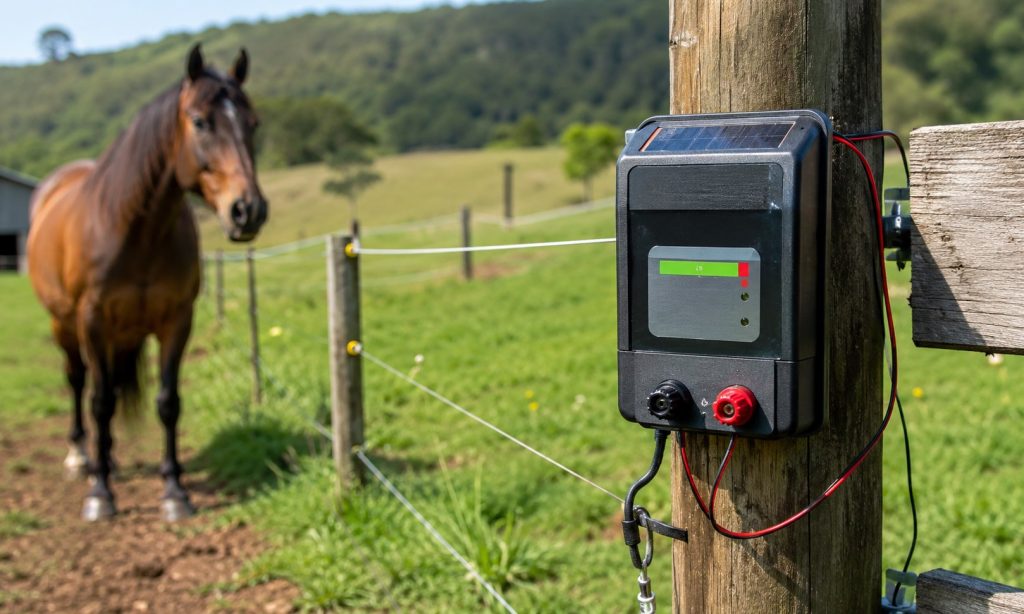
The best electric fence charger for horses should deliver steady joules with proven reliability.
You love your horses, and you want them safe. Yet a weak fence can fail fast when weeds grow, storms hit, or a curious gelding leans. A good charger fixes that. It sends a clear, humane pulse that trains respect without harm. It keeps the line hot across seasons. It also saves time, money, and stress. In this guide, I break down what works on real pastures, in real weather, with real horses. I also show you how to pick the best electric fence charger for horses for your layout, power access, and herd behavior.

Zareba 10 Mile AC Powered…
CONTAIN LIVESTOCK: Use this AC electric fence charger to energize up to 10 miles of electric fencing in ideal conditions (no weeds) and up to 1 mile (heavy weed conditions)….

10 Miles Solar Electric Fence…
Powerful Energizer: Solar Fence Charger is compact and easy to install and move, making it the ideal solution for strip grazing. Energizes up to 10 miles of electric fencing Portable…

Zareba 50 Mile AC-Powered Low…
50 MILE RATING: This 2-joule AC-powered electric fence energizer energizes up to 50 miles of electric fencing in ideal conditions, making it perfect for containing cattle, horses, goats, and pigs…
Zareba 10-Mile AC Low-Impedance Charger (0.5 J)

This Zareba 10-mile AC unit is a solid pick for small to mid fields. The 0.5-joule output is gentle for horses yet strong enough to be felt. Low impedance helps keep energy up when mild weeds touch the line. If you have power in the barn or at the fence head, setup is easy.
I like this charger for tape, rope, and smooth wire runs. It stands up well in wet months when voltage can sag. The case is simple and tough, with clear terminals. For a few paddocks with gates and cross-fencing, it gives reliable, even power.
Pros:
- Balanced 0.5-joule output suits most horse temperaments. It is firm yet humane.
- Low impedance helps push through light weed load and moisture.
- 10-mile rating covers small to medium layouts with room to expand.
- AC power means no battery to charge. It runs steady day and night.
- Works well with poly tape and rope, which horses see better.
- Simple terminals and clear labels make install fast.
Cons:
- Needs a nearby outlet. Not for remote or off-grid lines.
- May feel light if you run many strands or long lanes.
- Grounding still matters a lot. Poor rods will cut performance.
My Recommendation
If you want the best electric fence charger for horses in a small barn setup, this is a great start. It shines in 1–3 acre paddocks and for a few cross-fence runs. The pulse is clear, and horses learn fast. With proper grounding and good connectors, it stays hot even in spring growth. The value is strong if you have AC power and want set-it-and-forget-it reliability.
| Best for | Why |
|---|---|
| Small to mid paddocks near power | AC reliability with enough joules for clear training pulses |
| Poly tape or rope for high visibility | Stable output supports wide conductive surfaces horses notice |
| Owners new to electric fencing | Easy setup, low upkeep, and predictable performance |
10-Mile Solar Fence Charger, Day/Night Mode (0.16 J)
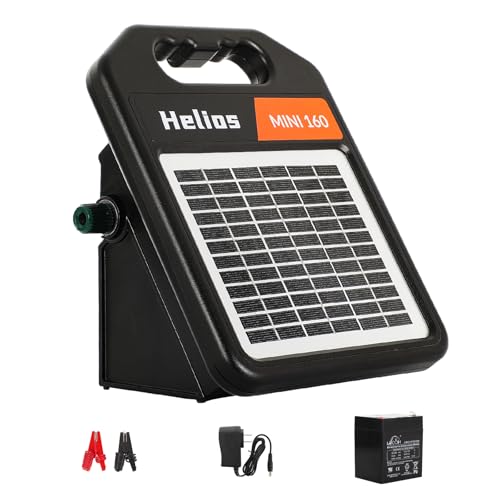
This portable solar charger is built for simple, off-grid fence needs. The 0.16-joule output fits short runs, temporary pens, and calm horses. The panel trickle charges a built-in battery for night and cloudy days. Day/Night mode helps manage power use when the sun dips.
I use small solar units for rotational grazing and quick lane changes. They move fast and mount on a T-post without fuss. With clean insulators and a short lead-out, it holds a steady tick. Keep the panel south-facing and free of shade for best results.
Pros:
- True off-grid use. No outlet needed. Great for remote pasture corners.
- Light and portable. Easy to move for strip grazing and training pens.
- Day/Night mode helps save stored charge. It keeps the line hot longer.
- Simple to mount on a post or wall. No tools beyond basics.
- Ideal for calm or trained horses that respect a light pulse.
- Good backup unit if your main AC charger fails.
Cons:
- 0.16 joule is mild. Not the best pick for pushy horses.
- “10-mile” claims assume perfect lines and no weeds.
- Performance drops with shade, snow, or weeks of rain.
My Recommendation
Pick this if you want the best electric fence charger for horses on a flexible, short line. It is a smart tool for travel, shows, and fast turnout shifts. It also helps if you rotate pasture and need a clean, mobile pulse. For long lines or strong-willed horses, step up to a higher joule unit. But for light work, this is a cost-friendly solar choice.
| Best for | Why |
|---|---|
| Rotational grazing and temp pens | Portable solar power with easy post mounting |
| Short lines with calm or trained horses | 0.16 J is gentle yet clear on compact layouts |
| Backup during outages | Runs without AC and fills gaps when main power drops |
Zareba 50-Mile AC Low-Impedance Charger

Have a long fence, many strands, or a heavy weed season? This high-range Zareba AC unit brings stout output and strong recovery on contact. It is made for large pastures and mixed livestock lanes. When you split and loop tape across gates and alleys, the extra headroom helps.
I recommend big chargers when horses share lines with cattle or when you need multi-paddock reach. The steady pulse makes fence checks simple with a tester. It also holds voltage better over long lead-outs. If you want a main hub that can grow, it is a smart anchor.
Pros:
- Strong output for long, multi-wire layouts and branch lines.
- Low impedance resists voltage drop in damp grass and weeds.
- Great as a single hub feeding many paddocks and lanes.
- AC power offers steady, predictable operation all year.
- Pairs well with wide tape for high visibility across distance.
- Good training effect for horses that test the fence.
Cons:
- Overkill on a small paddock. You may not need this much punch.
- Requires careful grounding with multiple rods for best results.
- Higher energy means proper signs and safe placement are a must.
My Recommendation
For a big property, this can be the best electric fence charger for horses and cattle. It feeds long lanes and keeps power up across gates. It helps when weeds are high and rain is common. If you want one hub to rule your map, start here and build out from it with sound grounding and quality connectors.
| Best for | Why |
|---|---|
| Large ranches and multi-paddock systems | High output keeps long runs hot and consistent |
| Shared lines with cattle or bold horses | Firm pulse helps train respect across species |
| Weed and moisture heavy seasons | Low impedance fights leakage into vegetation |
Zareba 5-Mile Solar Low-Impedance Charger
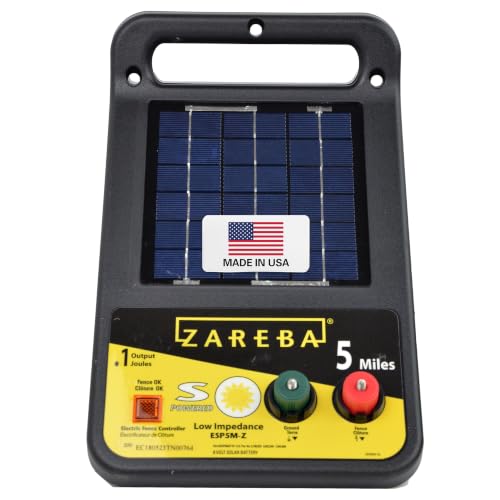
This compact Zareba solar model is a step up in build and brand support. It serves short runs, dry lots, and small turnouts where AC power is not close. The panel charges an internal battery for day and night protection. Low impedance helps when grass kisses the lower strand.
I like it for trail heads, show grounds, and seasonal fields. It is simple to mount and to move. Keep the panel clean and tilted toward the sun for best charge. For young horses or rehab pens, it offers a clear yet modest pulse.
Pros:
- Trusted brand build with solid solar performance for small jobs.
- Easy setup with few parts. Good for first-time solar users.
- Low impedance aids in damp seasons and light vegetation.
- Handy for dry lots and round pens with no AC outlet.
- Portable design supports flexible pasture plans.
- Works well with one to two strands of tape or rope.
Cons:
- Limited range. Not for large fields or many branch lines.
- Winter sun and snow can cut charge time.
- Needs careful placement to avoid shade from trees or barns.
My Recommendation
If you want the best electric fence charger for horses for a small, sunlit pen, this fits the bill. It is light, clean to run, and low hassle. Horses learn fast and stay inside. As long as your line is short and the panel gets sun, it is a reliable solar solution at a fair price.
| Best for | Why |
|---|---|
| Small turnout or rehab pens | Gentle, steady pulse suits daily management |
| Areas with no AC access | Solar panel keeps the fence running off-grid |
| Simple one- to two-strand setups | Low impedance helps hold voltage on short lines |
Zareba 25-Mile AC Low-Impedance Charger (EAC25M-Z)

This 25-mile Zareba AC unit hits the sweet spot for many barns. It blends stout power with a fair price and easy install. Low impedance helps it drive through light brush and wet air. It is strong enough for a few paddocks and lane lines without strain.
I rate it high for all-around horse work. It supports tape, rope, and smooth wire well. With decent grounding, it holds fence testers in the green. It gives room to grow without jumping to a very large hub.
Pros:
- Great balance of output and cost for typical horse farms.
- 25-mile rating fits several paddocks plus alleys and gates.
- Low impedance keeps voltage up in real-world conditions.
- AC power means no battery swap or charge duty.
- Strong with tape and rope that horses see and respect.
- Scales well as you add a strand or a new turnout.
Cons:
- Needs a proper ground bed. Skimping here cuts performance.
- Not as portable as solar. It stays where the outlet is.
- For huge runs or many branches, the 50-mile unit is better.
My Recommendation
For many owners, this is the best electric fence charger for horses overall. It has the power to train, the reach to grow, and the price to make sense. If your map is mid-sized and you have AC access, it is the balanced pick. Add sound grounding and clean connections, and it will keep your line hot and your horses safe.
| Best for | Why |
|---|---|
| Medium farms with several paddocks | Right-sized output and range for common layouts |
| Owners who want room to grow | Handles extra strands and gates without strain |
| Horses that test once, then respect | Clear pulse trains behavior without harsh shock |
FAQs of best electric fence charger for horses
How many joules do I need for horses?
For most horses, 0.5 to 2.0 joules at the charger works well. Calm herds on short lines can use less. Long runs, many strands, or bold horses may need more. Always match joules to fence length, strands, and weed load.
Is AC or solar better for horse fences?
AC gives steady power with low upkeep if you have an outlet. Solar wins for remote spots and fast moves. For the best electric fence charger for horses on a main line, AC often leads. Use solar for short or mobile runs.
Will an electric fence hurt my horse?
Modern chargers send short pulses. They startle but they do not burn. Horses learn to respect the fence fast. Use proper signs and follow safety rules.
How do I ground a fence charger right?
Use 3 galvanized rods, 6–8 feet each, spaced 10 feet apart. Clamp with proper ground clamps. Use insulated wire back to the charger ground terminal. Wet the soil if it is very dry.
Why is my fence weak or clicking low?
Check grounding first. Then look for shorts, bad insulators, and loose joints. Trim weeds off lower strands. Test voltage at the charger and at the far end to find the drop.
Final Verdict: Which Should You Buy?
The Zareba 25-Mile AC Low-Impedance Charger is my best all-around pick. It balances power, range, and price for most barns and paddocks.
If you want the best electric fence charger for horses, match your power source, line length, and herd. Choose steady output, ground it right, and keep the tape clean.