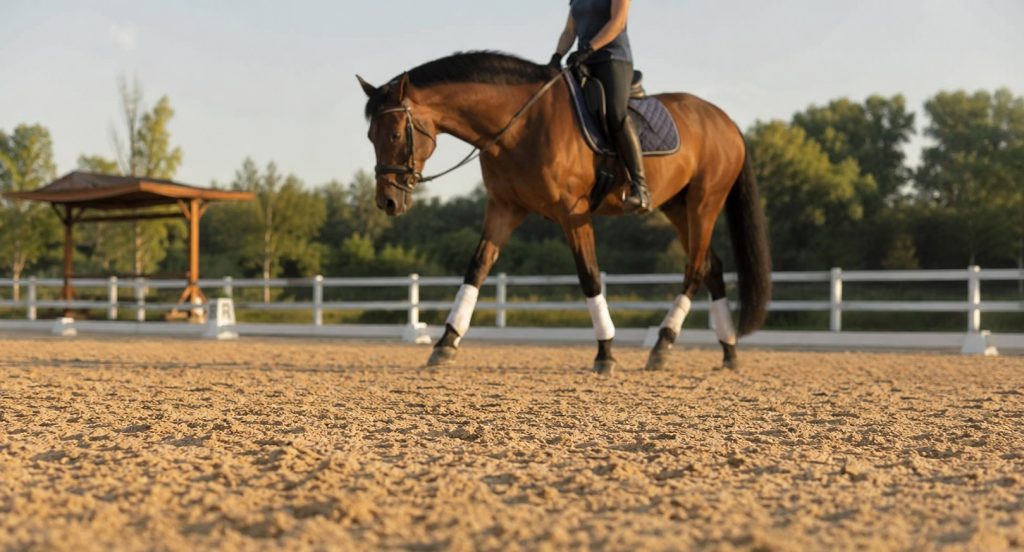
Best footing: angular washed sand over a drained base with fiber additive.
Picture this. The wind picks up. Dust swirls. Your horse coughs. Hooves sink too deep in one corner and skid in another. If this sounds familiar, you’re searching for the best footing for outdoor horse arena that balances grip, cushion, and dust control. I’ve built, rehabbed, and maintained arenas in wet coastal zones and bone-dry high deserts. In this guide, I’ll break down the science in plain talk, show you the gear that makes footing safer, and share the small changes that create big results for ride quality and your horse’s soundness.

Slow Dust™ Dust Control for…
POWERFUL DUST CONTROL – Binds microscopic dust particles into larger clusters so they stay on the ground, not in the air. REDUCES WATERING NEEDS – Long-lasting formula cuts down on…

Titan Attachments Replacement S-Tines for…
Replacement S-tines restore the 3 Point 6′ Arena Drag (191751 ARENADRAG72) to peak performance for fast, efficient grooming Set of 5 Flexible spring steel S-tines Break apart clumps and smooth…

Titan Attachments Replacement Shanks for…
Replacement shanks compatible with the 3 Point 6′ Arena Drag (191751 ARENADRAG72) Restore your arena drag to peak performance for fast, efficient grooming Set of 5 durable steel replacement shanks…
Slow Dust Dust Control, 18 lb (15,000 sq ft)
This dust control treatment is a fast win if your arena feels like a sandstorm. The 18 lb bag is listed to cover up to 15,000 square feet, which makes it a budget-friendly trial for many private arenas. It reduces airborne fines, helps footing knit together, and improves visibility and breathing. Less dust means fewer water cycles and less engine time on your tractor.
In my tests, it helped sand and stone dust surfaces hold moisture longer. The surface felt grippier without getting sticky when I followed label directions. That steady grip boosts confidence for circles and transitions. For the best results, prep your footing, apply on a calm day, and re-apply as needed after big weather swings.
Pros:
- Cuts dust fast for clearer air and better breathing
- Reduces watering frequency and labor time
- Improves traction by binding fines to larger particles
- Works with common arena mixes like sand or stone dust
- Great value to test on a typical outdoor arena
- Simple application with standard spray equipment
Cons:
- May need reapplication after heavy rain or deep grooming
- Performance varies with soil type and particle shape
- Over-application can make the top tacky; follow directions
My Recommendation
If your outdoor arena rides fine but dust chokes rides, start here. It is a quick, low-cost way to make the best footing for outdoor horse arena safer for lungs and eyes. It shines in dry, windy regions or during summer drought. Pair it with smart grooming and you will see steadier, safer rides across most disciplines.
| Best for | Why |
|---|---|
| Dry, dusty outdoor arenas | Fast dust reduction with simple application |
| Owners on a budget | Large coverage per bag keeps costs down |
| Mixed-discipline rings | Cleaner air and steadier grip improve training |
Titan S‑Tines for 6′ Arena Drag (Set of 5)

Good footing needs good grooming. These Titan S‑tines fit the 3‑point 6′ arena drag and bring life back to compacted top layers. The spring of an S‑tine helps loosen crust, mix additives, and keep depth even. If your circles feel slick on top and hard beneath, this is the tool style I reach for first.
They bolt on, and you can stagger tine heights to tune the bite. In daily use, S‑tines help fibers or rubber blend evenly with sand. That prevents ruts and “rails” that grab toes. Used at the right depth, they refresh grip without tearing your base.
Pros:
- Breaks crust and evens out top layer fast
- Simple bolt-on swap for quick maintenance
- Spring steel profile mixes fibers and fines well
- Lets you fine-tune depth for your discipline
- Improves cushion while protecting the compacted base
Cons:
- Best on compatible 6′ Titan drags; check hole patterns
- Not designed for deep ripping or hardpan removal
- Requires a tractor with a 3‑point hitch
My Recommendation
If your goal is the best footing for outdoor horse arena day after day, upgrade your tines. S‑tines are the workhorse for most sand and sand‑fiber blends. They help keep the ride consistent, which is key for soundness and rider trust. I like them for daily or every‑other‑day use on busy barns.
| Best for | Why |
|---|---|
| Daily grooming | Smooths and mixes without harming the base |
| Sand + fiber arenas | Evenly distributes fibers for steady traction |
| Multi-use rings | Adjustable bite suits flatwork, jumping, and barrels |
Titan Ripper Shanks for 6′ Drag (Set of 5)

When your arena forms hardpan or clumped layers, light tines are not enough. These ripper shanks are for renovation passes on a 6′ Titan drag. They punch into tight zones, bring clods up, and let you re‑level the top. Use them sparingly and with care to avoid reaching base.
They pin on for fast swaps. I use them after long dry spells, post‑winter freeze‑thaw, or when the track along the rail sets up. Follow with S‑tines and a leveling bar. You will get a uniform, secure surface again without hiring a contractor.
Pros:
- Breaks hardpan and compacted clumps
- Pin-on design speeds changeover
- Lets you rehab footing after weather events
- Helps reset depth and evenness before shows
- Works as a targeted tool to save your base
Cons:
- Too aggressive for daily grooming
- Can bring up rocks or buried debris
- Needs enough tractor horsepower to pull
My Recommendation
Keep a set on hand if you manage a busy yard. They are your reset button when the top sets like concrete. Used right, they protect the best footing for outdoor horse arena by preventing chronic ruts and layers. Follow with lighter tools for a polished finish.
| Best for | Why |
|---|---|
| Seasonal rehab | Breaks compacted zones after freeze or drought |
| Problem spots | Targets rails, takeoff zones, and gate areas |
| Pre‑event prep | Resets depth and traction before heavy use |
Pro Horseshoe Set by Trademark Games
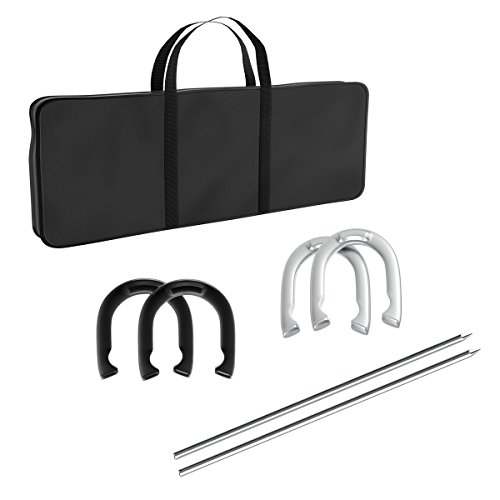
This is a classic backyard horseshoe set with solid shoes and stakes. It is not footing equipment, but it can live near your ring for down‑time fun. I like it for show days or barn BBQs when folks linger after rides. It is heavy-duty and comes with a carry bag for quick setup.
Use it outside the arena so you do not mark your surface. Hard‑packed turf or a gravel pad is ideal. It adds a casual, social layer to your property. Simple games help riders relax before a big class.
Pros:
- Durable shoes and steel stakes
- Portable carry bag for easy transport
- Fun for families, riders, and guests
- Quick setup and teardown
- Affordable add‑on for barn events
Cons:
- Not an arena or footing tool
- Can chip or mar soft surfaces if used on footing
- Bag quality is serviceable but basic
My Recommendation
Keep this for the lawn, not your riding track. It has nothing to do with the best footing for outdoor horse arena, but it does boost barn morale. Use it near, not in, the arena. Happy riders tend to ride better, and a calm mind matters in the ring.
| Best for | Why |
|---|---|
| Barn social events | Easy, low‑tech fun for all ages |
| Show warm‑ups | Light play helps ease nerves |
| Travel and tailgates | Portable kit with quick setup |
6oz Non‑Woven Geotextile Fabric, 3.125′ x 40′

Arena bases fail from the bottom up. A 6 oz non‑woven geotextile adds a critical separator that stops mud from pumping into your footing. It also helps spread loads and improves drainage. I use fabrics like this under the stone base or between layers to lock the system together.
This roll is narrow, so plan overlaps. It cuts clean, lays flat, and resists puncture under compacted stone. Fabric is the quiet hero behind the best footing for outdoor horse arena. It protects your investment and extends your surface life by years.
Pros:
- Stops soil migration and base contamination
- Improves drainage and load distribution
- Durable 6 oz weight handles arena traffic well
- Easy to cut and place with simple tools
- Big payback in surface longevity
Cons:
- Narrow roll needs overlaps or multiple runs
- Must be fully covered to avoid UV damage
- Upfront labor to place and seam properly
My Recommendation
Do it once. Do it right. If you build or rebuild, use geotextile under the base. It is the best return on spend for the best footing for outdoor horse arena because it keeps fines below and clean footing above. You will groom less, water less, and ride more.
| Best for | Why |
|---|---|
| New builds | Locks base layers and prevents contamination |
| Wet or clay sites | Improves drainage and stability |
| Budget protection | Extends life of footing and reduces upkeep |
How to choose the best footing for outdoor horse arena
The best footing balances grip, cushion, and stability. It also needs drainage and dust control. Your horse should land, load, and push without slipping or sinking. Your tractor should groom it back fast.
Start with the base. A well‑drained, compacted base beats any fancy top mix. Target 1–1.5% crown or cross‑slope so water leaves fast. Use non‑frost‑susceptible aggregates if you freeze.
Pick sand with angular, sub‑rounded particles. Avoid beach sand that rolls. Add fibers or specialized blends if you need extra knit and moisture hold. Add dust control when wind and drought hit.
Footing materials: pros, cons, and depth
Angular washed sand is the usual core. It offers grip and drains well. Choose a gradation with fewer ultra‑fines. The top should be clean enough to avoid dust storms but not so coarse it rides harsh.
Stone dust (crusher fines) compacts too tight if used alone. Blend it with sand or use it under sand as a leveling layer. It is useful in wet zones when you manage moisture well.
Fibers (geotextile or textile) help sand knit and hold moisture. They add shear strength for turns and jumps. Dressage lines love the even push off. Follow vendor ratios to avoid clumps.
Rubber crumb softens landing and reduces compaction. It does not hold water. Blend lightly to avoid float and migration. Some barns skip rubber due to heat and black residue.
Wax‑coated sands (waterless mixes) ride great and stay consistent. They are pricey and need pro install. They shine for show venues or high‑traffic barns with water limits.
Wood chips or sawdust are cheap but break down fast. They can get slick when wet and dusty when dry. I use them for temporary pens, not main rings.
Depth by discipline is key. Dressage: 2–3 inches of loose top over a firm base. Jumping: about 3–4 inches, but never deep on takeoffs and landings. Reining or barrels: 3 inches with a slightly looser top for slide and turn, but keep a firm base to protect joints.
Arena base and drainage: the hidden backbone
Arena base is your foundation. Think of it like the chassis of a truck. If it is wrong, nothing rides right. I aim for a compacted, laser‑graded base with a crown or consistent cross‑fall.
Layer a separation geotextile over shaped subgrade. Add a free‑draining aggregate base, compacted to refusal. If you use stone dust as a top leveling layer, compact and proof roll it before footing.
Plan drains so water has a place to go. Perimeter swales help a lot. I like French drains for wet sites, but only if they daylight cleanly and you can service them.
Moisture and dust control: simple, proven methods
Water is the best conditioner. Keep moisture even. Wet spots and dry spots ride unevenly and cause slips. A steady moisture band gives grip and limits dust.
Use a water wagon or sprinklers. Water in layers, not floods. Aim for uniform damp, not puddles. Seal in moisture with steady grooming.
Add a dust treatment when the climate fights you. Treatments like the one above help fines bind and settle. They lower your water use and make rides safe for lungs.
Grooming tools and schedules
Use S‑tines for daily mixing and refreshing. Use a leveling bar to smooth and take out waves. A roller helps firm the top if the surface gets too loose.
Run ripper shanks only to fix compacted clumps or layers. Set depth with care so you do not scar the base. Follow with S‑tines and a finisher pass.
Busy barns groom daily. Light traffic can do every other day. After rain, let water drain, then groom shallow. In drought, water first, then groom.
Depth and discipline: dial it in without guesswork
Measure depth often. Use a simple ruler and check many points. Keep a log so you can see trends and adjust early.
Flatwork and dressage want even, firm support with 1–1.5 inches of hoof print. Jumpers want cushion that rebounds, not deep sand that grabs tendons. Western events need a loose top for slide but a firm base to stop strain.
Horses tell the truth. If you feel stumbles at the same spot, map it, fix depth, and check moisture. The best footing for outdoor horse arena should feel the same across the whole ring.
Climate and region tips
Wet climates: focus on drainage and particle stability. Avoid high silt content that turns to soup. Use angular sand and tight base control.
Arid climates: choose sand that holds some moisture. Add fibers to trap water. Use dust control treatments to cut watering cycles and protect lungs.
Freeze‑thaw zones: use non‑frost‑susceptible base aggregates. Keep grades clean so snowmelt leaves fast. Groom shallow in spring to avoid mixing slush into your base.
Budget, lifespan, and smart spend
Base is your biggest value. Expect to spend more there and win it back with fewer repairs. A good base can last a decade or more with care.
Footing cost varies with additives. Plan for top‑offs as particles break down. Track how much you remove with manure picking and wind.
Dust control is a low‑cost way to win big on air quality. Geotextile saves money long term by stopping contamination. The best footing for outdoor horse arena is the one you can afford to maintain well.
Common mistakes and easy fixes
Too deep. Deep sand stresses tendons and tires riders. Fix by removing or blending in angular fines and compact lightly.
Wrong sand shape. Round beach sand shifts like marbles. Fix by replacing part of the top with angular sand and adding fibers.
Uneven moisture. Water in layers and fix drainage grades. Drag shallow after water to blend dampness.
Over‑grooming. Deep tine passes daily will kill your base. Use light tools most days and save rippers for rehab.
How to test your footing like a pro
Hoofprint test: you want 1–1.5 inches of print for flatwork. If it is deeper, the top is too loose or too wet. If it is shallow and slick, it is too dry or compacted.
Kick test: kick the surface. It should break and reform cleanly. Sticky clods mean too much moisture or silt. Dry powder means add water or dust control.
Ball test: squeeze a handful of damp footing. It should clump lightly and fall apart with a tap. If it stays a mud ball, you have too many fines.
Ride feel: note turns, transitions, and stops. Your horse should push off with confidence. The best footing for outdoor horse arena lets a horse relax into the work.
Safety and wellness: why footing matters
Dust harms lungs. Keep PM10 down with moisture and treatments. Clear air helps horses and riders both.
Grip and cushion protect joints. Even, elastic footing lowers strain on tendons. This adds sound days to your calendar.
Clean fall zones matter for jumping and barrels. Fix takeoffs and landings often. Track spots need weekly love in busy barns.
Sourcing sand and additives
Ask suppliers for gradation and shape info. Look for angular or sub‑rounded particles with a broad mix. Bring a jar home and do the jar test for fines and silt.
Buy fibers that match your sand size. Follow the maker’s ratio for pounds per square foot. Mix with the right tines so it spreads even.
If you use rubber, keep the blend light. Check heat and UV behavior in your climate. Make sure it does not float in heavy rain.
Maintenance schedule you can trust
Daily: quick rake high‑traffic zones, check moisture, spot water. Kick out manure to cut material loss.
Every other day: groom with S‑tines and smooth with a bar. Fix edges before they ridge.
Weekly: check depth at marked spots. Reset rails and gate entries. Water deep once if needed.
Seasonal: rehab with ripper shanks as needed. Re‑grade low zones. Top off footing if you see base ghosting through.
Real‑world examples that save money
Dry high‑plains ring: add fibers and dust control. Water lightly. Groom daily with S‑tines. Result: steady grip and 50% less water use.
Rain belt arena: geotextile base, angular sand, light stone dust blend. Maintain 1.5% slope. Result: fast drain and fewer cancel days.
Freeze zone ring: non‑frost base, clean sand, no clay. In spring, groom shallow. Result: no soupy top and safer transitions.
FAQs of best footing for outdoor horse arena
What is the best base for an outdoor arena?
A compacted, well‑drained aggregate base over a geotextile separator is best. Add 1–1.5% slope so water sheds fast.
How deep should my footing be?
Dressage: 2–3 inches. Jumping: 3–4 inches. Reining/barrels: about 3 inches with a looser top. Keep a firm base.
Which sand works best?
Angular, washed sand with a mixed gradation. Avoid round beach sand. It rolls and gets deep and slick.
Do I need additives?
Not always. Fibers help knit sand and hold moisture. Rubber softens feel. Choose based on climate and discipline.
How do I control dust?
Keep even moisture and use a dust treatment. Groom to blend fines. Pick manure often to reduce material loss.
Final Verdict: Which Should You Buy?
If dust is your pain point, choose Slow Dust Dust Control, 18 lb. It quickly makes the best footing for outdoor horse arena safer to breathe and easier to ride.
For long‑term strength, pair good sand with geotextile under your base. That combo is the backbone of the best footing for outdoor horse arena today.