How veterinarians diagnose yeast and fungal skin infections in dogs starts with careful history and examination, not a guess based on a rash. Yeast dermatitis, ringworm, bacterial infection, allergies, mites, and other conditions can all cause itching, redness, flakes, or hair loss. Some can occur together. The veterinarian’s goal is to identify the organism or pattern, find factors that allow the problem to continue, and decide which tests will change care. If you are exploring an antifungal cream for dogs over the counter, discuss it with your veterinary team before applying anything. The wrong product may irritate skin, affect test results, or delay treatment for another cause.
Start with the dog’s history
The appointment usually begins with questions about when the signs began and how they have changed. Be ready to describe itching, licking, odor, discharge, ear problems, hair loss, or previous episodes. The veterinarian may ask whether symptoms are seasonal, whether another pet or person has developed a rash, and whether the dog recently visited a groomer, boarding facility, shelter, or dog park.
Bring a medication and supplement list, including shampoos, wipes, creams, flea preventives, and recent antibiotics or steroids. Mention any allergies or chronic illness. Photos can help show how a patch changes over time. Note what has already been applied and when; this can affect what the veterinarian sees or samples.
Examine the skin and coat
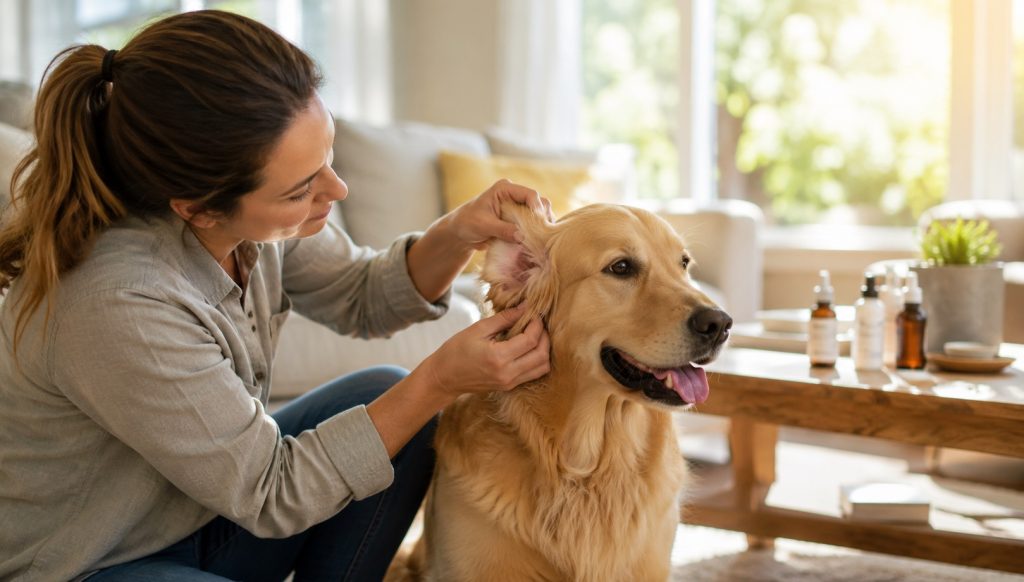
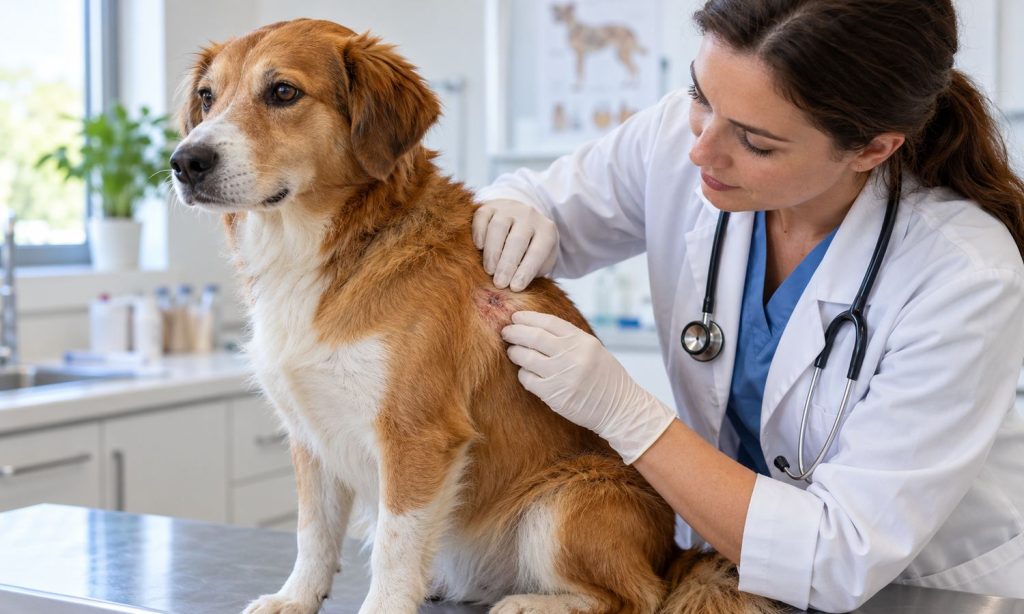
The veterinarian checks the affected spots and often examines the whole body, including paws, skin folds, ears, and nails. The distribution of lesions can help narrow possibilities, but it does not confirm a fungal cause. Moist, greasy, thickened, or discolored skin may support suspicion of yeast overgrowth. Broken hairs and scaly patches can raise concern for ringworm. Both can resemble other conditions, and the dog may have more than one problem.
How veterinarians diagnose yeast and fungal skin infections in dogs depends on matching findings from the exam with test results and history. A normal-appearing patch does not rule out disease, especially if signs fluctuate. Likewise, a strong odor or a circular patch alone is not proof of a particular fungus.
Common tests for yeast overgrowth
Skin cytology
A common first test is cytology. The veterinarian may press a slide or clear tape against a lesion, collect material with a swab, or gently scrape the surface. The sample is stained and examined under a microscope for yeast, bacteria, inflammatory cells, or other clues. Cytology can often be performed in the clinic and may give results during the visit.
Finding yeast must be interpreted with the dog’s signs because some organisms can normally live on skin. The amount, location, inflammation, and clinical pattern matter. A veterinarian may sample more than one site or repeat cytology after treatment to check response.
Additional tests when the problem returns
Recurrent yeast problems may prompt a search for underlying causes such as allergic skin disease, excess moisture, skin-fold irritation, or another medical condition. The veterinarian may suggest parasite checks, blood testing, or additional dermatology evaluation based on the dog’s history. In selected cases, biopsy or specialist testing helps clarify unusual or persistent inflammation.
Tests for ringworm and other fungi
Ringworm is a fungal infection of hair, skin, or nails; it is not caused by a worm. The veterinarian may examine hairs and scale under a microscope, use a Wood’s lamp as one screening aid, and recommend fungal culture or a molecular test. A Wood’s lamp can help find some infected hairs, but a negative result does not rule out ringworm. Culture or other laboratory testing may be needed to identify infection and monitor whether it has cleared.
Sometimes a skin biopsy is appropriate, especially when lesions are unusual, deep, ulcerated, or not responding as expected. Other systemic fungal diseases may require tissue sampling, imaging, blood work, or tests guided by the dog’s travel and exposure history. The veterinarian chooses tests based on the suspected organism and the dog’s overall condition.
How veterinarians diagnose yeast and fungal skin infections in dogs is not always a one-test process. Results may take days or longer when samples go to a laboratory. Ask which precautions to use while waiting, especially if ringworm is suspected, because some fungal infections can spread to other animals or people.
Why the cause behind the infection matters
Yeast may overgrow when skin is inflamed or its barrier is disrupted. A secondary infection can make an allergy itchier and harder to manage. Treating the organism alone may not prevent recurrence if the underlying trigger remains. For that reason, a plan may include treatment of yeast or fungus plus steps to address allergy, parasites, moisture, or another disease.
Ask the veterinarian what the test showed, whether the infection is contagious, what treatment is recommended, and how to apply it safely. If a topical medicine is chosen, confirm the exact product, body areas, schedule, duration, and what to do if your dog licks it. An over-the-counter cream should not replace diagnosis; ingredient, concentration, and formulation all matter.
What to expect after testing
Follow the plan exactly and keep scheduled rechecks. The dog may look better before the infection is fully controlled. Your veterinarian may repeat cytology or culture to decide whether treatment can stop. Contact the clinic if the area spreads, becomes painful, develops discharge, or fails to improve within the time frame provided. Do not extend, stop, or combine medicines without guidance.
If the diagnosis is ringworm, ask how to reduce spread at home, how to handle grooming tools and bedding, and when other pets should be checked. Follow the clinic’s cleaning instructions rather than using strong disinfectants indiscriminately. If family members develop a suspicious skin rash, contact a healthcare professional and mention possible animal exposure.
Frequently Asked Questions
Can a veterinarian diagnose yeast by smell alone?
No. Odor can be a clue, but examination and testing such as cytology help distinguish yeast from other causes.
Does a negative Wood’s lamp test rule out ringworm?
No. It can detect some cases, but other tests may be needed if the veterinarian remains concerned.
Can my dog have allergies and a fungal infection together?
Yes. Inflammation may occur alongside yeast or bacterial overgrowth, so the veterinarian may investigate more than one issue.
Should I stop a cream before the appointment?
Call the clinic for advice. Tell them exactly what was used and when; they can decide whether to pause it before sampling.
How long do fungal test results take?
Some microscope checks are quick, while culture or laboratory tests may take longer. Ask the clinic when to expect results.
Final Words
How veterinarians diagnose yeast and fungal skin infections in dogs involves the history, whole-skin exam, and tests chosen for the suspected cause. Cytology can help identify yeast and bacteria; fungal culture, molecular testing, or biopsy may be considered for ringworm or unusual disease. Ask what each result means, whether the condition can spread, and how to monitor progress. If you are considering an antifungal cream for dogs over the counter, use it only after your veterinarian confirms that the specific treatment fits the diagnosis.
Reference
- University of Illinois College of Veterinary Medicine, Malassezia Dermatitis in Dogs and Cats.
- Texas A&M University, Ringworm in Pets.
- Merck Veterinary Manual, Ringworm (Dermatophytosis) in Dogs.
- Cornell University College of Veterinary Medicine, Dermatology.