
Choosing a pet-safe cleaning routine for vinyl starts with two checks: what your flooring allows and what the cleaner label says. Vinyl types and finishes differ, so a product that works on one floor may dull or damage another. A pet-safe routine also means limiting exposure to wet surfaces, fumes, and residues while you clean. This guide explains how to build a simple, repeatable plan for fur, muddy paw prints, food spills, and urine accidents. For dog urine cleaner options on vinyl, see our cleaner for dog urine on vinyl floors guide, then confirm compatibility with your own floor before use.
Start with your floor’s care instructions
Find the flooring documentation or care guidance for your product. Check whether it is sheet vinyl, vinyl tile, or luxury vinyl plank, and whether the manufacturer permits specific detergents, disinfectants, steam, or wax. If the exact type is unknown, use a cautious method and avoid aggressive products. Do not assume that a cleaner labeled natural or pet-safe is automatically compatible with the floor’s finish.
Test any permitted cleaner in a hidden spot. Apply it as directed, wait the stated time, wipe or rinse as instructed, and let the test area dry. Look for color change, dullness, tackiness, haze, or slipperiness. Stop if the surface reacts. Never test a product on a visible accident spot before checking its instructions.
Choose cleaners by task and label
For routine dust, fur, and paw prints, a soft dry mop or a damp microfiber cloth may be enough. For sticky soil or a fresh accident, use a cleaner whose label says it is appropriate for vinyl and the type of mess. Read dilution directions carefully. More concentrated is not necessarily more effective and may leave residue or harm the finish.
For urine odor, verify both floor compatibility and the cleaner’s intended use. A product can be designed for pet odors but still be unsuitable for a particular vinyl surface. Confirm whether rinsing is required, how long the product should remain in contact, and when pets may safely return. Avoid fragrance-heavy products if the pet is sensitive to scents, and avoid applying any product directly to the animal.
Keep the routine simple
Daily or as-needed pickup
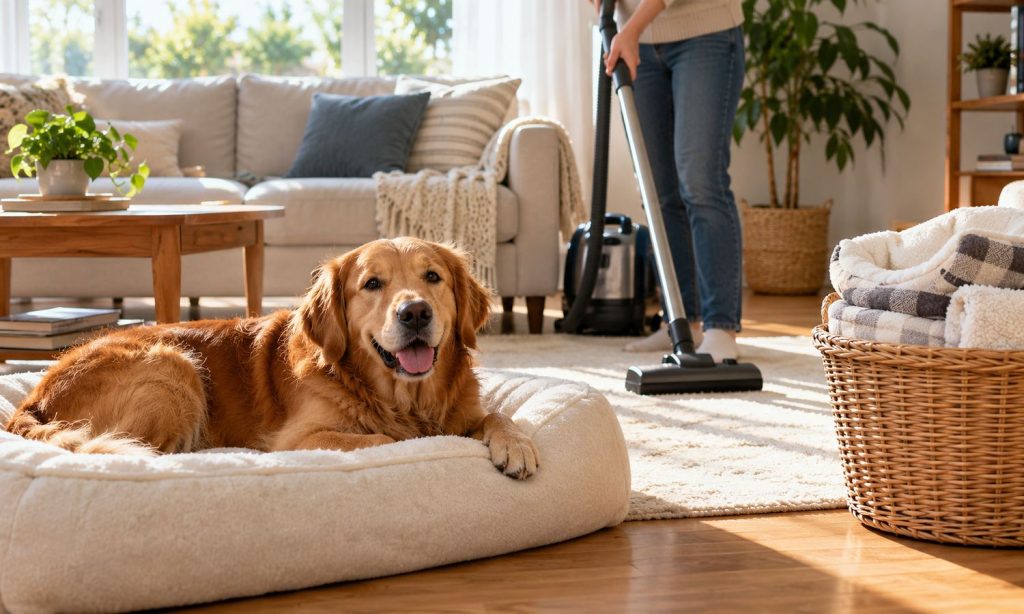
Remove grit, loose fur, and tracked dirt with a soft broom, vacuum approved for hard floors, or microfiber dust mop. Clean spills promptly. Use mats near doors and food areas, and shake or wash them according to their care labels. Keeping grit out reduces abrasion as people and pets walk across the floor.
Regular damp cleaning
Damp mop with the amount of cleaner permitted by the floor directions. Wring out the mop so it is not dripping. Work in small sections, avoid flooding joints, and dry remaining moisture if the care instructions call for it. Clean tools after use so they do not spread dirt or old residue.
Accident response
Blot fresh urine rather than rubbing it outward. Use a compatible cleaner on a cloth or as the label directs. Keep liquid away from open seams and edges, then dry the surface. If odor persists, check nearby mats and baseboards and consider whether urine reached under damaged flooring. Repeated odor may require professional assessment rather than stronger surface chemicals.
Protect pets while cleaning
Move pets to another room while you prepare and apply a cleaner. Keep them away from wet floors, open containers, and used cloths. Ventilate the room when the label recommends it. Follow instructions for protective equipment, dilution, contact time, rinsing, and re-entry. Store products tightly closed and out of reach, and never leave a bucket or open bottle unattended.
Do not mix cleaning products. Combining bleach with ammonia or acids can release toxic gases. Avoid using disinfectants or concentrated chemicals on a pet’s coat, paws, food bowls, or bedding unless the label and veterinarian specifically direct that use. If a pet licks or contacts a product, follow its label and contact a veterinarian or poison control for guidance.
What to avoid on vinyl
Unless the floor manufacturer specifically allows them, avoid abrasive powders, steel wool, scouring pads, sharp scrapers, strong solvents, and excess heat or steam. These may scratch or soften the finish. Avoid wax or polish unless it is approved for the exact floor; some finishes can become slippery or hazy. Do not use a product simply because it worked on wood, tile, or laminate.
Vinegar, essential oils, and homemade mixtures are not automatically safe. Their acidity, concentration, scent, and residue can affect pets or finishes. The simplest routine often causes the fewest problems: dry pickup, a compatible cleaner used sparingly, and prompt drying.
When a routine needs more than cleaning
If a dog repeatedly urinates indoors, investigate the pattern. A new accident in a previously house-trained dog may have a medical or behavioral cause. Call a veterinarian for frequent urination, straining, blood, increased thirst, discomfort, or sudden changes. For a nonmedical marking pattern, consider bathroom access, routine, supervision, and professional behavior guidance.
Contact the flooring installer or a qualified flooring professional if the finish looks damaged, a plank lifts, or odor persists below the surface. Do not pour more cleaner into a seam to reach hidden material. That can increase moisture damage. Describe the product already used and the floor type when asking for help.
Set up a small cleaning kit with white cloths, absorbent towels, gloves if the label recommends them, and the one cleaner approved for your floor. Store it in a closed cabinet away from pets. Before treating a spill, move the pet to another room and remove nearby food bowls or toys. Working with a prepared kit helps you blot promptly without reaching for unrelated chemicals or mixing products in a hurry.
After cleaning, check the area in daylight once it is dry. Look for a cloudy film, tackiness, changed color, or a slippery feel. If you notice a change, stop using that product and consult the flooring care guidance. Do not add polish to hide a dull patch; it may create a residue or make the surface slick.
Frequently Asked Questions
Does “pet safe” on a label guarantee compatibility with vinyl?
No. Check that the product is suitable for both the pet-related mess and the specific floor type.
Can I use a steam mop on vinyl?
Only if the flooring manufacturer explicitly permits it. Heat and moisture may affect some products and seams.
How can I keep my pet off a wet floor?
Use a closed door or gate and follow the label’s drying and re-entry instructions before allowing access.
Should I mix cleaners to remove stronger odors?
No. Never mix products unless the label specifically directs it. Some combinations can produce toxic fumes.
What if urine odor returns after cleaning?
Check seams, edges, mats, and nearby fabric. Persistent odor may point to trapped residue or a repeated marking trigger.
Final Words
A pet-safe cleaning routine for vinyl is gentle, label-led, and consistent. Confirm floor compatibility, use only the amount needed, blot accidents promptly, avoid mixing cleaners, and keep pets away until the surface is dry and safe for re-entry. If odors or accidents keep returning, address the source as well as the floor. Our guide to a cleaner for dog urine on vinyl floors may help you compare cleaning options, but the label and your floor’s care instructions should guide your final choice.









