How to make vertical space accessible for an older cat is less about adding a taller perch and more about building a safe route to the places your cat enjoys. Aging can bring changes in strength, balance, vision, or comfort. A jump that was easy last year may now be difficult. Watch how your cat moves before changing the room, then add stable steps or a ramp with good traction. Our guide to Cat Trees for Senior Cats covers cat-tree features, while this article focuses on access and home layout. If your cat suddenly stops jumping or seems sore, ask a veterinarian to check for a medical cause.
Notice how your cat uses the room
Start by observing favorite resting spots, window views, beds, shelves, and elevated furniture. Note where your cat hesitates, slips, changes direction, or chooses a lower alternative. Watch without encouraging a jump. A short video can help you describe subtle changes to a veterinarian.
Look at the entire route, not only the destination. A cat may need to climb from the floor to a chair, then to a sofa arm, then to a window perch. If one gap is too tall or unstable, the whole route can become inaccessible. How to make vertical space accessible for an older cat begins with matching each step to the cat’s current ability.
Build a gentle step-by-step path
Place broad, stable platforms at heights your cat can comfortably manage. Use furniture or purpose-made pet steps with a firm base that will not tip or slide. Keep each transition short enough that the cat can step rather than leap. A ramp may suit a cat that finds stair-like steps uncomfortable, but it must be stable and not too steep.
Check weight limits and assembly before use. Press on each platform and test for wobble. Secure the structure to a wall if the design allows and the manufacturer recommends it. Keep it away from narrow edges, cords, hot appliances, or places where a fall could lead to injury. Leave a clear landing area at the top and bottom.
Add traction and make landing spots comfortable
Smooth surfaces can be slippery for a cat with reduced confidence or strength. Use a firmly attached, washable, nonslip covering designed for the platform. Avoid loose towels or rugs that bunch up or slide. Check the material often for frayed edges, loose fibers, or damp spots. If your cat chews fabric, choose a safer surface and supervise use.
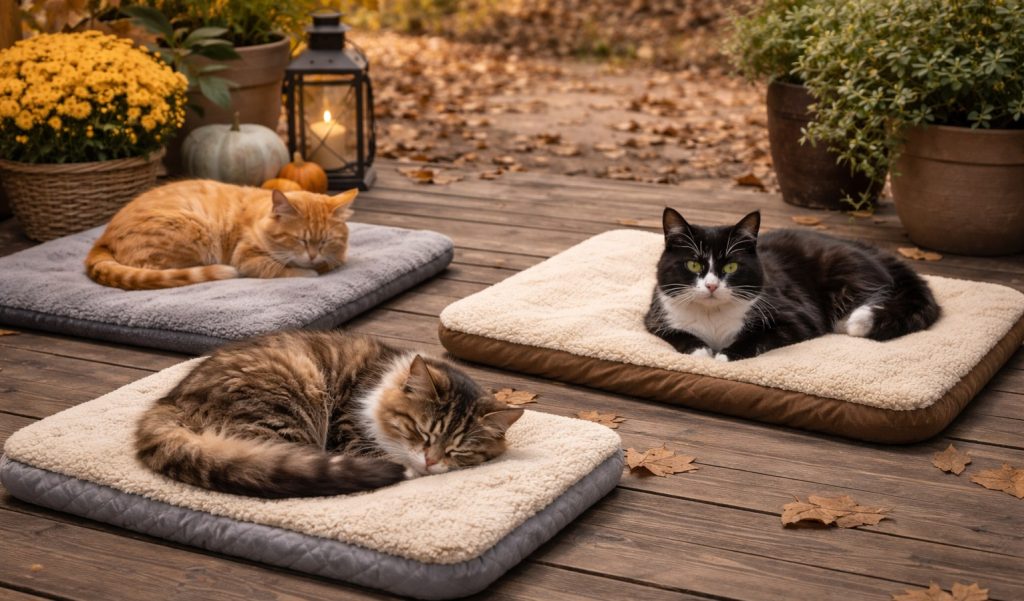
Place a comfortable resting pad on the destination if your cat likes to nap there. Make sure the pad cannot slide. Keep water, food, and litter access on the same floor as your cat’s main resting area when possible, so essential needs do not depend on climbing. Vertical routes supplement basic access; they should not force your cat to climb to reach necessities.
Keep the environment predictable
Older cats may take longer to explore a new object. Keep the location consistent and introduce one change at a time. Let your cat investigate at its own pace. Reward calm approaches with praise or a small treat if appropriate. Avoid lifting the cat onto a high perch or pushing it up a ramp. A cat that feels trapped may avoid the route entirely.
In a multi-cat home, make sure another cat cannot block the only way up or down. Provide alternate paths or a lower resting place where the older cat can retreat. Place the setup away from busy doorways and noisy appliances. Make the route wide enough for the cat to turn around without feeling squeezed.
Choose a cat tree with access in mind
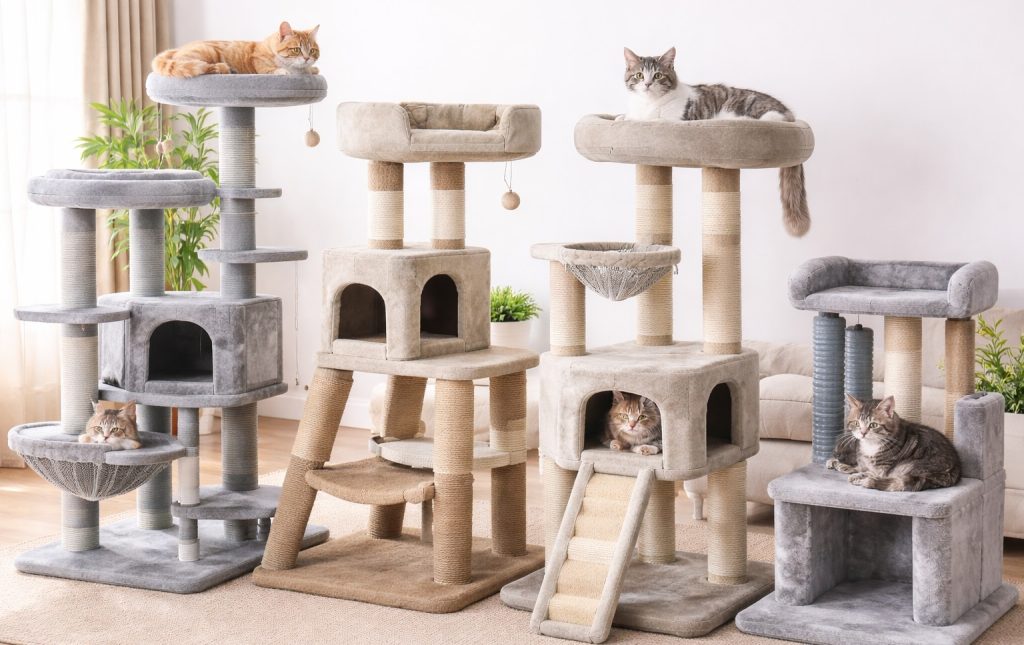
A cat tree for an older cat should be stable, have platforms that are easy to reach, and offer a clear route between levels. Consider wide steps, a lower entry level, sturdy support, and surfaces that provide grip. Avoid relying on a single narrow pole or large vertical jumps. Inspect the tree regularly for wobbling, loose fasteners, frayed covering, or damaged platforms.
Match the structure to your cat’s size and movement rather than buying by height alone. A shorter tree with reachable platforms may be more useful than a tall design with long gaps. The best choice is the one your individual cat can safely use. How to make vertical space accessible for an older cat may involve adapting existing furniture instead of buying new equipment.
Look for changes that deserve veterinary attention
Reduced jumping, stiffness after rest, reluctance to use stairs, hiding, irritability, or changes in grooming may signal pain or another health issue. Do not assume these changes are simply old age. A veterinarian can assess mobility and discuss appropriate care. Seek prompt advice if your cat falls, stops eating, has sudden weakness, or appears painful.
Share the timeline and a video of the behavior. Mention changes in litter box use, appetite, water intake, sleep, or social behavior. Never give a cat human pain medicine. Home modifications improve access, but they do not diagnose or treat joint disease.
Make the route easy to recognize and easy to maintain. Keep platforms in the same positions for several days, especially if your cat is cautious about new objects. Remove loose toys and cords from the path, and keep the landing zone free of clutter. If a step must sit beside furniture, check that the gap between surfaces is small and stable enough for a comfortable transition.
Revisit the setup as your cat’s mobility changes. A route that worked in spring may become too high or slippery later. Watch whether your cat uses each platform naturally, pauses, or chooses another path. If the cat avoids the new route, lower the steps, add traction, or offer a floor-level resting place. Ask a veterinarian about new reluctance, stiffness, or loss of balance.
Frequently Asked Questions
Are ramps better than steps for older cats?
It depends on the cat and the location. A stable, gentle ramp may help some cats; others prefer low steps with traction.
How high should each step be?
Use low, manageable transitions and watch your cat’s movement. Ask a veterinarian if pain or weakness is present.
Should I place food and water on a raised platform?
Keep basic resources easy to reach. Do not require your cat to climb to reach food, water, or a litter box.
How can I encourage my cat to use a new ramp?
Introduce it gradually, let the cat explore voluntarily, and reward calm interest. Do not force or carry the cat onto it.
When should I call a veterinarian about mobility?
Call if your cat suddenly stops jumping, seems stiff, slips often, changes litter habits, or shows signs of pain.
Final Words
How to make vertical space accessible for an older cat means providing stable intermediate steps, firm traction, safe landings, and an alternate route to essential resources. Introduce changes gradually and watch how your cat responds. New mobility problems deserve veterinary attention because pain or illness may be involved. For elevated resting options, see our guide to Cat Trees for Senior Cats, then choose an arrangement your own cat can use comfortably.
Reference
- Cornell University College of Veterinary Medicine, Loving Care for Older Cats.
- 2021 AAFP Feline Senior Care Guidelines, environmental changes for aging cats.
- Veterinary Medicine at Illinois, Tips for Keeping Geriatric Pets Healthy.