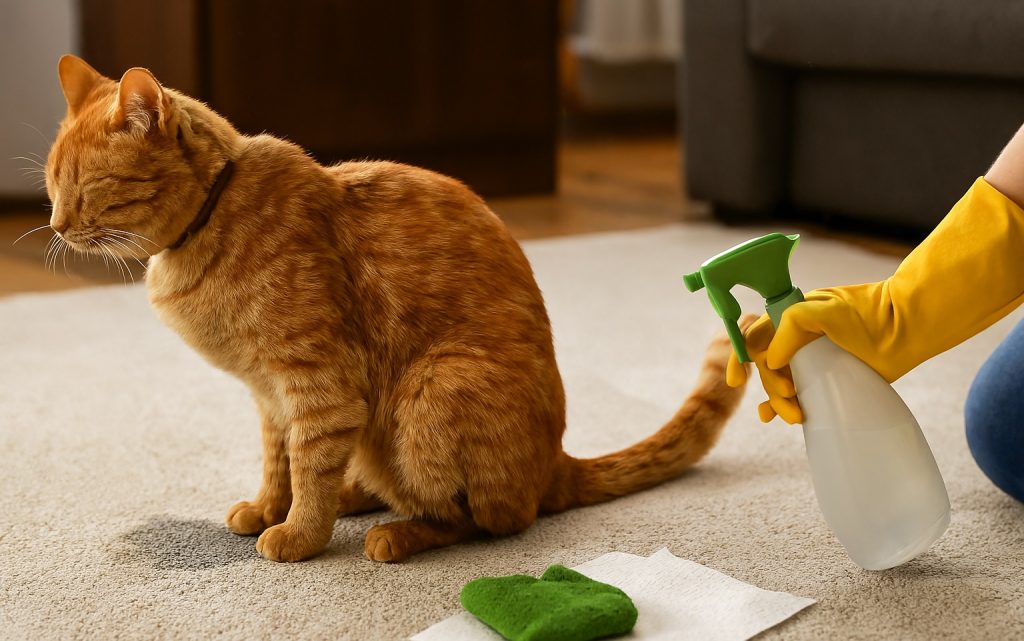
Why cats may return to a urine-marked spot on carpet is often a mix of scent, behavior, and what is happening in the home. A carpet can hold odor below the surface even after it looks clean, and a cat may also be responding to stress, social tension, or a medical problem. Returning to one area does not mean the cat is acting out to punish you. This guide explains common reasons and what to do next. For cleaning methods, see our guide to Carpet Cleaner Solutions for Pets, then use only products compatible with your carpet and follow the label.
Residual scent may remain in carpet
Carpet fibers, padding, and the subfloor can hold urine odor. A surface may seem clean to people while a cat still detects a familiar scent. If a spot is repeatedly soiled, clean the whole affected area as safely as possible and check whether liquid reached the pad. A stain that returns after drying or an odor that persists may need a professional assessment.
Use a cleaner labeled for the carpet material and intended mess. Test a hidden area first if the instructions allow. Do not soak the spot, rub aggressively, or combine products. For a step-by-step method, see our guide to cleaning cat pee from carpet. Cleaning can remove odor cues, but repeated urination may have another cause too.
Marking and house-soiling are different patterns
Urine marking is usually a communication behavior. A cat may deposit a small amount in a socially important area, often on a vertical surface, although marks can appear on horizontal carpet too. The cat may return to refresh a scent message or respond to a nearby animal’s odor. Marking is not the same as emptying a full bladder outside the litter box.
House-soiling can involve a larger puddle on a horizontal surface. A cat may avoid the litter box because of box access, cleanliness, location, substrate preference, fear, or discomfort. These patterns can overlap, so look at the amount, posture, location, and context without assuming one explanation.
Changes in the home can trigger repetition
New pets, visitors, construction, a changed schedule, moving furniture, conflict between cats, or outdoor cats near a window can increase stress. The carpet spot may be near a doorway, window, or route another cat uses. A cat might choose a familiar place because it feels predictable or because the previous odor remains there.
Notice whether the behavior follows a particular event or involves one cat in a multi-cat home. Provide separate food, water, resting areas, scratching surfaces, and litter boxes. Keep boxes in quiet, accessible places and avoid forcing cats to pass one another to reach them. A veterinarian or qualified feline behavior professional can help assess persistent marking or conflict.
Rule out a medical issue
Urinary discomfort, inflammation, kidney disease, diabetes, arthritis, or other conditions may change where and how often a cat urinates. Call a veterinarian when a cat starts urinating outside the box, especially if the pattern is sudden or repeated. Tell the clinic about straining, frequent attempts, blood, crying, licking, increased thirst, appetite change, or reduced energy.
Repeated attempts with little or no urine, obvious pain, or distress needs urgent veterinary advice. A urinary blockage can become an emergency, particularly in male cats. Do not wait to see whether cleaning stops the behavior. A veterinary exam may include a physical assessment and urine testing to look for causes.
Make the litter box easier to use
Keep boxes clean and easy to reach. In multi-level homes, put a box on each floor the cat uses. A common starting point is one box per cat plus one extra, placed in separate locations rather than lined up together. Choose a box size and entry height the cat can use comfortably. Older cats or cats with mobility limits may need a lower entry.
Try changes one at a time and note the response. Avoid suddenly switching litter, moving all boxes, or placing them near loud appliances. Scoop regularly and wash boxes with mild, unscented soap when needed. Do not punish or startle a cat for urinating outside the box; punishment can add stress and make the pattern harder to understand.
Clean the spot and manage access
Blot fresh urine and follow the carpet’s care instructions. Use a product labeled for the carpet and pet urine, test it first, and dry the area thoroughly. Keep cats away while the cleaner is wet and follow the label’s re-entry directions. If the pad is saturated, a surface treatment may not reach the source. A professional cleaner can assess deeper contamination.
While you work on the cause, temporarily block access to the spot if practical. Do not use harsh deterrent chemicals or strongly scented products that could irritate the cat or alter the carpet. If the cat repeatedly returns, note the location and circumstances and share them with your veterinarian.
For several days, keep a brief record of which cat uses the box, how often the carpet spot is visited, and whether the urine amount is small or large. If you are unsure which cat is responsible, a veterinarian may suggest humane ways to observe the pattern. Avoid isolating or startling cats as a test. A clear history can help separate marking, box preference, and possible urinary discomfort.
Review each litter box’s location, size, entry height, litter type, and cleaning schedule. Boxes should be easy to reach and placed where a cat can use them without being cornered by another pet. In a multi-cat home, distribute resources rather than placing every box in one room. Make changes gradually, and keep at least one familiar box available while testing a new setup.
If the spot is difficult to clean, protect the carpet while you investigate the pattern. Use a washable barrier that does not slip, and remove it promptly for washing. Keep the cat’s water and litter box accessible. A barrier is temporary management, not a cure; it should not prevent the cat from reaching a safe resting place or litter box.
Frequently Asked Questions
Does a cat return because it is angry?
No. Repeated urination is better understood through scent, stress, access, preference, or possible medical causes.
Can I tell spraying from a bladder accident?
Small amounts on vertical surfaces are common in marking, but patterns vary. A veterinarian can help distinguish causes.
Why does the odor return after cleaning?
Urine may remain in carpet backing or padding, or the cat may be marking again. Check the underlying source and behavior pattern.
Should I move the litter box near the carpet spot?
Ask your veterinarian or behavior professional. Box placement should fit the cat’s access needs and household layout.
When is urinating outside the box urgent?
Straining, frequent unsuccessful attempts, blood, pain, or distress warrants prompt veterinary advice.
Final Words
Cats may return to a urine-marked carpet spot because odor remains, a marking trigger persists, the litter box is difficult to use, or a health problem is present. Clean safely, observe the pattern, and contact a veterinarian for new or repeated accidents, especially with straining or blood. Our guide to Carpet Cleaner Solutions for Pets can help with surface cleanup, but behavior and medical causes may need separate attention.
Reference
- Cornell University College of Veterinary Medicine, Feline Behavior Problems: House Soiling.
- ASPCA, Litter Box Problems.
- University of Illinois College of Veterinary Medicine, Inappropriate Elimination in Cats.