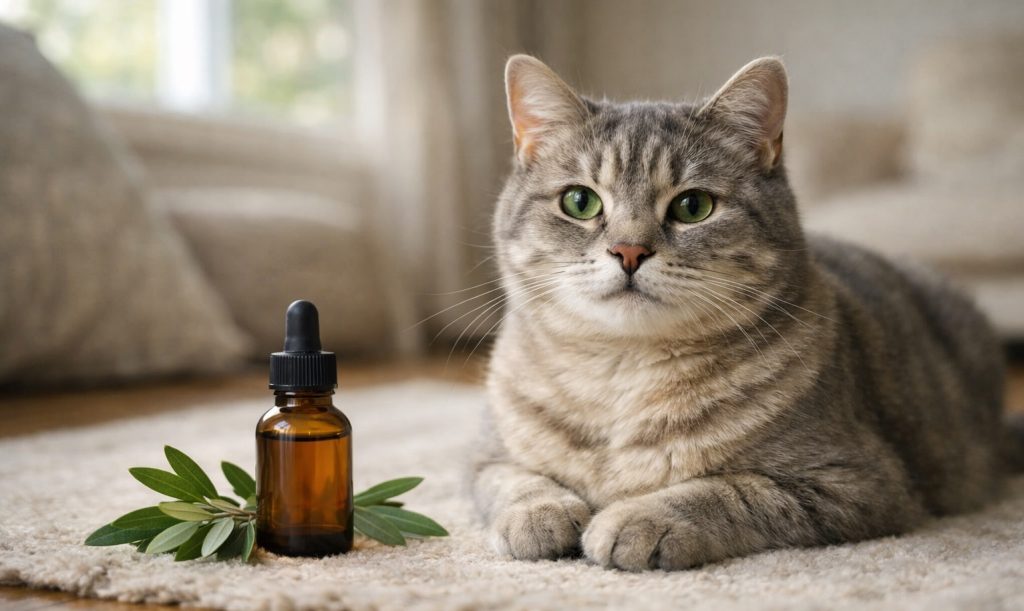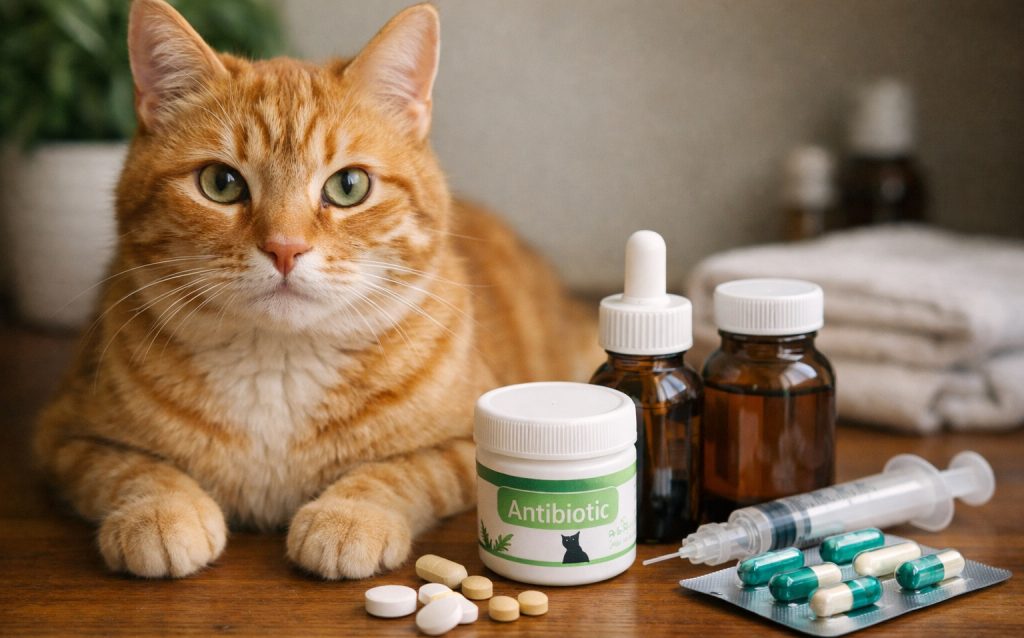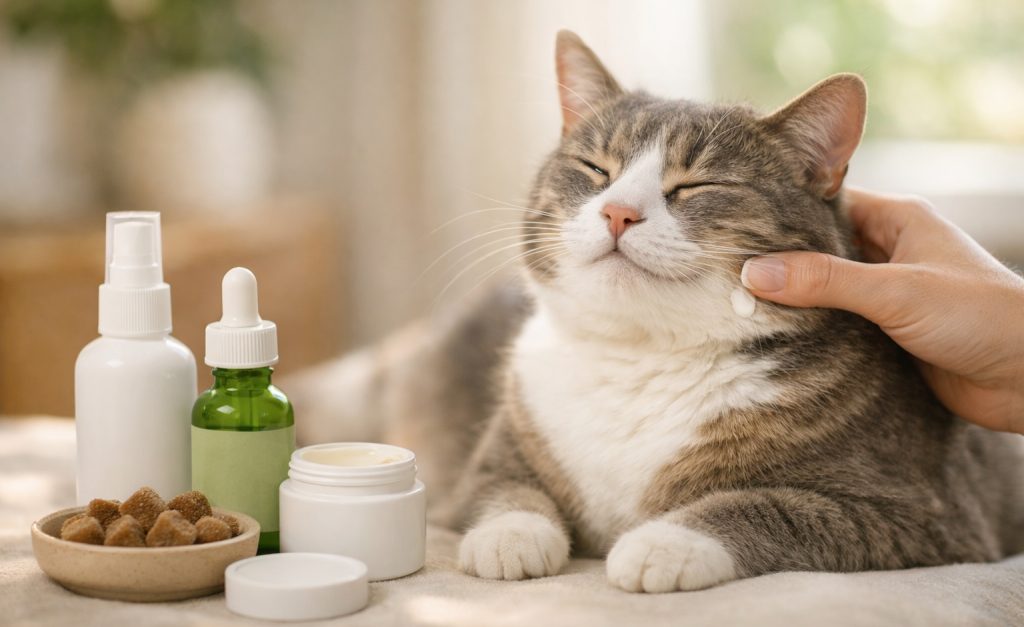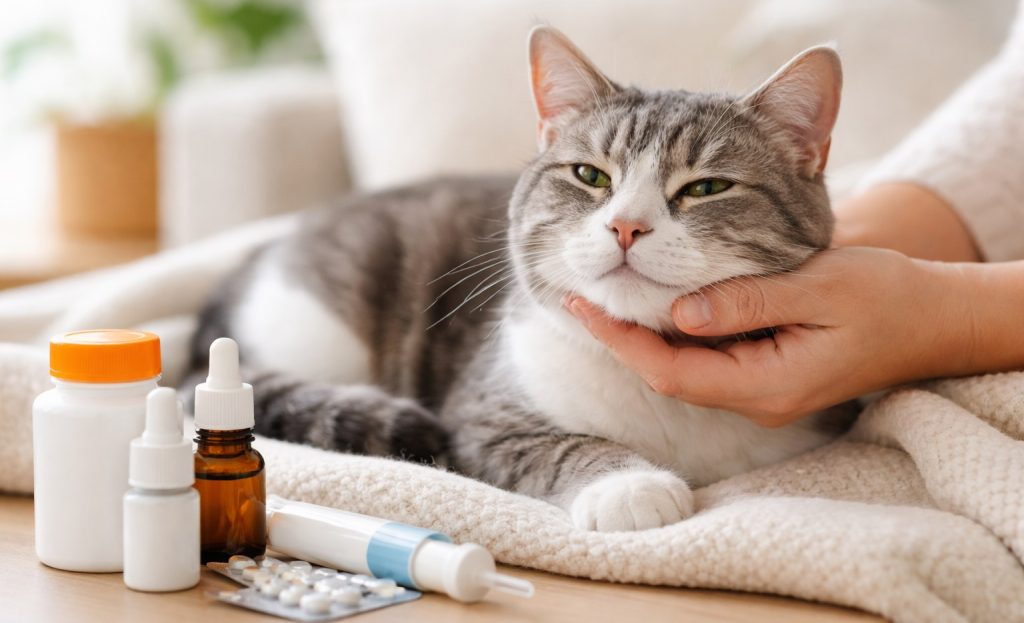
People use calming drops for cats for travel, visitors, noise, or other stressful events. Products differ widely: some contain supplements or herbal ingredients, while others are prescription medicines. “Calming” is not one standardized formulation, and a label does not guarantee that the product is appropriate for every cat.
Ask your veterinarian to review the exact bottle before giving it. Confirm the dose, timing, route, and whether it can be combined with the cat’s current medicines. A veterinarian may discuss behavioral changes, pheromones, or prescription medication depending on the cause of distress. Our related overview, calming drops for cats, can help you prepare product questions, but it does not replace individualized veterinary guidance.
What may happen after a dose?
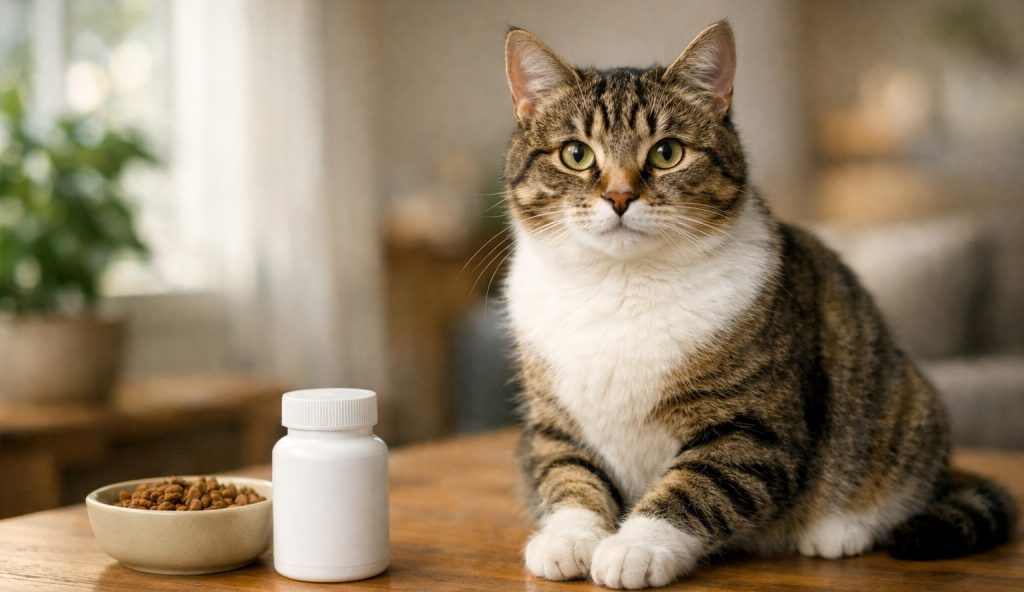
Observe your cat in a quiet, familiar place. Depending on the ingredients, the cat may show no obvious change, settle more readily, or become sleepier. A product may take time to work; giving extra drops because the first dose seems ineffective can lead to overexposure. Follow only the veterinarian-approved label directions.
Watch for a change from your cat’s normal balance, alertness, appetite, coordination, breathing, or ability to respond. Vomiting, diarrhea, pronounced agitation, marked weakness, or unusual behavior should be discussed with a veterinarian. Sleepiness that is difficult to interrupt, stumbling, fainting, tremors, seizures, facial swelling, or breathing difficulty requires urgent care. Do not assume a symptom is a normal calming effect simply because it appeared after a supplement.
Why the product label matters
Calming products may contain different active ingredients and concentrations. Some are intended for routine use; others are designed for a particular situation. Herbal products and supplements can vary in quality and may interact with prescription medicines. VCA cautions that “natural” does not ensure safety and recommends veterinary advice before nonprescription products. See VCA’s overview of complementary behavior products.
Never use a dog product, human sedative, essential oil, or a product with an unclear ingredient list unless your veterinarian has specifically approved it for your cat. Cats can be especially vulnerable to substances that people tolerate. Tell the clinician about all medicines, supplements, flea treatments, and recent changes in health.
What to do if a reaction is possible
For a mild change, call the veterinarian who recommended the drops and ask what to do before another dose. Provide the product name, ingredient panel, dose, time given, and the signs you observed. If the product was not prescribed or recommended, still call for guidance; keep the container available. Do not try to counteract the effect with food, another supplement, or a human medicine.
If your cat received too much, got the wrong formulation, or may have chewed the bottle, contact a veterinary clinic or animal poison-control service right away. Do this even if the cat seems fine. Keep a photo of the label and estimate how much is missing. Do not induce vomiting unless a veterinary professional instructs you.
When calming drops are not enough
Ongoing hiding, aggression, overgrooming, house-soiling, or appetite changes can have medical causes as well as behavioral ones. A vet visit can check for pain or illness and help build a plan. Environmental changes may include predictable routines, hiding places, gradual exposure to triggers, and positive reinforcement. Do not punish fear-related behavior; punishment can make anxiety worse.
For travel or clinic visits, ask whether carrier training or a prescribed medication is suitable. VCA explains that prescription sedatives can have side effects and should be used only when appropriate for the cat’s health: medication to reduce stress during veterinary visits.
Before trying a new calming product
Write down the situation you hope to improve, such as carrier entry, car travel, visitors, or loud sounds. That helps a veterinarian choose between behavior changes, environmental management, pheromone products, and medication. A product may be unsuitable if the cat is pregnant, very young, elderly, has liver or kidney disease, or takes other medicines. Share the full label, not just the front-of-package claims.
Give any approved product exactly as directed and observe the cat in a safe room where it cannot fall from a high surface or escape outdoors. Avoid scheduling a first trial immediately before a stressful event unless the veterinarian recommends that plan. Record the time given and how the cat responds. Do not use a second calming product to strengthen the effect without checking for interactions.
Calming products are not a substitute for investigating sudden behavior change. A cat that begins hiding, vocalizing, resisting touch, or avoiding the litter box may be in pain or ill. Schedule an exam when behavior changes persist, worsen, or occur with appetite, thirst, urination, or mobility changes. For an immediate reaction, call the clinic and describe the ingredient list and symptoms. If the cat is difficult to wake, cannot stand, has tremors, or breathes abnormally, seek emergency care.
Make the environment easier during a stressful event
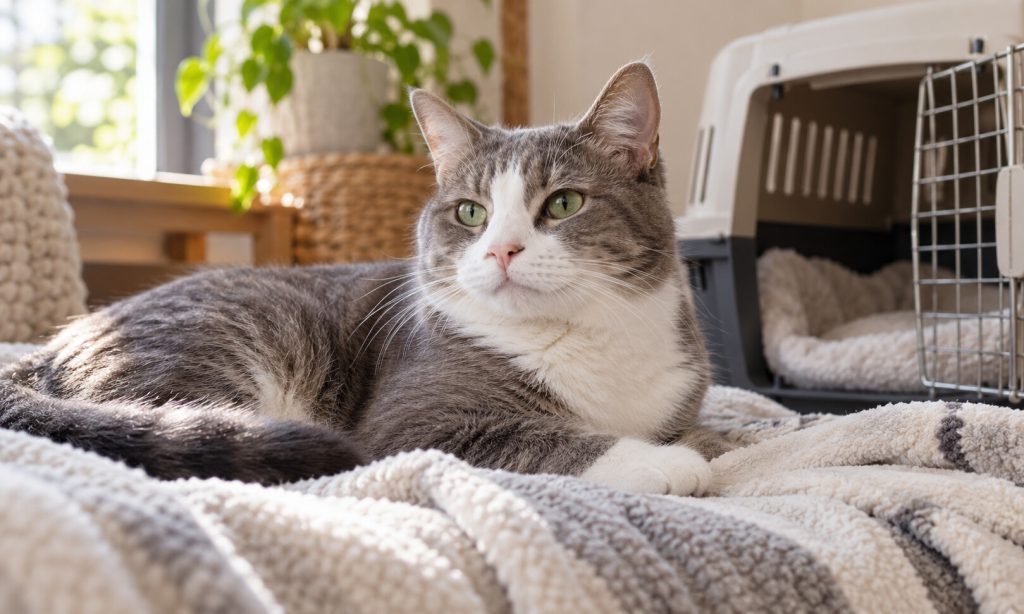
Pair product discussions with simple environmental support. Let the cat choose a hiding place, keep food and water accessible, and reduce noise or unfamiliar handling when possible. For a planned event, prepare the carrier days ahead and allow the cat to explore it freely. These steps may lower stress without adding another ingredient or dose.
After the event, note what triggered the distress and which steps seemed helpful. This record gives your veterinarian useful context and may reveal patterns, such as anxiety around travel or loud sounds. If the cat’s fear is severe, a gradual behavior plan or prescription treatment may be more appropriate than a supplement alone.
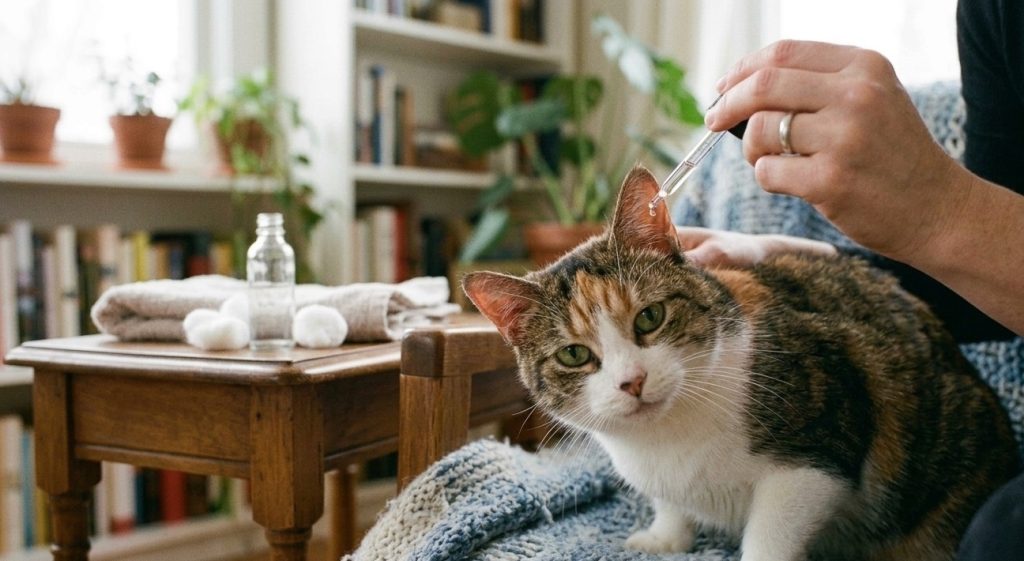
Keep the dropper or bottle clean and follow storage instructions. Do not let the tip touch the cat’s mouth, eyes, or skin unless the label specifically requires that route. If the seal is damaged, the product is expired, or the ingredients are unreadable, set it aside and ask the clinic about safe disposal and an alternative.
For related reading, see our guides to calming drops for cats, calming chews for cats, and anti-anxiety medication for cats. These are product overviews, not instructions to combine remedies or choose a dose without veterinary direction.
Before giving any new calming product, check whether the cat has an upcoming procedure, is taking other medicines, or has a recent health change. Mention these details when you ask the veterinarian for advice.
When you call, use plain descriptions such as “she is walking normally but vomited once” instead of saying only that the cat seems off. Include whether the cat is eating, drinking, urinating, and responding to its name. These details help a veterinary professional decide what to do next and whether the cat should be seen immediately.
Frequently asked questions
How long should calming drops take to work?
It depends on the ingredients, route, and individual cat. Follow the product directions approved by your veterinarian. Do not repeat a dose early unless instructed.
Is sleepiness always expected?
No. The intended effect varies by product. If your cat is unusually difficult to wake, weak, unsteady, or not responding normally, seek veterinary advice promptly.
Can I combine calming drops with prescription medicine?
Do not combine products without checking with the veterinarian. Interactions and duplicate ingredients may change the risk.
Final Words
Monitor your cat after using calming drops for cats, follow the approved dose, and keep the packaging. Call your veterinarian for new or worsening symptoms. Trouble breathing, collapse, seizures, severe weakness, or a possible overdose needs emergency guidance.