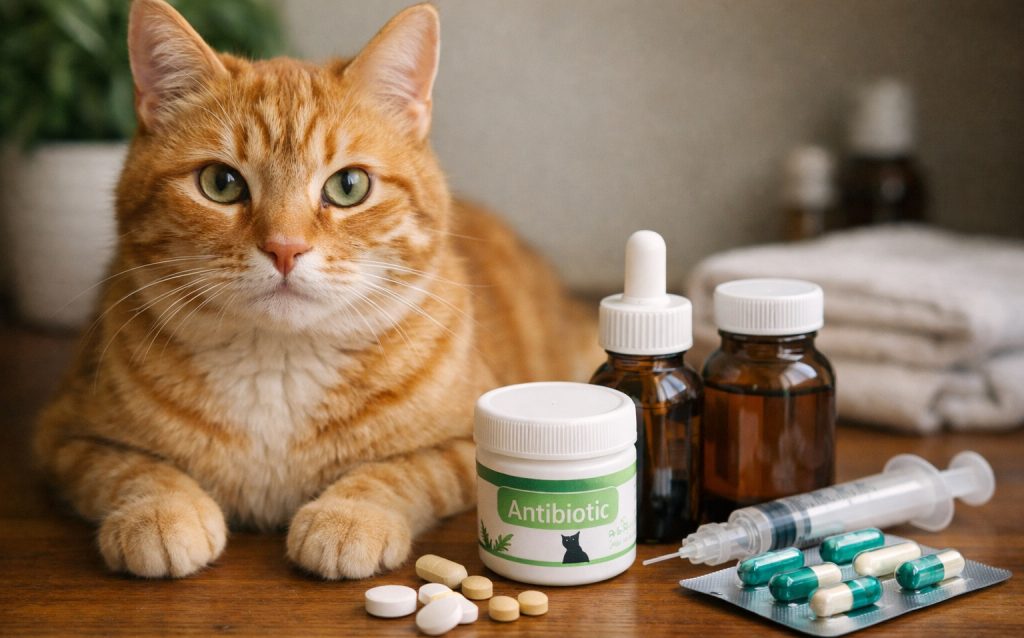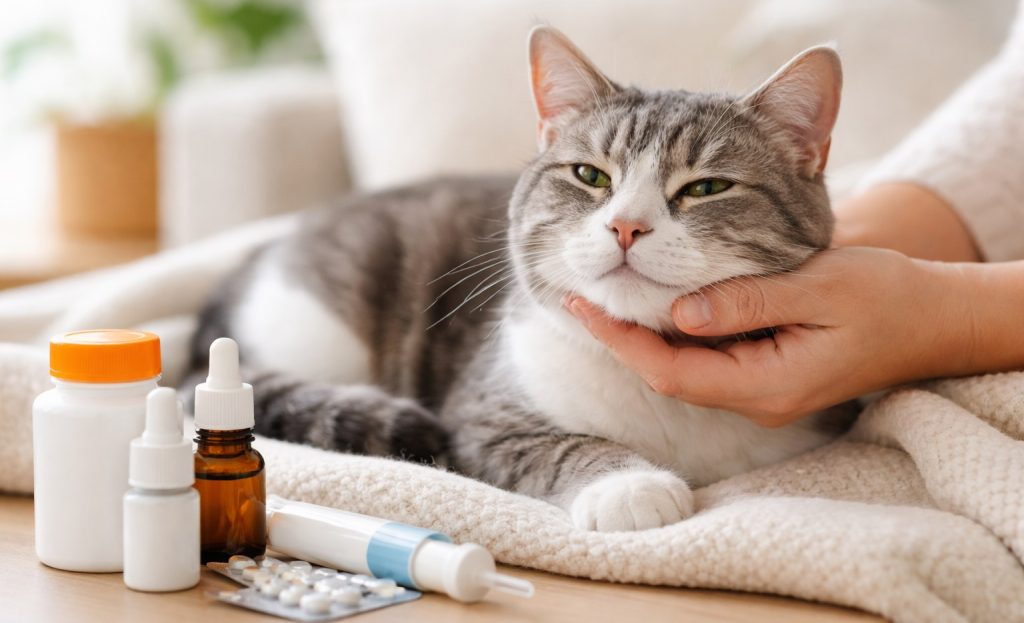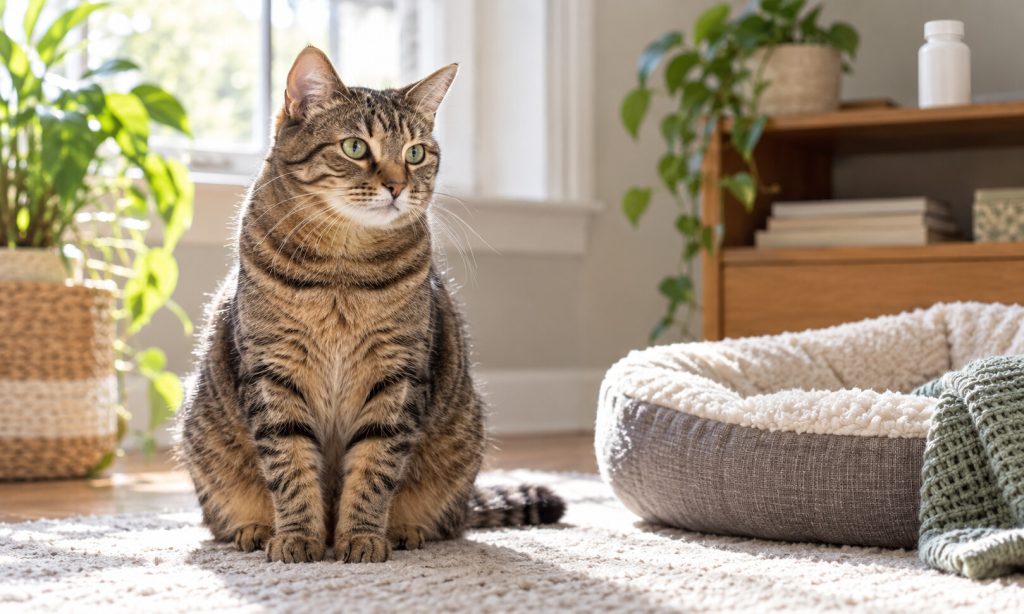
When a veterinarian recommends medicine for cat allergy, it can help control itching or other symptoms, but every cat responds differently. A new behavior or physical change after a dose may be a side effect, an allergic reaction, the original illness, or an unrelated problem. Timing matters, yet it cannot confirm the cause by itself.
Before giving any drug, confirm the exact product, dose, route, and schedule with your veterinary team. Cats process many substances differently from people. Do not give human allergy medicine or change a prescribed dose unless the veterinarian specifically instructs you. For broader background, see our guide to medication options used for cats and discuss any overlap with your veterinarian.
What changes should you watch for?
Write down how your cat was acting before the first dose. Afterward, note the time, amount, appetite, water intake, litter-box habits, energy, breathing, and any new skin or digestive signs. Common medication effects depend on the drug. Sleepiness, restlessness, reduced appetite, vomiting, or diarrhea can occur with some treatments, but they should not automatically be dismissed as harmless.
A possible reaction may include facial puffiness, hives or raised bumps, sudden vomiting or diarrhea, unusual weakness, or a marked change in behavior. These signs deserve prompt veterinary advice, especially if they appear soon after a dose or worsen. A severe allergic reaction can progress quickly. Facial swelling, difficulty breathing, collapse, or rapidly worsening weakness is an emergency. Call an emergency veterinary clinic and go in immediately; do not wait to see whether the signs pass.
How to respond safely
If your cat has a mild but new change, call the prescribing clinic for instructions before the next dose. Do not double a missed dose, stop a long-term medication abruptly, or add an over-the-counter product. The safest choice depends on the exact medicine and your cat’s history. Ask whether the next dose should be held and whether the cat needs an exam.
If you suspect the cat swallowed a wrong medicine or too much, contact a veterinarian or animal poison-control service immediately, even if the cat looks normal. Keep the package, strength, remaining tablets, and approximate exposure time nearby. Do not induce vomiting or give milk, food, or another medication unless a veterinary professional tells you to. ASPCA guidance explains why early poison-control advice matters: what to do if a pet may be poisoned.
What to tell the veterinarian
Share the medicine’s generic and brand names, strength, prescribed amount, route, last dose, and the time signs began. Mention supplements, flea products, foods, and any other medicines. A short video of unusual movement or breathing can help if recording does not delay emergency care. Keep a simple medication log and bring it to follow-up visits.
Do not assume that “natural” or nonprescription allergy products are safer. Ingredients and concentrations vary, and some human products include additional active ingredients that may be dangerous to cats. Ask the veterinarian to review the full label before use. If allergy signs continue despite treatment, the clinician may need to reassess the diagnosis or treatment plan rather than simply increasing the dose.
When should you contact a veterinarian?
- Call promptly: repeated vomiting or diarrhea, persistent appetite loss, unusual agitation or sleepiness, new rash, or any concerning change after a dose.
- Seek emergency care now: trouble breathing, facial or throat swelling, collapse, seizures, pale or blue gums, severe weakness, or a suspected overdose.
- Ask before the next dose: if a new symptom appears and you are unsure whether to continue treatment.
VCA notes that facial swelling, hives, vomiting, and breathing difficulty can be signs of a serious allergic reaction in pets. Read its emergency overview at Emergencies in Cats. This article is educational and cannot identify the cause of an individual cat’s symptoms.
Side effect, allergy, or overdose?
These possibilities can look similar at home, so avoid trying to diagnose the cause from one symptom. A side effect is an unwanted effect that can occur at a correctly prescribed dose; an allergic reaction involves an abnormal immune response; an overdose means too much was given or the wrong product was used. Each situation needs different advice. Tell the veterinarian what happened and let them decide whether an examination, dose adjustment, or other care is needed.
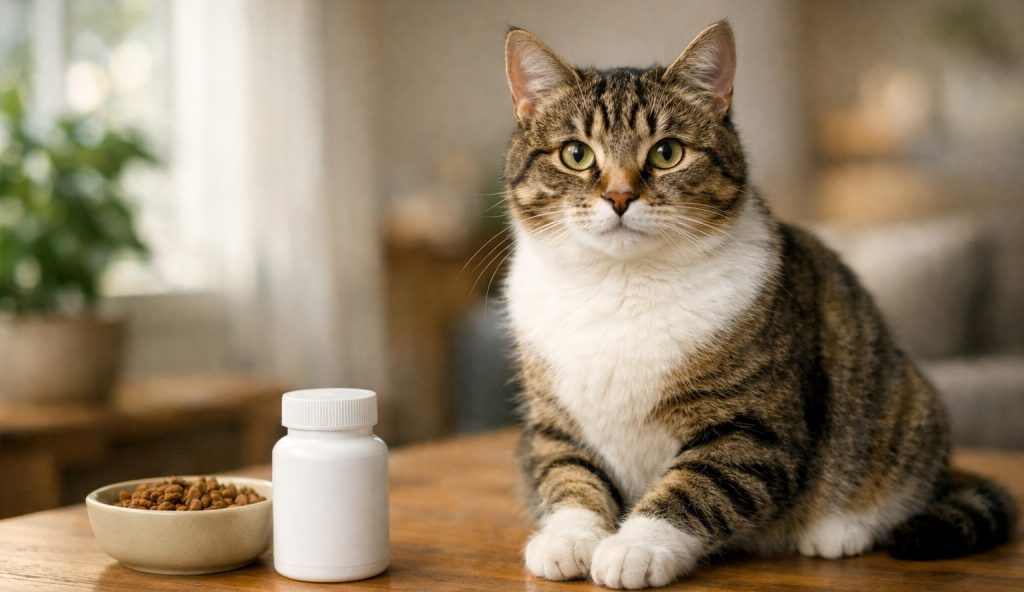
Keep the medicine in its original container and use the supplied measuring device for liquid products. A kitchen spoon is not a reliable dose measure. If more than one person cares for the cat, keep a shared written record of doses to prevent accidental repeats. Store medicines behind a closed door and return dropped pills to a secure container immediately. Cornell lists common human medicines and dog flea products among hazards for cats; prevention is especially important in homes with multiple pets.
When the clinic is closed, use its after-hours instructions or contact a veterinary emergency service. In the United States, ASPCA Animal Poison Control can be reached at 888-426-4435; a consultation fee may apply. Keep the number and your regular clinic’s number in an easy-to-find place. If breathing is impaired or the cat collapses, travel to emergency care first while someone calls ahead.
Help your cat safely while you wait for advice
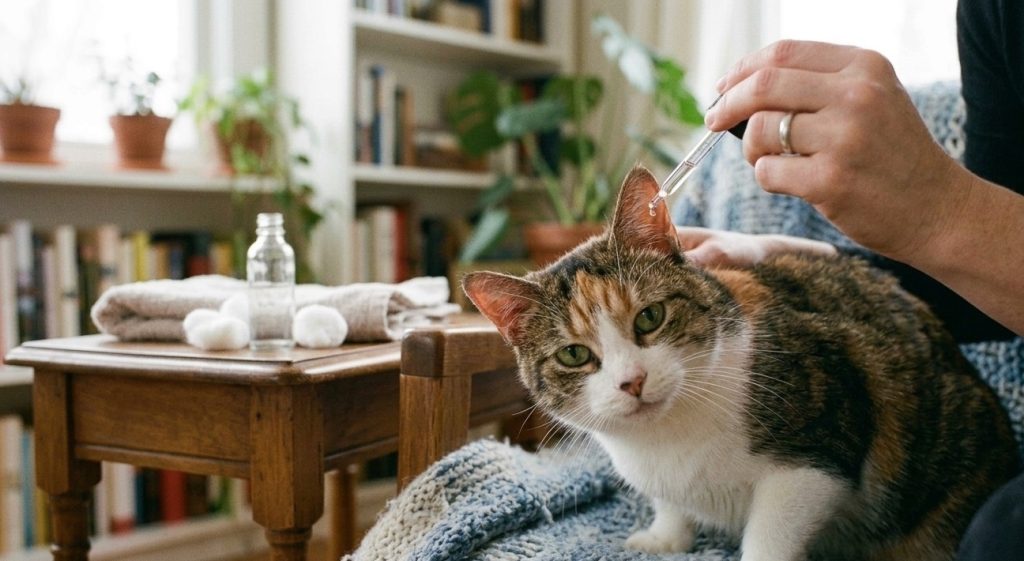
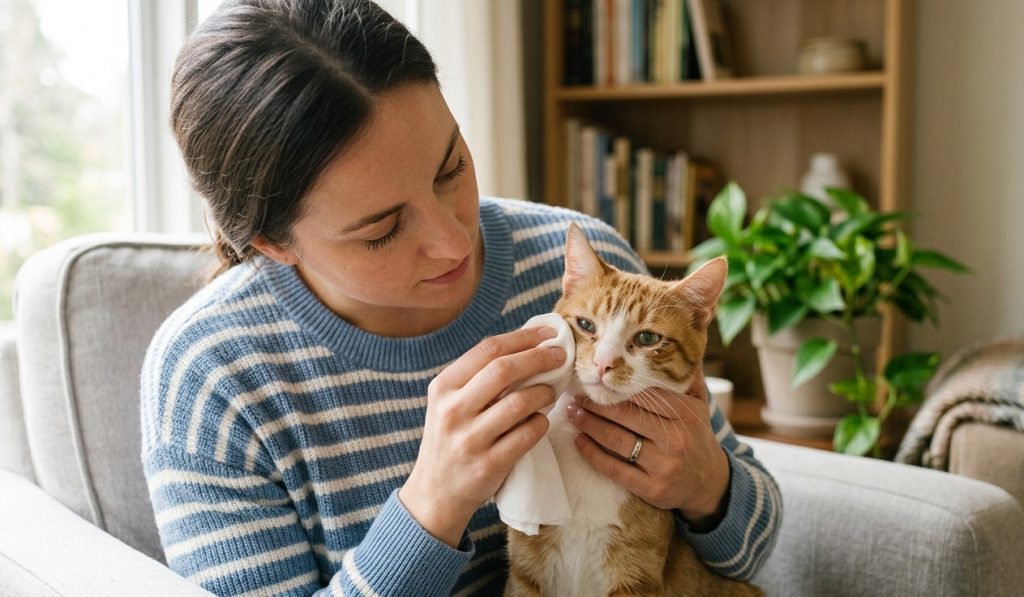
Keep the cat indoors and in a calm room while arranging veterinary guidance. If the cat is itchy, prevent self-trauma where possible, but do not apply creams or eye products unless directed. Take a photo of a rash or swelling if it is safe to do so, because skin changes can fade before the appointment. Do not delay a call to get a perfect picture.
For ongoing allergy care, ask how the veterinarian will judge whether treatment is working and when to recheck. Improvement may take time, and some allergy conditions need a broader plan that includes parasite control, skin care, or food evaluation. Avoid switching foods and medicines at once; changing several things makes it harder to identify what helped or caused a reaction.
When in doubt, describe the sequence clearly: the cat’s condition before treatment, the dose, the first sign noticed, and whether the sign is improving. This helps the team judge urgency. If another dose is due soon, ask directly whether to give it. Do not guess or use an online dosing chart for a cat-specific decision.
For questions about product types, compare the veterinarian’s recommendation with our coverage of over-the-counter allergy medication for cats and prescription anxiety medicine used in cats. These pages discuss product categories; the prescribing clinician should still confirm what is suitable for your cat.
Frequently asked questions
Can I give my cat an antihistamine made for people?
Only if your veterinarian has named the exact product and dose. Combination cold or allergy medicines can contain ingredients unsafe for cats.
Should I stop a prescribed allergy medicine if my cat seems sleepy?
Contact the prescribing clinic before changing a treatment plan. Report how severe the sleepiness is and when it started. Collapse or inability to wake normally is urgent.
Can an allergic reaction happen after several doses?
Yes. A cat may develop sensitivity after repeated exposure, so monitor throughout treatment and report new signs.
Final Words
Use medicine for cat allergy only as directed, track changes after each dose, and contact a veterinary professional when new symptoms appear. Breathing trouble, swelling, collapse, or suspected overdose needs immediate help. Keep the medication packaging accessible and do not try home remedies while arranging care.