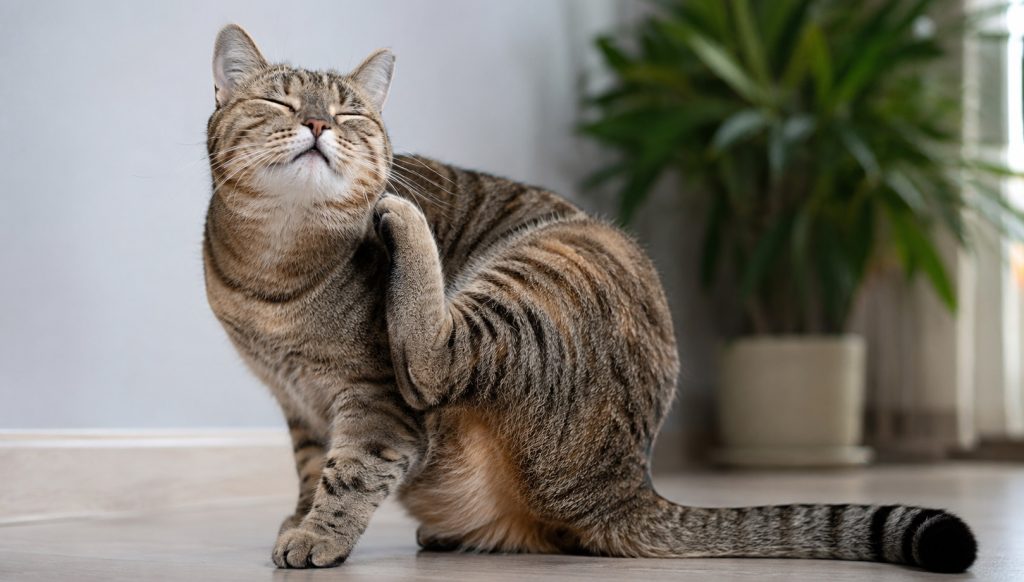
It is 2:00 AM, and your house is completely silent—except for the rhythmic, aggressive thump-thump-thump of your cat frantically scratching behind their ears. You flip on the lamp, grab your trusty fine-toothed flea comb, and carefully part their fur. You check the belly, the base of the tail, and behind the neck.
Result? Nothing. Not a single flea, no moving specks, and not even a trace of flea dirt.
So, why is my cat itching but has no fleas?
If you are currently staring at a completely clean flea comb while your feline companion continues to scratch, lick, or bite their skin ragged, you are not alone. As a lifelong cat parent who has spent more nights than I care to admit playing detective with feline skin mystery cases, I know how frustrating this scenario is. Fleas are usually the main suspect when it comes to feline skin irritation, but they are far from the only culprit.
In this guide, we will unpack the hidden triggers behind non-flea itching, explore the root cat itching causes, and help you bring sweet relief back to your fur baby.
Are You Sure It Isn’t Fleas? The Invisible Parasite Problem
Before completely ruling out parasites, we need to address a frustrating truth: cats are meticulous self-cleaners.
Unlike dogs, who will let flea dirt pile up until they look like a salt and pepper shaker, cats groom constantly. A cat suffering from Flea Allergy Dermatitis (FAD) might be allergic to the saliva of a single flea. That flea bites your cat, triggers a massive histamine reaction, and gets immediately groomed away and swallowed by your cat.
The flea is gone, but the intense allergic reaction remains.
IMO, before diving into complex medical testing, perform a wet paper towel test. Run a flea comb through your cat’s fur over a white paper towel. Moisten any black specks that drop off. If they dissolve into a reddish ring, that’s digested blood (flea dirt), confirming fleas are still the root issue despite your lack of visual sightings.
If the paper towel remains clean, it is time to look at other non-flea reasons.
5 Surprising Reasons Why Your Cat Is Itching (Without Fleas)
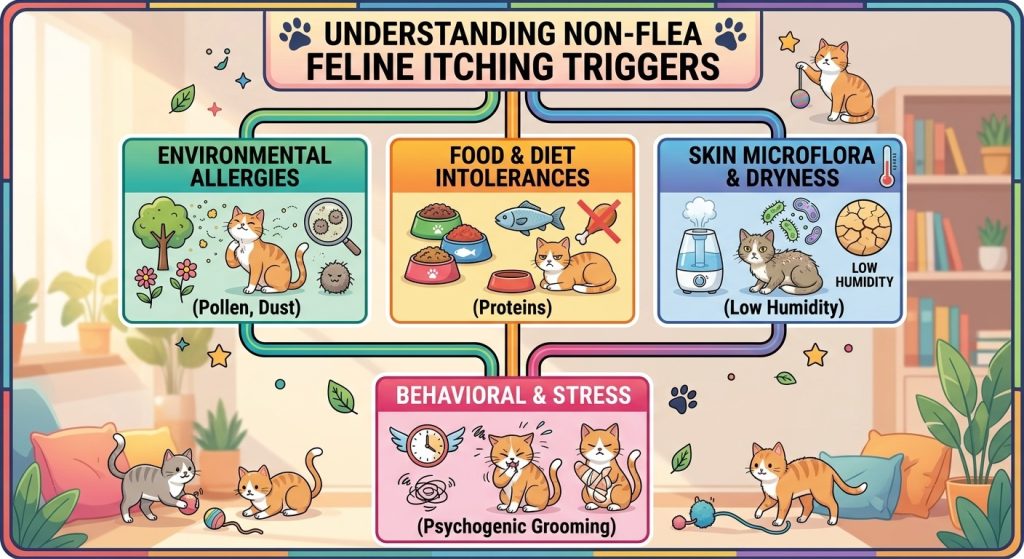
When you ask yourself, “why is my cat so itchy if parasites aren’t present?”, the answer usually falls into one of five major categories. Feline skin is remarkably sensitive, reacting strongly to internal imbalances and external triggers alike.
1. Environmental Allergies (Atopic Dermatitis)
Just like humans suffer from hay fever during spring pollen spikes, cats can develop sensitivity to microscopic airborne irritants. Environmental allergens are among the most common cat itching causes in North America.
-
Pollen: Tree, grass, and weed pollens brought inside on your shoes or drifting through open windows.
-
Dust Mites: Microscopic bugs thriving in carpet fibers, upholstered furniture, and old pet bedding.
-
Molds: Spores in humid basements or around potted plant soil.
-
Household Products: Synthetic air fresheners, scented candle soot, plug-in diffusers, and harsh carpet cleaners.
If your cat’s scratching flares up seasonally—or worsens right after you vacuum the living room—an environmental allergy is likely at play.
2. Dietary Sensitivities and Food Allergies
Cats don’t typically develop food allergies overnight, but eating the same protein source for months or years can eventually trigger an immune system overreaction.
When a cat has a food sensitivity, the immune system mistakenly identifies specific dietary proteins as hostile invaders. This reaction manifests almost entirely through the skin, particularly around the head, neck, ears, and face.
The most common food allergens for cats include:
-
Beef
-
Dairy products
-
Fish & Seafood
-
Chicken & Poultry by-products
If your cat’s intense face-scratching is accompanied by mild gastrointestinal issues like soft stools or periodic vomiting, diet should be your primary suspect.
3. Dry Skin and Low Indoor Humidity
During cold winters across the US, household heating systems strip the air of natural moisture. Just as your hands get dry and itchy, your cat’s skin loses vital lipids.
Dry cat skin breaks down the natural epidermal barrier, causing flaky dandruff, tightness, and persistent minor irritation. While dry skin rarely causes the frantic, skin-tearing scratching seen with severe allergies, it keeps your cat in a constant state of mild discomfort.
4. Secondary Bacterial or Yeast Infections
Sometimes, the initial itch was minor, but your cat’s tongue and claws introduced bacteria (Staphylococcus) or yeast (Malassezia) into the skin layer. Once an infection establishes itself, it creates a self-perpetuating itch-scratch cycle.
Even if the original trigger resolved weeks ago, a secondary infection will keep your cat scratching relentlessly until treated with target antimicrobial therapies.
5. Stress, Anxiety, and Psychogenic Grooming
Cats are notorious creatures of habit. A change in your work schedule, moving to a new home, introducing a new pet, or even stray cats wandering past the window can spike your cat’s cortisol levels.
To soothe themselves, cats resort to grooming. Grooming releases endorphins, which help them calm down. However, this coping mechanism can quickly turn compulsive. Known as psychogenic grooming, cats will lick a specific area—usually the belly, inner thighs, or forearms—until the hair is stripped clean and the underlying skin becomes raw and inflamed.
Best Anti Itch Medicine For Cats: Top Relief Solutions for Skin Issues
Key Signs Your Cat’s Itching Is Escalating
Itching isn’t just an annoyance; left unaddressed, it leads to self-trauma and secondary complications. You need to keep a close eye out for these visual indicators:
| Symptom | What It Looks Like | Primary Suspect |
| Miliary Dermatitis | Small, crusty bumps resembling millet seeds along the spine and neck | Allergic reaction (food or environmental) |
| Symmetrical Alopecia | Even patches of missing fur on the belly, flanks, or legs | Psychogenic overgrooming or food allergies |
| Excoriations | Open scratches, bleeding sores, or scabs around ears and cheeks | Severe acute itch (intense food/flea allergy) |
| Eosinophilic Granulomas | Raised red plaques, ulcers on upper lip, or raw sores on thighs | Immune-mediated allergic response |
Practical At-Home Remedies and Solutions
If you are stuck asking, “Why is my cat itching but has no fleas?” while waiting for your veterinary appointment, several safe, practical steps can reduce their discomfort right now.
1. Upgrade Their Omega-3 Fatty Acid Intake
Omega-3 fatty acids, specifically EPA and DHA sourced from wild-caught fish oil, act as natural anti-inflammatories for the skin. Adding high-quality liquid salmon oil or marine lipids to your cat’s daily meal supports the skin barrier, reduces flaking, and cools down allergic responses from the inside out.
2. Switch to Hypoallergenic or Limited-Ingredient Diets
If food allergies are suspected, transition your cat to a limited-ingredient diet (LID) featuring a single, novel protein source they have never eaten before (such as rabbit, venison, or duck). Alternatively, ask your vet about a hydrolyzed protein diet, where the proteins are broken down into particles too small for the immune system to recognize as allergens.
Note: A true food trial requires strict adherence for 8 to 12 weeks—no extra treats, table scraps, or flavored medications allowed!
3. Bathe with Soothing Topical Formulas
While most cats treat bath time like an act of war, a quick soak or sponge bath with a soap-free, colloidal oatmeal or pramoxine-based feline shampoo can offer immediate, temporary cooling relief to inflamed skin.
For cats that absolutely refuse baths, leave-in soothing mousses containing phytosphingosine or ceramides can help repair damaged skin microflora without the aquatic drama.
4. Optimize Indoor Air Quality and Moisture
-
Run a HEPA Air Purifier: Keeps indoor air free of airborne pollens, dust mites, and dander.
-
Use a Cool-Mist Humidifier: Maintains indoor humidity between 40% and 50% during dry winter months to protect skin hydration.
-
Switch to Low-Dust, Unscented Litter: Fragranced litters emit chemical dust that settles directly on your cat’s paws and coat during daily use.
When to Schedule a Veterinary Visit
While mild dry skin can often be managed with home adjustments, severe or persistent feline itching requires professional veterinary intervention.
Schedule an appointment promptly if you notice any of the following warning signs:
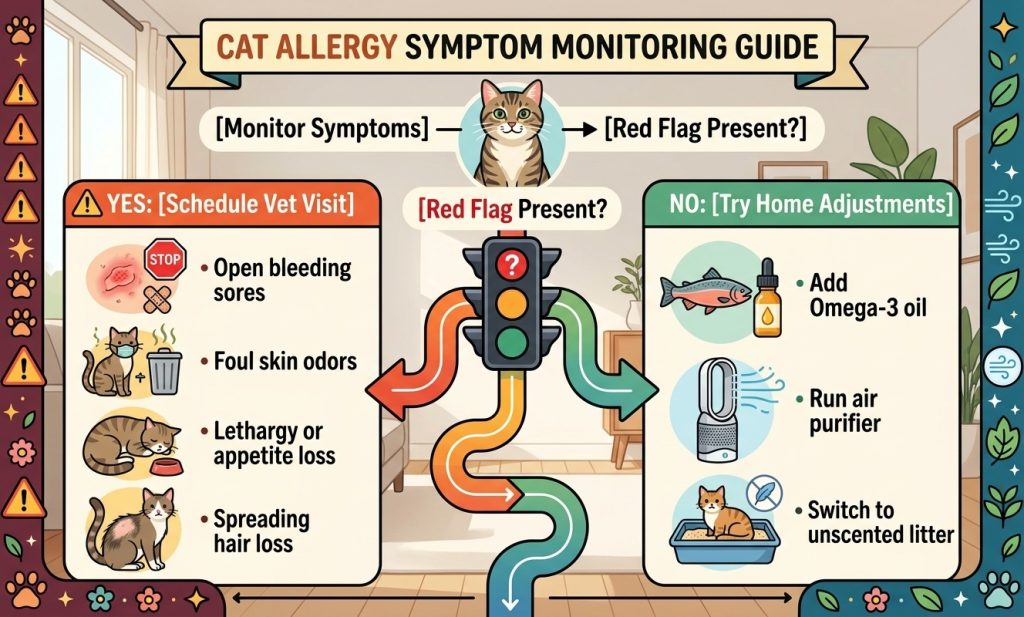
Your veterinarian can perform diagnostic tests, such as skin scrapings to check for microscopic mites (Cheyletiella or Demodex), fungal cultures for ringworm, or cytologies to detect hidden bacterial infections. They can also prescribe targeted treatments like short-term steroids, Apoquel, Cytopoint, or specialized prescription diets to break the itch cycle safely.
Frequently Asked Questions
Why is my cat itching but has no fleas or dry skin?
If parasites and flakiness are completely ruled out, the most common causes are internal allergic reactions (such as a food sensitivity or environmental atopy) or stress-induced overgrooming. Systemic issues like thyroid imbalances or early-stage liver disorders can also occasionally manifest as persistent skin itching.
Can indoor cats get allergies even if they don’t go outside?
Yes, absolutely! Indoor cats are constantly exposed to dust mites, household molds, cleaning chemicals, synthetic fragrances, and pollen brought inside on clothes and shoes. In fact, indoor environments can sometimes concentrate airborne allergens more than outdoor spaces.
How do I know if my cat’s itching is caused by food or environment?
Environmental allergies often fluctuate with seasons (worsening in spring/fall), whereas food allergies typically persist year-round. Food allergies also tend to cause concentrated scratching around the head, neck, and ears, sometimes accompanied by soft stools, while environmental allergies often affect the paws, armpits, and belly.
Can I give my cat human antihistamines like Benadryl for itching?
Never administer human medications without explicit guidance from your veterinarian. While certain antihistamines can be used safely in felines at specific doses, many over-the-counter human products contain decongestants (like pseudoephedrine) or artificial sweeteners (like xylitol) that are toxic and fatal to cats.
How long does it take for a cat’s skin to heal after resolving the itch?
Once the underlying trigger is successfully eliminated, minor skin redness improves within 3 to 7 days. However, full hair regrowth and complete skin barrier repair typically take 4 to 8 weeks, as feline hair follicles grow in distinct, slow-moving cycles.
Final Thoughts
Watching your beloved feline suffer through constant, frantic scratching is agonizing for any dedicated pet parent. But when you find yourself asking, “Why is my cat itching but has no fleas?“, remember that this is simply a signal from your cat’s body that something in their internal or external environment is out of balance.
By methodically evaluating their food, indoor air quality, skin hydration, and stress levels, you can pinpoint the root cause of their discomfort. Start with simple, high-value adjustments—like adding omega-3s, choosing unscented litters, and consulting your vet for diagnostic guidance—to help your feline friend return to doing what they do best: napping peacefully in a sunny window, completely itch-free. 🙂