The right feeding bowl should be stable, easy to clean, and comfortable for your individual dog. Bowl height and shape can affect posture, access, mess, and how quickly a dog eats. There is no single height that suits every dog, and a raised bowl is not automatically better.
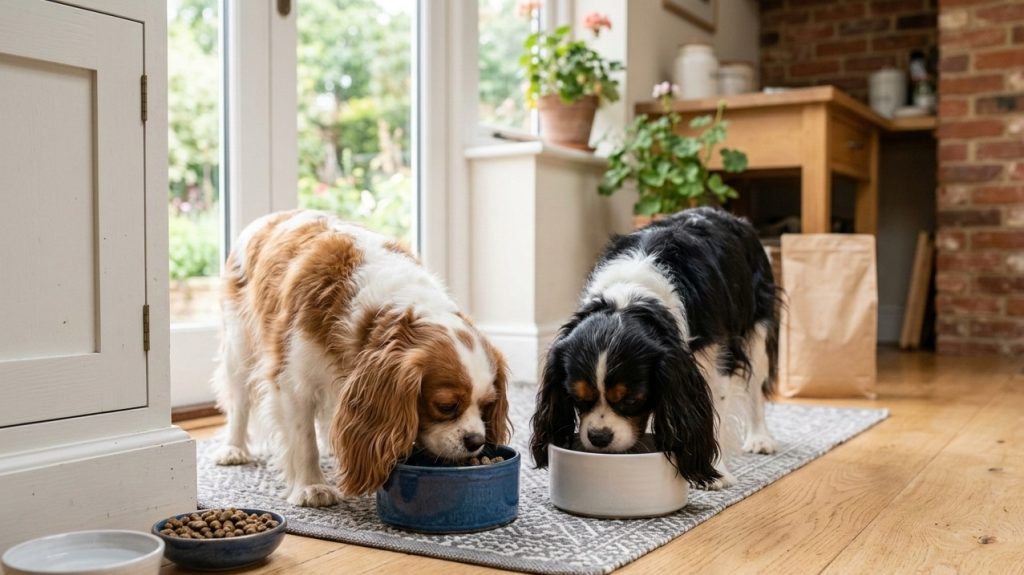
Start by watching your dog eat from a stable floor-level bowl. Notice whether the dog can reach the food without stretching, slipping, or pressing its neck into the rim. Then consider mobility, muzzle shape, ear length, appetite, and any veterinary advice. A bowl designed for Cavalier King Charles Spaniels may illustrate breed-friendly details, but measure your own dog rather than relying on breed alone.
How to assess bowl height
For many healthy dogs, a bowl on the floor is a reasonable starting point. The dog should stand naturally, reach the food, and swallow without struggling. If the dog has arthritis, neck pain, weakness, or a neurologic condition, ask a veterinarian or rehabilitation professional whether a raised feeder could help. The best setup depends on the diagnosis and the dog’s movement.
Do not raise a bowl solely because a dog is large or because it appears more comfortable to people. Research on elevated feeders and bloat risk has raised concern, particularly for large and giant breeds, so discuss the choice with your veterinarian. If a raised stand is recommended, measure the bowl’s rim and choose a stable height that does not force the dog to reach upward. Reassess if posture, swallowing, or comfort worsens.
Choose shape for muzzle, ears, and eating style
A wide, shallow bowl may suit a dog with a short muzzle or long, feathered ears, while a deeper bowl may contain food better for a dog with a longer muzzle. The opening should let the dog reach food without rubbing its face on a narrow edge. For long-eared dogs, a narrower opening can help keep ears out of food, provided it does not restrict access.
For a dog that gulps meals, a slow feeder or puzzle bowl may spread food across ridges. Introduce it gradually and check that the dog can retrieve food without frustration. Avoid a design with grooves that are difficult to wash. If the dog coughs, gags, regurgitates, or has trouble swallowing, pause the experiment and speak with a veterinarian rather than trying progressively different heights.
Material, stability, and cleaning
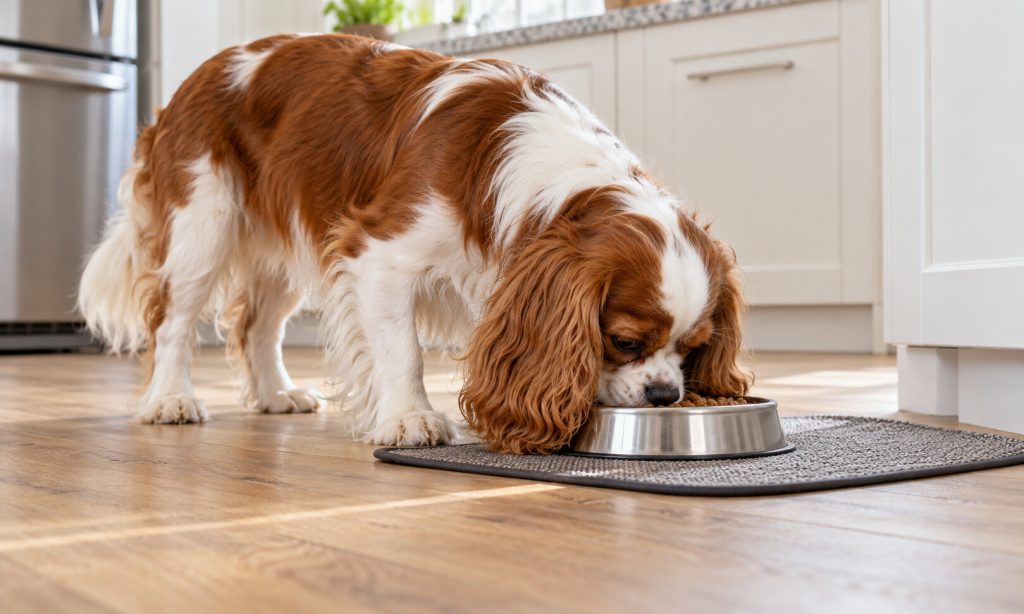
Stainless steel is durable and generally easy to clean. Ceramic bowls can be stable but should be checked for chips or cracks. Plastic bowls are light and inexpensive, yet scratches can trap residue; replace damaged bowls and wash them regularly. Choose a bowl that does not slide across the floor. A rubber base or washable mat can help contain spills.
Wash food bowls after meals when wet food or fresh additions are used, and clean water bowls daily. Dry the area beneath the bowl so moisture does not damage flooring. If multiple pets eat together, separate stations can reduce crowding and allow you to track each animal’s intake. The American Kennel Club’s bowl guide reviews common bowl types and practical cleaning considerations.
A simple fitting check
- Measure your dog’s nose and shoulder height only as starting references; do not assume a formula gives the correct bowl height.
- Set the bowl on a nonslip surface and watch a normal meal.
- Check for an easy reach, natural stance, stable bowl, and relaxed pace.
- For medical or mobility concerns, ask the veterinarian to observe a short video of the dog eating.
- Make one change at a time and watch appetite, comfort, coughing, and digestion.
For Cavaliers specifically, coat and ear length may affect mess and bowl access, while individual dogs can also have heart or orthopedic conditions. Choose bowl height for the dog in front of you, and follow any medical feeding instructions. A bowl choice cannot treat swallowing problems or replace evaluation of unexplained weight change or reduced appetite.
Special considerations for small breeds and Cavaliers
A Cavalier King Charles Spaniel is a small dog, but individual body proportions, age, coat, and health still matter more than a breed label. Long ears may dip into a broad bowl, so a narrower opening can reduce mess if the dog can still reach food easily. A shallow bowl may work well for a short muzzle, while an anxious or fast eater may benefit from a stable slow feeder. Watch an ordinary meal before buying a specialized design.
Measure the available feeding space and bowl diameter. Leave enough room for the dog to stand without bumping furniture or another pet. A heavy bowl or nonslip base can help prevent chasing the dish across the floor. For water, choose a size that the dog can use comfortably and refill it with fresh water. Clean both bowls regularly, including rubber rings and grooves where residue can collect.
If your dog has a diagnosed heart, neck, joint, or swallowing condition, ask the veterinarian about bowl position before changing it. Bring a short video showing the dog approaching, eating, and swallowing. Mention coughing, gagging, food dropping from the mouth, or refusal to eat. These signs call for medical evaluation rather than repeated changes to the bowl. Follow the clinician’s advice if a raised station is recommended and recheck fit as the dog ages or its mobility changes.
When bowl changes should prompt a health check
A dog that suddenly avoids its bowl may have dental pain, nausea, weakness, or another health problem. Notice whether the dog eats from your hand, drops food, chews on one side, drinks more than usual, or loses weight. Report these changes to a veterinarian rather than assuming the bowl is the only issue. A new bowl can help with comfort, but it cannot diagnose a medical cause.
Clean the feeder and inspect it for cracks, loose parts, and worn non-slip material. A stand that rocks or slides can startle a dog and discourage eating. If the dog shares space with another pet, offer separate stations so neither animal has to rush or guard food. Calm access and consistent observation are part of choosing a practical feeding setup.
For dogs that eat in a crate or on a raised platform, check that the bowl cannot tip or block an exit. The dog should be able to step away freely. A practical feeding station supports a calm meal and makes it easy for you to notice changes in intake.
If your Cavalier needs a breed-sized example, see our overview of dog bowls for Cavalier King Charles Spaniels. You can also compare feeding needs with our Cavalier dog food guide; product roundups do not determine the right bowl height for an individual dog.
Frequently asked questions
Should every dog use a raised bowl?
No. A floor-level bowl is suitable for many dogs. Ask a veterinarian about elevation when pain, weakness, or another medical issue affects feeding.
What bowl shape is best for a Cavalier King Charles Spaniel?
Look for a stable, easy-to-clean bowl with an opening that accommodates the dog’s muzzle and ears. Measure and observe your dog; breed alone does not determine the ideal shape.
Do slow-feed bowls help every fast eater?
They can slow some dogs, but choose a design the dog can use comfortably and keep it clean. Persistent gulping, coughing, or regurgitation warrants veterinary advice.
Final Words
To choose dog bowl height and shape, consider your dog’s posture, muzzle, ears, mobility, and eating habits. Start with a stable setup, make changes gradually, and get veterinary guidance when health conditions affect feeding.