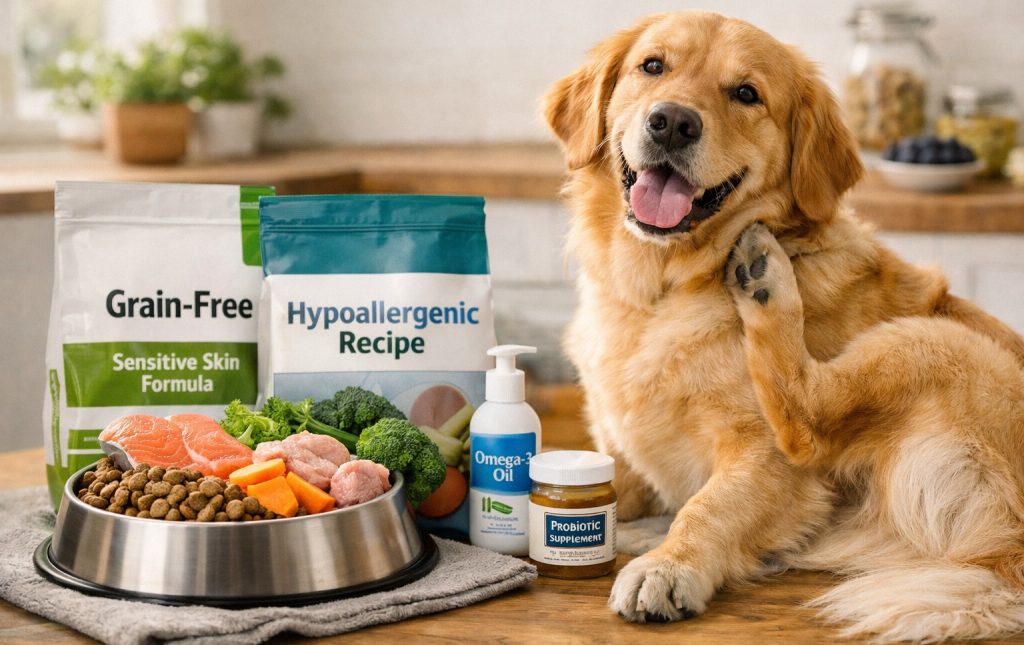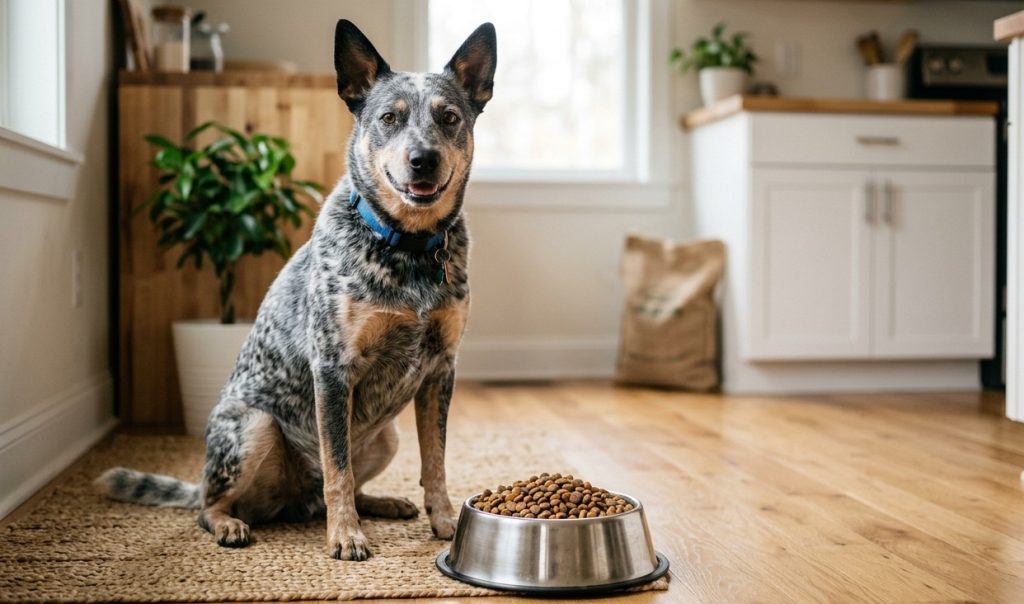
Hearing that a senior dog has a heart murmur can make feeding decisions feel urgent. A murmur is an abnormal sound heard during a veterinary exam; it does not, by itself, identify the cause or prove that heart failure is present. Some murmurs are harmless, while others reflect structural disease. The next step is to ask what evaluation and monitoring your dog needs.
Do not switch to a low-sodium food or a product marketed as dog food for senior dogs with heart murmur without veterinary advice. The appropriate diet depends on the diagnosis, disease stage, medications, body condition, kidney function, appetite, and other health conditions. Our overview of low-sodium dog food for heart murmurs can help you prepare questions, but it cannot prescribe a diet.
What a murmur can and cannot tell you
A murmur reflects turbulent blood flow. A veterinarian may recommend follow-up exams or tests such as chest imaging, an echocardiogram, blood pressure measurement, or blood tests to understand whether heart disease is present and how advanced it may be. The plan can differ for a young dog with a soft murmur and an older dog with coughing, exercise intolerance, or fluid accumulation.
Ask the veterinarian what the suspected cause is, what signs to track at home, when the next recheck should occur, and whether the dog needs a cardiology referral. Do not infer severity from the sound alone. Cornell’s guidance on heart murmurs in dogs explains why evaluation and follow-up matter.
How diet decisions are made
Some dogs with diagnosed heart disease may benefit from a therapeutic diet, including carefully managed sodium. But sodium restriction is not the same for every dog, and an overly restrictive or unpalatable diet can reduce food intake. A dog with heart disease may also have kidney disease or another condition that changes nutritional priorities. Ask the veterinarian before changing food, adding supplements, or offering salty human foods.
Bring the current food label, treat list, medication list, and approximate daily portions to the appointment. Ask whether a complete and balanced senior formula is appropriate, whether a cardiac diet is indicated now, and how to transition if a change is recommended. If your dog is eating poorly or losing weight, report it; maintaining adequate calories and muscle can be as important as restricting specific nutrients. VCA’s nutrition overview describes how diet depends on the dog’s stage of heart disease: Nutrition for Dogs with Heart Disease.
Daily care and monitoring
Keep meals and medicines on a predictable schedule. Give heart medication exactly as prescribed and do not stop it because the dog appears better. Track appetite, energy, coughing, breathing while resting, fainting, and ability to complete ordinary activities. Your veterinarian may teach you how to count resting breaths or ask for a diary. Follow the clinic’s thresholds rather than relying on a generic number found online.
Use activity guidance tailored to the dog. Many dogs can continue gentle walks, but strenuous bursts may be inappropriate for some conditions. Ask what level, duration, and temperature are safe. Keep routine appointments even when your dog seems well because early heart disease may have few visible signs. If breathing becomes labored, gums look blue or pale, the dog collapses, or distress develops, seek urgent veterinary care.
Questions for your veterinarian
- What could be causing the murmur, and what test would clarify it?
- Does my dog need a special diet now, or should we continue the current food?
- Should I limit salty treats, and what treats are acceptable?
- Are there medication, supplement, or food interactions to consider?
- What changes in breathing, cough, appetite, or activity require a same-day call?
Choose treats with the veterinarian’s advice, especially if the dog takes medication or has heart failure. Avoid assuming that all “senior” foods are heart diets or that grain-free, fresh, or homemade food is automatically better. If a homemade diet is desired, ask for a recipe formulated by a board-certified veterinary nutritionist.
How to prepare for a heart follow-up
Bring a list of changes since the murmur was found, including cough frequency, sleep quality, appetite, walking pace, fainting, and any change in breathing. Note whether signs occur at rest, during exercise, or after excitement. Keep the dog’s current food bag or a clear photo of its nutrition panel, plus a list of treats, table foods, supplements, and medications. This helps the veterinarian assess the entire diet instead of one product name.
Ask for a written plan that covers the working diagnosis, recommended tests, feeding instructions, activity limits, medication timing, and follow-up date. If the vet recommends a therapeutic food, ask how to transition, how much to feed, and what to do if the dog refuses it. Do not add salt substitutes or electrolyte products; some contain ingredients that can be unsafe or conflict with medication. Check before giving chews or dental treats because sodium levels and calorie density vary considerably.
Senior dogs may also have dental pain, reduced smell, arthritis, or kidney changes that affect appetite and food choices. A sudden refusal to eat should not be solved by adding increasingly rich toppings without advice. Contact the veterinary team if appetite drops, weight changes, vomiting occurs, or medicine becomes difficult to give. For a dog with heart failure, ask whether home monitoring of resting breathing is useful and what reading should prompt a call. If the dog is struggling to breathe or collapses, treat it as an emergency.
Keep changes coordinated
Make one nutrition or routine change at a time and agree on a follow-up date. If the dog is prescribed a cardiac diet, ask whether current treats can remain and whether the new food should be mixed gradually. If a medication must be given with food, confirm which foods are suitable. Do not stop a medication, add a supplement, or use a salt substitute without checking first.
Share updates with every family member who feeds the dog so that treats and meals stay consistent. A measuring cup or kitchen scale can help provide predictable portions, but ask the veterinarian to set the amount. Recheck weight and body condition at the clinic; both excess weight and unplanned weight loss can affect comfort and care decisions for an older dog.
Write down the clinic’s after-hours number and keep medication instructions with the dog’s records. Clear instructions reduce uncertainty when symptoms appear at night or during a weekend. If you are unsure whether a change is urgent, call the veterinary service and describe exactly what you see.
For related product questions, review our pages on food for senior dogs with a heart murmur, low-sodium treats for dogs with heart murmurs, and dog food for heart disease. Use these roundups to develop questions, then confirm any change with the veterinarian who knows your dog’s diagnosis.
Frequently asked questions
Does a heart murmur mean my dog needs low-sodium food?
Not necessarily. A murmur is a finding, and diet changes depend on the underlying diagnosis and stage. Ask the veterinarian before restricting sodium.
Can I keep feeding my dog’s usual senior food?
Often the veterinarian may recommend continuing it while tests are completed. Share the label and your dog’s full health history for an individualized decision.
Which signs need urgent care?
Labored breathing, collapse, fainting, blue or very pale gums, or sudden severe weakness warrant urgent veterinary attention.
Final Words
Dog food for senior dogs with heart murmur should be chosen after a veterinarian clarifies what the murmur means for that dog. Keep a stable routine, track changes, follow medication directions, and avoid unapproved sodium or supplement changes.