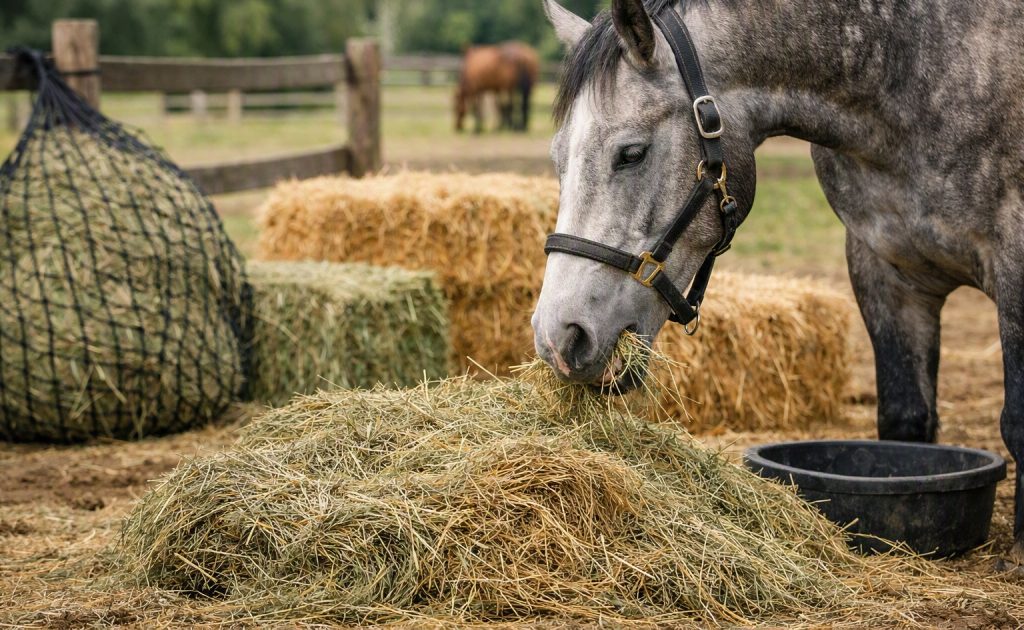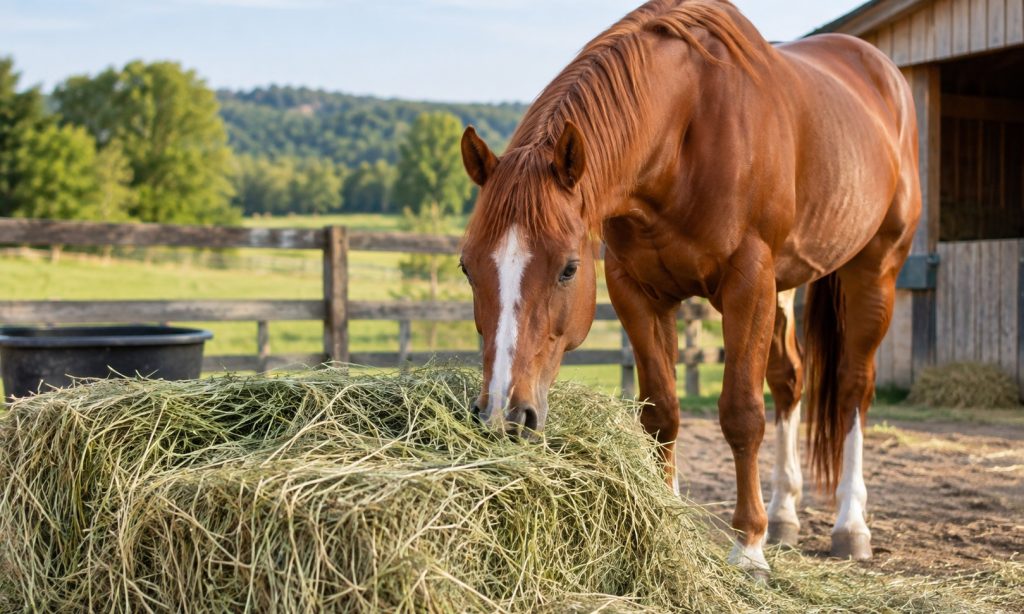
If your horse spends much of the year on hay or has a health concern, you may be considering vitamin E supplements. The right choice depends on the whole ration, forage access, and the horse’s individual status. This guide compares seven products by form, listed nutrient information, and feeding practicality. It does not prescribe a dose or diagnose deficiency. Ask your veterinarian whether testing is appropriate before adding vitamin E, especially if your horse receives fortified feed or other supplements. A measured plan can help avoid unnecessary overlap and excessive intake. Our guide to reading horse food labels can help you organize the ingredients already in the ration. Discuss the full ration before selecting a product or setting the amount.
Quick Picks
| Product | Best For | Key Advantage | Buy | |
|---|---|---|---|---|
| UltraCruz Equine Natural Vitamin E Plus Pellets | Pellet format | Pelleted natural E | View on Amazon | Jump to Review |
| MPV Vitamin E 5,000 Pellets | Pelleted vitamin E | Simple pellet listing | View on Amazon | Jump to Review |
| Kentucky Performance Products Elevate Maintenance Powder | Natural E powder | Measured natural E powder | View on Amazon | Jump to Review |
| Mad Barn Natural Vitamin E Powder | Concentrated natural E | Concentrated powder | View on Amazon | Jump to Review |
| Equithrive Natural Vitamin E Pellets | Vitamin E with omega-3 | Vitamin E with omega-3 | View on Amazon | Jump to Review |
| Pennwoods Essential E Liquid | Liquid format | Liquid delivery | View on Amazon | Jump to Review |
| Kentucky Performance Products Elevate Se | Vitamin E with selenium | Vitamin E plus selenium | View on Amazon | Jump to Review |
When to Consider Vitamin E for Horses
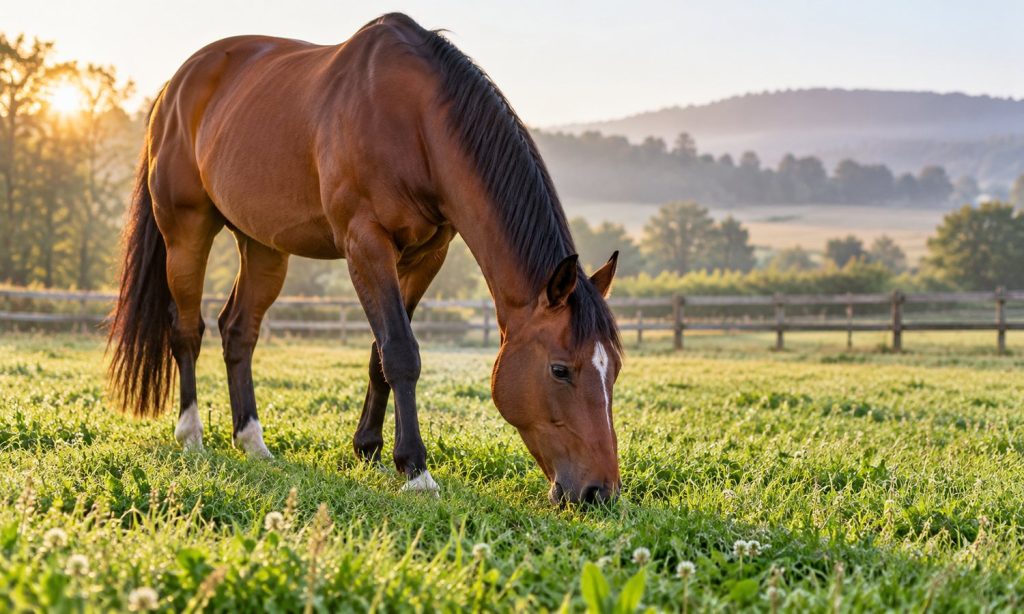
Fresh green forage is a dietary source of vitamin E, and vitamin content can be lower in stored hay. That does not mean every horse needs a supplement. Your veterinarian may use diet history, clinical context, and blood testing to guide a plan. Selenium is a separate nutrient that interacts with vitamin E; combination products should not be added without checking total selenium intake.
Product Reviews
1. UltraCruz Equine Natural Vitamin E Plus Pellets

- Pelleted natural vitamin E
- 2-pound container listed
- Natural E positioning
- Single-serving option mentioned
- Verify amount per serving
- Avoid duplicating selenium or vitamin E
UltraCruz Equine Natural Vitamin E Plus is listed as a 2-pound pelleted supplement. The product information describes natural vitamin E and positions the pellets for horses that need dietary antioxidant support. A pellet may be easier to portion than a loose powder, depending on the horse’s feed routine. The listing also mentions single-serve versions, but verify the exact package and serving instructions for this particular listing before ordering.
Vitamin E needs depend on forage access, the rest of the ration, and the horse’s health. Do not infer a daily dose from the product title. Ask your veterinarian whether a blood test is warranted and what form and amount fit the horse. The label and guaranteed analysis matter more than general marketing language. If your horse receives a fortified feed or another vitamin supplement, include those sources in the calculation.
This option may suit owners who prefer a pelleted product and want a natural vitamin E formula. Check whether your horse will eat it consistently and whether the current package lists the amount of vitamin E per serving. Avoid stacking it with other vitamin E or selenium products without professional advice. A liquid or powder may be more suitable if the vet recommends a specific amount that is difficult to achieve with pellets. Keep a daily log of the amount fed and any other vitamin products in the ration. That record helps the veterinarian assess changes over time.
My Recommendation
UltraCruz may fit owners who prefer a pelleted, natural vitamin E option. Confirm the actual IU amount and serving directions on the package, since the product title alone is not enough to set a dose. It may be less suitable if your veterinarian recommends a liquid or exact adjustable amount. Review all existing vitamin E and selenium sources before feeding, and use it only as part of a professionally reviewed ration.
2. MPV Vitamin E 5,000 Pellets

- Pelleted format
- Vitamin E named in product title
- Compact product presentation
- No extra nutrient listed in returned details
- Returned product details are limited
- Confirm full label before use
MPV Vitamin E 5,000 is named as a pelleted vitamin E product for horses. The returned listing provides little detail beyond that title and a general muscle and immune support statement. Because the public product data is sparse, verify the full label before purchase. Confirm the vitamin E form, amount per serving, directions, and any added nutrients. Do not assume that the “5,000” name alone tells you how much to feed.
Pellets may be convenient in a measured ration, but a horse must consume the intended quantity. Check the feeding guide on the current package and ask your veterinarian to compare the daily amount with forage and fortified feed. If the label does not clearly disclose the ingredient source and concentration, contact the manufacturer. This matters when a veterinarian is targeting a particular blood vitamin E level or monitoring a deficiency.
MPV’s compact product description makes it harder to compare this supplement with products that publish more ingredient details. That is a practical drawback, not evidence that the product is ineffective. Do not rely on marketing terms to select a dose. Request a full ingredient panel and follow the veterinary plan. If those details cannot be confirmed, a product with transparent labeling may be easier to evaluate and track. Ask the manufacturer to clarify the full label and nutrient concentration before purchase. Clear information is especially useful when the care plan includes blood testing.
My Recommendation
MPV may be worth considering only after you confirm the full label and serving information. The returned listing provides less detail than the other options, which makes comparison difficult. If the manufacturer supplies clear nutrient amounts and your veterinarian approves the formula, pellets may be a convenient format. If not, choose a supplement with more transparent labeling. Do not select a dose from the product name. Ask for the current container label if online details remain incomplete.
3. Kentucky Performance Products Elevate Maintenance Powder

- Natural vitamin E powder
- 1,000 IU per 7-gram scoop listed
- 2-pound container
- Top-dress format
- Powder may be sorted out of feed
- Scoop size must be followed
Elevate Maintenance Powder is described as a supplemental source of natural vitamin E. Its listing states that a 7-gram scoop contains 1,000 IU of vitamin E as d-alpha-tocopheryl acetate. That amount is a label detail, not a dose recommendation for every horse. The product is presented for gradual increases or maintenance over time. Confirm the current container’s directions and serving scoop before using those figures in a feeding plan.
A powder can be top-dressed and may make it easier to adjust intake than a fixed pellet serving, provided the horse eats the complete meal. Measure the product with the supplied scoop rather than estimating. Review the rest of the ration for other vitamin E sources. If the veterinarian recommends blood monitoring, record the product, serving, and start date so changes can be interpreted alongside test results.
This 2-pound package may fit an owner who wants a natural E powder from a product line offering maintenance and other formula types. Check that you select the maintenance version, since similarly named supplements may contain different ingredients. Ask whether the horse needs selenium as well; do not add selenium automatically. A pellet could be simpler for a horse that sorts powder out of feed. Store the powder as directed and keep the scoop with the package. Accurate portions matter more when a formula is concentrated or used daily. Weighing the scoop can help maintain consistency.
My Recommendation
Elevate Maintenance Powder suits owners who want a natural E powder with a stated amount per scoop. It may be easier to adjust than a fixed pellet if the horse eats powder reliably. Confirm that you have the maintenance version and discuss the total ration with your veterinarian. If the horse refuses top-dressed feed, a pelleted or liquid option may be more practical. Do not add selenium unless it is also indicated.
4. Mad Barn Natural Vitamin E Powder

- Natural E powder listed
- 1,000 IU per scoop stated
- 500-gram package
- No added sugar or starch claimed
- Concentrated powder requires precise measuring
- Verify current label and scoop
Mad Barn Natural Vitamin E is listed as a 500-gram powder with a concentrated d-alpha-tocopheryl acetate source. The listing states 1,000 IU per 3-cc scoop and approximately 300 servings at the stated amount. These are product-label claims, so confirm them on the container. The formula is described without added fillers, sugars, or starches, which may matter when comparing ingredient lists for a horse with dietary restrictions.
The concentrated scoop can make small serving amounts easier to measure, but the owner should use the included measure and the veterinarian’s recommended amount. A small scoop is also easy to misplace or overfill. Check whether the horse eats the powder when top-dressed and monitor the ration for overlapping sources. If you change the amount, make the adjustment under professional guidance rather than responding to a product marketing claim.
This product may suit an owner looking for a concentrated powder with the vitamin E amount clearly stated in the listing. Verify the full label, expiry date, and storage directions. “Natural” does not mean one dose is right for every horse. The best comparison is the form and measured amount recommended for your horse, supported by diet review or testing when appropriate. Compare the stated scoop size with the veterinarian’s target amount before feeding. Do not adjust the serving just because another horse receives more. Store it sealed and dry, and keep the lid tightly closed between uses.
My Recommendation
Mad Barn is a useful comparison for a concentrated powder whose listing states an amount per scoop. Precise measuring is important, so it may not suit a barn that cannot maintain careful dosing. Ask your veterinarian whether the form and amount match the horse’s needs. If you want a less concentrated serving or easier handling, another powder or pellet may be preferable. Check the package label before relying on the listing.
5. Equithrive Natural Vitamin E Pellets

- Pellets combine vitamin E and omega-3
- 3.3-pound size listed
- Combination formula
- May simplify a ration that calls for both
- Omega-3 overlap needs review
- Combination may limit dose flexibility
Equithrive Natural Vitamin E Pellets are listed as a 3.3-pound product combining vitamin E with omega-3 ingredients. The product description is centered on pellet delivery and the addition of a second nutritional component. This may interest owners comparing combination products, but it also means the full label should be reviewed for the omega-3 source and amount. Confirm the current serving instructions and competition-related claims with the manufacturer or governing rules.
The listing suggests a role for horses with limited pasture access, but that does not establish that every horse in that situation needs supplementation. Ask your veterinarian whether the current diet provides adequate vitamin E and whether blood testing would help. If a horse already receives an omega-3 supplement, consider the overlap. A combination formula can simplify a ration for some owners, but it can also make individual nutrient adjustments less precise.
Choose this product only if both components fit the horse’s plan. Check the vitamin E form, amount per serving, omega-3 source, and storage requirements. Avoid assuming that statements about bioavailability or competition approval apply to every event or current rulebook. If the veterinarian wants vitamin E alone or a specific formulation, a single-nutrient powder or liquid may be a better match. If your horse already gets omega-3s, compare the sources and totals before choosing this combination. A single nutrient formula may be simpler to balance. Check how it pairs with your current feed.
My Recommendation
Equithrive may suit owners seeking a combined pellet with vitamin E and omega-3s. The combination is convenient only if both components belong in the diet. Review the source and amount of omega-3s and any competition claims. If the veterinarian wants vitamin E alone or a precisely adjustable amount, a single-nutrient formula offers more flexibility. Compare the complete ration before adding another combination product. Choose another format if one of the two nutrients is not needed.
6. Pennwoods Essential E Liquid

- Pourable liquid format
- One-gallon container listed
- Pump dispensing described
- Vitamin E source listed
- Large container needs storage space
- Pump and measuring details need confirmation
Pennwoods Essential E is a pourable supplement sold in a one-gallon container. Its listing describes vitamin E in a soybean oil carrier and identifies DL-alpha-tocopheryl as a form in the formula. It also states that a full pump is two ounces and associates that amount with 1,000 IU. Verify the current label and included pump, since the product page warns that pump availability may vary by seller.
A liquid can be useful when a horse refuses pellets or powder, and the flavoring may help with acceptance. It also requires accurate measuring and appropriate storage after opening. Review the ingredient list for oil and flavor components if your horse has dietary restrictions. Do not use the manufacturer’s sample feeding guidance as a universal dose; your veterinarian should consider the horse’s weight, baseline status, and other dietary sources.
The gallon size may be practical for a barn feeding several horses, but less convenient for a single horse trying the product for the first time. Check the expiry date, serving size, and pump mechanism. If a smaller package or a natural form is preferred, compare powdered or pelleted options. The key advantage here is liquid delivery; the main tradeoff is storage and the need to measure each serving carefully. Check the bottle’s storage instructions and use a clean measure. If the liquid separates or changes appearance, contact the manufacturer before feeding. Measure with a clean dose tool.
My Recommendation
Pennwoods Essential E is the main liquid option here and may work for a horse that refuses powders. Its one-gallon size and pump method require reliable storage and measuring. Verify the pump, label, and form of vitamin E, then ask your veterinarian whether it fits the plan. If you want a smaller trial size or a powder, compare those formats before choosing this large container. Consider a smaller or powder package if you only feed one horse.
7. Kentucky Performance Products Elevate Se

- Combines vitamin E and selenium
- 2-pound powder listed
- Natural E and selenium yeast described
- May fit a vet-directed combined plan
- Selenium adds cumulative intake risk
- Not suited when only vitamin E is needed
Elevate Se combines vitamin E with selenium yeast, according to the listing. That combination is different from a vitamin E-only supplement and may matter when a veterinarian has identified a need for both nutrients. The product page describes a 2-pound powder and names a natural vitamin E source alongside selenium. Verify the actual amount of each nutrient per serving on the current label before adding it to a ration.
Because selenium intake from forage, feed, and supplements adds together, this product requires a careful whole-diet review. Do not use it as a generic replacement for a vitamin E-only product. Ask your veterinarian or equine nutritionist whether the horse needs selenium and what total intake is appropriate. Measuring the serving accurately matters, particularly when the horse already receives a ration balancer or mineral mix.
Elevate Se may suit a horse whose professional nutrition plan calls for both vitamin E and selenium. If only vitamin E is needed, a single-nutrient supplement may avoid unnecessary selenium. Confirm the amount, source, warnings, and feeding rate on the container, and keep the label available for the care team. Choose this combined formula only when the second nutrient has been considered deliberately. Record selenium from every feed and supplement, not only this powder. That full accounting makes it easier to avoid overlapping mineral sources. Do not add extra selenium independently; keep the full mineral plan documented.
My Recommendation
Elevate Se should be considered only when a veterinarian or equine nutritionist has reviewed the horse’s selenium intake as well as vitamin E. Its combined formula may help avoid separate products when both nutrients are indicated. If selenium is already present in feed or forage, a vitamin E-only product may be safer. Follow the current label precisely and do not stack selenium supplements. Keep the feeding plan under professional review.
How to choose best vitamin e supplement for horses
Start with the horse’s diet and veterinary guidance. Compare the vitamin E form and amount per serving, then choose a delivery method the horse will eat reliably.
Review forage and other nutrient sources
List pasture access, hay, complete feed, ration balancers, and every supplement. Read each label for vitamin E and selenium, then show the full list to your veterinarian or equine nutritionist. A product that includes selenium should be treated differently from a vitamin E-only formula. Do not assume a horse needs more because it is active or kept indoors. Testing and diet history can help guide a specific plan. Our guide on discussing forage with an equine nutritionist may help you prepare ration questions.
Compare form and label clarity
Powder, pellets, and liquid differ in measuring and acceptance. Check the nutrient amount per scoop, pump, or serving rather than comparing container size alone. A concentrated powder requires careful measuring. Pellets may be easier to feed, but some horses sort them out. Liquids need suitable storage and consistent portioning. Confirm the current package, since online details can change. If the listing does not provide a complete ingredient panel, ask the manufacturer before buying.
Avoid unnecessary oversupplementation
Vitamin E and selenium are not interchangeable, and selenium can accumulate from several sources. Do not combine multiple products without calculating the total intake. Merck Veterinary Manual notes that excessive vitamin E supplementation should be avoided in healthy adult horses; individual needs differ. Follow the veterinarian’s dose and monitoring plan rather than general advice online. Keep the label and serving log in the barn. If a horse has weakness, abnormal movement, or another health change, seek veterinary assessment instead of self-treating.
Ask how long the recommended plan should continue and whether follow-up testing is useful. Keep the original and updated labels if the manufacturer changes a formula. For selenium-containing products, request help estimating total daily intake from all sources. If you switch brands, compare the nutrient amount per serving rather than matching scoop size. The same volume of powder can deliver a different amount of vitamin E. A format that the horse accepts, a transparent label, and a clear monitoring plan make a stronger choice than a broad performance promise.
Frequently Asked Questions
Does every horse need a vitamin E supplement?
No. Need depends on forage, diet, health, and test results. Discuss supplementation with your veterinarian.
Should I test vitamin E levels before supplementing?
Ask your veterinarian. Testing may help guide the form and amount for an individual horse.
Can I give vitamin E with selenium?
Only after reviewing total selenium from the entire ration with a veterinarian or equine nutritionist.
Which form is easiest to feed?
It depends on the horse. Compare pellets, powder, and liquid based on acceptance and accurate measuring.
Can too much vitamin E be harmful?
Excessive supplementation should be avoided. Follow veterinary guidance and do not stack products casually.
Final Verdict
The best vitamin E supplement for horses is the one that matches a veterinarian-reviewed nutrition plan. UltraCruz, MPV, Elevate Maintenance, Mad Barn, Equithrive, Pennwoods, and Elevate Se offer different forms and nutrient combinations. Compare label details, measure carefully, and account for vitamin E and selenium already in the ration. Do not start or increase a supplement based only on a product claim. Ask your veterinarian whether testing or a specific formulation is appropriate.
For related reading
Read our horse food label guide and how amino acid supplements differ as you review other parts of the ration.
Affiliate disclosure: This article contains Amazon affiliate links. If you purchase through them, PetAdvisorPro may earn a commission. As an Amazon Associate I earn from qualifying purchases.