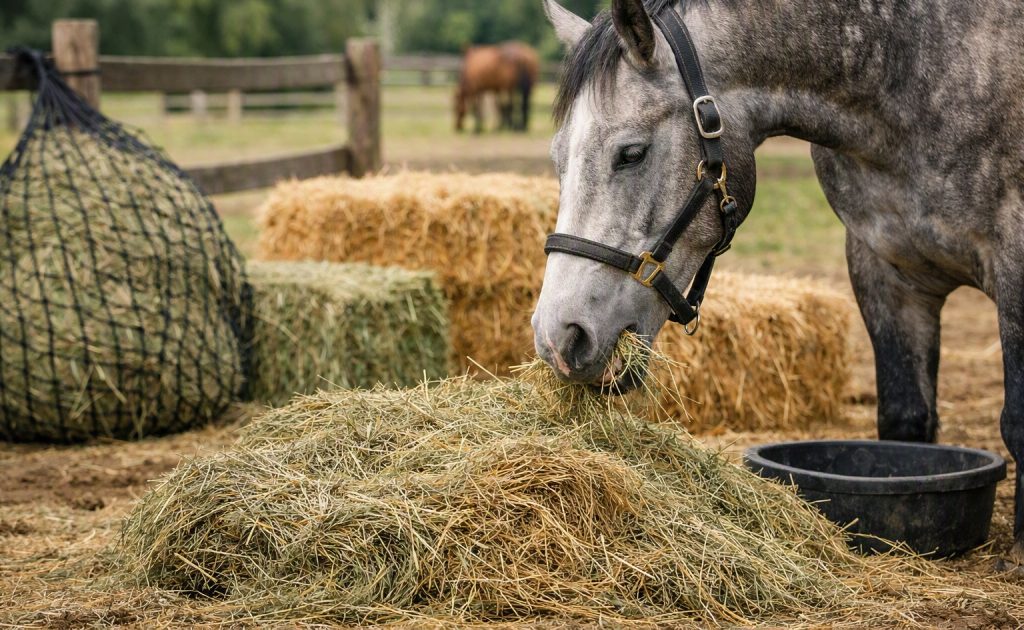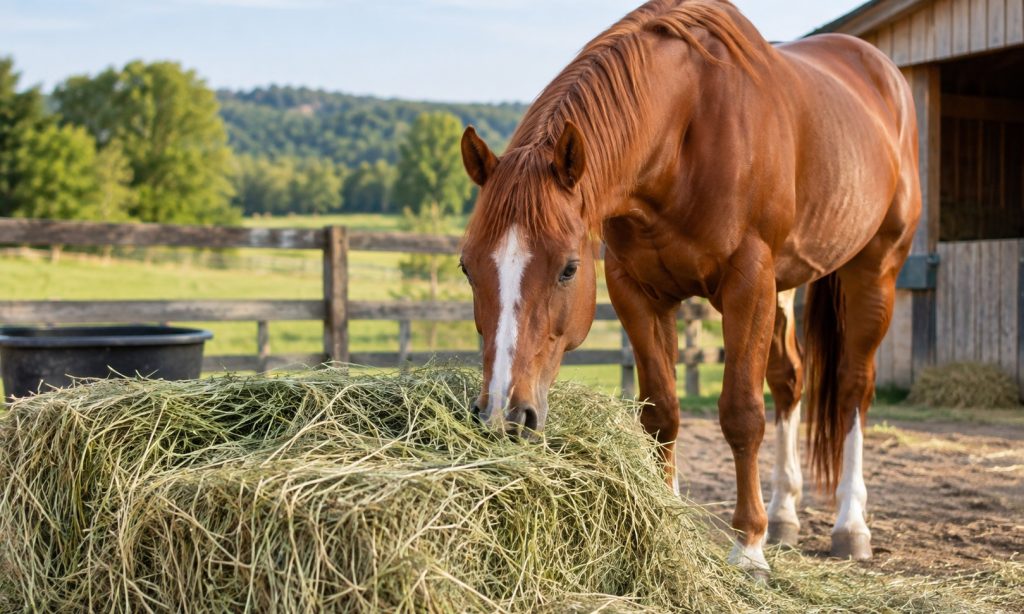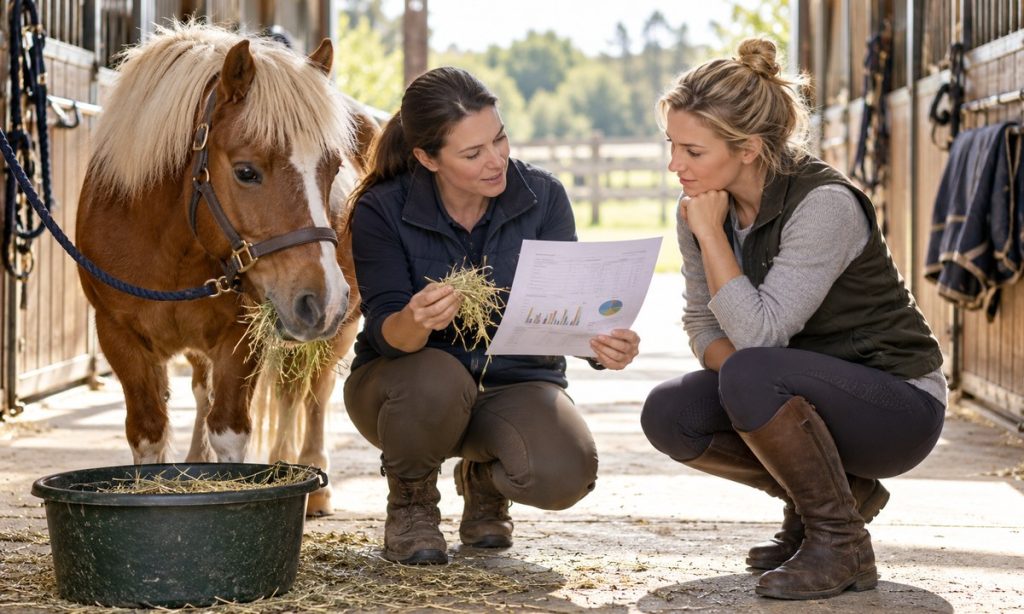
If a horse has insulin resistance or another form of insulin dysregulation, forage choices should be based on the diagnosis, body condition, hay analysis, and the horse’s complete diet. A lower-sugar forage plan may be part of management, but there is no single hay that suits every horse or replaces veterinary care. Ask an equine nutritionist to review the veterinarian’s findings, current feed labels, pasture routine, and recent changes in weight or hoof comfort. Bring the hay analysis if you have one, along with the amount fed each day. If you are comparing hay for insulin resistant horses, use the product information to prepare questions about nutrient content and suitability, not as a substitute for a tailored plan.
Start with the diagnosis and the goal
What does the veterinary diagnosis mean for this horse?
Ask the nutritionist to coordinate with the veterinarian and explain how test results affect feeding decisions. “Insulin resistant” and “insulin dysregulated” are not always used in exactly the same way, and blood testing may depend on the horse’s clinical picture and the test performed. Ask which results should guide the ration, whether additional testing is needed, and who will interpret changes over time.
Discuss why the horse is being evaluated. A history of laminitis, abnormal insulin results, regional fat deposits, easy weight gain, or a change in body condition may affect priorities. Ask whether the immediate goal is reducing excess weight, maintaining weight while lowering sugar and starch exposure, supporting a horse that is too thin, or balancing nutrients without adding unnecessary calories.
How should we track progress?
Agree on practical measures such as body condition score, weight estimates, neck crest, hoof comfort, appetite, and pasture access. Ask how often to record them and when to recheck with the veterinarian. A horse can appear stable while insulin risk or hoof discomfort changes, so visible weight alone may not tell the full story.
Questions about hay quality and analysis
Should we test the hay?
Ask whether a laboratory analysis would help select or balance the forage. Hay can differ in water-soluble carbohydrates, starch, fiber, energy, protein, and minerals even when it looks similar. Request guidance on which values matter and whether results should be read on an as-fed or dry-matter basis. Keep the sample and report tied to the specific lot of hay being fed; a new batch may not have the same profile.
Ask the nutritionist to explain the report in the context of the horse’s whole ration. A single carbohydrate number may not tell you everything, and recommendations can vary with medical history and body condition. Ask for a specific acceptable range or selection criteria for your horse, and whether the result suggests changing the hay, soaking it, adjusting portions, or adding a balancer.
What if I cannot get an analysis for every batch?
Ask how to choose forage when a laboratory report is not available. The nutritionist may discuss a consistent supplier, forage type, harvest maturity, storage, and prior analysis from the same source. Do not assume that a certain color, smell, or species guarantees low sugar. If the horse has had laminitis or is difficult to manage, ask whether testing should be a priority before feeding a new lot.
Review portions, pasture, and hay soaking
How much forage should the horse eat?
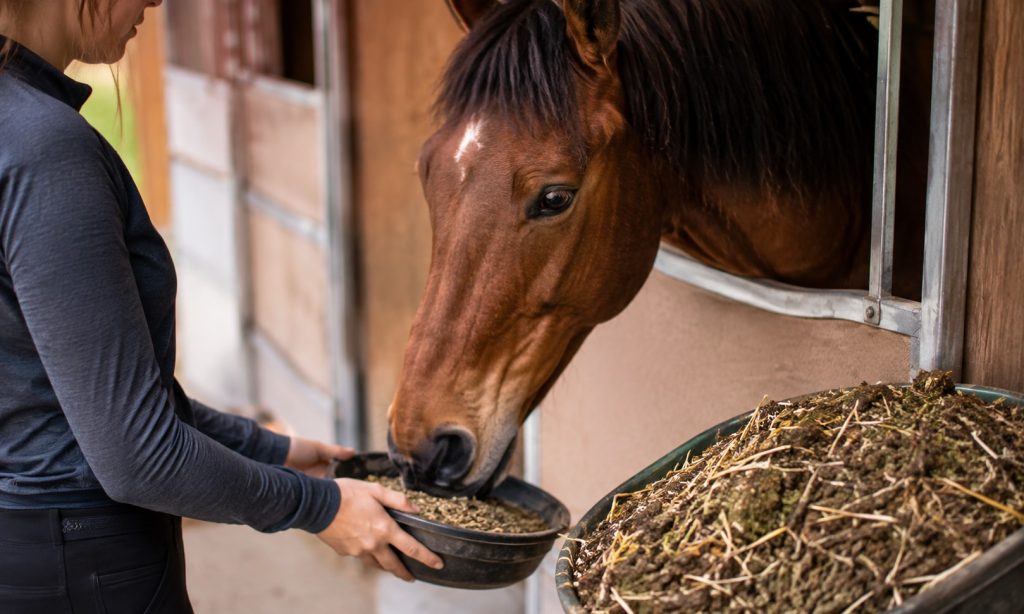
Ask for a daily forage target that accounts for body weight, body condition, dental health, workload, and any need for weight reduction. Weigh hay rather than relying on flakes, since bale and flake weights vary. Include pasture and any hay cubes, pellets, or chopped forage in the calculation. If the horse needs a calorie deficit, ask how to lower energy intake while preserving safe forage access and avoiding long periods without something appropriate to eat.
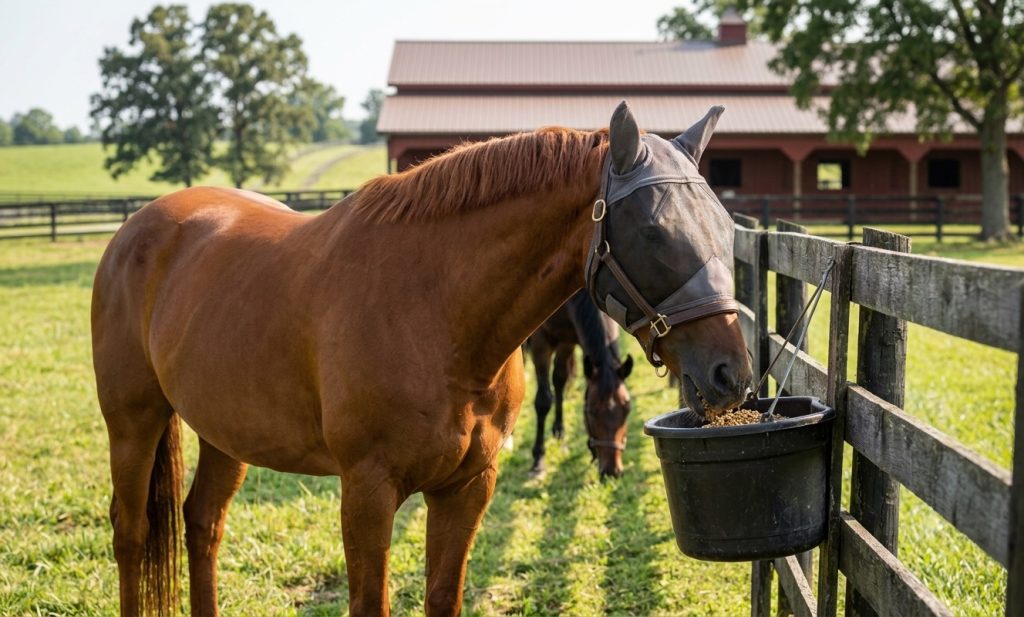
Discuss whether slow feeders, separate feeding, or turnout changes would help control intake. Any feeder should be safe for the horse and should not create a risk of entanglement. If the horse shares hay, decide how to confirm its individual intake and prevent it from consuming another horse’s ration.
Should I soak the hay?
Ask whether soaking is appropriate and what result to expect. Soaking can reduce water-soluble carbohydrates in some hay, but the effect varies and other nutrients can leach into the water. The forage may need rebalancing, and wet hay can spoil more quickly in warm conditions. Ask how long to soak, how to handle the water and wet forage hygienically, and how soon the horse should consume it. Do not guess at a soaking schedule based on another horse’s plan.
If soaking is impractical, ask about tested forage options and alternatives that meet the horse’s needs. A low-sugar complete feed or ration balancer may be considered for some horses, but the product must fit the whole diet and be fed according to its label and professional advice.
Questions about pasture, concentrates, and supplements
How should turnout be managed?
Ask whether pasture access needs to change and how to balance grazing with movement, social contact, and welfare. Grass carbohydrate levels can shift with season, weather, plant growth, and time of day. A grazing muzzle or dry lot may be options for some horses, but fit, supervision, forage availability, water, and behavior matter. Ask the veterinarian how laminitis risk affects the plan.
What else in the ration adds sugar or starch?
Bring labels for grain, treats, supplements, and medications given with feed. Ask the nutritionist to total the sources of sugar, starch, and calories and identify duplicate ingredients. Feed labels may not list every carbohydrate measure you want, so ask whether the manufacturer or laboratory can provide more detail. Avoid adding oil or fat simply because it is marketed for metabolic horses; extra calories may not suit a horse that needs weight reduction.
Ask whether the horse needs a ration balancer or vitamin and mineral supplement when the diet is based mainly on forage. A low-energy ration can still be short of nutrients. The goal is a balanced plan with suitable calories, not just a product labeled low sugar.
Make the plan clear and workable
Ask who is responsible for changes and what to do if the horse refuses the hay, loses too much weight, or develops hoof soreness. Request a transition schedule when changing forage or feed. Keep records of hay lot, measured portions, turnout, body condition, and hoof observations. Share changes with everyone who feeds the horse so the plan is followed consistently.
Frequently Asked Questions
Is all grass hay low in sugar?
No. Sugar and starch vary by forage, harvest, and conditions. A lab analysis is more useful than judging by color or grass type alone.
Does soaking always make hay safe for an insulin-resistant horse?
No. Soaking effects vary, and nutrients can leach out. Ask whether soaking is appropriate and how to handle wet forage safely for your horse.
Should I remove all pasture?
Not automatically. Pasture decisions depend on insulin status, laminitis history, grass conditions, and the horse’s needs. Discuss turnout and movement with the veterinarian and nutritionist.
Can a low-sugar hay replace medication?
No. Hay supports a feeding plan but does not replace prescribed treatment or veterinary monitoring. Do not change medication without the veterinarian.
What should I bring to the nutrition appointment?
Bring hay and feed analyses, product labels, measured amounts, turnout details, body condition records, recent test results, medications, and notes about hoof comfort and appetite.
Final Words
Ask an equine nutritionist to connect the veterinary diagnosis with a measurable forage plan, including hay testing, portion size, pasture, soaking, and nutrients from the rest of the ration. Monitor body condition and hoof comfort, and coordinate changes with your veterinarian. When reviewing hay for insulin resistant horses, compare analysis and feeding guidance with the horse’s test results and goals, not a general product claim.