
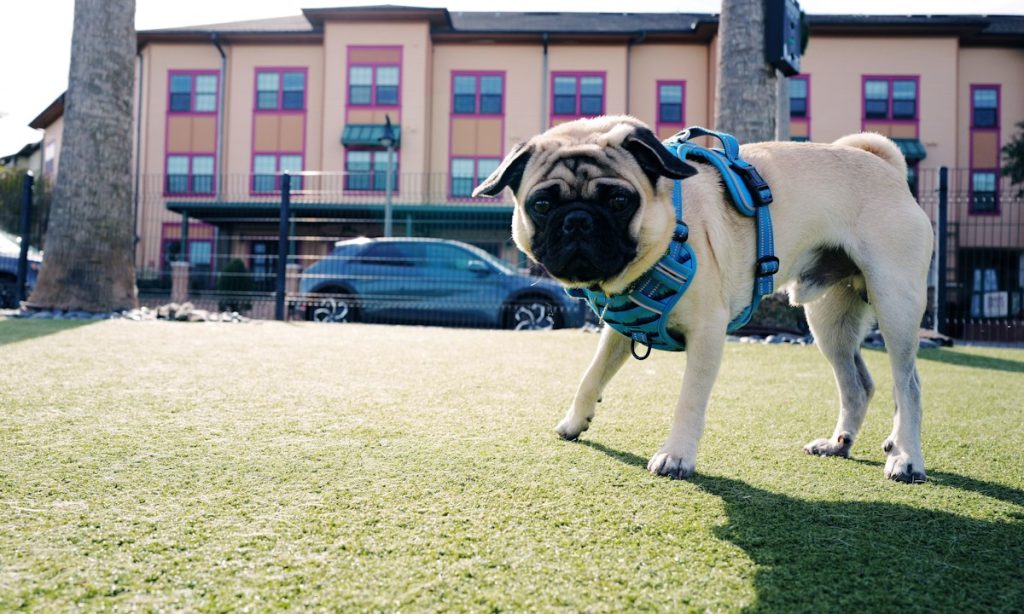
Pugs need a harness that fits their stocky body without putting unnecessary pressure against the neck. Finding the best dog harness for pugs involves comparing chest width, shoulder clearance, ease of dressing, and airflow. No product label can guarantee comfort or prevent breathing problems, especially in warm conditions. A veterinarian should assess noisy or difficult breathing rather than relying on a different harness to fix it. We compared seven Amazon-verified listings, including breathable mesh designs, front-and-back clip options, and breed-conscious adjustable styles. These are editorial assessments of product information, not personal tests. Measure your pug’s rib cage and neck before choosing a size, and inspect the fit in motion. Our dog harness fitting guide provides additional strap and rubbing checks.
Quick Picks
Compare these seven authenticated listings by fit style, leash connections, and dressing practicality. Measure the individual dog before choosing a variant.
| Product | Best For | Key Advantage | Buy | |
|---|---|---|---|---|
| IVY&LANE Small Dog Harness | adjustable small-dog walking | three buckles and front/back clips | View on Amazon | Jump to Review |
| Breathable Mesh Harness with Handle | airflow-focused walks | light mesh panels and padded grip | View on Amazon | Jump to Review |
| Lukovee Small Harness and Leash | padded leash bundles | soft contact areas and supplied short leash | View on Amazon | Jump to Review |
| SlowTon Small No-Pull Harness Set | cushioned guided walks | front leash connection plus soft padding | View on Amazon | Jump to Review |
| Voyager Dual Attachment Harness | medium chest fit | front and rear connections in a medium variant | View on Amazon | Jump to Review |
| BULLHUG Adjustable Broad-Chest Harness | breed-conscious body shape | adjustable shape marketed for pugs | View on Amazon | Jump to Review |
| PoyPet Medium Front-Clip Harness | neck-release dressing | neck buckle plus front leash ring | View on Amazon | Jump to Review |
1. IVY&LANE Small Dog Harness
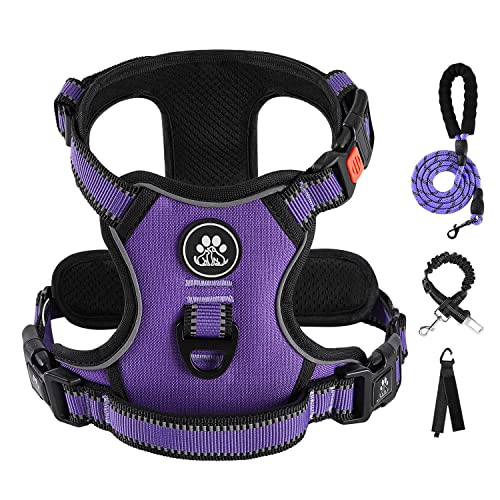
What We Like
- Multiple closure buckles
- Four fit adjusters
- Two leash locations
- Reflective webbing
What We Don’t Like
- Needs careful chest-and-neck sizing
IVY&LANE describes several closures and four adjustment points on its small-dog walking vest. Do not choose on breed name or bodyweight alone. Pugs often have a broad chest relative to their neck, so the selected size must accommodate both measurements. Look for a front panel that stays away from the throat, straps that do not dig behind the forelegs, and room for natural movement. A comfortable design should remain stable when the dog turns. The multiple buckles provide a choice of dressing sequence.
Its front and rear clips allow owners to choose where the leash attaches, and the listing includes a leash. The most useful handling feature is the one that fits your everyday walks. A front connection may assist gentle redirection, whereas a back connection often suits an already relaxed walker. Practice putting the harness on while the dog is calm. Introduce leash tension gently, check for twisted fabric, and reward loose-leash behavior instead of depending on a product’s no-pull promise. Check whether both rings sit flat during turns.
A small label does not ensure space for an adult pug’s broad chest, especially if the neck fitting differs. Because pugs can struggle with heat and breathing, watch the dog’s actual comfort rather than trusting a breathable label. Use short supervised outings, avoid strenuous exercise in hot weather, and stop if breathing looks difficult. Keep padding dry, inspect buckles and seams, and remove the harness during unsupervised periods. A harness cannot diagnose or treat airway disease. The four adjusters need to be balanced without compression.
My Recommendation
IVY&LANE Small Dog Harness deserves consideration when your priority is adjustable small-dog walking. The listed strengths are three buckles and front/back clips, but those are product-description details rather than personal test findings. The important limitation is that a small label does not ensure space for an adult pug’s broad chest, especially if the neck fitting differs. If that is a poor match, consider BULLHUG instead. Measure the specific variation and watch how it sits during a short supervised walk. For pugs, a comfortable neckline and sensible heat precautions take priority over a promise that a harness will fix pulling or breathing difficulties.
2. Breathable Mesh Harness with Handle

What We Like
- Air mesh body
- Front and back leash rings
- Padded top grip
- Reflective details
What We Don’t Like
- Heat precautions remain necessary
The listing describes honeycomb air mesh, two metal leash points, and a padded upper handling grip. Do not choose on breed name or bodyweight alone. Pugs often have a broad chest relative to their neck, so the selected size must accommodate both measurements. Look for a front panel that stays away from the throat, straps that do not dig behind the forelegs, and room for natural movement. A comfortable design should remain stable when the dog turns. Mesh can be attractive for shorter warm-weather routines.
Mesh coverage is intended to improve airflow, while the front connection can assist gentle direction changes. The most useful handling feature is the one that fits your everyday walks. A front connection may assist gentle redirection, whereas a back connection often suits an already relaxed walker. Practice putting the harness on while the dog is calm. Introduce leash tension gently, check for twisted fabric, and reward loose-leash behavior instead of depending on a product’s no-pull promise. Try the top grip gently without lifting the dog.
Breathable fabric does not eliminate overheating, and the size still needs a hands-on fit check. Because pugs can struggle with heat and breathing, watch the dog’s actual comfort rather than trusting a breathable label. Use short supervised outings, avoid strenuous exercise in hot weather, and stop if breathing looks difficult. Keep padding dry, inspect buckles and seams, and remove the harness during unsupervised periods. A harness cannot diagnose or treat airway disease. Airflow claims do not replace heat safety precautions.
My Recommendation
Breathable Mesh Harness with Handle deserves consideration when your priority is airflow-focused walks. The listed strengths are light mesh panels and padded grip, but those are product-description details rather than personal test findings. The important limitation is that breathable fabric does not eliminate overheating, and the size still needs a hands-on fit check. If that is a poor match, consider Voyager instead. Measure the specific variation and watch how it sits during a short supervised walk. For pugs, a comfortable neckline and sensible heat precautions take priority over a promise that a harness will fix pulling or breathing difficulties.
3. Lukovee Small Harness and Leash

What We Like
- Neck adjustment option
- Padded contact fabric
- Short leash included
- Front-body fit options
What We Don’t Like
- Warm padding may feel bulky
Lukovee lists a small-size harness with padded contact sections and an included four-foot leash. Do not choose on breed name or bodyweight alone. Pugs often have a broad chest relative to their neck, so the selected size must accommodate both measurements. Look for a front panel that stays away from the throat, straps that do not dig behind the forelegs, and room for natural movement. A comfortable design should remain stable when the dog turns. Compare the leash length with the setting in which you normally walk.
The neck and chest are designed to be adjusted, allowing an owner to check how the harness settles over a wider front body. The most useful handling feature is the one that fits your everyday walks. A front connection may assist gentle redirection, whereas a back connection often suits an already relaxed walker. Practice putting the harness on while the dog is calm. Introduce leash tension gently, check for twisted fabric, and reward loose-leash behavior instead of depending on a product’s no-pull promise. Pads should lie flat rather than bunch at the elbow.
An included leash is not automatically appropriate for every handler, and padding may trap warmth after exercise. Because pugs can struggle with heat and breathing, watch the dog’s actual comfort rather than trusting a breathable label. Use short supervised outings, avoid strenuous exercise in hot weather, and stop if breathing looks difficult. Keep padding dry, inspect buckles and seams, and remove the harness during unsupervised periods. A harness cannot diagnose or treat airway disease. Dry padded surfaces after each wet outing.
My Recommendation
Lukovee Small Harness and Leash deserves consideration when your priority is padded leash bundles. The listed strengths are soft contact areas and supplied short leash, but those are product-description details rather than personal test findings. The important limitation is that an included leash is not automatically appropriate for every handler, and padding may trap warmth after exercise. If that is a poor match, consider mesh harness instead. Measure the specific variation and watch how it sits during a short supervised walk. For pugs, a comfortable neckline and sensible heat precautions take priority over a promise that a harness will fix pulling or breathing difficulties.
4. SlowTon Small No-Pull Harness Set

What We Like
- Padded neckline
- Front leash clip
- Adjustable chest area
- Leash in package
What We Don’t Like
- Front clip still requires training
The small-dog SlowTon model is listed with soft padding, adjustable chest and neck areas, and a leash. Do not choose on breed name or bodyweight alone. Pugs often have a broad chest relative to their neck, so the selected size must accommodate both measurements. Look for a front panel that stays away from the throat, straps that do not dig behind the forelegs, and room for natural movement. A comfortable design should remain stable when the dog turns. A chest ring can change the angle of pull during early training.
The front leash attachment offers directional guidance during calm training, while the fabric spreads contact beyond a narrow collar. The most useful handling feature is the one that fits your everyday walks. A front connection may assist gentle redirection, whereas a back connection often suits an already relaxed walker. Practice putting the harness on while the dog is calm. Introduce leash tension gently, check for twisted fabric, and reward loose-leash behavior instead of depending on a product’s no-pull promise. Make the first fitting a low-pressure indoor exercise.
No-pull marketing should not be mistaken for a guarantee that pulling stops or that the harness prevents respiratory symptoms. Because pugs can struggle with heat and breathing, watch the dog’s actual comfort rather than trusting a breathable label. Use short supervised outings, avoid strenuous exercise in hot weather, and stop if breathing looks difficult. Keep padding dry, inspect buckles and seams, and remove the harness during unsupervised periods. A harness cannot diagnose or treat airway disease. No harness replaces calm handling and positive rewards.
My Recommendation
SlowTon Small No-Pull Harness Set deserves consideration when your priority is cushioned guided walks. The listed strengths are front leash connection plus soft padding, but those are product-description details rather than personal test findings. The important limitation is that no-pull marketing should not be mistaken for a guarantee that pulling stops or that the harness prevents respiratory symptoms. If that is a poor match, consider IVY&LANE instead. Measure the specific variation and watch how it sits during a short supervised walk. For pugs, a comfortable neckline and sensible heat precautions take priority over a promise that a harness will fix pulling or breathing difficulties.
5. Voyager Dual Attachment Harness

What We Like
- Specified medium chest range
- Dual leash connection
- Walking-focused body shape
- Simple connection choice
What We Don’t Like
- Neck fit needs separate checking
The Voyager dual-attachment listing identifies a medium size intended for a 20–25-inch chest range. Do not choose on breed name or bodyweight alone. Pugs often have a broad chest relative to their neck, so the selected size must accommodate both measurements. Look for a front panel that stays away from the throat, straps that do not dig behind the forelegs, and room for natural movement. A comfortable design should remain stable when the dog turns. The stated chest range is more useful than a generic medium label.
Two leash connection points offer choice for relaxed walks or non-tightening directional guidance. The most useful handling feature is the one that fits your everyday walks. A front connection may assist gentle redirection, whereas a back connection often suits an already relaxed walker. Practice putting the harness on while the dog is calm. Introduce leash tension gently, check for twisted fabric, and reward loose-leash behavior instead of depending on a product’s no-pull promise. Confirm that neck opening is not too wide for your dog.
Measure before ordering because a medium chest range does not tell you whether the neckline and body cut will suit your pug. Because pugs can struggle with heat and breathing, watch the dog’s actual comfort rather than trusting a breathable label. Use short supervised outings, avoid strenuous exercise in hot weather, and stop if breathing looks difficult. Keep padding dry, inspect buckles and seams, and remove the harness during unsupervised periods. A harness cannot diagnose or treat airway disease. The leash point should remain centered on a turn.
My Recommendation
Voyager Dual Attachment Harness deserves consideration when your priority is medium chest fit. The listed strengths are front and rear connections in a medium variant, but those are product-description details rather than personal test findings. The important limitation is that measure before ordering because a medium chest range does not tell you whether the neckline and body cut will suit your pug. If that is a poor match, consider BULLHUG instead. Measure the specific variation and watch how it sits during a short supervised walk. For pugs, a comfortable neckline and sensible heat precautions take priority over a promise that a harness will fix pulling or breathing difficulties.
6. BULLHUG Adjustable Broad-Chest Harness

What We Like
- Marketed for pug builds
- Adjustable fit design
- Straightforward dressing
- Broad-chest-focused construction
What We Don’t Like
- Breed label cannot replace measuring
BULLHUG explicitly includes pugs among the breeds its adjustable harness is intended to accommodate. Do not choose on breed name or bodyweight alone. Pugs often have a broad chest relative to their neck, so the selected size must accommodate both measurements. Look for a front panel that stays away from the throat, straps that do not dig behind the forelegs, and room for natural movement. A comfortable design should remain stable when the dog turns. A stocky body cut can be useful if ordinary small vests shift.
Its design focuses on a broad-front body and simple dressing, which may appeal when ordinary small-dog harnesses twist. The most useful handling feature is the one that fits your everyday walks. A front connection may assist gentle redirection, whereas a back connection often suits an already relaxed walker. Practice putting the harness on while the dog is calm. Introduce leash tension gently, check for twisted fabric, and reward loose-leash behavior instead of depending on a product’s no-pull promise. Check the actual shoulder clearance before choosing a variation.
Breed-specific styling does not make any model escape-proof or ensure that its chest panel stays clear of the throat. Because pugs can struggle with heat and breathing, watch the dog’s actual comfort rather than trusting a breathable label. Use short supervised outings, avoid strenuous exercise in hot weather, and stop if breathing looks difficult. Keep padding dry, inspect buckles and seams, and remove the harness during unsupervised periods. A harness cannot diagnose or treat airway disease. Inspect the chest panel whenever your pug sits or lowers its head.
My Recommendation
BULLHUG Adjustable Broad-Chest Harness deserves consideration when your priority is breed-conscious body shape. The listed strengths are adjustable shape marketed for pugs, but those are product-description details rather than personal test findings. The important limitation is that breed-specific styling does not make any model escape-proof or ensure that its chest panel stays clear of the throat. If that is a poor match, consider PoyPet instead. Measure the specific variation and watch how it sits during a short supervised walk. For pugs, a comfortable neckline and sensible heat precautions take priority over a promise that a harness will fix pulling or breathing difficulties.
7. PoyPet Medium Front-Clip Harness

What We Like
- Release buckle at neck
- Front leash attachment
- Multiple fit adjustments
- Medium size option
What We Don’t Like
- Two-area fit checks are essential
The PoyPet medium harness lists a front leash clip and a release buckle near the neck. Do not choose on breed name or bodyweight alone. Pugs often have a broad chest relative to their neck, so the selected size must accommodate both measurements. Look for a front panel that stays away from the throat, straps that do not dig behind the forelegs, and room for natural movement. A comfortable design should remain stable when the dog turns. A neck-release buckle can reduce difficult over-head dressing.
A neck buckle may avoid pulling the harness over a pug’s head, while the front attachment provides another guidance angle. The most useful handling feature is the one that fits your everyday walks. A front connection may assist gentle redirection, whereas a back connection often suits an already relaxed walker. Practice putting the harness on while the dog is calm. Introduce leash tension gently, check for twisted fabric, and reward loose-leash behavior instead of depending on a product’s no-pull promise. Check whether the medium chest area has enough adjustment.
A medium variant may fit the rib cage differently from the neck, so both need checking before a full walk. Because pugs can struggle with heat and breathing, watch the dog’s actual comfort rather than trusting a breathable label. Use short supervised outings, avoid strenuous exercise in hot weather, and stop if breathing looks difficult. Keep padding dry, inspect buckles and seams, and remove the harness during unsupervised periods. A harness cannot diagnose or treat airway disease. A loose front panel can still twist even with a secure buckle.
My Recommendation
PoyPet Medium Front-Clip Harness deserves consideration when your priority is neck-release dressing. The listed strengths are neck buckle plus front leash ring, but those are product-description details rather than personal test findings. The important limitation is that a medium variant may fit the rib cage differently from the neck, so both need checking before a full walk. If that is a poor match, consider Voyager instead. Measure the specific variation and watch how it sits during a short supervised walk. For pugs, a comfortable neckline and sensible heat precautions take priority over a promise that a harness will fix pulling or breathing difficulties.
How to choose best dog harness for pugs
A well-chosen pug harness combines easy breathing clearance, adjustable straps, and a stable fit. Use the checks below to compare chest measurements, leash attachments, and daily walking comfort. For a pug with persistent breathing difficulty, consult a veterinarian before exercise.
Measure a pug’s body rather than relying on small or medium
Measure around the widest part of the ribs, then around the lower neck where the harness actually rests. A pug can have a broad chest and compact body, so the smallest-looking harness is not necessarily appropriate. Compare both measurements with the manufacturer’s chart for the exact variation. Fit the straps evenly and watch the dog’s shoulders, elbows, and throat area during sitting and walking. The front panel should not move up into the neck as the dog lowers its head. If the fit is impossible without tightening the wrong area, choose another shape. Our harness adjustment and rubbing checks offer useful guidance. Avoid relying on a size label or a flattering photograph. Stable contact without constriction is the more important goal.
Prioritize comfortable breathing and safe temperatures
Pugs are brachycephalic, which means their shortened facial anatomy can make exercise and heat management more challenging. A harness can avoid the direct neck pressure of some collars, but it does not correct anatomical airway problems. Stop an outing if a dog seems distressed or struggles to breathe, and seek veterinary advice about concerning breathing symptoms. Plan shorter walks during cooler parts of the day and offer rest and water. Even a mesh product can become uncomfortable if it is too snug or if the weather is hot. Check whether the chest section catches the armpits when the dog steps forward. A dog that repeatedly avoids being dressed or moves stiffly may be signaling discomfort. Reassess the fit rather than trying to force longer exercise.
Choose clips and closures for the actual walking routine
Front leash attachments can help with gentle redirection when a dog pulls, while rear clips are useful for relaxed walks. They are not substitutes for training. Consider how easy it is to fasten the harness without pulling material across the face. A neck-release buckle or step-in opening can help some dogs accept dressing more calmly. Check that all buckles click fully into place and that the leash clip moves freely. Clean padded or mesh fabrics regularly and let them dry after rain. Remove walking gear when the dog is unattended to reduce snagging. Do not assume a walking harness is an approved vehicle restraint. A useful choice supports safe daily handling while allowing the pug to breathe and move without unnecessary strain.
FAQs
Does a harness cure a pug’s breathing problems?
No. A harness cannot treat brachycephalic airway disease. Ask a veterinarian about noisy, difficult, or worsening breathing.
Should a pug use a front clip or back clip?
It depends on walking behavior. Front clips may aid gentle guidance; back clips often work for relaxed walks.
Can a pug wear a harness in summer?
Use caution in warm weather, plan short cool-hour walks, and watch for heat or breathing distress.
How do I know the chest is too tight?
Look for restricted movement, skin rubbing, pressure around the neck, or visible discomfort during sitting and walking.
Are step-in harnesses better?
Some dogs prefer them, but the best opening style is whichever allows secure fitting and calm dressing.
Final Verdict
BULLHUG is a relevant broad-chest option to compare for pugs, while Voyager offers a defined medium chest range. IVY&LANE and PoyPet emphasize adjustment and closure choices. SlowTon and Lukovee offer padded walking kits; the mesh harness emphasizes airflow. None can guarantee safety or solve breathing problems. Measure the individual dog, check shoulder and throat clearance, and take particular care with temperature and exertion. The most suitable harness is one that stays secure and lets your pug walk comfortably.
As an Amazon Associate, PetAdvisorPro earns from qualifying purchases. If you buy through an eligible Amazon link on this page, we may earn a commission at no additional cost to you. Our product assessments compare listing information and practical suitability; they are not personal tests, medical advice, or guarantees of results.









