Sharing a small bite with your cat can feel affectionate, but human food for cats must be chosen with care. Cats need animal-derived nutrients and a complete, balanced diet; table scraps cannot reliably provide those needs. The safest decision begins with the ingredient, its preparation, and the cat’s health. Learning how to choose the right human food for cats means knowing when a tiny plain treat may be reasonable—and when to say no.
This guide explains safe screening questions, common toxic foods, simple preparation, portion limits, and the need for veterinary guidance. It is not a recipe for replacing complete cat food. Individual cats differ in digestion and medical needs. If you suspect your pet swallowed a toxic ingredient, call your veterinarian or animal poison-control service promptly rather than waiting for symptoms.
Keep Complete Cat Nutrition at the Center
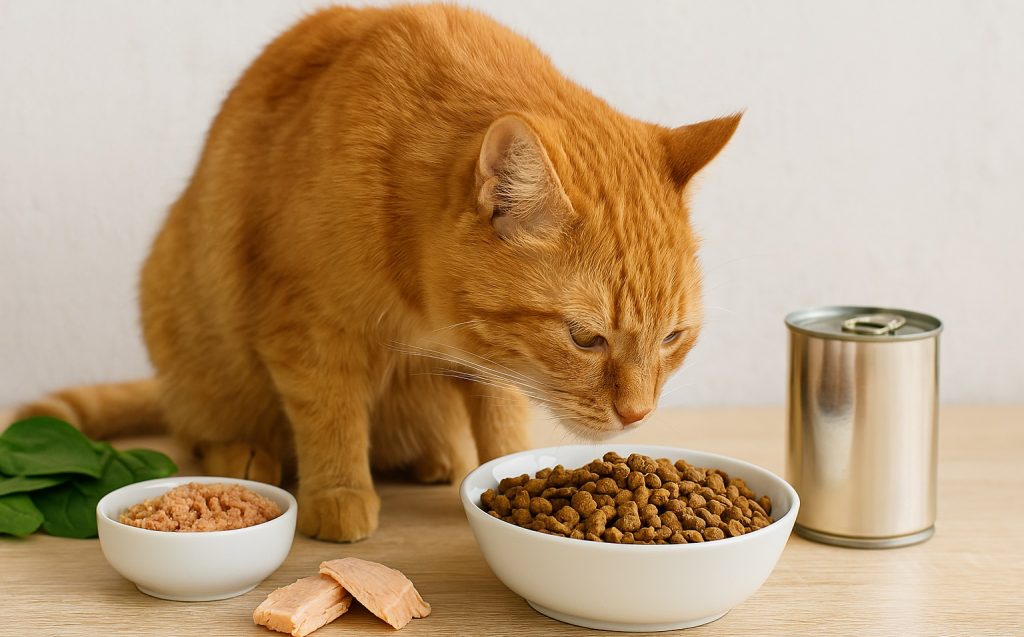
Cats are obligate carnivores, but that does not mean any meat from a human plate makes a balanced feline meal. They require specific nutrients such as taurine, an appropriate amino acid balance, and essential fatty acids and vitamins. Cornell’s feline health guidance emphasizes using food formulated to meet established nutritional requirements. A diet assembled from random leftovers may lack key nutrients even when every ingredient seems wholesome.
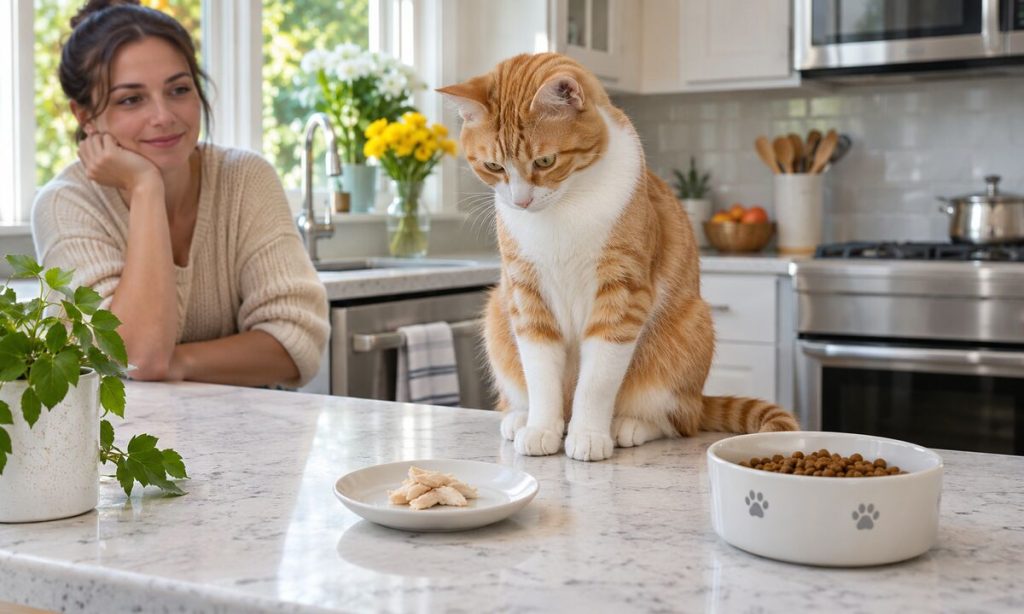
Think of human food for cats as an occasional extra, not the foundation of dinner. A complete-and-balanced cat diet should provide most daily calories. If a cat needs a home-prepared plan for a medical condition, work with a veterinarian trained in nutrition to ensure it meets the individual’s needs. Do not make abrupt changes to a kitten’s diet, a therapeutic feeding plan, or food for a cat with chronic illness.
Screen Every Ingredient and Seasoning
Start by asking exactly what is in the food. Plain, thoroughly cooked unseasoned lean meat or fish may be suitable as a very small occasional treat for some healthy cats. Remove bones, skin, excessive fat, salty sauces, butter, and seasoning. Never assume grilled or roasted food is plain; marinades and pan drippings may contain onion or garlic powders. Serving size and the cat’s health still matter.
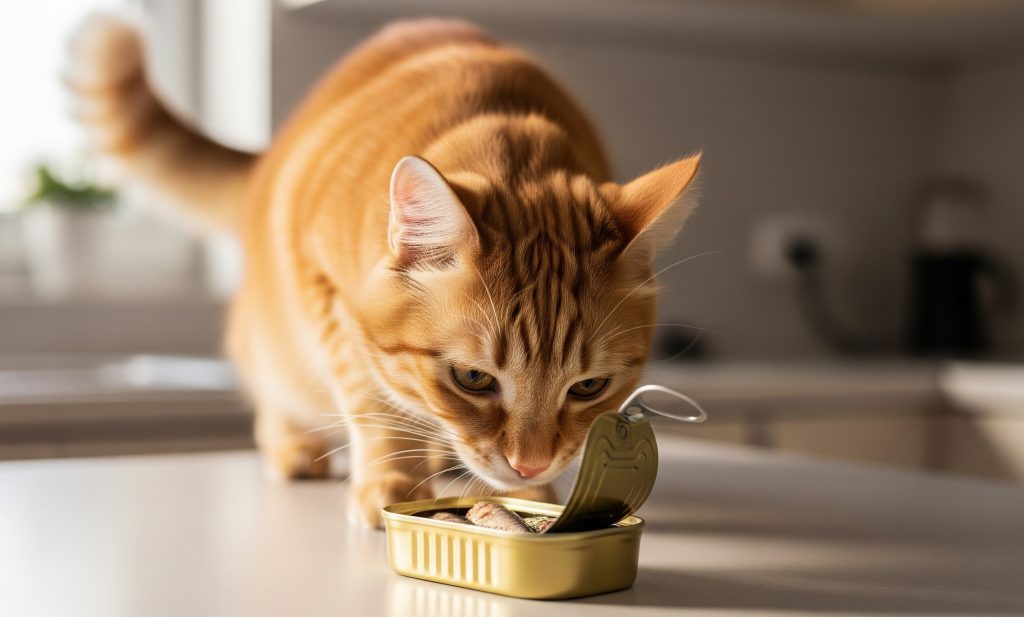
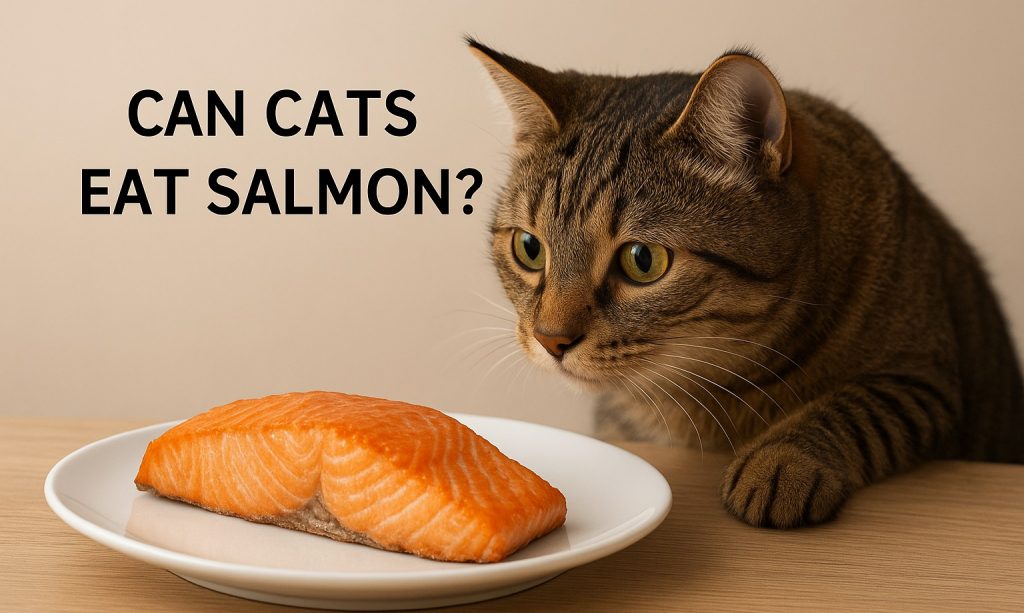
For fish, confirm it is cooked, boneless, and free of salty brine or strong seasoning. The site’s discussion of safe preparation of salmon for cats provides related context, while serving sardines safely raises additional portion and preparation questions. Fish is not a necessary supplement to a complete diet. Repeated large servings can displace balanced food, and bones may cause choking or gastrointestinal injury.
Know the Foods to Keep Off the Menu
Onion, garlic, chives, leeks, and related allium ingredients can damage feline red blood cells. Chocolate, coffee, caffeinated drinks, and alcohol are also unsafe. Avoid giving grapes or raisins because they are a known concern for pets, and the cat-specific risk is not established well enough to justify exposure. Do not deliberately offer xylitol-containing foods or other sugar-free products without veterinary advice; dog-specific toxicity findings should not be casually assumed to apply identically to cats.
Keep ingredients and snacks secured, including bread dough, bones, highly salted foods, and meals containing unknown sweeteners or spices. If a cat eats something concerning, record the ingredient, approximate amount, and timing. Contact a veterinarian or animal poison-control service immediately for individualized instructions. Do not induce vomiting unless a professional specifically directs it. Poisoning signs may develop after the owner has lost sight of the food.
Avoid Raw Meat and Raw Eggs
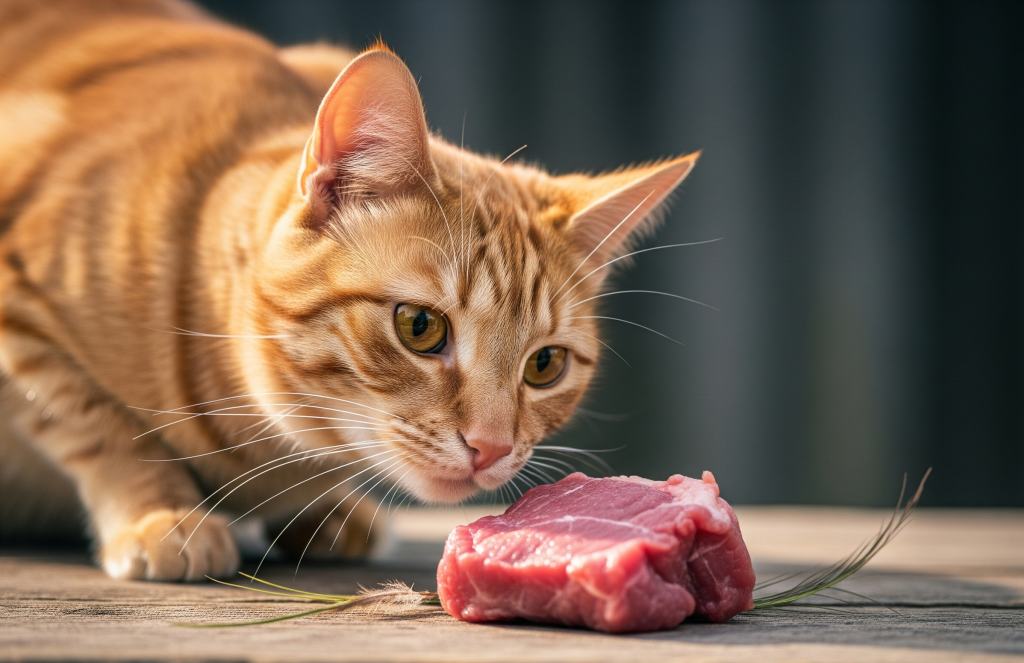
Raw animal products can carry Salmonella, Listeria, and other pathogens. The FDA warns that raw pet foods present contamination risks for pets and people, including households with young children or immunocompromised individuals. Cats can shed organisms even when they appear healthy. Cooking reduces relevant foodborne hazards, although food still needs clean handling and appropriate storage afterward.
Raw fish also creates a separate set of uncertainties, including parasites and nutrient imbalance when offered repeatedly. For a shareable treat, use thoroughly cooked, plain, boneless food without cross-contact from raw ingredients. Wash hands, utensils, boards, and surfaces after handling raw animal products. The fact that wild felines consume prey does not make raw scraps a safe household practice.
Watch Portions More Closely Than the Cat Does
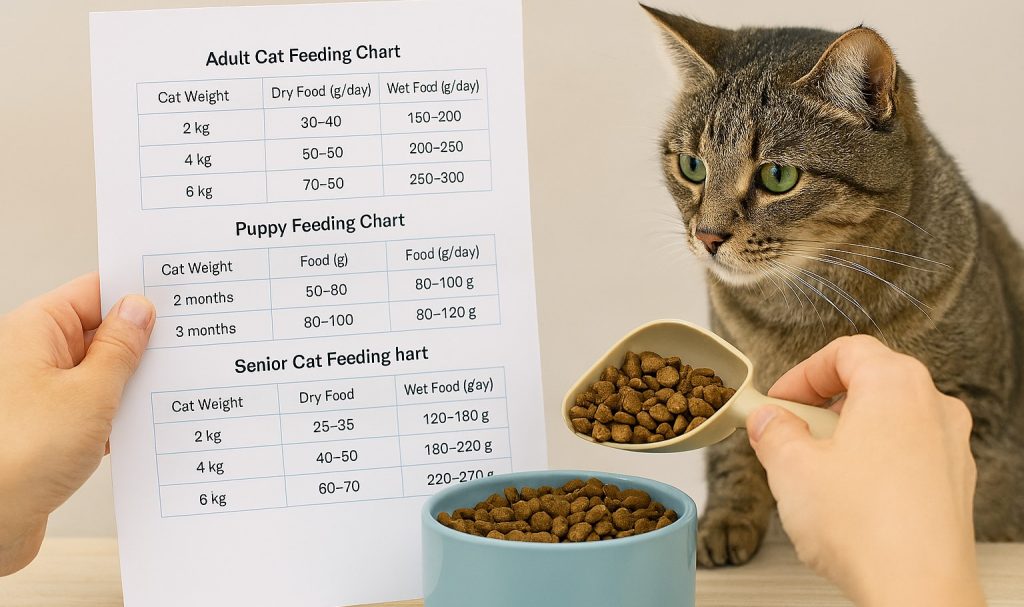
Cornell suggests keeping treats to a small minority of daily calorie intake, generally no more than around 10–15%. For many cats, even a few bites of cheese or fatty meat can consume a meaningful share of that allowance. Human food for cats is often calorie-dense, so start with a tiny amount. Do not use a whole slice or handful as a default feline portion.
Ask your veterinarian about a sensible calorie budget if your cat is overweight, underweight, or on a restricted diet. Treats should not interfere with appetite for complete food. Multiple family members can unintentionally double or triple extras, so agree on a daily limit. IMO, the most effective “treat container” may be a simple household rule that everyone follows.
Understand Dairy, Spices, and Digestive Sensitivity
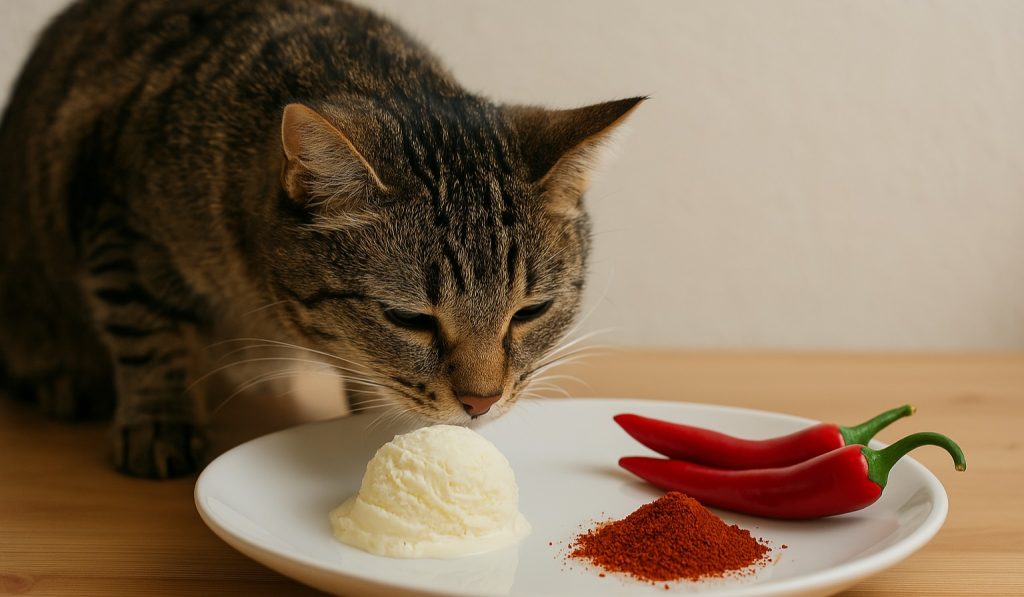
Many adult cats do not digest lactose well. Milk, ice cream, and cheese can cause diarrhea or gastrointestinal discomfort, even when the cat eagerly asks for them. The site guide to whether cats tolerate cheese explores that common temptation. Fatty, spicy, or heavily seasoned food can also upset digestion, while some seasonings contain ingredients that are directly toxic.
Cats do not experience flavor the same way people do. Their response to a food is affected by odor, texture, fat, and other sensory cues, not by a human sense of a “delicious” spicy meal. See the discussion of how cats perceive sweet and spicy flavors for more background. Do not offer chili sauces, seasoned leftovers, or sweet desserts to test a cat’s curiosity. A curious sniff is not nutritional consent.
Introduce a Treat and Monitor the Response
If a veterinarian confirms a particular plain food is reasonable, introduce only a tiny portion. Offer it separately from the usual meal, and observe for vomiting, diarrhea, itching, changes in appetite, or unusual behavior. Cats with food allergies, inflammatory bowel disease, pancreatitis, kidney disease, diabetes, or urinary issues may need tighter restrictions. Their treatment plans take priority over general treat suggestions.
Avoid introducing several unfamiliar foods on the same day. If symptoms appear, stop the new food and seek veterinary advice. Use the site’s guide to recognizing digestive upset to document relevant changes. Persistent vomiting, repeated diarrhea, severe lethargy, or refusal to eat requires prompt professional assessment. Do not assume the newest treat must be the only explanation; illness and accidental exposures may occur independently.
Make Safe Sharing an Occasional Habit
Keep pet and human food preparation areas organized. Use clean utensils, chill leftovers promptly, and avoid leaving bowls of meat or dairy accessible. Family members and visitors should know that sharing food is not a harmless default. Children may need a simple rule: ask an adult before offering anything to the cat. This prevents a well-meant bite from becoming a poisoning concern.
When the cat begs, attention, a short play session, or a predictable meal routine may be more appropriate than an extra snack. FYI, a cat’s expressive stare is excellent communication but not a reliable nutrition label. If begging is new, intense, or accompanied by weight loss or increased thirst, consult a veterinarian. An underlying medical issue may need attention.
Frequently Asked Questions
Human foods vary widely in safety and nutrient content, so there is no universal list that fits every cat. Choose plain ingredients, keep amounts small, and prioritize the cat’s established diet. A veterinarian can advise on special health concerns.
These concise answers address common kitchen decisions and poisoning fears. Never rely on an online food list when a cat has swallowed a potentially toxic substance; contact a professional immediately.
Can cats eat plain cooked chicken?
A small amount of thoroughly cooked, boneless, unseasoned chicken may be an occasional treat for some healthy cats, not a complete diet.
Is milk a healthy cat treat?
Often no. Many adult cats poorly tolerate lactose, and milk adds calories without providing balanced feline nutrition.
Can I feed raw meat because cats are carnivores?
Raw meat carries pathogen risks for pets and people. Cornell and the FDA advise against raw feeding.
What should I do if a cat eats onion or garlic?
Contact a veterinarian or animal poison-control service promptly and provide details of the ingredient and amount.
How much human food can a cat have?
Treats should remain a small portion of daily calories, with an individual limit set according to age, body condition, and health.
Final Words
To choose the right human food for cats, start with a complete, balanced feeding plan and a close look at each ingredient. Human food for cats must be plain, safely cooked, boneless, and modest in quantity when a veterinarian considers it appropriate. Keep toxic foods and unknown seasonings out of reach, and never treat leftovers as a substitute for a nutritionally complete diet.
Sharing affection does not require sharing dinner. A small safe treat, playtime, or calm attention may be just as meaningful to your cat. When you are uncertain about a food or suspect an exposure, seek professional advice. Your cat’s long-term health deserves more weight than the appeal of one tempting bite.