
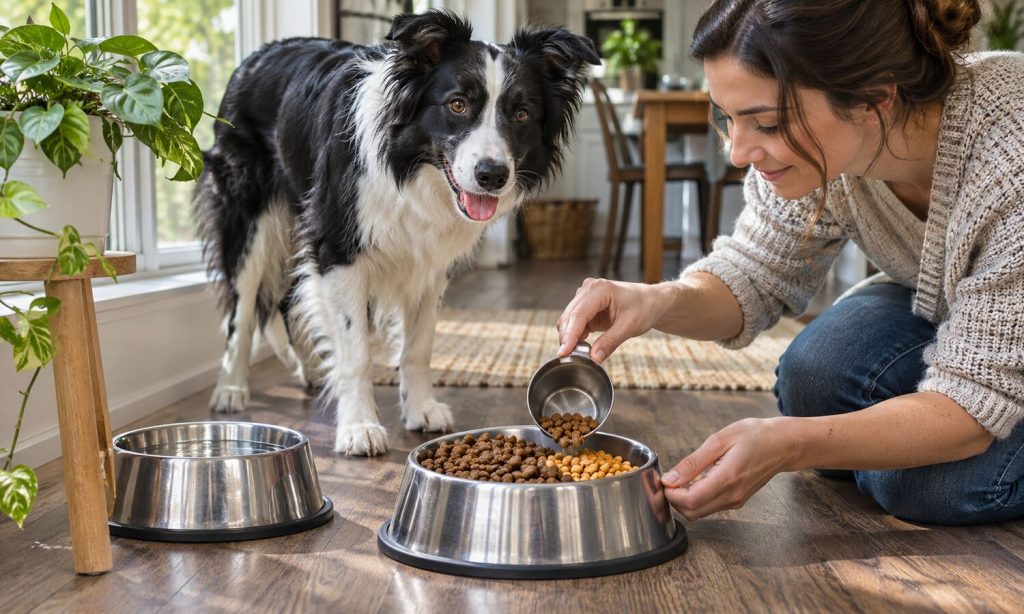
A Border Collie may look ready for anything, but its stomach still appreciates routine. Learning how to introduce a dog food for border collies to your pet means checking whether the new diet fits your dog’s age and workload, then changing meals gradually. The goal is steady digestion and lasting nutrition, not a dramatic overnight menu makeover. This guide covers the first label check through the final all-new meal. It also shows how to spot trouble early.
Before you begin, remember that dog food for border collies is not one universal formula. A young puppy, an active herding adult, and an older companion have different needs. Your veterinarian can help when your dog has a medical condition, weight concern, or recurrent stomach upset. For a healthy dog, the transition is usually straightforward. Measure carefully, keep meal times consistent, and observe your dog’s response.
Confirm the New Food Fits Your Dog
Start with the nutritional-adequacy statement on the package. It should describe the diet as complete and balanced for your Border Collie’s present life stage. Puppy growth, adult maintenance, and reproduction are not interchangeable needs. Food intended only for intermittent or supplemental feeding should not replace the main daily ration. Ingredient-list trends matter less than whether the complete formulation is appropriate, consistently manufactured, and supported by qualified nutrition expertise.
Think about your dog’s daily job before choosing a calorie level. A Border Collie that trains for agility may use more energy than one enjoying short neighborhood walks. Neither breed name nor apparent enthusiasm tells you exactly how much to feed. Record current weight, body condition, activity, and the calories per cup or can on both foods. For a broader foundation, see the site’s dog nutrition guide and ask your veterinarian to interpret feeding labels for your individual dog.
Build a Gradual Food Transition
For a healthy adult, a practical starting plan is to replace roughly one-quarter of the old ration with new food for the first few days, then move toward half, three-quarters, and finally all new food. Many dogs do well over seven to ten days, but this is a flexible schedule, not a deadline. Guidance from veterinary nutrition authorities supports gradual change; pets with gastrointestinal disease can need a slower, professionally directed plan. If your dog is unusually sensitive, pause at the last well-tolerated ratio.
Measure portions by calories rather than assuming one scoop of each food provides the same amount of energy. If the new recipe is denser, equal-looking servings could unintentionally overfeed. Use a clean measuring cup or kitchen scale and write down the proportions for everyone who feeds your dog. Keep treats, training rewards, and table scraps stable while you make the switch. Otherwise, when stool changes, you will not know whether the new food or an extra handful of rewards caused it.
Keep the Routine Calm and Predictable
Serve food at the usual times, in a familiar location, with fresh water available. Some Border Collies become highly focused on activity and may ignore meals when excited or distracted. Let your dog settle after training before offering the bowl, without forcing a meal during heavy panting. If you also change a bowl, feeding spot, or household schedule, introduce those adjustments separately. The fewer simultaneous changes you make, the easier it becomes to understand the dog’s response.
A regular routine also helps you notice patterns that are easy to miss. Write down how fast your dog finishes a meal, whether food remains, and any new begging or avoidance. Avoid turning refusal into a contest by repeatedly adding richer extras. Instead, confirm food is fresh, portions are reasonable, and the dog feels well. If activity shapes the schedule, the site’s explanation of how fast dogs can run provides useful context for why fitness, age, and conditioning differ between individual dogs.
Watch Digestion, Skin, and Body Condition
During the transition, inspect stool consistency and frequency each day. A brief soft stool may settle with a slower change, but repeated vomiting, blood in stool, marked lethargy, a painful abdomen, or refusal to drink warrants prompt veterinary advice. Persistent diarrhea should not be treated as a normal cost of switching food. Puppies, seniors, and dogs with existing illness have less room for prolonged poor intake. If symptoms are severe, seek veterinary care instead of continuing the schedule at home.
Also watch for scratching, ear inflammation, weight change, or a dull coat over subsequent weeks. Those signs can have many causes and do not automatically prove a food allergy. Use a body-condition check by feeling for ribs under a light fat covering and looking for a waist from above. Weigh your dog periodically under similar conditions. A planned transition is successful when the dog remains bright, eats comfortably, passes normal stools, and maintains an appropriate body condition—not simply when the old bag is empty.
Adjust for Puppies, Seniors, and Medical Diets
A Border Collie puppy needs growth-appropriate nutrition, planned feeding frequency, and regular growth monitoring. Do not assume an adult maintenance diet covers those needs. Senior dogs may need special calorie adjustments based on lean muscle, mobility, appetite, and illnesses. For a dog with pancreatitis, chronic enteropathy, kidney disease, or a prescribed therapeutic diet, ask the treating veterinarian before substituting anything. A routine transition chart does not override a medical feeding plan.
If the new diet is prescribed for a diagnosed condition, even small amounts of other food can interfere with the plan. Follow the veterinary team’s instructions about mixing foods, treat allowances, and the monitoring schedule. A dog that refuses a medical food should be reassessed, not left without adequate intake. If you are switching because of recurrent itchy skin or diarrhea, document the timeline and discuss whether a supervised elimination trial is appropriate. Randomly rotating formulas makes a true food-related problem harder to identify.
Common Transition Mistakes and Their Fixes
The biggest mistake is starting with a full bowl of unfamiliar food and hoping digestion keeps up. Another is following an old portion size after moving to a higher-calorie recipe. Both can create discomfort or unwanted weight gain. Rushing because the previous food ran out is understandable, so keep a small reserve until the replacement has been tested. FYI, a dog’s enthusiasm for a new smell is not proof that a sudden swap is kind to its digestive system.
A second mistake is attributing every change to food. Stress, scavenging outdoors, parasites, new medicines, and illness can also alter appetite or stool. Use a simple daily log rather than guessing. If a problem starts, review how quickly the proportion changed and whether anything else was introduced. Return to a previously tolerated ratio only when symptoms are mild and your veterinarian has not advised otherwise. Seek professional help for worsening signs or symptoms that continue despite slowing the change.
Frequently Asked Questions
Most successful food changes depend on the dog’s health, the difference between recipes, and how carefully the transition is managed. These answers cover common practical questions without assuming every Border Collie has the same digestive tolerance.
If your dog has a diagnosed disease, is receiving medication, or has repeated eating problems, treat the general advice below as a discussion starter for your veterinarian. A personalized plan matters more than a rigid calendar.
How long should a food transition take?
Many healthy dogs can adjust over about seven to ten days. Use a slower schedule if stools soften or your veterinarian advises additional caution.
Can I mix old and new kibble in the same bowl?
Often yes for dogs. Measure the separate foods and keep the total calories appropriate; mixing alone does not guarantee an appropriate daily portion.
What if my Border Collie refuses the new diet?
Check freshness and routine, then offer the previous tolerated proportion. Contact your veterinarian for persistent refusal, illness signs, or poor intake in a puppy.
Should I add digestive supplements automatically?
No. A supplement is not required for every diet change. Discuss repeated digestive symptoms with a veterinarian before adding products that could complicate assessment.
How do I know the new food is working?
Look for normal stools, reliable appetite, steady weight and body condition, good energy, and no new persistent symptoms over time.
Final Words
Learning how to introduce a dog food for border collies to your pet is ultimately about a measured, observant transition. Choose a complete diet for the correct life stage, compare calories, move gradually, and keep daily records. Healthy digestion, steady energy, and appropriate body condition are better signals than how quickly the switch is completed.
Return to the broader Border Collie food guide if you need help understanding the nutritional questions to ask about different diets. For the actual switch, take your cues from your dog and involve a veterinarian when symptoms or existing conditions make the change complicated. A simple plan that you can follow consistently is usually the most practical one.









