
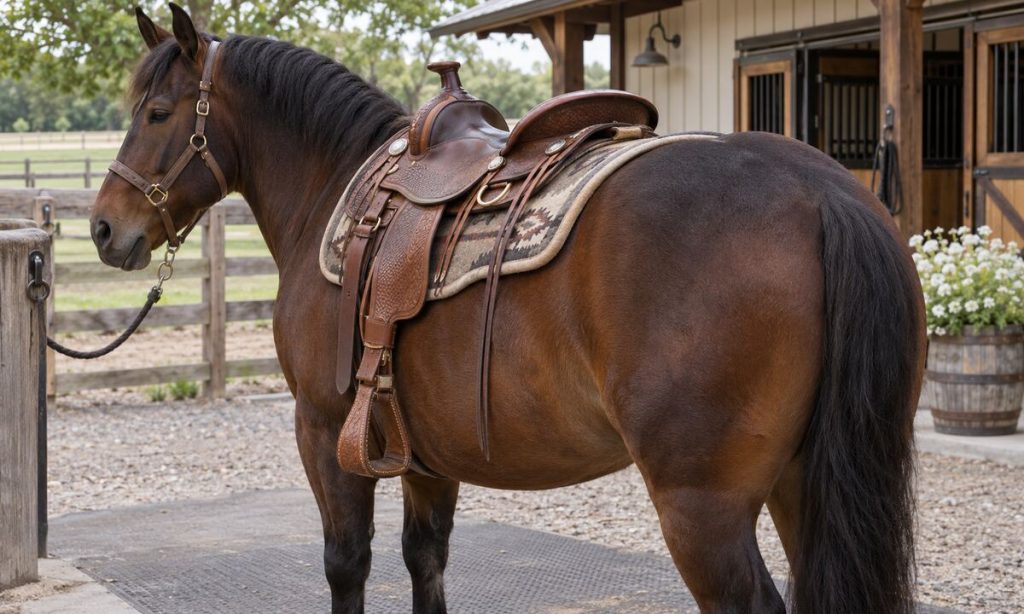
A broad back with low, rounded withers can make a saddle feel less stable, especially through turns or uneven terrain. Yet the best saddle pad for mutton withered horse comfort cannot compensate for an incorrect saddle tree. A pad should complement a properly fitted saddle, stay smooth against the back, and avoid adding uneven pressure or excessive bulk.
We compared seven distinct Western pads and underpads with different grip surfaces, felt materials, shapes, and adjustability. Most are not marketed exclusively for mutton withers; they are fitting candidates based on particular design features. If your saddle rolls or slips, have a qualified fitter assess tree width, bar shape, girth position, rider balance, and pad interaction before purchasing anything. A non-slip surface can mask a deeper fit problem.
Quick Picks
The most relevant differences are grip, contour, material thickness, and how each pad affects saddle balance. Check measurements against your horse and saddle.
| Product | Best For | Key Advantage | Buy | |
|---|---|---|---|---|
| Reinsman Contoured Trail Pad with Tacky Too Bottom | Grippy everyday trail pad | Contoured spine with tacky underside | View on Amazon | Jump to Review |
| Weaver Leather Contoured Single Weave Felt Pad | Traditional wool-blend cushioning | Three-quarter-inch felt liner | View on Amazon | Jump to Review |
| ECP Breathable 3D Mesh Western Pad with Memory Foam | Professional shim adjustment | Removable memory-foam pockets | View on Amazon | Jump to Review |
| Schneiders Contoured Felt Western Saddle Pad | Structured lightweight felt | One-inch synthetic felt with reinforced top | View on Amazon | Jump to Review |
| Reinsman Square Contour Tacky Too Under Pad | Additional non-slip underlayer | Thin tacky layer beneath existing pad | View on Amazon | Jump to Review |
| Reinsman Rancher Contour Wool Saddle Pad | Ranch-oriented wool felt | Natural wool with protective canvas | View on Amazon | Jump to Review |
| Pro Rider Western Gel Anti-Slip Neoprene Saddle Pad | Gel and neoprene grip comparison | Tacky neoprene with gel fill | View on Amazon | Jump to Review |
Reinsman Contoured Trail Pad with Tacky Too Bottom

- Non-slip Tacky Too underside
- Contoured relief channel
- Felt impact cushioning
- Trail saddle positioning
- Durable upper material
- May add bulk
- Cleaning needs attention
The Reinsman Contoured Trail Pad combines a shaped spine profile, a felt interior, and the company’s Tacky Too non-slip underside. It is designed for everyday trail use, including saddles with dropped rigging, and the selected version measures about thirty inches along the spine with a thirty-four-inch drop. For a broad-backed horse with low withers, the tacky contact surface is a feature worth evaluating after the saddle itself has been shown to fit. Grip alone does not establish correct tree balance.
The contoured spine relief channel is intended to keep bulk away from sensitive top-line areas, while the felt interior adds cushioning. Check whether the pad sits smoothly beneath your particular saddle without being stretched tight or folded at the shoulders. A wide saddle that rocks or rolls because of bar geometry will not be made safe by a sticky underside. Ask a fitter to assess the horse while standing and moving. The sizeable drop may be excessive on smaller horses, so compare dimensions carefully.
Reinsman describes a durable, stain-resistant upper surface, but the underside still needs regular care. Remove hair and grit that can accumulate on tacky material, then clean according to the maker’s instructions. Check for heat buildup, trapped debris, or coat irritation after use. This pad is most useful where a correctly fitted trail saddle needs a particular combination of contour and friction. It is not a universal mutton-wither correction, and its felt thickness should be considered within the total saddle setup.
My Recommendation
I would shortlist the Reinsman Contoured Trail Pad if a fitter confirms the saddle already sits correctly and a grippy underside would help keep the pad aligned. The shaped channel and felt construction are useful details. Check its sizeable dimensions and inspect the horse’s back after brief rides before using it for long trails.
Weaver Leather Contoured Single Weave Felt Pad

- Contoured profile
- 3/4-inch wool-blend felt
- Moisture-wicking liner
- Protective wear leathers
- Classic woven topper
- Can add substantial thickness
- Not specifically non-slip
Weaver’s Contoured Single Weave Felt Pad is a traditional Western pad with a woven decorative top and a three-quarter-inch wool-blend felt liner. It measures approximately thirty-two by thirty-two inches, providing broad coverage for many Western saddles. The contoured design may help the pad follow the horse’s topline without excessive wrinkling. On a low-withered horse, however, even a nicely shaped pad must complement the saddle’s bar geometry. The woven surface itself should not be relied upon as a solution to rolling.
The wool-blend lining offers cushioning and moisture management, while wear leathers protect areas exposed to friction from fenders or rigging. Thickness matters: adding three-quarters of an inch beneath an already snug saddle can alter fit. A fitter should evaluate the horse, saddle, and actual pad together. Confirm the full pad length does not interfere with the horse’s back movement and that the saddle sits within its intended reinforced contact area. If the tree is too narrow, a thicker pad can make the mismatch worse.
Brush or clean the felt according to Weaver’s care instructions and allow it to dry fully after sweaty rides. Wool blends can retain debris if neglected, so check both the underside and the horse’s coat before tacking up. This pad is a sensible baseline for riders who prefer conventional felt construction and do not necessarily need a highly tacky surface. Its cushioning and moisture management are distinguishing features; it should be chosen by actual fit, not by assuming thickness equals safety.
My Recommendation
Choose the Weaver Single Weave when a fitter recommends a traditional contoured felt pad of this thickness. I like its clear materials and protective wear leathers. If saddle rolling is the main complaint, examine tree width and rigging first; this woven pad is not designed as a dedicated anti-roll fix.
ECP Breathable 3D Mesh Western Pad with Memory Foam

- Breathable mesh construction
- Grip-oriented underside
- Removable foam shims
- Lightweight feel
- Washable after removing shims
- Shim errors create pressure
- Needs fitting expertise
ECP’s Western 3D Mesh Saddle Pad combines a ventilated mesh structure with a gripping underside and removable memory-foam shims. That makes it a different tool from a fixed-thickness felt pad. For a rounded back with low withers, its ability to adjust certain areas may interest an experienced saddle fitter when there is a small, specific balance issue to address. It should never be used to disguise an incompatible saddle tree or to fill arbitrary gaps without understanding the pressure consequences.
The manufacturer’s removable foam pockets allow some localized changes, but incorrect shim placement can increase rocking, tilt the rider, or concentrate force. Have a fitter identify whether any correction is appropriate and document the configuration. Check the saddle’s bar contact before and after any adjustment, including during a mounted movement test. Mesh ventilation may help with airflow, yet it does not prevent rubbing if a pad shifts or becomes dirty. The grip surface can also be counterproductive if it masks unresolved saddle instability.
Care is a practical advantage when performed correctly. The listing instructs owners to remove shims before washing, hand wash in cool water with mild detergent, and dry flat. Follow those directions to avoid damaging the foam or changing the pad’s shape. This is most valuable as a fitting accessory when professional guidance and repeat checks are available. If you simply need a durable everyday pad under a well-fitted Western saddle, a non-adjustable option may be easier to manage safely.
My Recommendation
I recommend considering ECP’s 3D Mesh pad only when a qualified fitter can determine whether shim adjustment is justified. The ventilation and removable layers offer versatility, but also room for mistakes. If no correction is needed, keep the setup simple and avoid extra inserts merely because the pockets are available.
Schneiders Contoured Felt Western Saddle Pad

- One-inch synthetic felt
- Reinforced spine profile
- Contoured 32-inch shape
- Cinch cutaways
- Protective wear patches
- Very thick for some saddles
- Synthetic felt care differs
The Schneiders Contoured Felt Western Saddle Pad is a one-inch synthetic felt option with a shaped spine, reinforced wither area, and cinch cutaways. Its relatively thick cushioning may interest riders whose saddles have been fitted with that precise pad profile in mind. On a broad, low-withered horse, however, adding an inch of material can noticeably change bar contact. The fitter should assess the combined saddle and pad rather than treating the pad as a universal pressure-relief layer.
The reinforced top line is designed for durability in an area often exposed to tack movement, while the cinch cutaways may help reduce bulk alongside the rider’s leg. Check whether those cutouts align with your actual rigging and whether the pad extends beyond the saddle’s contact footprint as intended. Synthetic felt may feel different from wool felt under pressure and moisture, so compare how it behaves during a short ridden assessment. A thick pad is not automatically more comfortable or stable on a mutton-withered back.
After riding, inspect the underside for trapped grit and the horse’s coat for uneven rubbing. Clean the synthetic material according to the manufacturer’s recommendations and dry it fully before storage. This pad is a distinct choice for owners wanting a shaped, reinforced construction with a clearly stated one-inch thickness. If the saddle already fits closely with a thinner pad, switching without rechecking could create avoidable pressure. Prioritize measured fit over the promise of extra shock absorption.
My Recommendation
I would consider Schneiders only if a saddle fitter confirms the one-inch felt thickness is appropriate. The reinforced top line and cinch cutaways are useful practical features, but thickness changes the entire contact system. On an already snug broad-backed horse, I would be cautious about adding this much material.
Reinsman Square Contour Tacky Too Under Pad

- Tacky Too grip surface
- Underpad format
- Contoured shape
- Quick-drying material
- Intended to reduce pad slipping
- Adds another layer
- Cannot fix poor saddle balance
The Reinsman Square Contour Tacky Too Under Pad is designed as an additional layer beneath a conventional Western saddle pad. Its grip-oriented underside is intended to help keep the upper pad aligned when sliding is a problem. That can sound appealing for low-withered horses, but a sliding saddle and a sliding pad are not necessarily the same issue. The correct first step is identifying whether the tree, girth, rider balance, or merely the pad’s smooth underside is causing movement.
The underpad’s contoured cut and non-slip material make it distinct from a full traditional felt pad. Because it sits beneath another layer, its thickness and edges affect the total setup. A fitter should examine how both layers lie along the spine and shoulders without bunching or trapping heat. Do not add an underpad simply because the saddle rolls; friction can hide a structural mismatch. If the original pad is already very thick, a second layer might increase pressure or lift the saddle excessively.
Reinsman describes the Tacky Too material as easy to clean and quick drying. Inspect it often, because hair, dust, and sweat residue can reduce grip and irritate the coat. Confirm that the upper pad covers the underlayer securely and that no exposed edge can roll beneath the saddle. This product is best reserved for a properly fitted setup where controlled extra friction has a clear purpose. Its compact underpad role makes it different from the larger standalone pads reviewed here.
My Recommendation
The Reinsman Under Pad is my conditional choice when the saddle fits but the primary pad alone creeps during normal movement. Confirm the problem with a fitter before adding layers. I would avoid it if the saddle itself rolls or tips, since a tacky liner cannot solve incorrect tree contact.
Reinsman Rancher Contour Wool Saddle Pad

- Natural wool felt material
- Contoured wither cutout
- Durable canvas upper
- Heavy wear leathers
- Ranch-work construction
- Dense felt adds weight
- Cutout shape may not match all
The Reinsman Rancher Contour Wool Pad uses dense wool felt with a rugged Duck canvas top and oil-tanned wear leathers. Its contoured shape includes a pronounced wither-relief cutout. That design can work well for some horses, but a low rounded wither profile does not automatically need a deep cutout, and the pad’s contour should be checked against the actual topline. The product is positioned for ranch riding and daily work, making durability and moisture handling central to its appeal.
Natural wool can manage moisture while providing a cushioned contact layer, yet dense felt changes the saddle’s effective fit. A professional should check whether the full pad thickness leaves the correct balance and bar contact. Confirm the wither cutout does not create an abrupt change in contact or allow the pad to pull tightly under the pommel. Because mutton-withered horses can have broad shoulders, the saddle’s tree shape and girthing are particularly important. Do not use the cutout as evidence the saddle will remain stable.
The canvas top and wear leathers are intended to withstand friction and regular ranch use. Maintain felt by brushing out hair, drying moisture, and following the maker’s cleaning instructions. Inspect the leather protection areas and the underside for wear. This pad is a relevant traditional-material alternative to mesh and neoprene designs, but it does not feature a dedicated anti-roll mechanism. It makes most sense where a fitter recommends wool felt and the rider needs a hard-wearing everyday ranch pad.
My Recommendation
Choose Reinsman Rancher Contour when a properly fitted saddle works well with natural wool felt and you value rugged upper materials. I would verify the pronounced wither cutout on a low-withered horse rather than assuming it is beneficial. Check balance and pressure under the rider before committing to long workdays.
Pro Rider Western Gel Anti-Slip Neoprene Saddle Pad

- Anti-slip neoprene surface
- Gel cushioning layer
- Washable exterior
- Western barrel format
- Relatively compact dimensions
- Heat and sweat need monitoring
- May alter contact with thickness
The Pro Rider Western Endurance Barrel Gel Saddle Pad combines an anti-slip neoprene-style material with a gel-filled cushioning layer. It offers a contrasting feel to wool or synthetic felt and may interest owners comparing friction-based options for a correctly fitted saddle on a round back. The selected listing indicates a spine dimension of about twenty-eight inches and a nineteen-inch drop, which may suit some smaller Western saddle outlines. Fit must be checked rather than assumed from the compact measurements.
Gel and neoprene can change how a saddle sits, and grip does not guarantee comfort. Have a fitter verify that the pad does not elevate the saddle, change bar contact, or create uneven pressure around the shoulders. Observe the horse during turns and transitions, not merely at a halt. Some horses may be sensitive to heat or skin contact under certain synthetic materials, so watch for sweat buildup and rubbing. If the saddle slides because the tree is too wide, this product is not a remedy.
The manufacturer promotes easy washing with soap and a hose, which is convenient for an active barn routine. Dry the pad completely, inspect seams and gel-filled areas, and replace it if leaks or deformation develop. This option is most appropriate as a carefully assessed grip-and-cushioning alternative, particularly when the saddle’s contact shape has already been established. It is not necessarily cooler or healthier than wool for every horse, despite product marketing. Choose based on fit and skin response.
My Recommendation
I would trial the Pro Rider gel/neoprene pad only with a verified saddle fit and close attention to heat, sweat, and coat irritation. Its grip and smaller format distinguish it from thick wool pads. If your horse is prone to skin sensitivity or the saddle already fits tightly, ask your fitter before changing materials.
How to choose best saddle pad for mutton withered horse
The best saddle pad for mutton withered horse anatomy is a finishing component of a correct fitting system. Choose padding only after verifying the saddle’s width, bar angle, balance, and security.
Fit the saddle first on a broad rounded back
Mutton withers describe a low, broad wither profile, but horses with this shape can have very different shoulders and back lengths. A saddle that rolls may have too narrow a tree, incorrect bar angle, poor rigging alignment, or a rider-balance issue. Adding a grippy pad may reduce visible movement while leaving pressure concentrated beneath the saddle. Ask a qualified fitter to assess tree contact without and with the intended pad, then observe the horse moving and turning under the rider. Check for bridging, rocking, pressure marks, uneven sweating, and discomfort. Do not assume that a thicker pad or one marketed as orthopedic can fix these problems. A properly fitted saddle should remain reasonably stable before friction tricks are considered. Retest as the horse gains or loses condition, particularly when the shoulders become wider through training.
Compare grip, contour, and thickness together
A non-slip underside may be helpful for some correctly fitted saddles on rounded horses, especially when hair is fine or a smooth blanket shifts. However, tacky materials vary in breathability, washing needs, and how they interact with the coat. A contoured pad should lie smoothly along the back without being pulled tightly over the spine or bunched near the withers. Too much material can raise the saddle, alter tree contact, and create new pressure. Consider felt or wool blends for moisture handling and cushioning, mesh for ventilation, and underpads for a specific layer beneath another pad. Use removable shims only under professional guidance; incorrect placement may worsen pressure. Check finished dimensions carefully because Western pad labels commonly indicate spine length and side drop, not a universal saddle fit. A pad must protect the contact area without extending into sensitive regions.
Maintain clean surfaces and monitor the horse
Before each ride, brush dirt from the horse’s back and inspect the pad for grit, curled edges, compressed spots, and damage. A damp or dirty underside can rub even when the fit is correct. Wash or brush the material according to its specific care instructions, drying fully before storage. Neoprene and mesh liners may have different cleaning requirements from wool felt, while adjustable pads need their shims removed before washing. After riding, look at the horse’s skin and hair for friction and ask a fitter or veterinarian to investigate sensitivity or soreness. Do not rely on perfectly symmetrical sweat marks as a single diagnostic test. Saddle stability is influenced by girth fit, rider movement, and the horse’s changing topline. Reevaluate the entire system after changes in training intensity, weight, or tack, rather than buying progressively more layers.
Frequently Asked Questions
Here are practical answers to the questions owners often ask before choosing.
What does mutton withered mean for saddle fitting?
It describes relatively low, rounded withers, often alongside a broad back. Tree shape, girth line, and saddle balance are more important than the label alone.
Will a non-slip pad prevent saddle rolling?
It may reduce shifting in some correctly fitted combinations, but it cannot fix an incorrectly shaped saddle tree or poor rigging. Investigate the cause first.
Should I use a thicker saddle pad on a mutton-withered horse?
Not automatically. Extra thickness can change contact and pressure. Ask a saddle fitter to recommend the appropriate profile for the actual saddle and horse.
Are shimmable pads good for broad-backed horses?
They can help in selected situations when a knowledgeable fitter identifies a specific correction. Random shimming can create pressure points or make rolling worse.
How often should I check the pad for wear?
Inspect before every ride and clean according to the manufacturer’s care guidance. Reassess fit if the pad compresses, curls, slips, or the horse shows discomfort.
Final Verdict
The best saddle pad for mutton withered horse stability begins with a saddle whose tree suits the broad back. Reinsman Contoured Trail and Reinsman Square Tacky Too offer distinct grippy options, while ECP’s 3D Mesh pad adds professional-adjustment potential through removable shims. Weaver Contoured Felt and Schneiders Contoured Felt provide more traditional cushioning choices.
Reinsman Rancher Contour Wool and Pro Rider Gel/Neoprene offer different material profiles. None is a cure for saddle roll from incorrect tree shape. Have the complete tack setup checked under the rider, then choose a pad for appropriate contour, thickness, hygiene, and manageable grip.
Affiliate disclosure: This article contains Amazon affiliate links. If you purchase through them, PetAdvisorPro may earn a commission. As an Amazon Associate I earn from qualifying purchases.









