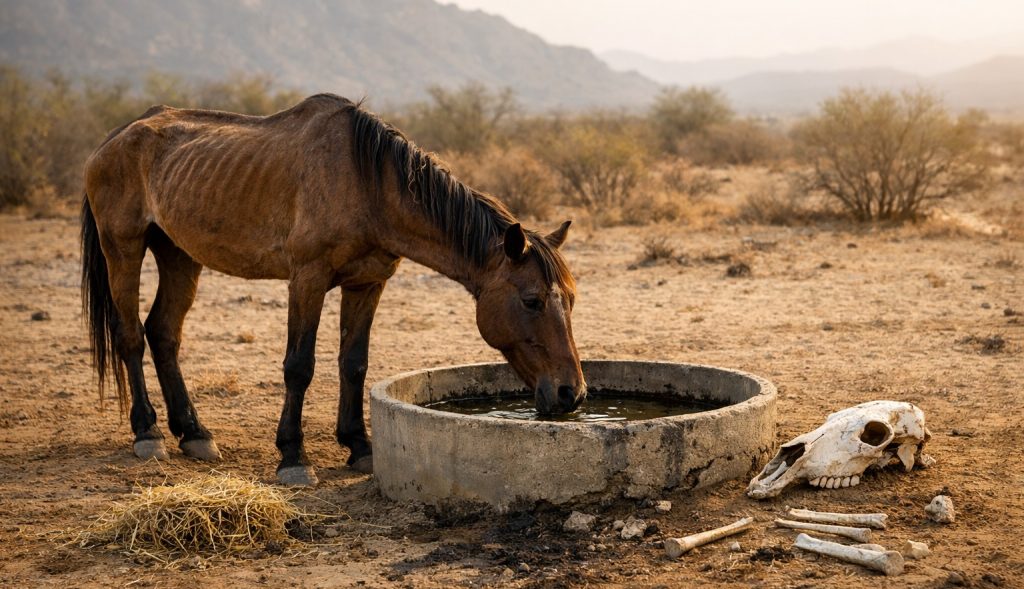
A horse can survive without water for 48–72 hours and without food for 1–3 weeks.
I have worked with horses for years as a trainer and barn manager, and I know how critical water and feed are to a horse’s health. This article explains exactly how long a horse can go without food and water, what affects survival times, how to spot trouble early, and what to do in an emergency. Read on for clear, practical guidance backed by clinical knowledge, field experience, and sensible precautions.
Why water and food matter for horses
Horses are large, active herbivores. They depend on steady water and forage to keep digestion, circulation, and temperature control working well. The gut of a horse runs almost continuously. Lack of feed disrupts that stream and can lead to colic, metabolic trouble, and weight loss.
Water is even more urgent. A horse loses water through sweat, urine, and feces. Without enough water, blood volume drops. Organs and muscles fail faster than with lack of calories. I have seen otherwise fit horses become critical within two days when water was cut off on hot days.
How long can a horse go without food and water
The simple question—how long can a horse go without food and water—has different answers depending on the context. For water, many horses begin to show signs of dehydration within 24 hours. Most healthy horses can survive 48 to 72 hours without water, but their condition worsens fast after 24 hours. For food, a healthy adult horse may live 1 to 3 weeks without feed, depending on body reserves and condition.
Key points to remember:
- How long can a horse go without food and water varies with age, health, weather, and activity levels.
- A fit horse in cool weather lasts longer without feed than a senior horse or one under heat stress.
- Water deprivation is the most urgent risk. Even short water loss can trigger colic and kidney stress.
Signs of dehydration and starvation
Early detection saves lives. Watch your horse closely if access to water or feed is limited.
Signs of dehydration:
- Dry or tacky gums and a slow return in the skin pinch test.
- Sunken eyes and reduced tear film.
- Weak pulse and low temperature in late stages.
Signs of starvation or prolonged underfeeding:
- Rapid weight loss and loss of muscle.
- Dull coat and brittle hooves.
- Behavioral changes and lethargy.
If you suspect dehydration or starvation, call a veterinarian immediately.
Factors that change survival time
Not all horses respond the same when asked how long can a horse go without food and water. Several factors change how long a horse can realistically survive.
Important factors:
- Age: Foals and seniors decompensate faster.
- Body condition: Fat reserves help during food shortage.
- Health status: Sick horses have less reserve.
- Weather: Heat increases water need dramatically.
- Workload: Active horses need more calories and water.
- Access to forage vs. concentrated feed: Continuous grazing supports gut motility.
In my experience, a thin older mare will show trouble from food shortages in days, not weeks. A well-conditioned gelding may last longer but is still vulnerable to dehydration.
Complications from lack of water or food
When you think about how long can a horse go without food and water, consider the cascade of problems that follow shortages.
Common complications:
- Colic from impaction or slowed gut motility.
- Kidney damage from low blood flow and concentrated urine.
- Electrolyte imbalances leading to muscle weakness or cardiac issues.
- Laminitis in horses that stop eating and then are refed incorrectly.
These complications make even short periods without water or feed dangerous for some animals.
What to do in an emergency
If you find a horse without water or feed for an extended time, act fast and calmly.
Immediate steps:
- Provide clean, cool water in small amounts at first. Offer water every 10–15 minutes to avoid shock to the gut.
- Offer hay before grain. Plain hay helps restart gut motility gently.
- Keep the horse calm and shaded if hot. Reduce activity to lower water needs.
- Call a veterinarian for assessment and possible IV fluids or electrolytes.
I once had a horse arrive after being without water for 36 hours. Small sips of water, shade, and prompt vet care with fluids helped him recover. Slow rehydration saved his kidneys and his life.
Preventive care and best practices
Prevention is the best strategy when it comes to how long can a horse go without food and water. Good routines cut risk.
Daily practices:
- Check water sources twice daily. Clean and refill buckets and automatic waters.
- Provide free-choice hay or turnout with pasture access.
- Monitor intake when weather changes and in transport or shows.
- Maintain body condition scores and dental care. Poor teeth reduce feed intake.
- Prepare an emergency plan for droughts, storms, or supply disruptions.
Simple checks at the barn can prevent most emergencies. I keep a written daily log of water checks and feed delivered. That small habit prevented a problem after a pump failure once.
Feeding and rehydration tips
Reintroducing water and food after a fast must be slow and careful.
Guidelines:
- Offer small, frequent sips of water first. Large gulps can cause shock or founder.
- Feed plain hay before concentrate. High-grain meals can trigger laminitis in starved horses.
- Consider electrolyte paste or vet-prescribed fluids for horses that sweated heavily.
- Monitor manure, appetite, and attitude closely for 24–72 hours after refeeding.
When I reintroduced feed to a neglected horse, I used short intervals and watched feces and vitals. Steady progress over 3–4 days is ideal.
Frequently Asked Questions of how long can a horse go without food and water
How long can a horse live without water?
Most healthy adult horses can survive 48 to 72 hours without water, but serious signs appear within 24 hours. Immediate rehydration and vet care are needed if water has been withheld.
How long can a horse go without food?
A healthy adult horse may survive 1 to 3 weeks without food, depending on condition and fat reserves. Lack of feed for days increases colic and metabolic risks.
Can a horse die from not drinking for one day?
A horse can show marked dehydration after one day without water, especially in heat. Death is less likely at 24 hours in mild conditions but possible with disease or extreme heat.
What are the first signs that a horse is dehydrated?
Early signs include dry gums, a slow skin pinch test, and reduced urine output. Behavioral changes and sunken eyes follow as dehydration worsens.
Should I give a dehydrated horse a lot of water at once?
No. Offer small amounts of water frequently to avoid shock to the gut and possible rehydration issues. A veterinarian can advise on IV fluids if needed.
What if my horse stops eating but drinks water?
That still requires vet evaluation. Loss of appetite can mean dental pain, colic, or systemic illness. Early treatment improves outcomes.
Is it safe to withhold food before vet procedures?
Only follow a vet’s instructions. Short fasts may be required, but prolonged withholding increases risk of colic and gut stasis.
Conclusion
Knowing how long a horse can go without food and water can help you keep horses safe. “The most important need is water. One day without water can be dangerous. Food shortages take longer to become a life threat, but still, carry serious risk. Keep the supplies coming, watch the intake and call your vet at the first sign of trouble. Act quickly, and stay calm, and as needed use slow rehydration and gentle refeeding. If this article was helpful, consider subscribing for more practical horse-care guides, or leave a comment with your experience.