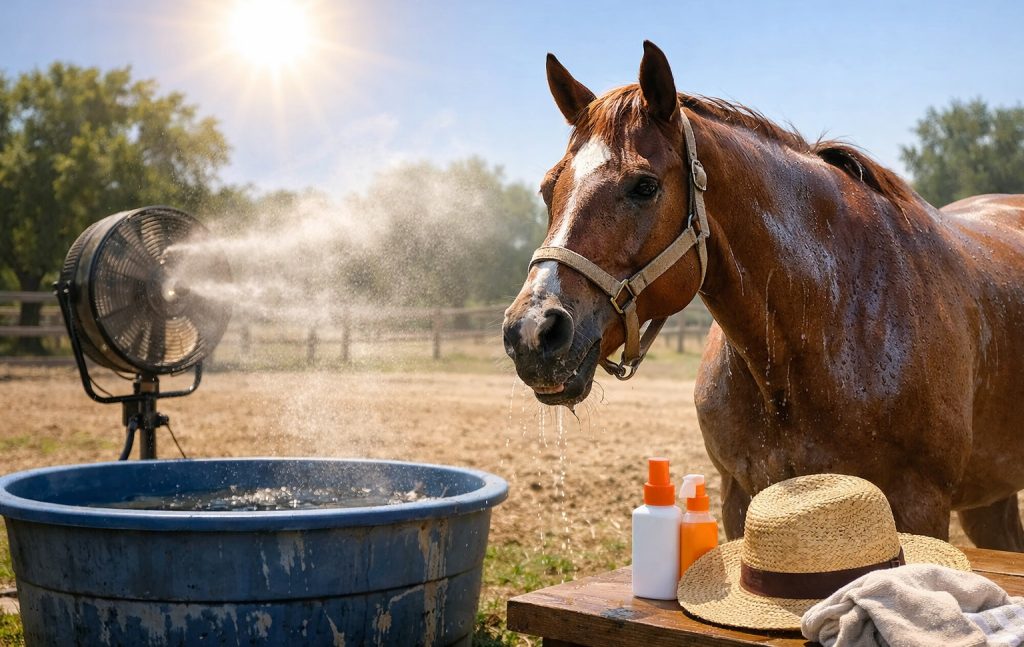
So, let’s cut to the chase: what temperature is too hot for horses to be outside? If you’ve ever stood in the blazing sun, sweating buckets, and thought, “Geez, if I’m melting, what about my horse?” — you’re asking the right question. Horses aren’t exactly equipped with portable fans or iced lattes (though wouldn’t that be a sight?). As horse owners, we need to know when “warm and sunny” crosses into “dangerously hot.”
I’ve had my fair share of summer barn days where I thought my gelding was fine, only to realize he was panting like he’d just run a marathon. Trust me, it’s not fun. That’s why this guide is here — to help you figure out the safe limits, spot the warning signs, and keep your horse cool without turning your stable into a luxury spa.
Defining Heat: Temperature, Relative Humidity, and Temperature-Humidity Indexes
Most people check the outdoor temperature and stop there. Unfortunately, horses don’t have that luxury.
Three factors determine whether conditions become dangerous:
- Air temperature
- Relative humidity
- Temperature-Humidity Index (THI)
Temperature measures how hot the air feels.
Humidity measures how much moisture already sits in the air.
The Temperature-Humidity Index (THI) combines these two measurements to estimate the ability of the horse to cool itself.
When humidity rises, sweat evaporates much more slowly. Since evaporation cools the horse, high humidity makes even moderate temperatures feel much hotter.
For example:
| Air Temperature | Humidity | Risk Level |
| 75°F (24°C) | 30% | Low |
| 85°F (29°C) | 80% | Moderate to High |
| 95°F (35°C) | 50% | High |
| 100°F (38°C) | 70% | Dangerous |
Humidity often creates more risk than temperature alone.
What “Too Hot” Means for Horses
Horses do not cool themselves down efficiently because they possess a massive muscle-to-skin ratio. Their large, heavy bodies generate incredible amounts of internal heat, but they have a relatively small surface area to shed it.
Why Humidity Changes Everything
If the humidity hits 90%, sweat simply sits on your horse’s coat without evaporating. IMO, ignoring humidity is the single biggest mistake horse owners make in the summer. When sweat cannot evaporate, your horse’s internal temperature continues to climb, even if they are just standing still in the shade.
Turnout vs. Exercise Risk (Quick Clarity)
Standing in a breezy pasture is completely different from working in an arena. A horse can typically tolerate a higher heat index during turnout if they have shade and water. However, the heat generated by a horse’s muscles may be ten times greater than at rest.
What is Too Hot to Ride a Horse?
This question deserves its own answer because riding adds significant stress.
Here’s a simple guideline:
- Below 80°F (27°C): Generally safe
- 80–90°F (27–32°C): Ride early morning or evening
- Above 90°F (32°C): Reduce intensity significantly
- Heat Index above 150: Skip strenuous work
Personally, I prefer early morning rides during summer. The horses stay happier, I sweat less, and nobody feels like melting into the saddle. That’s a win-win. 🙂
Always monitor recovery after exercise. A horse should return toward normal breathing within several minutes after cooling begins.
What is Heat Stress in Horses?
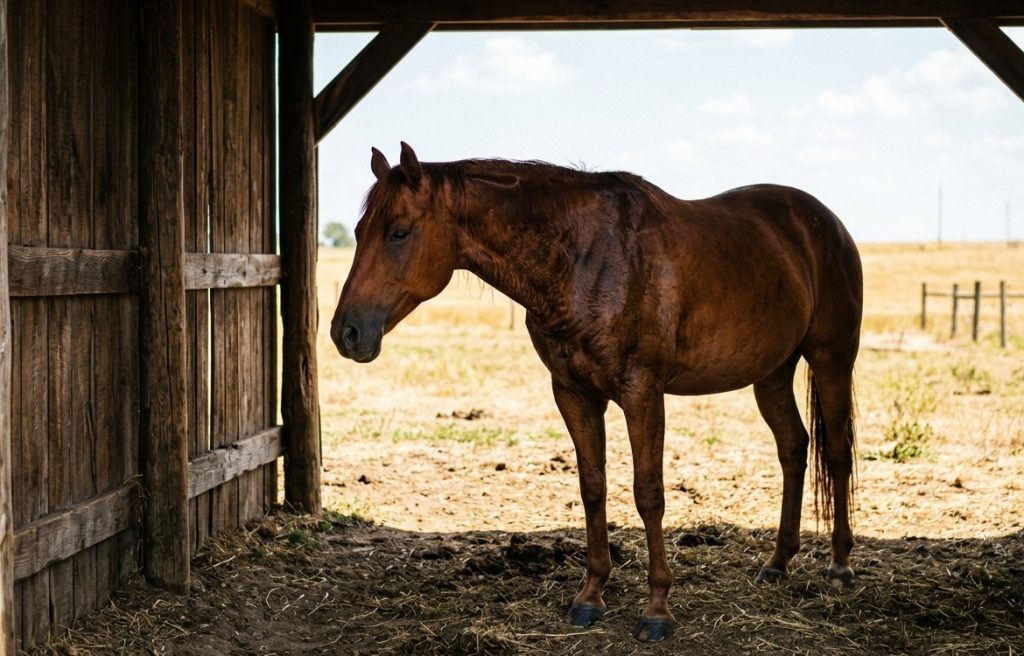
Heat stress occurs when a horse’s internal heat production far exceeds their ability to dump that heat into the environment. Think of it like a car engine running with a broken radiator.
When a horse is in heat stress the circulatory system will divert blood away from the internal organs to the skin surface to cool down. If this process goes wrong, their internal temperature rises, causing cellular damage, muscle breakdown, and eventually organ failure.
Heat Index Guidelines for Horses
Veterinarians often recommend watching the heat index rather than temperature alone.
General guidelines include:
| Heat Index | Risk |
| Under 130 | Low |
| 130–150 | Moderate |
| 150–180 | High |
| Above 180 | Extreme |
Once the heat index exceeds 150, reduce strenuous work.
Above 180, avoid exercise altogether whenever possible.
Equine Heat Index Chart
| THI | Meaning | Recommendation |
| Under 70 | Comfortable | Normal turnout |
| 70–75 | Mild caution | Watch hydration |
| 76–80 | Moderate stress | Reduce workload |
| 81–85 | High stress | Limit activity |
| Above 85 | Severe danger | Cooling measures immediately |
Which Horses have the Highest Risk of Heat Stress?
Just like humans, certain horses handle summer weather much worse than others. You cannot treat every horse in your barn exactly the same way when the thermometer spikes.
Health and Body Factors
- Dark-coated horses: Black and dark bay coats absorb solar radiation rapidly compared to grey or white coats.
- Overweight people: Fat, in thick layers, acts like heavy winter blankets keeping internal heat inside the body cavity.
- Old horses and foals: Old thermoregulation systems and undeveloped bodies don’t take well to fast temperature changes.
- Anhidrotic Horses: This is a medical condition where a horse is unable to sweat properly making it extremely vulnerable.
Management and Environment Factors
Horses that have just come from the cooler northern climates have not had the opportunity to become acclimated to sudden southern humidity. Poorly ventilated low-ceilinged barns also trap and create stagnant, dangerous air pockets.
Managing Horses in Hot Weather
Good management prevents most heat-related problems.
I always think of summer horse care as stacking small advantages together.
Here’s what works best:
- Turn horses out overnight when temperatures stay cooler.
- Bring horses inside during peak afternoon heat.
- Offer unlimited clean water.
- Add fans inside barns.
- Feed during cooler hours.
- Reduce strenuous exercise.
- Monitor breathing after work.
Simple adjustments often make a huge difference.
Heat-Related Illness in Horses
If you leave a horse outside in extreme temperatures without support, their system will eventually fail. You must recognize the progression of heat-related illness before it turns fatal.
Effects of Overheating in Horses
Overheating leads directly to dehydration, electrolyte depletion, and metabolic confusion. In severe cases, it causes heat stroke, which results in brain swelling, severe colic symptoms, and neurological damage.
Critical Signs of Heat Stress in Horses
Look for these five red flags when checking your herd during a heatwave:
Rapid, shallow breathing or panting
A normal horse breathes 8 to 16 times per minute. If your horse’s respiration rate hits 40 to 50 breaths per minute, they are actively struggling to dump heat.
Flared nostrils and lethargy
Look closely at their muzzle. Wide, fixed nostrils indicate your horse is working incredibly hard to draw air and cool their internal pathways.
Excessive sweating or a complete stop in sweating
A dripping wet horse needs immediate attention, but a completely dry horse in extreme heat indicates a true medical emergency. If their skin feels hot and dry, their cooling system has broken down completely.
Rectal temperature climbing above 102°F (39°C)
A horse’s normal baseline temperature sits between 99.5°F and 101.5°F. A rectal temperature reading of 103°F or higher means you must start aggressive cooling protocols immediately.
Stumbling, weakness, or disorientation
If your horse looks glazed over, drags their toes, or weaves while walking, heat stroke is affecting their brain function. Call your veterinarian immediately.
Tips to Prevent Heat Stress in Horses
Prevention always beats emergency treatment.
Here are my favorite habits:
- Ride before 9 AM.
- Avoid intense afternoon work.
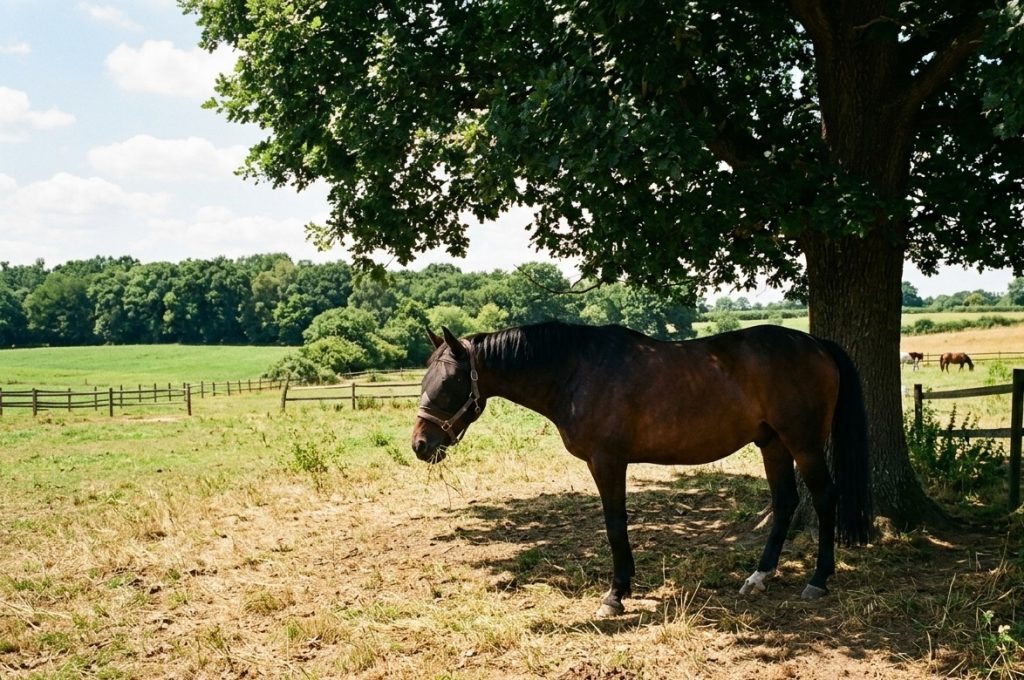
- Provide shade at all times.
- Check water buckets frequently.
- Replace lost electrolytes after heavy sweating.
- Allow gradual fitness conditioning.
- Clip heavy coats if appropriate.
- Watch humidity forecasts.
Ever wondered why conditioned horses recover faster?
Fitness improves circulation and sweating efficiency, making cooling much easier.
How to Keep an Outside Horse Cool
If your horses must stay outside, you need to actively modify their environment to fight off the heat.
Continuous Hosing
Forget the old myth that leaving water on a horse causes them to boil. Hose your horse continuously with cold water, scrape it off immediately, and apply more cold water. Target the large blood vessels inside their hind legs, chest, and neck for maximum cooling efficiency.
Constant Shade & Airflow
A pasture without trees or a run-in shelter is a danger zone. Ensure your structures allow natural cross-breezes to move stagnant air away from your horses’ bodies.
Hydration & Electrolytes
An average horse drinks 10 to 15 gallons of water daily in normal weather, but that number doubles during a heatwave. Offer clean, fresh water that isn’t boiling hot from a sitting plastic tank.
To complete your cooling toolkit, use these two additional processes:
- Offer loose salt blocks: Horses lose massive amounts of sodium and potassium through sweat; a loose salt option encourages consistent drinking.
- Set up pasture misters: If you have an industrial misting fan under a run-in shelter, your horses will stand under it all day to lower their skin temperatures.
Frequently Asked Questions
What temperature is too hot for horses to be outside in summer?
Most healthy horses tolerate temperatures into the 80s°F with proper shade and water. Once temperatures exceed 90°F (32°C), especially with high humidity, heat stress becomes much more likely.
What temperature is too hot for horses to be outside at night?
Night time is usually not as dangerous because it cools off. But even hot nights over 80°F (27°C) and high humidity mean it’s still impossible for horses to cool down effectively.
What temperature is too cold for horses to be outside?
Healthy horses often tolerate surprisingly cold weather. Many adult horses remain comfortable below freezing if they stay dry, receive adequate forage, and have shelter from wind.
What is the horse heat index calculator?
A horse heat index calculator combines temperature and humidity to estimate heat stress risk. Many equine organizations provide online calculators that help owners decide whether turnout or exercise remains safe.
Should horses stay inside during extreme heat?
Sometimes, yes.
If your barn provides excellent airflow, fans, shade, and cool water, horses often stay more comfortable indoors during peak afternoon temperatures than in open fields.
Can horses recover fully from heat stress?
Most horses recover completely when owners recognize symptoms early and begin aggressive cooling immediately. Severe heat stroke requires emergency veterinary care and may carry long-term complications.
Final Words
So, what temperature is too hot for horses to be outside? IMO, once temps hit the 90s with humidity, you should think twice. Horses aren’t invincible, and heat stress is no joke. The good news? With shade, water, airflow, and smart management, you can keep your horse safe and comfy even in the dog days of summer.
And hey, next time you’re sweating through your shirt at the barn, just remember — your horse feels it too. So grab that hose, share the cool-down, and maybe skip the midday ride. Your horse will thank you… probably with a happy snort instead of a heat-induced meltdown. 🙂