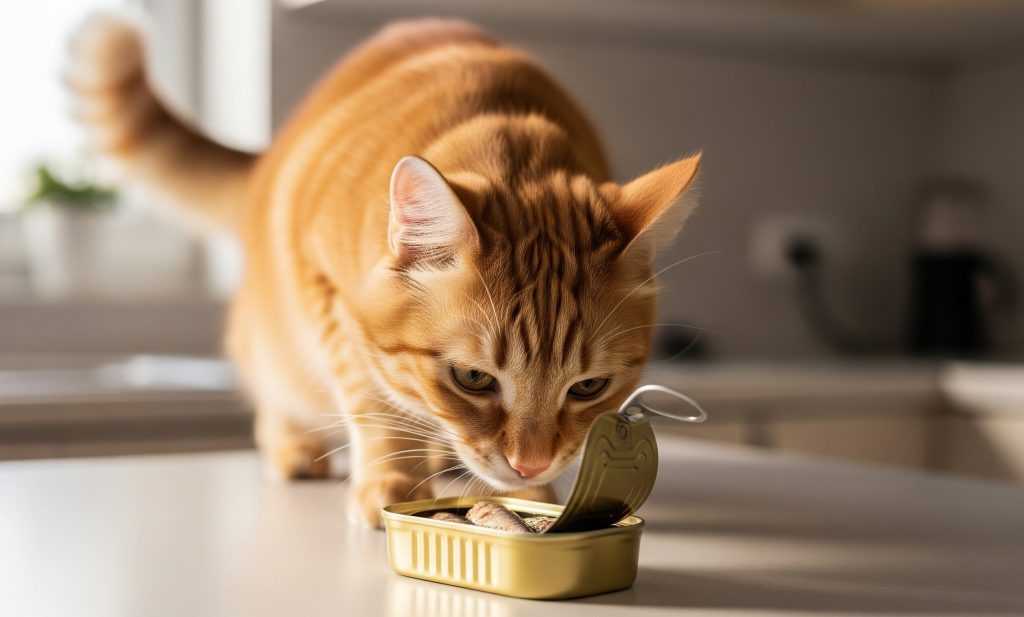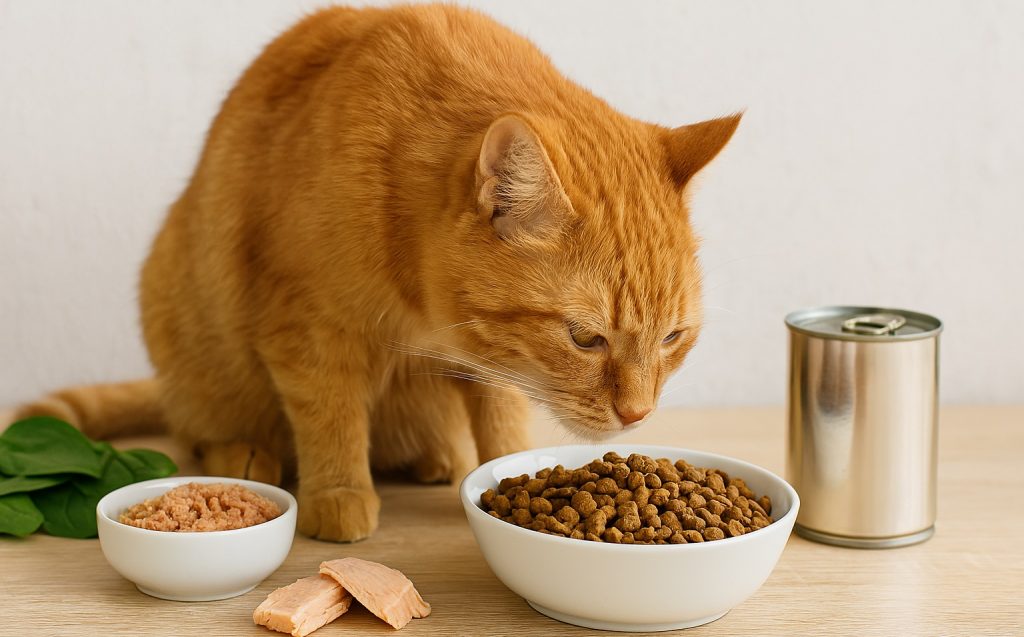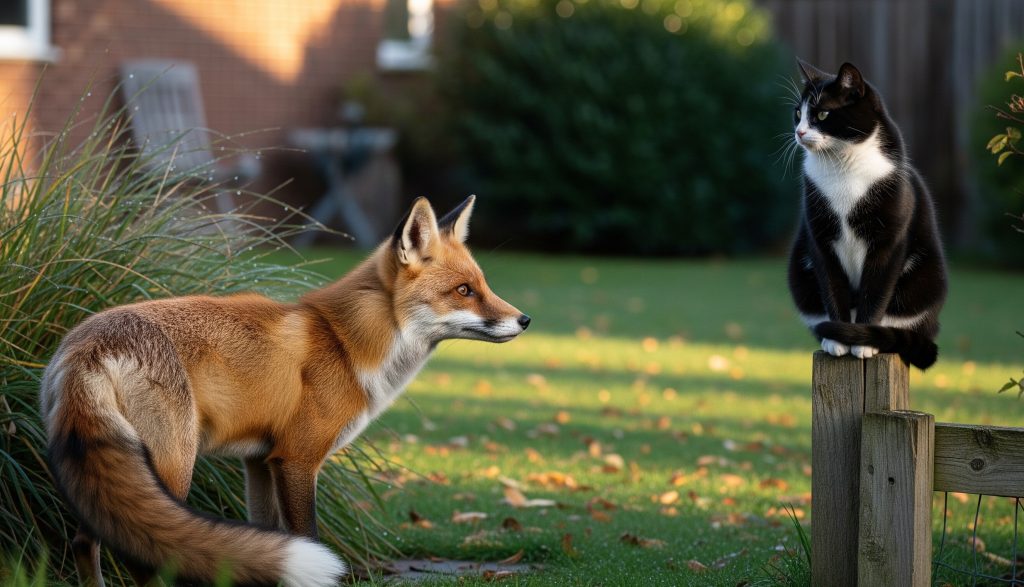
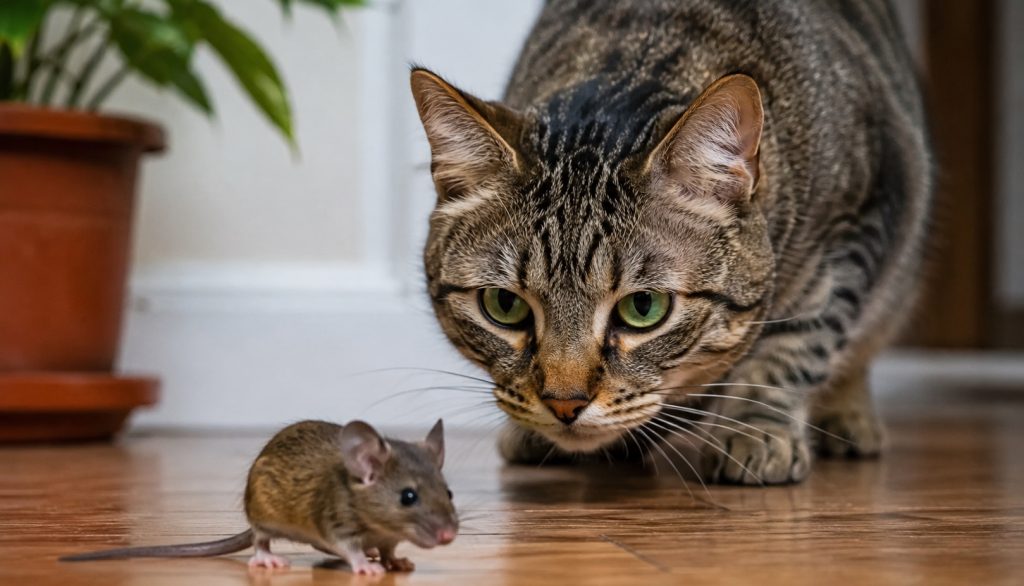
Top barn and working breeds like the American Shorthair and Maine Coon are among the best cats for mice.
I have worked with feral colonies, barn cats, and indoor mousers for years. This guide draws on field experience, vet advice, and behavior science to explain which cats excel at catching mice, why they do it, and how to choose or train a cat for rodent control. Read on to learn breed traits, practical tips, safety concerns, and real-life examples to help you select the best cats for mice with confidence.
Why some cats are better at hunting mice
Cats evolved as small predators. Their senses and body make them effective hunters. Cats that hunt mice share traits like high prey drive, agility, and strong stalking instincts.
Key traits that make the best cats for mice:
- Keen hearing and night vision to detect quiet movements.
- High prey drive and curiosity to pursue small, fast targets.
- Agile bodies and quick reflexes for the final pounce.
- Independent temperament that tolerates outdoor work or patrol.
Understanding these traits helps you pick or train a cat that will reduce rodent problems without relying on poisons.

Top breeds that are the best cats for mice
Several breeds and types stand out. Some are historically used as mousers. Below are breeds with practical notes on temperament, care needs, and hunting ability.
American Shorthair
- Temperament: Calm, friendly, strong hunting instincts.
- Why good: Bred as working cats; excellent at chasing small rodents.
- Care: Low grooming needs and good indoor-outdoor adaptability.
Maine Coon
- Temperament: Gentle giant but alert and playful.
- Why good: Large, agile, with strong paws and high curiosity.
- Care: Regular brushing; suited to farms or homes with space.
Barn Cat / Domestic Shorthaired Mix
- Temperament: Varied; often highly driven.
- Why good: Natural selection favors the best hunters in feral lines.
- Care: Often the most cost-effective and practical “mousers.”
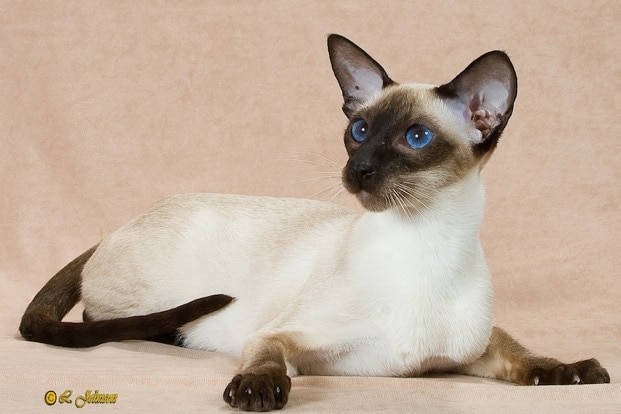
Siamese and Oriental Shorthair
- Temperament: Vocal, intelligent, active.
- Why good: High energy and focus make them persistent hunters.
- Care: Mental stimulation is essential to avoid boredom.
Abyssinian
- Temperament: Very active and curious.
- Why good: Fast and agile; loves exploring and stalking.
- Care: Needs play and climbing outlets to channel energy.
Norwegian Forest Cat
- Temperament: Independent and hearty.
- Why good: Built for cold and rough terrain; excellent outdoor hunter.
- Care: Thick coat needs seasonal grooming.
These breeds often top lists for the best cats for mice. But many mixed-breed shorthaired cats are also exceptional hunters.
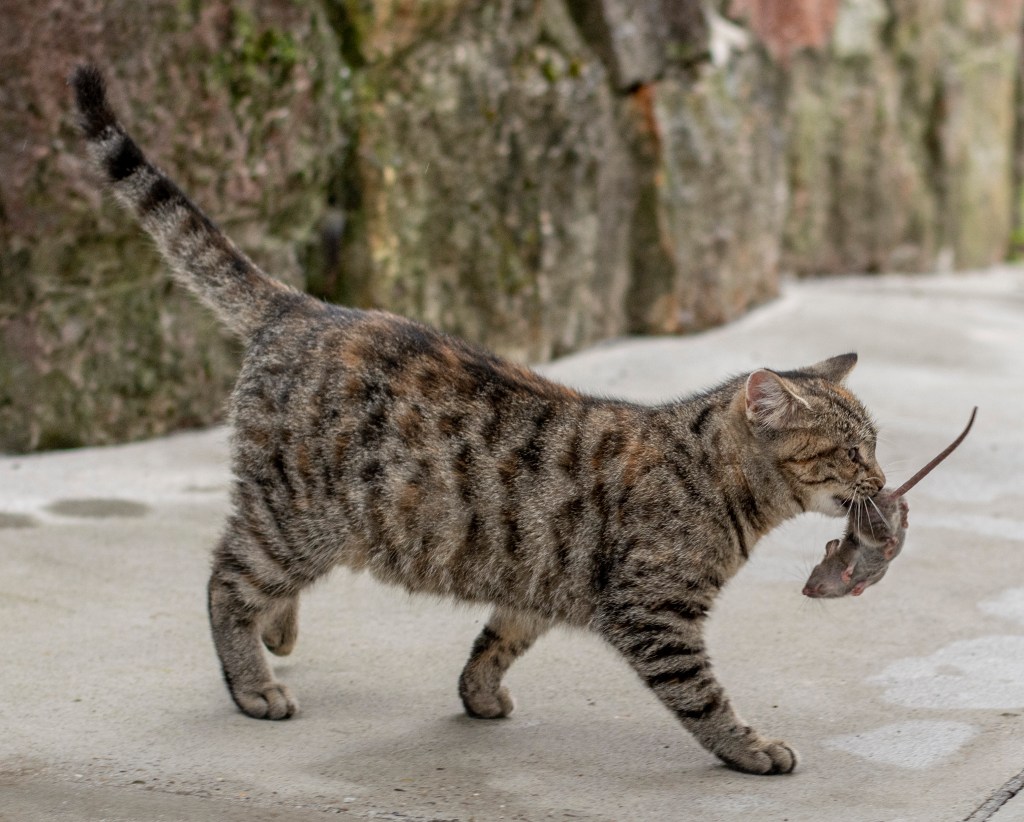 Source: cattime.com
How to choose the right mouser for your situation
Match the cat to your environment and goals. Consider these steps.
Assess the site
- Indoor pest control: Choose a cat comfortable living indoors with supervised outdoor access.
- Barn or farm: Look for hardy breeds that tolerate the outdoors.
- Small garden: A small, agile mouser who won’t harm wildlife is ideal.
Evaluate temperament
- High prey drive: The best cats for mice usually show interest in toys that mimic prey.
- Social needs: Some working cats are independent and do fine alone. Others need human interaction to stay balanced.
Health and safety
- Vaccinate and deworm before outdoor work.
- Spay or neuter to reduce roaming and fighting.
- Microchip and ID your cat for recovery if they roam.
Adoption tips
- Rescue shelters often have proven mousers.
- Observe a cat’s play and hunting behavior before adopting.
- Ask caretakers about the cat’s outdoor experience and health history.
Selecting the right cat reduces trial-and-error. A well-matched cat performs better and stays healthier.
Training and managing a mouser: practical methods
Hunting is partly instinctive. But management and small training steps improve success and safety.
Encourage natural behavior
- Use wand toys and laser play to simulate chase and pounce.
- Reward stalking and pouncing with treats to reinforce success.
Safe outdoor access
- Create supervised “hunt time” in a fenced area.
- Use a leash and harness for controlled outdoor exploration.
Reduce unwanted kills
- Provide regular feeding so the cat does not depend solely on prey.
- Offer puzzle feeders and play to satisfy predatory drive.
Rodent proofing as a team approach
- Seal holes and store food in airtight containers.
- Combine cat presence with traps (non-toxic) for heavy infestations.
My experience: I introduced young barn cats to hunting by starting short dawn patrols. I paired each patrol with a small reward like wet food. Over weeks, they learned to focus on barns and feed areas. This approach reduced accidental hunting of non-target wildlife.

Benefits and limitations of using cats for rodent control
Cats can be an effective part of pest management. But there are limits and responsibilities.
Benefits
- Natural, low-cost deterrent that requires no chemicals.
- Continuous presence that can discourage rodents from settling.
- Dual value as companion animals and workers.
Limitations
- Not all cats will reliably hunt. Personality matters.
- Cats may harm non-target wildlife like songbirds.
- Health risks exist for cats that eat infected rodents.
Ethical and ecological considerations require balance. If you keep cats for pest control, use coexistence strategies to protect wildlife and the cat.
Health, welfare, and legal issues
Protecting both the cat and the environment is essential.
Veterinary care
- Keep vaccines and parasite control current.
- Monitor for bites or injuries after fights with rodents.
Avoiding rodenticide problems
- Rodenticides can poison cats secondarily. Avoid these where possible.
- Use mechanical traps or non-toxic baits in concert with a mouser.
Local rules and ownership
- Check leash and outdoor cat laws in your area.
- If placing barn cats, secure permission and clear responsibilities.
Transparency about limitations and risks builds trust with neighbors and protects your animals.
Real-world examples and lessons learned
I managed a group of barn cats on a small farm for three years. Here are practical lessons.
What worked
- Rotating cats across buildings prevented territory disputes.
- Young cats learned fastest when paired with an experienced mouser.
- Food placed near barn doors kept cats patrolling key entry points.
What failed
- Releasing unvaccinated stray cats caused illness in the herd.
- Relying solely on cats during a severe infestation delayed proper control.
Tip: Start small and monitor outcomes. Combine cats with exclusion and sanitation for best results.
Frequently Asked Questions of best cats for mice
What breed is the best at catching mice?
Most working and shorthaired breeds like American Shorthairs and mixed barn cats are top mousers due to strong prey drive and agility. Individual personality usually matters more than breed.
Can indoor cats catch mice?
Yes. Indoor cats with strong prey drive can be taught to catch mice if they access the rodent area or are allowed supervised outdoor time. Use training and safe outings to encourage hunting.
Are barn cats a good long-term solution?
Barn cats can be effective long-term when they receive health care, shelter, and regular feeding. They work best as part of a broader pest management plan with sanitation and exclusion measures.
How do I keep my mouser safe from poisons?
Avoid rodenticides on your property and in neighbor areas when possible. Use mechanical traps, secure food storage, and inform neighbors about the risks to pets.
Will a cat eliminate a rodent problem completely?
Rarely. A cat reduces rodent numbers and deters settlement, but severe infestations need traps, sanitation, and exclusion to fully resolve.
Conclusion
Choosing the best cats for mice is a blend of science, experience, and common sense. Look for cats with strong prey drive, good health, and a temperament that fits your site. Use training, veterinary care, and humane pest-controls to protect the cat and the environment. Start with one well-chosen cat, monitor results, and adapt your approach. If you want reliable rodent control without chemicals, consider adopting a proven mouser or working with local shelters to find the right fit. Share your experiences below, subscribe for more tips, or reach out if you need help matching a cat to your property.