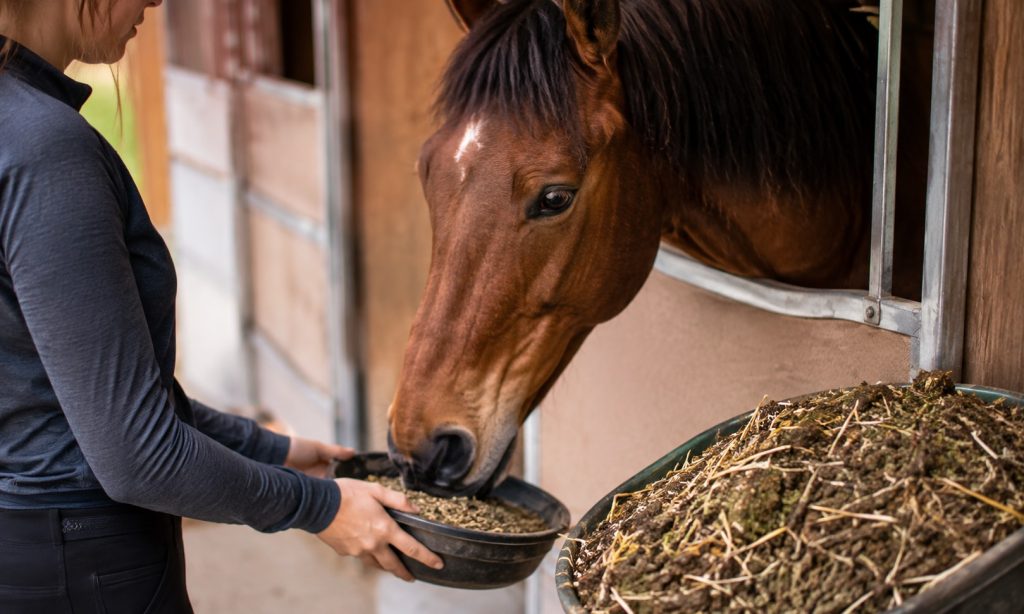
Choose low-NSC, forage-first, high-fiber feeds with added fat and balanced minerals.
Caring for a horse with Cushing’s can feel like a tightrope walk. One day is fine, the next brings foot soreness or a sugar spike you did not see coming. I’ve been in that barn aisle, scooping feed and second-guessing every pellet. The right ration lowers risk, stabilizes energy, and keeps weight steady. In this guide, I break down the best feed for horses with cushings, explain what to avoid, and highlight picks that respect low-sugar needs while keeping calories up where needed. Let’s make feeding simpler, safer, and more predictable.

Triple Crown Timothy Cubes Balancing…
HORSE SUPPLEMENT – A premium forage replacement designed to support mature and metabolic horses with specialized dietary needs. LOW SUGAR HORSE FEED – Contains low starch and sugar levels, ideal…

HA4E – Horse Digestive Support…
Natural Support for Equine Cushing’s: Gently supports hormone balance and overall wellness in horses showing signs of Cushing’s, such as muscle wasting, laminitis, or excessive hair growth. Helps with Excessive…

Triple Crown Senior Horse Feed,…
SENIOR HORSE FEED – Specially formulated for older horses, offering a beet pulp-based formula rich in nutrients and fats for optimal digestive health and weight maintenance. EQUINE SENIOR FEED -…
Triple Crown Timothy Cubes, Low Sugar 50 lb

Low-NSC forage is the backbone of any Cushing’s plan. These timothy cubes check that box and keep things simple. You get consistent, clean fiber with very little sugar and starch. I like that I can soak them for seniors or horses with dental issues.
The texture, once soaked, is soft and safe. That helps reduce choke risk. The cubes can replace part or all of a hay ration. This is a strong base when you want the best feed for horses with cushings.
Pros:
- Low sugar and starch for safer daily intake
- Easy to soak for seniors or poor dentition
- Consistent timothy fiber supports hindgut health
- Helpful for horses prone to laminitis flare-ups
- Great base for adding minerals or a balancer
Cons:
- Needs soaking time to reduce choke risk
- Heavier bags can be hard to store or move
- May need added vitamins and minerals
My Recommendation
If you want a steady, low-NSC forage base, start here. It fits a Cushing’s diet because it limits sugar swings and supports a calm gut. Use it for horses that need predictable fiber with minimal extras. Add a mineral balancer and a fat source as needed. For many barns, this becomes the best feed for horses with cushings when forage testing is not possible.
It shines for picky eaters when soaked with warm water. It also helps rehab feet after laminitis. I would pair it with a low-NSC ration balancer and omega-3 fat for a complete plan.
| Best for | Why |
|---|---|
| Daily low-NSC forage base | Simple timothy fiber with low sugar and starch |
| Seniors or bad teeth | Soaks to a soft mash for safer chewing |
| Laminitis-prone horses | Predictable NSC to reduce risk of flare-ups |
HA4E Digestive Support for Cushing’s, 300 Tabs

Cushing’s often brings gut swings. Stress, medication, and feed changes all play a part. This homeopathic formula aims to support digestion and regularity. It is gentle and simple to give in tablet form.
I see it as a support tool, not a cure. It may help ease mild belly upset during diet shifts. Some owners report calmer manure patterns. When used well, it can round out the best feed for horses with cushings plan.
Pros:
- Gentle, non-invasive support for the gut
- Tablet form is easy to dose and track
- Can help during transitions or stress
- Pairs with low-NSC diets and pergolide plans
- No added sugars or molasses
Cons:
- Homeopathic evidence is mixed and limited
- Not a replacement for veterinary care
- Results can vary from horse to horse
My Recommendation
Use this if your horse gets mild gut bumps during changes. It may help keep manure steady and appetite calm. I do not use it as a main tool. But it can support a low-NSC ration and a slow, safe transition. For many barns, small aids like this make the best feed for horses with cushings more reliable day to day.
Always talk with your vet, especially if your horse is on pergolide. Watch for any sugar in other treats. Keep your main diet as forage-first and low starch.
| Best for | Why |
|---|---|
| Digestive support during changes | Gentle tool when shifting hay or feed |
| Horses sensitive to stress | May ease minor gut swings without sugar |
| Adjunct to low-NSC diets | Fits well with forage-first Cushing’s plans |
Triple Crown Senior Feed, High Fat/High Fiber
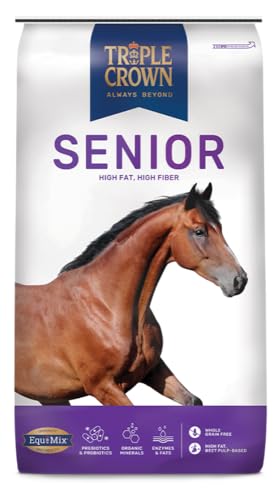
Many Cushing’s horses are older and lose weight fast. This senior feed brings calories from fat and fiber, not heavy grain. That is the right path for low-NSC needs. It is also easy to chew and can be soaked.
The NSC is designed to be controlled for seniors. That is key for laminitis risk. You still must feed by the tag and check body score. But this is often a safe bridge to hold weight and topline.
Pros:
- Calorie-dense from fat and fiber, not grain
- Often within a Cushing’s-friendly NSC range
- Soaks well for seniors and dental issues
- Complete profile reduces guesswork
- Great taste helps keep picky horses eating
Cons:
- Not all seniors need a concentrate
- Must watch serving size to avoid weight gain
- Always confirm NSC for your lot or region
My Recommendation
Pick this for hard keepers that drop weight on hay alone. It keeps sugar in check while adding safe calories. I have used it as the main bucket feed under a forage base. For many, it becomes the best feed for horses with cushings who still need extra energy for work or winter.
Balance it with exercise as your vet allows. Add omega-3s if hooves or coat need support. Regular weight tapes and photos help dial in the right scoop.
| Best for | Why |
|---|---|
| Older horses losing condition | High fat and fiber without heavy starch |
| Picky senior eaters | Palatable and easy to soak |
| Laminitis history with weight loss | Controlled NSC supports safer calorie intake |
Vetanimus Feed Topper with Flaxseed, 420 g
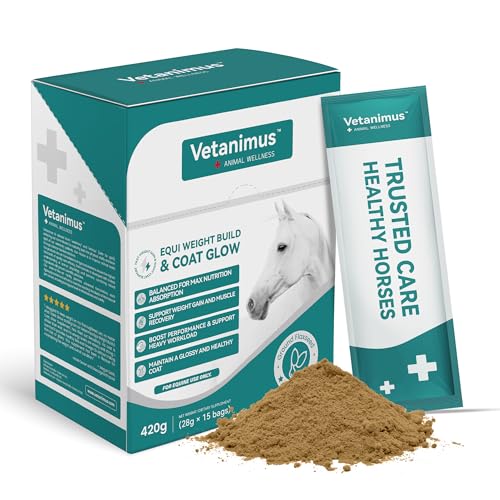
Some Cushing’s horses need extra calories for work or winter. I look to fat before starch for those cases. This topper brings flaxseed and rice bran fat to the bowl. The texture mixes fast into a soaked mash.
There is corn in the blend. That adds some starch, so portion matters. I use small amounts and monitor feet. For many horses, this is a handy, tasty add-on to the best feed for horses with cushings that runs lean.
Pros:
- Boosts calories with fat, not just grain
- Flax brings omega-3s for coat and hooves
- Mixes well into cubes or senior feed
- Useful in cold weather or higher work
- Helps picky horses finish meals
Cons:
- Contains corn; watch starch-sensitive horses
- Small jar; may need frequent reorders
- Not a complete feed or balancer
My Recommendation
Use this as a controlled calorie bump. It suits horses that need more fuel but cannot handle big grain. Keep serving sizes modest. Add to a low-NSC base so you still have the best feed for horses with cushings at the core.
Track digital pulses in spring grass season. I like this for picky eaters who need shine and topline. It is a simple, fast way to add fat and taste.
| Best for | Why |
|---|---|
| Hard keepers with Cushing’s | Extra calories from fat with good taste |
| Shine and hoof support | Flaxseed omega-3s aid skin and coat |
| Mixing into soaked feeds | Fine texture blends into mashes fast |
Herbal Insulin Resistance Supplement, 0.44 lb

Many Cushing’s horses also show insulin resistance. This herbal blend is made for that overlap. It is a feed-through powder that you add to a low-NSC ration. The goal is to support normal glucose and comfort in feet.
Ingredients in such blends can vary. Typical herbs may include cinnamon, fenugreek, or similar aids. Evidence is mixed, so I monitor closely. Used with care, it can support the best feed for horses with cushings and insulin spikes.
Pros:
- Targets insulin resistance concerns
- Easy to add to daily feed
- Pairs well with low-NSC forage plans
- Useful during grass transition seasons
- No added molasses, based on label type
Cons:
- Herbal evidence varies by horse
- Not a stand-alone fix for IR or EMS
- Must monitor feet and pulses often
My Recommendation
Consider this if your horse shows insulin highs on labs. Add it to a steady forage base. Keep your vet in the loop and recheck blood work. I see it as a helpful layer, not a cure. The best feed for horses with cushings always starts with low-NSC hay and careful turnout.
Use a grazing muzzle if grass is lush. Keep sugars steady in spring and fall. Tweak dose only with guidance from your vet.
| Best for | Why |
|---|---|
| Horses with Cushing’s and IR | Targets glucose support alongside diet |
| Feed plans needing a gentle add-on | Powder format blends into daily ration |
| Seasonal sugar swings | Pairs with turnout limits during grass flush |
How to choose the best feed for horses with cushings
I keep my approach simple and strict. Cushing’s is a metabolic disease. Less sugar and starch means less risk. More fiber and fat means safer calories. Here is how I pick and combine feeds with confidence.
Know your numbers
- Non-structural carbs (NSC) should be low. Aim near or under 10–12% for the base diet.
- Forage first. Hay or cubes form at least 1.5% of body weight per day.
- Test hay when possible. If NSC runs high, soak to help reduce sugars.
Build the ration in layers
- Base: low-NSC hay, timothy cubes, or tested grass hay.
- Core feed: a proven low-NSC senior feed or a ration balancer.
- Calories: add fat via flax, oils, or rice bran if needed.
- Support: consider targeted supplements with your vet’s input.
What to avoid
- Molasses-heavy feeds. These can spike sugar fast.
- High-corn or grain mixes served in big scoops.
- Large meals. Small, frequent feedings are easier on the system.
- Rich pasture without control. Use muzzles or dry lots in high-risk seasons.
How to transition safely
- Change feed over 7–14 days minimum.
- Start with 25% new, 75% old. Increase new feed every few days.
- Soak cubes or pellets if choke is a concern.
- Watch manure, appetite, and digital pulses daily.
Body condition and hoof checks
- Use a weight tape weekly. Track trends, not hours.
- Score body condition monthly. Aim for a score near 5–6 for most.
- Feel feet every day. Warmth or a bounding pulse is a red flag.
- Photo progress. It helps you spot slow changes in topline.
Medications and feeding
- Many Cushing’s horses take pergolide. Feed with a small, low-NSC snack if appetite dips.
- Ask your vet about timing and monitoring ACTH or insulin labs.
- Keep notes. Diet, turnout, and meds all affect outcomes.
When I say the best feed for horses with cushings, I mean a system, not just a bag. A smart system keeps sugars down, supports muscle, and protects feet. Your horse will show you what works through weight, energy, and hooves.
FAQs of best feed for horses with cushings
What NSC level should I feed a Cushing’s horse?
Keep NSC low. Aim near or under 10–12% for the base diet. Lower is safer for laminitis risk.
Should I soak hay or cubes for a Cushing’s horse?
Yes, soaking can lower sugars. Use warm water for 30–60 minutes. Drain well before feeding.
Can senior feeds work for Cushing’s horses?
Yes, if NSC is controlled. Choose high-fiber, high-fat options. Confirm numbers on the tag.
Is pasture safe for Cushing’s horses?
It depends on sugar levels. Use a muzzle or dry lot in high-sugar seasons. Monitor feet daily.
Do supplements replace a low-NSC diet?
No. The foundation is low-NSC forage and careful turnout. Supplements only support the main plan.
Final Verdict: Which Should You Buy?
Triple Crown Timothy Cubes deliver the most dependable base. They keep NSC low and are easy to soak. For hard keepers, add Triple Crown Senior for safe calories.
Pick the best feed for horses with cushings that fits your horse’s weight and feet. Keep meals small, sugars low, and fat steady. Your plan wins with time and tracking.