Cats can be surprisingly good at hiding when something is wrong. A cat may still walk around the house, curl up in a favorite spot, or even eat a little while becoming less well than usual. That can make the Signs of Dehydration in Cats easy to miss, especially when the earliest changes are subtle.
Dehydration occurs when a cat loses more fluid than it takes in. Sometimes the cause is as simple as reduced drinking during a stressful change in routine. In other cases, vomiting, diarrhea, fever, kidney disease, urinary problems, or another illness may be involved. Because the symptoms of dehydration can overlap with many other health problems, observing one sign at home cannot reliably diagnose the cause or tell you exactly how serious the situation is.
After years of caring for cats and other pets, one thing I have learned is that small changes in normal habits often matter. A cat drinking less water, producing less urine, hiding more than usual, or becoming unusually quiet may tell you something is different before there is an obvious emergency.
This article explains common signs of dehydration in cats, possible causes, normal hydration needs, ways to encourage healthy water consumption, and when veterinary care is necessary.
What Is Dehydration in Cats?
Dehydration means the body does not have enough water and other fluids to function normally. Water is involved in circulation, digestion, temperature regulation, waste removal, and the normal function of cells and organs.
A cat can become dehydrated because it is not taking in enough fluid, because it is losing too much fluid, or because both are happening at the same time. The problem may range from mild dehydration in cats to severe dehydration that requires urgent veterinary treatment.
Why Proper Hydration Matters for Cats
Cats have a reputation for not drinking large amounts of water, and there is some truth behind that observation. Their ancestors evolved in relatively dry environments and were able to obtain much of their moisture from prey. Modern cats eating wet food may also get a substantial amount of water from their meals.
That does not mean cats can safely go without adequate fluid. Proper feline hydration supports normal kidney function, digestion, circulation, and body temperature. When fluid intake drops or fluid losses increase, the body may struggle to compensate.
The challenge for owners is that dehydration does not always announce itself dramatically. A mildly dehydrated cat may simply seem a little quieter, eat less enthusiastically, or visit the water bowl less often. Watching for patterns rather than relying on one isolated sign is usually more useful.
Common Signs of Dehydration in Cats
Several physical and behavioral changes may suggest that a cat is dehydrated. However, no single home observation can reliably diagnose dehydration or determine its severity. These signs should be considered alongside your cat’s overall behavior and any symptoms of illness.
Dry or Sticky Gums
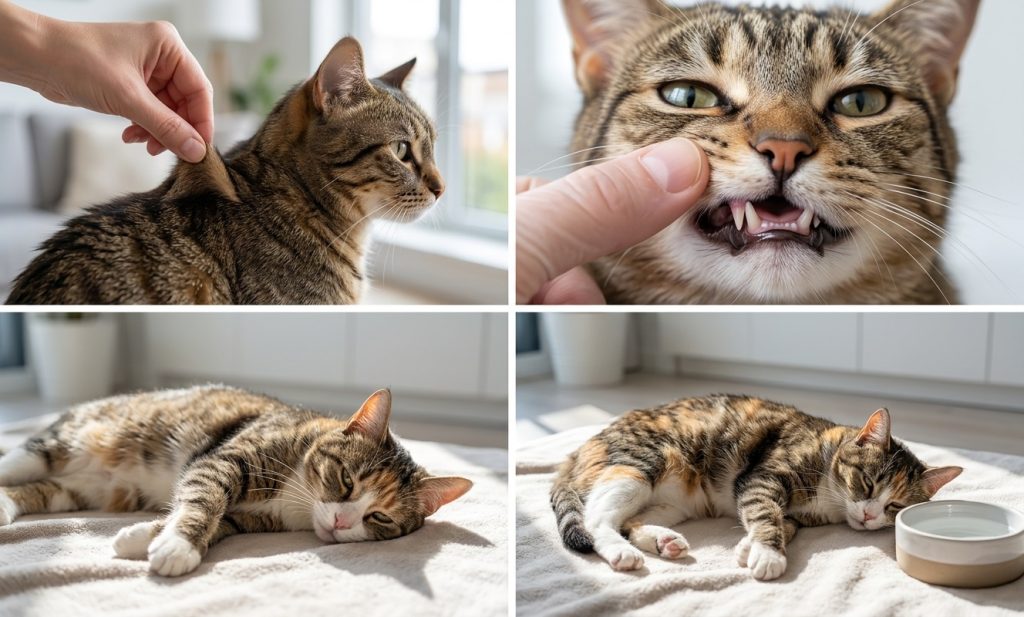
Healthy gums are generally moist rather than dry or tacky. Dry gums in cats or gums that feel unusually sticky can be one possible sign of reduced hydration.
That said, gum appearance can vary, and examining a reluctant or stressed cat may not give you a clear answer. Oral disease and other conditions can also affect the mouth. If your cat’s gums appear very dry, pale, unusually colored, or abnormal in another way, contact a veterinarian.
Reduced Skin Elasticity
Some owners gently observe how quickly the skin returns to its normal position after being lightly lifted. Reduced skin elasticity can occur with dehydration, but this is not a perfect home test.
Age, body condition, and the location where the skin is assessed can influence the result. Older cats, for example, may naturally have less elastic skin. A skin test should never be used alone to decide that a cat is healthy or that severe dehydration is absent.
Sunken or Dull-Looking Eyes
Sunken eyes in cats can occur when dehydration becomes more significant. The eyes may also appear dull or less bright than usual.
Eye changes can have many causes, so they should not automatically be blamed on dehydration. Still, noticeable changes in the eyes combined with weakness, poor appetite, vomiting, reduced drinking, or other symptoms deserve prompt veterinary attention.
Lethargy and Weakness
A lethargic cat may sleep more than usual, show less interest in normal activities, move slowly, or avoid interaction. Severe weakness is more concerning, particularly if a cat struggles to stand or walk normally.
Cats naturally sleep a great deal, which can make this symptom tricky. The important question is whether your cat behaves differently from its normal self. A cat that is usually alert when you open a food container but suddenly does not respond may be showing a meaningful change.
Reduced Appetite
A dehydrated or ill cat may eat less than usual. Reduced appetite can also contribute to hydration problems because food, particularly wet cat food, supplies moisture.
Loss of appetite has many possible causes, including pain, digestive problems, dental disease, and systemic illness. Do not assume that poor appetite is simply a hydration issue.
Changes in Urination
A cat that is taking in less fluid may produce less urine. You might notice smaller or less frequent urine clumps in the litter box.
However, litter box changes can also point to urinary problems, kidney disease, or other conditions. Straining to urinate, repeated trips to the litter box with little output, or apparent pain while urinating can be especially serious and should not be treated as a simple drinking issue.
Faster Breathing or Other Serious Changes
Dehydration or the illness causing it may sometimes be accompanied by more serious changes, including weakness, rapid breathing, collapse, or altered responsiveness.
These are not symptoms to casually monitor for days. If your cat has significant breathing changes, collapses, cannot stand normally, or seems severely unwell, seek veterinary care promptly.
Cat Dehydration Symptoms: Mild vs. Severe
The cat dehydration symptoms owners notice can vary depending on the degree of fluid loss and the underlying cause.
Possible Early Signs
Possible early signs may include:
- Drinking less than usual
- Slightly dry or sticky gums
- Reduced appetite
- Lower energy
- Less frequent or reduced urination
- Mild changes in normal behavior
These signs can be subtle. They can also occur with problems other than dehydration, which is why context matters.
Signs That May Indicate a More Serious Problem
More concerning symptoms may include:
- Extreme lethargy or marked weakness
- Very dry gums
- Sunken-looking eyes
- Repeated vomiting
- Persistent diarrhea
- Refusing both food and water
- Collapse or difficulty standing
- Significant changes in urination
- Symptoms that are clearly worsening
Cats are not submitting bug reports; they often hide problems until they become difficult to ignore. A worsening situation should not be handled with a “wait and see forever” approach.
What Causes Dehydration in Cats?
Understanding possible dehydration causes in cats can help you recognize when a change in drinking may be temporary and when an underlying health issue needs attention.
Not Drinking Enough Water
Some cats simply drink less from a bowl than others, especially when they eat wet food. However, a sudden reduction in drinking can be more concerning than a cat’s naturally modest water consumption.
Changes in water freshness, bowl location, stress, household routine, or illness may affect drinking.
Vomiting or Diarrhea
Vomiting and diarrhea in cats can cause fluid loss, sometimes quickly. A cat that repeatedly vomits or has persistent diarrhea may become dehydrated while also losing electrolytes and nutrients.
Repeated symptoms, weakness, or refusal to drink should prompt veterinary advice rather than prolonged home monitoring.
Hot Weather and Environmental Factors
Hot weather and cats can be a risky combination, particularly if a cat is in a poorly ventilated area or becomes overheated. Higher temperatures may increase fluid needs.
Always provide access to fresh water and a cool, safe environment. Signs of overheating or severe illness require prompt professional attention.
Kidney Disease and Other Medical Conditions
Kidney disease can affect fluid balance and may cause changes in drinking and urination. Diabetes, digestive disorders, infections, and other medical conditions can also contribute to dehydration.
Interestingly, some conditions may cause increased thirst while still leaving a cat vulnerable to dehydration. That is one reason unusual drinking behavior should not be interpreted too simply.
Fever or Other Illnesses
Fever and many illnesses can increase fluid needs or reduce a cat’s willingness to drink. Pain, nausea, and general weakness may also make normal eating and drinking less likely.
Stress, Diet, and Changes in Routine
Moving, travel, new pets, construction noise, or changes in routine can affect a cat’s behavior. Diet matters as well. A cat eating primarily dry food generally obtains less moisture from meals than one regularly eating moisture-rich food.
Stress alone should not be used to explain away persistent symptoms. If your cat seems unwell, the underlying cause may need veterinary assessment.
Why Is My Cat Not Drinking Water?
If you are wondering, why is my cat not drinking water, first consider the entire picture rather than focusing only on the water bowl.
Your cat may drink less visibly because:
- It gets substantial moisture from wet food.
- The water is not fresh enough for its preference.
- The bowl is too close to food, a litter box, noise, or another stressor.
- The bowl’s material, shape, or depth is uncomfortable.
- A recent routine or environmental change has caused stress.
- Pain, nausea, dental problems, or illness are affecting normal behavior.
A cat eating canned food may take in significant moisture without making frequent trips to the water bowl. In contrast, a sudden decrease in total fluid intake combined with illness deserves more attention.
From practical experience, I have found that comparing today’s behavior with a cat’s personal routine is often more useful than comparing one cat with another. Some cats rarely seem to drink in front of their owners, while others make frequent visits to the bowl.
How Much Water Should a Cat Drink?
So, how much water should a cat drink? There is no single rigid amount that applies to every cat.
A cat’s overall water requirement depends on factors including:
- Body size
- Diet
- Activity level
- Environmental temperature
- Age
- Health status
- Moisture already obtained from food
For this reason, cat water intake per day should be considered as total water obtained from both food and drinking, not simply the amount disappearing from the bowl.
Cats eating wet food may drink much less from a water bowl because wet cat food and hydration are closely connected. Dry-food diets provide less moisture, so drinking behavior may look different.
If you need guidance about your individual cat’s water needs, particularly if the cat has kidney disease or another medical condition, ask your veterinarian. A sudden increase or decrease in drinking can sometimes be more informative than a particular number.
How Long Can a Cat Survive Without Water?
People understandably ask, how long can a cat survive without water, but there is no safe universal timeline.
A cat’s age, health, temperature, diet, activity, and underlying illness can all affect how quickly dehydration and other complications develop. Waiting to discover an extreme “survival limit” is dangerous because a cat may become seriously ill well before that point.
If a cat is refusing water, particularly while also eating poorly, vomiting, having diarrhea, or acting weak, contact a veterinarian rather than testing how long the cat can go without drinking. This is one experiment nobody needs to conduct at home. :/
How Long Can a Kitten Go Without Water?
The question how long can a kitten go without water deserves even greater caution.
Kittens are smaller, still developing, and can become vulnerable to fluid problems more quickly than healthy adult cats. A young kitten that is not drinking, not nursing appropriately, vomiting, has diarrhea, or appears weak should receive prompt veterinary guidance.
Do not rely on a general online timeline to decide when to act. The kitten’s age, size, health, and symptoms all matter.
How to Get a Cat to Drink More Water
If your cat is healthy and you simply want to support normal hydration, there are several safe ways to explore how to get a cat to drink more water.
Offer Fresh Water in Multiple Locations
Place clean water in several quiet, accessible areas. A cat may prefer one location over another, especially in a multi-pet household.
Try Different Bowl Materials or Shapes
Some cats have surprisingly strong preferences. You might try ceramic, glass, or stainless-steel bowls and experiment with wider or shallower designs.
Consider a Cat Water Fountain
Moving water attracts some cats. A cat water bowl remains perfectly suitable for many cats, but a fountain may encourage others to drink more.
Keep any fountain clean and properly maintained. A device that develops buildup or unpleasant odors may have the opposite effect.
Include Moisture-Rich Food When Appropriate
Adding wet food to an appropriate, nutritionally complete diet can increase moisture intake. Discuss dietary changes with your veterinarian if your cat has a medical condition or special nutritional needs.
Keep Water Away From Potential Stressors
Many cats prefer calm drinking locations away from loud appliances, busy pathways, and the litter box. Experimenting with placement can be worthwhile.
Monitor Changes in Drinking Habits
Encouraging normal hydration is different from trying to treat a sick cat at home. If a usually healthy cat drinks slightly less one day but otherwise acts normal, providing easy access to fresh water and observing the situation may be reasonable. Persistent changes or signs of illness deserve professional advice.
What to Do If You Think Your Cat Is Dehydrated
A calm response is usually better than panic, but it is also important not to minimize serious symptoms.
Observe the Overall Situation
Consider your cat’s drinking, appetite, energy, urination, vomiting, diarrhea, and general behavior. Look for a pattern rather than making a decision based on one dry-looking gum or one unusual nap.
Encourage Normal Access to Fresh Water
Make fresh, clean water easily available. If your cat is otherwise healthy, normal encouragement—such as offering water in a preferred location or providing moisture-rich food when appropriate—may support hydration.
Do Not Force Water Into Your Cat’s Mouth
Do not force water into a cat’s mouth or attempt aggressive home rehydration. A distressed cat may inhale liquid into the airway, and forcing fluids can create additional problems.
A cat that cannot or will not drink normally, particularly when showing signs of illness, needs professional guidance.
Contact a Veterinarian When Needed
Call your veterinarian if you suspect meaningful dehydration, notice persistent refusal to drink, or see other concerning symptoms. The appropriate response depends on the cat’s overall condition and the possible cause.
When Should You Take a Dehydrated Cat to the Vet?
Prompt veterinary care is especially important if your cat has:
- Extreme lethargy or significant weakness
- Collapse or inability to stand or walk normally
- Repeated vomiting
- Persistent diarrhea
- Refusal of both food and water
- Marked changes in urination
- Symptoms that worsen over time
- Noticeably sunken eyes or very dry gums
- Significant breathing changes
- Very young age, advanced age, or known medical vulnerabilities
Trust your knowledge of your own cat. If something is clearly wrong, you do not need to wait for every textbook symptom to appear before seeking advice.
A veterinarian can evaluate hydration status more accurately, investigate the underlying cause, and provide treatment when needed. Severe dehydration in cats may require professional fluid therapy and other care that cannot be safely replaced with home remedies.
Preventing Dehydration in Cats
Good prevention focuses on making normal hydration easy and noticing meaningful changes early.
Keep Fresh Water Available
Provide clean water at all times. Multiple water stations can be useful, particularly in larger homes.
Clean Water Bowls Regularly
Wash bowls regularly and refill them with fresh water. Some cats are sensitive to odors or debris that humans barely notice.
Consider Your Cat’s Diet
Moisture-rich foods can contribute substantially to total fluid intake. The best diet varies by cat, so nutritional decisions should consider age, health, weight, and veterinary recommendations.
Watch for Changes in Normal Habits
Pay attention to drinking, eating, energy, and litter box patterns. You do not need to measure every drop of water your cat consumes, but a noticeable change from normal can be useful information.
Support Hydration During Hot Weather
During warm periods, ensure your cat has easy access to water and a cool place to rest. Indoor cats can still be affected by high temperatures if ventilation or air conditioning is inadequate.
Maintain Regular Veterinary Care
Routine veterinary visits can help identify health problems that may affect hydration before they become more serious. Regular care is especially valuable for senior cats and cats with chronic conditions.
Frequently Asked Questions About Signs of Dehydration in Cats
What are the first signs of dehydration in cats?
Early signs of dehydration in cats may include reduced drinking, slightly sticky gums, lower energy, reduced appetite, and changes in urination. These signs are not specific to dehydration, so look at your cat’s overall condition and contact a veterinarian if symptoms persist or worsen.
How can I tell if my cat is dehydrated at home?
You may notice dry gums, reduced skin elasticity, dull or sunken-looking eyes, lethargy, or reduced urination. However, home observations cannot reliably determine the severity of dehydration. If your cat appears ill or has multiple symptoms, seek veterinary advice.
Why is my cat not drinking water but eating normally?
Your cat may be getting significant moisture from wet food or may simply prefer to drink when you are not watching. Bowl placement and water freshness can also matter. A sudden, persistent change in drinking behavior should still be discussed with a veterinarian.
How much water should a cat drink each day?
There is no single amount that fits every cat. Water needs vary with size, diet, activity, temperature, and health. Remember that wet food contributes to total daily fluid intake, so bowl consumption alone does not show the whole picture.
When should I call a vet about possible dehydration?
Call promptly if your cat refuses water, repeatedly vomits, has persistent diarrhea, becomes very weak or lethargic, collapses, has major changes in urination, or shows worsening symptoms. Young kittens, senior cats, and medically vulnerable cats may need faster assessment.
Final Words
Recognizing possible dehydration starts with knowing what is normal for your cat. A sudden change in drinking, appetite, energy, or litter box habits can be useful information, even when the classic physical signs are not obvious.
Mild changes may sometimes have simple explanations, but dehydration can also be connected to illness that needs treatment. Offer normal access to fresh water, avoid forcing fluids, and pay attention to the whole picture.
Most importantly, do not feel that you must diagnose dehydration perfectly at home before contacting a veterinarian. Noticing a meaningful change early and asking for professional guidance can be far more valuable than waiting for the problem to become unmistakable.