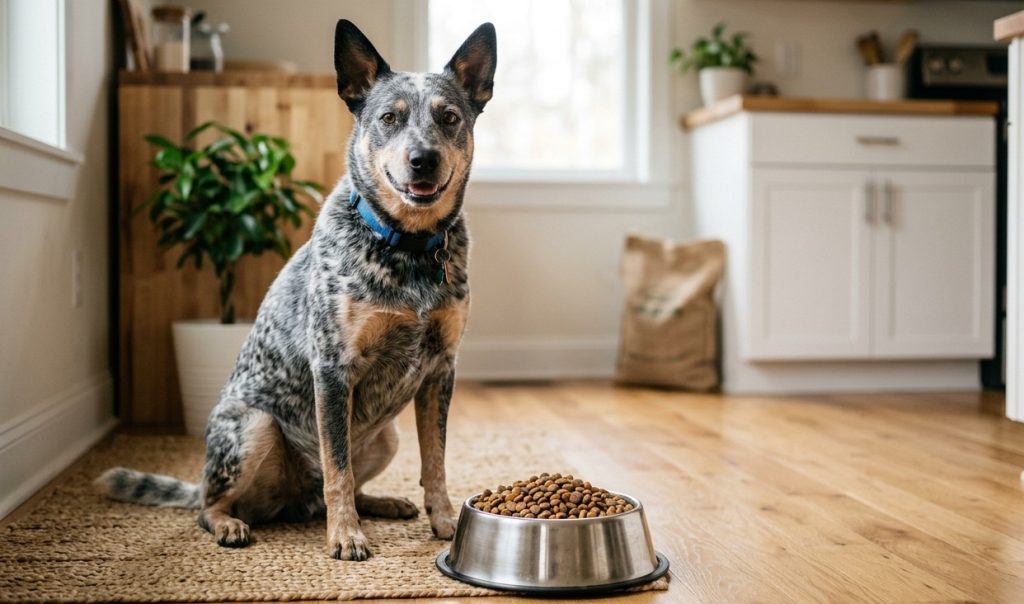
The best canned dog food for seniors should fit the dog’s age, health needs, appetite, and daily calorie plan. I compared seven wet formulas by their senior age guidance, texture, and listed ingredients. A canned format may suit dogs that prefer moist meals, but senior dogs do not all need the same nutrient profile. Read the current can, monitor weight and appetite, and ask your veterinarian before changing food for a health concern. Compare the life-stage statement, calories per can, texture, ingredient list, and serving format. A senior label alone does not determine the right diet, so check any medical needs and portion plan with your veterinarian.
For senior feeding context, see our soft food guide for seniors with no teeth, our wet food guide for sensitive stomachs, and our dog nutrition guide.
Quick Picks
| Product | Best For | Key Advantage | Buy | |
|---|---|---|---|---|
| Purina Pro Plan Complete Essentials Classic Senior Chicken & Rice Pâté | Senior dogs preferring pâté | Chicken-and-rice pâté; 13 oz | View on Amazon | Jump to Review |
| Purina ONE Plus Senior Turkey & Barley | Senior dogs who like turkey and barley | Turkey and barley; 7+ label | View on Amazon | Jump to Review |
| Purina Pro Plan Senior Beef & Rice in Gravy | Senior dogs preferring beef in gravy | Beef and rice gravy | View on Amazon | Jump to Review |
| IAMS Proactive Health Senior Ground Chicken | Senior dogs preferring ground chicken | Ground chicken senior recipe | View on Amazon | Jump to Review |
| Royal Canin Mature Wet Dog Food | Mature dogs preferring loaf texture | Loaf texture; check age label | View on Amazon | Jump to Review |
| Hill’s Science Diet Senior Vitality Chicken & Vegetable Stew | Senior dogs preferring chicken stew | Chicken and vegetable stew | View on Amazon | Jump to Review |
| Blue Buffalo Homestyle Recipe Senior Chicken Dinner | Senior dogs preferring chicken pâté | Chicken pâté with whole grains | View on Amazon | Jump to Review |
1. Purina Pro Plan Complete Essentials Classic Senior Chicken & Rice Pâté

- Senior chicken-and-rice pâté
- Wet format and details to compare
- 13-ounce senior pâté listing chicken
- Age labels differ by brand
- Purina Pro Plan Complete Essentials Classic Senior Chicken & Rice
- Senior labels and calorie needs vary by dog
Purina Pro Plan Complete Essentials Classic Senior Chicken & Rice Pâté is a canned wet food listed for a 13-ounce senior pâté listing chicken first, an adult 7+ formula, and 23 essential vitamins and minerals. That makes it a candidate for owners comparing senior formulas, texture, and serving format. Age labels differ by brand, so check the exact package and your dog’s life stage rather than assuming all senior diets use the same cutoff.
Wet food can be served on its own or as part of a mixed feeding plan when the label allows. Review calories per can and serving directions before adjusting the daily amount. The product information also notes that the listing describes a complete-and-balanced senior recipe without artificial colors, flavors, or preservatives. Check the can’s adequacy statement and calorie amount. Compare the full ingredient list, guaranteed analysis, and nutritional adequacy statement on the current can. If your dog has kidney, heart, digestive, or other medical concerns, ask your veterinarian before changing diets; senior age alone does not determine the right nutrient profile.
Introduce a new food gradually if your veterinarian has not recommended a different plan, and monitor appetite, stool, and body condition. This option may suit a household seeking a soft, portionable meal for an older dog, provided its label and nutrition fit the individual. Canned food can be convenient for dogs that prefer a moist texture, but it may have a different calorie density than dry food. Follow storage directions after opening, refrigerate leftovers as instructed, and discard food left out beyond the label’s guidance. Use the feeding chart as a starting point and confirm portions with your veterinary team.
My Recommendation
Purina Pro Plan Complete Essentials Classic Senior Chicken & Rice Pâté stands out for a 13-ounce senior pâté listing chicken first, an adult 7+ formula, and 23 essential vitamins and minerals. I like that its listing identifies a senior age range, texture, or formula details to compare.
2. Purina ONE Plus Senior Turkey & Barley

- Turkey and barley
- 12-can wet-food pack for mature
- Wet food can be served on its own or as part of
- Purina ONE Plus Senior Turkey & Barley is a canned wet food
- Turkey and barley senior formula
- Turkey and barley may not suit every ingredient plan
Purina ONE Plus Senior Turkey & Barley is a canned wet food listed for a 12-can wet-food pack for mature dogs 7+, with turkey listed first and MCTs noted in the product details. That makes it a candidate for owners comparing senior formulas, texture, and serving format. Age labels differ by brand, so check the exact package and your dog’s life stage rather than assuming all senior diets use the same cutoff. Wet food can be served on its own or as part of a mixed feeding plan when the label allows.
Review calories per can and serving directions before adjusting the daily amount. The product information also notes that the listing describes added vitamins, antioxidants, and MCTs. These are formula features, not a promise of improved alertness or health for an individual dog. Compare the full ingredient list, guaranteed analysis, and nutritional adequacy statement on the current can. If your dog has kidney, heart, digestive, or other medical concerns, ask your veterinarian before changing diets; senior age alone does not determine the right nutrient profile.
Introduce a new food gradually if your veterinarian has not recommended a different plan, and monitor appetite, stool, and body condition. This option may suit a household seeking a soft, portionable meal for an older dog, provided its label and nutrition fit the individual. Canned food can be convenient for dogs that prefer a moist texture, but it may have a different calorie density than dry food. Follow storage directions after opening, refrigerate leftovers as instructed, and discard food left out beyond the label’s guidance. Use the feeding chart as a starting point and confirm portions with your veterinary team.
My Recommendation
Purina ONE Plus Senior Turkey & Barley stands out for a 12-can wet-food pack for mature dogs 7+, with turkey listed first and MCTs noted in the product details. I like that its listing identifies a senior age range, texture, or formula details to compare. I would check the current can’s adequacy statement, calories, and ingredients before buying.
3. Purina Pro Plan Senior Beef & Rice in Gravy

- Beef and rice in gravy
- 12-can senior wet-food pack for
- Purina Pro Plan Senior Beef & Rice in Gravy is a canned wet food
- Wet food can be served on its own or as part of a mixed feeding
- Gravy texture may not appeal to every senior dog
Purina Pro Plan Senior Beef & Rice in Gravy is a canned wet food listed for a 12-can senior wet-food pack for dogs 7+, with beef and a gravy-style texture. That makes it a candidate for owners comparing senior formulas, texture, and serving format. Age labels differ by brand, so check the exact package and your dog’s life stage rather than assuming all senior diets use the same cutoff. Wet food can be served on its own or as part of a mixed feeding plan when the label allows.
Review calories per can and serving directions before adjusting the daily amount. The product information also notes that the product page describes a high-protein complete-and-balanced recipe with vitamins and minerals. Compare calories and serving directions with your dog’s plan. Compare the full ingredient list, guaranteed analysis, and nutritional adequacy statement on the current can. If your dog has kidney, heart, digestive, or other medical concerns, ask your veterinarian before changing diets; senior age alone does not determine the right nutrient profile.
Introduce a new food gradually if your veterinarian has not recommended a different plan, and monitor appetite, stool, and body condition. This option may suit a household seeking a soft, portionable meal for an older dog, provided its label and nutrition fit the individual. Canned food can be convenient for dogs that prefer a moist texture, but it may have a different calorie density than dry food. Follow storage directions after opening, refrigerate leftovers as instructed, and discard food left out beyond the label’s guidance. Use the feeding chart as a starting point and confirm portions with your veterinary team.
My Recommendation
Purina Pro Plan Senior Beef & Rice in Gravy stands out for a 12-can senior wet-food pack for dogs 7+, with beef and a gravy-style texture. I like that its listing identifies a senior age range, texture, or formula details to compare. I would check the current can’s adequacy statement, calories, and ingredients before buying.
4. IAMS Proactive Health Senior Ground Chicken
- Ground chicken
- 12-pack of ground chicken wet
- Confirm the current label and ask your veterinarian how it fits
- IAMS Proactive Health Senior Ground Chicken is a canned wet food
- Ground chicken senior recipe
- Ground texture may not suit every preference
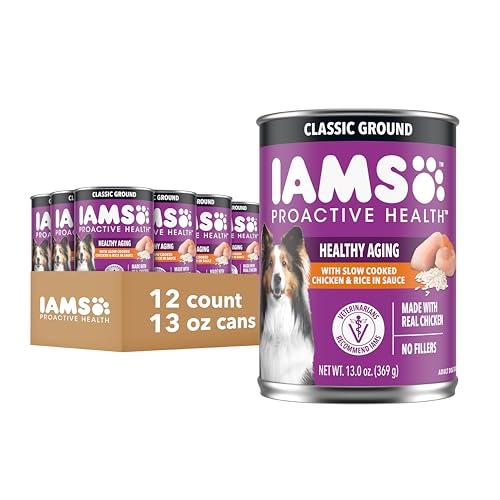
IAMS Proactive Health Senior Ground Chicken is a canned senior-dog food sold in a 12-pack. The listing names ground chicken and notes DHA Gold, glucosamine, and chondroitin. That makes it a candidate for owners comparing senior formulas, texture, and serving format. Age labels differ by brand, so check the exact package and your dog’s life stage rather than assuming all senior diets use the same cutoff. Wet food can be served on its own or as part of a mixed feeding plan when the label allows.
Review calories per can and serving directions before adjusting the daily amount. The product information also notes that the listing describes a lower-fat, higher-protein, fiber-containing formula. Confirm the current label and ask your veterinarian how it fits your dog’s health needs. Compare the full ingredient list, guaranteed analysis, and nutritional adequacy statement on the current can. If your dog has kidney, heart, digestive, or other medical concerns, ask your veterinarian before changing diets; senior age alone does not determine the right nutrient profile.
Introduce a new food gradually if your veterinarian has not recommended a different plan, and monitor appetite, stool, and body condition. This option may suit a household seeking a soft, portionable meal for an older dog, provided its label and nutrition fit the individual. Canned food can be convenient for dogs that prefer a moist texture, but it may have a different calorie density than dry food. Follow storage directions after opening, refrigerate leftovers as instructed, and discard food left out beyond the label’s guidance. Use the feeding chart as a starting point and confirm portions with your veterinary team.
My Recommendation
IAMS Proactive Health Senior Ground Chicken stands out for a 12-pack of ground chicken wet food listed for senior dogs, with DHA Gold, glucosamine, and chondroitin noted. I like that its listing identifies a senior age range, texture, or formula details to compare. I would check the current can’s adequacy statement, calories, and ingredients before buying.
5. Royal Canin Mature Wet Dog Food

- Loaf texture
- 12-can loaf-style formula
- It also lists fish oil and B vitamins
- Introduce a new food gradually if your veterinarian has not
- Royal Canin Mature Wet Dog Food is a canned wet food listed for a
- Maturity age labeling should be checked on the current can
Royal Canin Mature Wet Dog Food is a canned wet food listed for a 12-can loaf-style formula; its title says Mature 8+, while the product detail text also references 5+. That makes it a candidate for owners comparing senior formulas, texture, and serving format. Age labels differ by brand, so check the exact package and your dog’s life stage rather than assuming all senior diets use the same cutoff. Wet food can be served on its own or as part of a mixed feeding plan when the label allows.
Review calories per can and serving directions before adjusting the daily amount. The product information also notes that Because the listing age details conflict, verify the age statement printed on the exact can before purchase. It also lists fish oil and B vitamins. Compare the full ingredient list, guaranteed analysis, and nutritional adequacy statement on the current can. If your dog has kidney, heart, digestive, or other medical concerns, ask your veterinarian before changing diets; senior age alone does not determine the right nutrient profile.
Introduce a new food gradually if your veterinarian has not recommended a different plan, and monitor appetite, stool, and body condition. This option may suit a household seeking a soft, portionable meal for an older dog, provided its label and nutrition fit the individual. Canned food can be convenient for dogs that prefer a moist texture, but it may have a different calorie density than dry food. Follow storage directions after opening, refrigerate leftovers as instructed, and discard food left out beyond the label’s guidance. Use the feeding chart as a starting point and confirm portions with your veterinary team.
My Recommendation
Royal Canin Mature Wet Dog Food stands out for a 12-can loaf-style formula; its title says Mature 8+, while the product detail text also references 5+. I like that its listing identifies a senior age range, texture, or formula details to compare. I would check the current can’s adequacy statement, calories, and ingredients before buying.
6. Hill’s Science Diet Senior Vitality Chicken & Vegetable Stew

- Chicken and vegetable stew
- 12-pack of senior wet food
- Hill’s Science Diet Senior Vitality Chicken & Vegetable Stew is a
- Chicken and vegetable stew texture
- Stew format may be messier to serve
Hill’s Science Diet Senior Vitality Chicken & Vegetable Stew is a canned wet food listed for a 12-pack of senior wet food with chicken and vegetables, and a listing that highlights digestibility and omega-3 and omega-6 fats. That makes it a candidate for owners comparing senior formulas, texture, and serving format. Age labels differ by brand, so check the exact package and your dog’s life stage rather than assuming all senior diets use the same cutoff.
Wet food can be served on its own or as part of a mixed feeding plan when the label allows. Review calories per can and serving directions before adjusting the daily amount. The product information also notes that the product page describes a proprietary ingredient blend for vitality and brain function. Treat these as product claims and check the feeding chart. Compare the full ingredient list, guaranteed analysis, and nutritional adequacy statement on the current can. If your dog has kidney, heart, digestive, or other medical concerns, ask your veterinarian before changing diets; senior age alone does not determine the right nutrient profile.
Introduce a new food gradually if your veterinarian has not recommended a different plan, and monitor appetite, stool, and body condition. This option may suit a household seeking a soft, portionable meal for an older dog, provided its label and nutrition fit the individual. Canned food can be convenient for dogs that prefer a moist texture, but it may have a different calorie density than dry food. Follow storage directions after opening, refrigerate leftovers as instructed, and discard food left out beyond the label’s guidance. Use the feeding chart as a starting point and confirm portions with your veterinary team.
My Recommendation
Hill’s Science Diet Senior Vitality Chicken & Vegetable Stew stands out for a 12-pack of senior wet food with chicken and vegetables, and a listing that highlights digestibility and omega-3 and omega-6 fats. I like that its listing identifies a senior age range, texture, or formula details to compare.
7. Blue Buffalo Homestyle Recipe Senior Chicken Dinner

- Chicken pâté with whole grains
- 12-pack of senior pâté-style wet
- Canned food can be convenient for dogs that prefer a moist texture
- Blue Buffalo Homestyle Recipe Senior Chicken Dinner is a canned
- Chicken recipe may not fit every sensitivity plan
Blue Buffalo Homestyle Recipe Senior Chicken Dinner is a canned wet food listed for a 12-pack of senior pâté-style wet food listing chicken first, vegetables, and whole grains. That makes it a candidate for owners comparing senior formulas, texture, and serving format. Age labels differ by brand, so check the exact package and your dog’s life stage rather than assuming all senior diets use the same cutoff. Wet food can be served on its own or as part of a mixed feeding plan when the label allows.
Review calories per can and serving directions before adjusting the daily amount. The product information also notes that the listing says it is for senior dogs 7+ and mentions brown rice, barley, oatmeal, and flaxseed. Review ingredients for sensitivities. Compare the full ingredient list, guaranteed analysis, and nutritional adequacy statement on the current can. If your dog has kidney, heart, digestive, or other medical concerns, ask your veterinarian before changing diets; senior age alone does not determine the right nutrient profile.
Introduce a new food gradually if your veterinarian has not recommended a different plan, and monitor appetite, stool, and body condition. This option may suit a household seeking a soft, portionable meal for an older dog, provided its label and nutrition fit the individual. Canned food can be convenient for dogs that prefer a moist texture, but it may have a different calorie density than dry food. Follow storage directions after opening, refrigerate leftovers as instructed, and discard food left out beyond the label’s guidance. Use the feeding chart as a starting point and confirm portions with your veterinary team.
My Recommendation
Blue Buffalo Homestyle Recipe Senior Chicken Dinner stands out for a 12-pack of senior pâté-style wet food listing chicken first, vegetables, and whole grains. I like that its listing identifies a senior age range, texture, or formula details to compare. I would check the current can’s adequacy statement, calories, and ingredients before buying.
How to choose best canned dog food for seniors
Senior dogs vary in appetite, chewing ability, health, and energy needs, so compare canned foods by life-stage statement, texture, calories, and feeding directions. Check whether the food is complete and balanced for your dog’s needs, and consult a veterinarian about medical diets.
Check the life-stage statement and calories
Confirm whether the food is complete and balanced for your dog’s life stage or intended only as a topper. Canned foods can differ substantially in moisture, calorie density, and texture, so do not compare serving amounts by can size alone. If the package or online listing gives conflicting age information, verify the statement on the can before buying.
Compare the nutritional adequacy statement, intended age, calories per can, and feeding directions on the exact product. “Senior” is not one uniform category, and brands may set different age ranges.
Match texture and nutrition to your dog
A moist pâté, ground recipe, or stew may appeal to a dog that prefers softer food, but texture alone does not determine whether a diet is appropriate. Consider weight, activity, appetite, dental status, and medical history. Ask your veterinarian before changing food for a dog with a diagnosed condition or unexplained weight loss. If combining canned and dry food, calculate the total daily calories and reduce portions as needed. Introduce a new diet gradually unless your veterinarian advises otherwise.
After opening a can, follow its refrigeration and use-by instructions. Measure portions, keep fresh water available, and note changes in appetite, stool, or body condition. Older dogs may need different plans as their health changes, so review feeding at routine veterinary visits. Choose a formula whose current label fits your dog and household routine, not a product simply because it uses a “senior” name. If your dog refuses food or has persistent digestive signs, contact your veterinarian.
When comparing cans, note whether the recipe is pâté, chunks in gravy, or stew, since a dog’s preference can affect how readily it eats. Open one can at a time and measure the portion rather than leaving food available all day. Follow refrigeration instructions for leftovers and use a clean container if the label recommends transferring the food. If your dog eats only part of a meal, record how much and when; a pattern of reduced intake is worth discussing with your veterinary team. Keep the original label for ingredient and calorie reference.
Frequently Asked Questions
Is canned food better for senior dogs?
Not for every dog. Compare the complete-and-balanced statement, calories, texture, and health needs with your veterinarian.
At what age should a dog eat senior food?
Age ranges differ by product and dog size. Check the can’s directions and ask your veterinarian when a senior formula makes sense.
Can I mix canned and dry food for my senior dog?
Often, but count calories from both foods and follow the package directions. Ask your veterinarian if your dog has a prescribed diet.
How long can opened canned food stay out?
Follow the product’s storage directions. Refrigerate opened portions as directed and discard leftovers that exceed the label’s guidance.
What if my senior dog stops eating?
Contact your veterinarian, especially if appetite loss is sudden, persistent, or accompanied by other symptoms.
Final Verdict
Choose senior canned food by checking life-stage guidance, calories, texture, and ingredients on the exact can. The seven options here offer pâté, ground, and stew formats with different stated age ranges. For a senior with a health condition, appetite change, or weight shift, let your veterinarian guide the formula and portion plan.
Affiliate disclosure: This article contains Amazon affiliate links. If you purchase through them, PetAdvisorPro may earn a commission. As an Amazon Associate I earn from qualifying purchases.