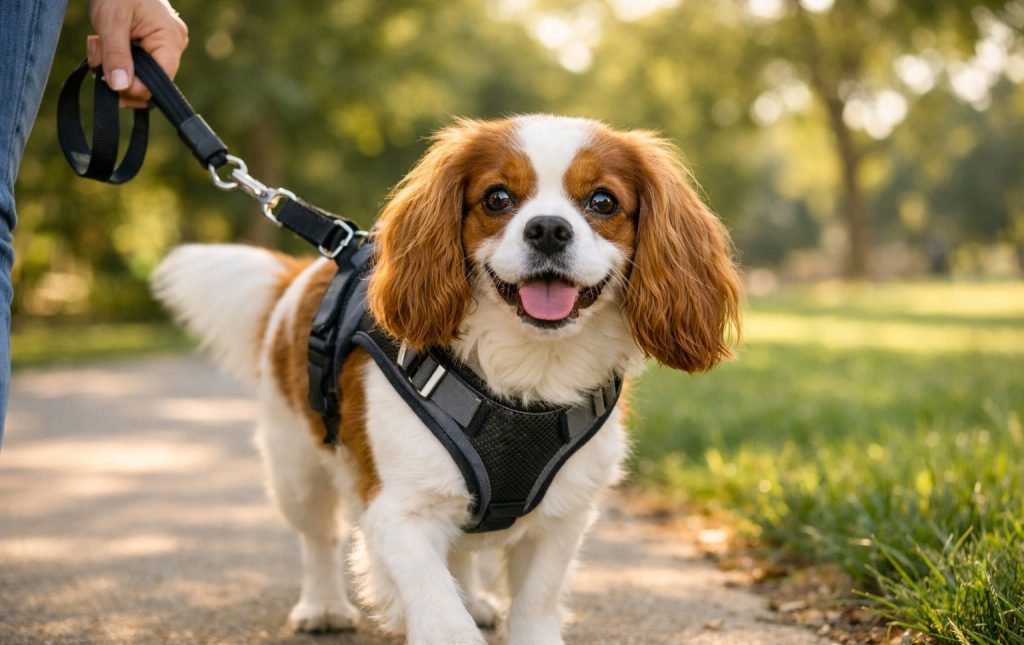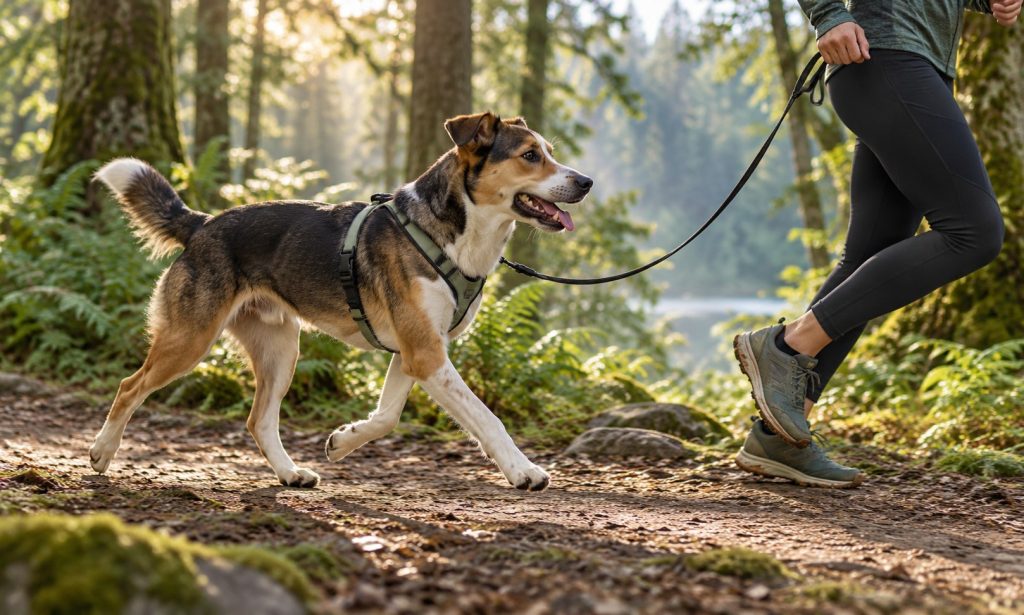
The best dog harness for running depends on whether your dog jogs beside you or pulls into a sport line. A lightweight chest harness can suit easy neighborhood miles, while canicross calls for a longer, purpose-built pulling shape. For this guide, I compared seven harness styles using current product details, attachment placement, adjustment options, padding, reflectivity, and the activities each brand describes. The picks include dedicated running and pulling models as well as everyday harnesses that may work for relaxed runs when they fit well. Measure your dog before buying, since listings often show one specific size or color. A harness can improve comfort and handling, but it cannot make an unconditioned dog ready for distance exercise. Start with short, easy outings, watch for rubbing or restricted movement, and ask your veterinarian whether running suits your dog’s age and health.
Quick Picks
| Product | Best For | Key Advantage | Buy | |
|---|---|---|---|---|
| Non-stop dogwear Freemotion Harness | Multiple pulling sports | Rear pulling point for canicross and joring | View on Amazon | Jump to Review |
| Non-stop dogwear Freemotion Harness 5.0 | Canicross | Y-shaped neck and adjustable sport fit | View on Amazon | Jump to Review |
| Ruffwear Flagline Dog Body Harness | Extra handling support | Three leash points and padded assist handle | View on Amazon | Jump to Review |
| Ruffwear Front Range Dog Harness | Padded all-around use | Four adjustment points and two leash points | View on Amazon | Jump to Review |
| Neewa Dog Running & Hiking Harness | Trail running | Reflective, padded H-style construction | View on Amazon | Jump to Review |
| Ruffwear Hi & Light Dog Harness | Lightweight everyday runs | Low-profile build with two leash points | View on Amazon | Jump to Review |
| BARKBAY No-Pull Dog Harness | Budget padded option | Air mesh, reflective trim, and two clips | View on Amazon | Jump to Review |
Our Picks for the Best Dog Harness for Running
1. Non-stop dogwear Freemotion Harness

What We Like
- Built for canicross, bikejoring, skijoring, and other pulling sports
- Adjustable design accommodates individual body shape
- Longer pulling point suits a line attached to a runner or belt
- Padded construction for active use
What We Don’t Like
- Requires accurate sizing and a compatible pulling line
- A technical sport fit may feel excessive for short, relaxed jogs
This Non-stop dogwear Freemotion Harness is another pulling-focused option, listed for canicross, skijoring, bikejoring, and related dog-powered sports. Its longer shape and rear pulling point are intended for a line attached to a runner or other moving person. That geometry differs from a conventional chest harness with a leash ring over the back. If you want the dog to travel in front and share the work, a purpose-built pulling shape is more relevant than a general walking harness.
The listing describes an adjustable design and padding intended to support movement while the dog works. Its key advantage is specialization: the attachment point and harness shape are arranged for forward traction, rather than quick steering in a busy sidewalk setting. That also means fit and line choice need attention. Measure using the current size guide, make sure the dog can move its shoulders freely, and check contact areas after every early session. The Amazon page describes a particular size variation, so verify it before purchase.
This model may suit a runner who wants one harness for several pulling activities, though the separate 5.0 version is a newer variant with its own size options. Compare both listings against the dog’s measurements and your intended line setup. For a dog that is still learning to run with a person, begin with short, easy sessions and teach cues before adding sustained pull. A technical harness is equipment for a trained activity, not a shortcut to safe or controlled running.
My Recommendation
Consider this when you want a traditional Freemotion pulling harness for several dog-powered activities. Its rear pulling geometry suits a dog working ahead on a compatible line; casual jogging on a standard leash is a better match for a simpler harness.
2. Non-stop dogwear Freemotion Harness 5.0

What We Like
- Designed for dog-powered sports including running
- Y-shaped neck construction aims to preserve shoulder movement
- Pulling force is distributed through side attachment points
- Padding and reflective details
What We Don’t Like
- Sport harness sizing is specific; measure rather than guessing from breed
- Pulling-line design may be unnecessary for casual leash jogging
The Freemotion Harness 5.0 is a specialized choice for runners who expect the dog to pull into a canicross line. Non-stop dogwear describes it for running, biking, and skiing, with an ergonomic Y-shaped neck opening intended to support free shoulder movement. The design routes pulling force through the sides instead of treating the harness as a simple back-clip walking vest. This makes it a more targeted match for dog-powered sport than for a dog that simply trots beside a loose leash.
The product listing describes a padded neck opening, adjustable fit, and reflective details. The brand provides a size finder, and measuring carefully is especially important for this harness because the shape and attachment point are designed around sustained forward pull. A harness that is too loose can shift; one that is too tight can rub or limit comfortable movement. Check the manufacturer’s current chart and inspect the dog in motion after the first few minutes rather than relying on the size named in the Amazon listing.
This listing represents a specific size and color variation, so check the selected option before checkout. A pulling harness also works best with compatible running equipment and a dog that has been gradually conditioned for the activity. It does not replace leash skills, route judgment, or an appropriate warm-up. For relaxed neighborhood jogging, a conventional Y-front chest harness may be simpler. For structured canicross, this purpose-built shape is the strongest fit in this roundup.
My Recommendation
Pick this when your runs involve a dog pulling into a dedicated canicross line. Its sport-specific shape and adjustment make it more appropriate for structured dog-powered exercise than casual jogging, provided you measure carefully and introduce the equipment gradually. Recheck the neckline after initial use.
3. Ruffwear Flagline Dog Body Harness

What We Like
- Lightweight, low-profile design described for walks, hikes, and runs
- Three leash attachment points
- Padded handle and belly panel provide lift assistance
- Reflective details
What We Don’t Like
- Support handle and extra coverage add material not every runner needs
- Medium listing; check size and current color variation
The Ruffwear Flagline is a lightweight body harness with more handling features than a minimalist chest style. The product listing describes it for walks, hikes, or runs and highlights three leash attachment points, a padded top handle, and a belly panel. The handle can be useful for brief assistance over obstacles or getting into a vehicle, while the harness shape offers more coverage than a simple Y-front design. This specific Amazon listing is a medium in Basalt Gray.
For steady running, the main consideration is whether the broader body harness stays comfortable without restricting your dog’s shoulder movement. A top handle is a secondary control aid, not a feature to pull or lift a dog by during a run. Ruffwear provides a sizing chart and fitting guidance; use those measurements and observe the harness during a walk before increasing pace. Check for strap movement around the front legs, and make sure the belly panel sits comfortably without rubbing or trapping debris.
The Flagline is a flexible option for runners whose outings include uneven trails, short pauses, or moments when extra assistance is useful. Its multiple leash points also offer more setup choices than a basic harness. That extra material may be unnecessary for a dog that prefers minimalist gear, and it is not designed to replace the long pulling shape used for canicross. For ordinary jogging on a loose leash, it can be a practical cross-purpose pick if your dog moves freely in the correct size.
My Recommendation
The Flagline fits runners who also value a handle and extra assistance features on trails. It is more versatile than a stripped-down running harness, but that added coverage is useful only if it fits without rubbing or limiting your dog’s stride.
4. Ruffwear Front Range Dog Harness
What We Like
- Four adjustment points support a more tailored fit
- Foam padding on chest and belly panels
- Two leash attachment points for everyday control options
- Reflective trim and ID pocket
What We Don’t Like
- Bulkier than minimalist running harnesses
- This medium listing may not match your dog’s size
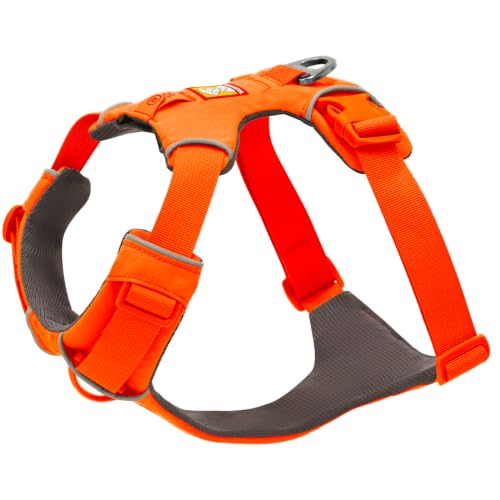
The Ruffwear Front Range is an everyday chest harness that can also work for easy runs when the fit remains stable through your dog’s stride. The listing highlights four adjustment points, foam-padded chest and belly panels, two leash attachment points, reflective trim, and an ID pocket. That combination favors general walking and outdoor versatility over a narrow competitive-running purpose. The padded build may appeal to dogs that need more coverage, while runners looking to minimize gear may prefer a lighter model.
Ruffwear’s product description says the leash can attach at a back V-ring or at reinforced chest webbing. These positions provide different handling options, but neither should be treated as a cure for pulling or a guarantee of control. The fit should be checked around the shoulders, chest, and behind the front legs so that the straps stay clear of the armpits. This Amazon variation is a medium in Blaze Orange, so compare your dog’s measurements with the current chart before selecting a size.
For a dog running on sidewalks, park paths, or shorter trails at a comfortable pace, the Front Range is a practical crossover between daily walking gear and exercise equipment. Its padding can add comfort during extended wear, but the extra material may feel warm in hot conditions or bulky on dogs with a narrow build. Inspect for shifting or chafing after the first outing and clean the harness according to its care instructions. Consider a purpose-built pulling harness if your dog will work ahead on a canicross line.
My Recommendation
Choose the Front Range if you want one padded harness for daily walks and occasional easy runs. Its adjustment range and dual leash points are useful general features, though the added coverage may feel warm or bulky compared with a minimalist running model.
5. Neewa Dog Running & Hiking Harness

What We Like
- Purpose-built H-style design for running, hiking, and trekking
- Reflective details support visibility in lower light
- Padded, breathable construction for active outings
- Useful option for dogs that run alongside rather than pull hard
What We Don’t Like
- This small-size listing may not fit medium or large dogs; check the size range carefully
The Neewa Dog Running & Hiking Harness is designed for dogs that join their people on runs, trail walks, and treks. Its H-style shape gives you a purpose-built alternative to a standard walking vest, while the reflective exterior adds visibility when a route is shaded or the light is fading. The listing describes this small pink version, so confirm that the available size range includes your dog before ordering. Fit matters more than the color or a breed label.
Neewa describes the harness as padded and made with durable, breathable, nonallergenic materials. Padding can help reduce rubbing on longer outings, but it only helps when the harness sits correctly and does not restrict the shoulders. The product is aimed at active dogs and mushing sports, which makes it a more running-focused choice than a basic step-in harness. It is still important to inspect seams and adjustment points regularly, particularly after muddy or wet trail use.
This is a practical candidate for a dog that runs beside its handler on mixed paths and needs a light, reflective harness. It is not the same kind of specialized pulling setup as a long-line canicross harness, and the listing does not provide a handle or extensive control features. Measure your dog, review the current size chart, and check the attachment placement before use. For first runs, keep the pace easy and stop if your dog shows rubbing, discomfort, or fatigue.
My Recommendation
Choose this for regular trail outings when a lighter, running-oriented fit and reflective details matter. Its small-size listing makes careful sizing essential, and it is best suited to dogs moving alongside you rather than leaning into a sustained pulling line.
6. Ruffwear Hi & Light Dog Harness

What We Like
- Minimalist, low-profile build intended for running and hiking
- Two leash attachment points offer setup flexibility
- Reflective trim and an ID pocket
- Lightweight option for dogs that dislike bulky gear
What We Don’t Like
- Medium size and color shown; verify the exact variation and sizing chart
- Less suited to a dog pulling hard than a dedicated canicross harness
The Ruffwear Hi & Light is a minimalist chest harness for people who want less bulk on walks, hikes, and trail runs. Ruffwear describes the design as lightweight and low profile, which can be helpful for dogs that move comfortably in a close-fitting harness but dislike heavier coverage. It includes two leash attachment points and reflective trim, giving you options for ordinary outings in different light conditions. The selected Amazon listing is a medium in Lichen Green; check the size and color variation displayed before ordering.
The streamlined shape makes this a better candidate for a dog running beside you than for a dog expected to pull hard into a canicross line. Two attachment points allow some flexibility, but they do not turn it into a purpose-built pulling harness. Ruffwear provides a sizing chart and fit guidance, and those measurements should be checked against your dog’s current chest and body shape. Observe the harness from the side and front while the dog walks: the neck opening should not press on the throat, and the straps should not rub behind the elbows.
For runners, the useful question is whether the harness stays positioned without restricting a full stride. The low-profile construction reduces extra fabric, but it also offers less coverage than a padded vest-style model. Check the product after muddy outings, and make sure the ID pocket and leash points remain secure. The Hi & Light is a good everyday-to-trail crossover for an appropriately sized dog and a loose leash; it is not a substitute for gradual conditioning or a veterinarian’s advice when exercise tolerance is uncertain.
My Recommendation
This is a strong everyday choice for a dog that runs beside you and benefits from a lightweight, low-profile fit. It offers less structure than a pulling harness, so choose it for loose-leash runs and verify that its sizing suits your dog.
7. BARKBAY No-Pull Dog Harness

What We Like
- Air-mesh padding and reflective details
- Two leash clips plus a top handle
- Adjustable straps and ID-tag holder
- Large-dog listing specifically mentions running
What We Don’t Like
- Size and color are specific to this listing; verify fit before buying
- Top handle and no-pull positioning require individual adjustment
The BARKBAY No-Pull Harness is a budget-friendly padded vest-style option for a dog that needs a general-purpose harness for walks and occasional runs. The listing describes air-mesh padding, adjustable straps, reflective details, two leash clips, a top handle, and an ID-tag holder. This variation is labeled large and Ocean Blue, so confirm that the exact size and color are selected and measure your dog rather than relying on weight or breed alone.
The two leash attachment positions and top handle offer more handling choices than a basic back-clip harness. BARKBAY markets the front clip as a no-pull feature, but equipment does not teach loose-leash behavior on its own. Check that the chest panel sits comfortably and the straps do not rub behind the elbows. A harness that twists, slides, or presses on the throat should be adjusted or replaced before running. The mesh lining may provide a softer feel, although the broader vest style can add warmth compared with minimalist options.
For casual runs with a dog that stays near the handler, this harness provides practical features at a more accessible level than specialist canicross gear. It is not a long-line pulling harness and should not be evaluated as one. The product description lists running among its uses, but your dog’s comfort and movement are the deciding factors. Start with a short walk, inspect for rubbing, and only then try an easy jog. Check stitching, clips, and reflective areas regularly, especially if the harness is used in wet or muddy conditions.
My Recommendation
Pick BARKBAY when you want padded everyday features for walks and occasional easy runs at a lower price point. It is a general-purpose harness, so choose a dedicated sport model if your dog will pull into a canicross line. Check each buckle before heading out.
How to Choose the Best Dog Harness for Running
Match the harness to your running style
First decide whether your dog will run beside you on a loose leash or pull into a line attached to your waist. For loose-leash jogging, look for a stable Y-front or chest harness that leaves the shoulders free, keeps straps away from the armpits, and does not press on the throat. A minimalist model can reduce bulk on warm days. A padded everyday harness may be more comfortable for a dog that wears gear for longer outings, but check that coverage does not become hot or shift as the dog moves. If your dog will pull ahead in canicross, choose a sport harness designed for that force direction and pair it with compatible equipment. The Non-stop dogwear Freemotion line is made for dog-powered activities; its manufacturer provides a size finder. Do not assume a walking vest is interchangeable with a pulling harness.
Prioritize fit, movement, and visibility
Measure your dog using the harness maker’s instructions, then compare the numbers with the current product chart. Breed and weight are only rough clues because chest depth, neck shape, coat, and body condition vary. Adjust every strap, check that the harness stays in place, and watch your dog walk and turn before running. You should be able to fit fingers under the straps without having the harness rotate or slide. The front legs should swing naturally, and no edge should rub behind the elbows. Reflective trim can help in low light, but it does not replace a light or reflective gear on the runner. Recheck fit as your dog gains or loses weight, changes coat, or grows out of a size.
Build exercise gradually and check conditions
A harness is only one part of a safe running routine. The VCA advises waiting until a puppy’s growth plates have started to close before strenuous running; ask your veterinarian about timing for your dog’s breed and development. Begin with short, easy sessions, warm up, bring water, and stop if your dog falls behind, limps, pants excessively, or seems reluctant. Heat and humidity can make exercise dangerous, and pavement can become hot enough to injure paws. Check the harness hardware and stitching before outings, clean it as directed, and replace it if a buckle, seam, or webbing is damaged. The right choice is the one that matches your activity, fits your dog’s body, and lets the dog move comfortably.
Frequently Asked Questions
Can I use a regular dog harness for running?
Some everyday harnesses work for easy runs if they fit securely and allow a full stride. A dog that pulls into a canicross line needs a purpose-built pulling harness designed for that attachment and force direction.
Should a running harness attach at the chest or back?
It depends on the activity and the dog’s leash skills. Everyday harnesses may offer chest and back points, while pulling harnesses use a longer rear attachment. Follow the product’s intended setup and choose based on fit and control, not a claim that one clip stops pulling by itself.
How tight should a dog running harness be?
It should be secure without pressing on the throat, restricting the shoulders, or rubbing behind the front legs. Follow the maker’s fit guide, check movement during a walk, and adjust again if the harness shifts.
Can puppies run with me in a harness?
A harness does not remove the exercise limits associated with growth. Ask your veterinarian when sustained running is appropriate for your puppy’s age, breed, and development, and use shorter, self-paced play until then.
Final Verdict
For dedicated canicross, the Non-stop dogwear Freemotion Harness 5.0 is the most purpose-built pick in this list. For relaxed runs beside you, the Ruffwear Hi & Light keeps the setup lightweight, while the Front Range offers more padding for general outdoor use. Measure carefully, watch your dog move in the harness, and build distance gradually. If you need the leash and waist-belt side of your setup, see our best hands-free dog leash for running and running leash fit and safety guide.
Affiliate disclosure: PetAdvisorPro may earn a commission when you buy through links in this article, at no extra cost to you. Product details, prices, availability, sizes, colors, and seller options can change, so confirm the current Amazon listing before purchasing. We select products based on their described features and suitability for the topic; inclusion does not mean every harness will fit every dog. Follow the manufacturer’s sizing and care instructions, and consult your veterinarian about your dog’s readiness for running, especially if your dog is young, older, short-nosed, or has a health condition.