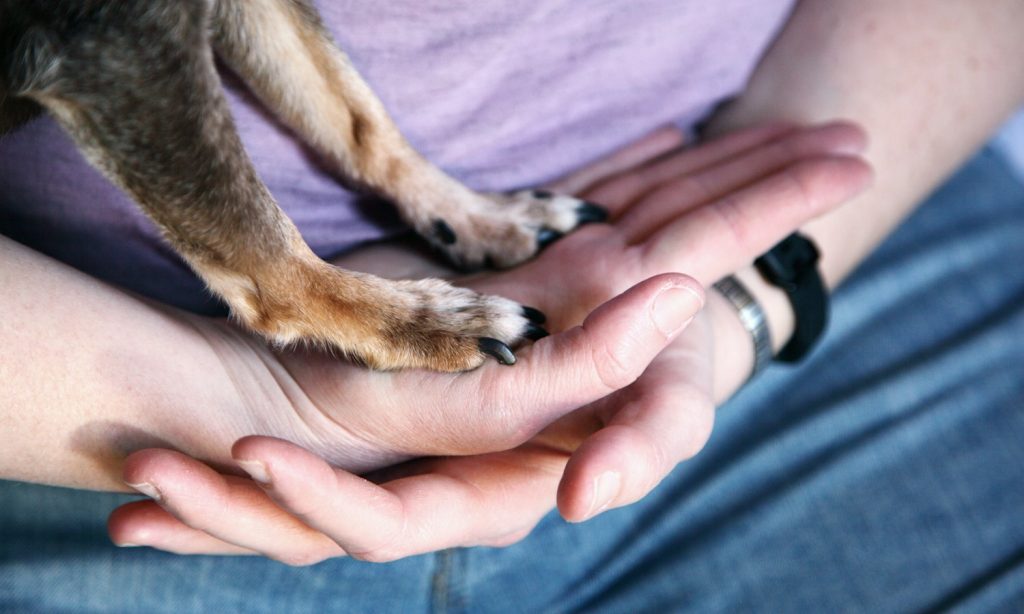
Your dog pulls a paw away as soon as the grooming tool appears, and suddenly a routine nail trim feels like a negotiation. The best dog nail grinder for nervous dogs is one you can introduce gradually and control comfortably. Adjustable speed, a manageable grip, and a clear view of the nail matter more than a promise of a completely stress-free trim. A grinder still makes noise, vibrates, and can hurt if used carelessly. In this guide, I compare six options by their verified features and practical tradeoffs, with LuckyTail as my starting choice for owners prioritizing a product marketed for quiet, low-vibration operation. These are research-based recommendations, not hands-on test results. No tool guarantees acceptance, and noise claims from different brands are not directly comparable. You will also find a gradual introduction plan so your purchase supports calmer nail care rather than another rushed session.
As an Amazon Associate, I earn from qualifying purchases.
Quick Picks: Best Dog Nail Grinders for Nervous Dogs
| Product | Best For | Key Advantage | Buy | |
|---|---|---|---|---|
| LuckyTail Dog Nail Grinder | Sound-sensitive beginners | Two speeds and a light | View on Amazon | Jump to Review |
| Casfuy Upgraded 2-Speed Grinder, Dark Blue | A straightforward rechargeable option | Two-speed diamond-bit format | View on Amazon | Jump to Review |
| Casfuy 6-Speed Grinder, Orange | Owners wanting more speed choices | Six selectable settings | View on Amazon | Jump to Review |
| Dremel PawControl 7760-PGK | Owners wanting a guided approach | Paw guide and variable speed | View on Amazon | Jump to Review |
| Andis 66750 Cord/Cordless Grinder | Flexible power arrangements | Plugged-in or cordless operation | View on Amazon | Jump to Review |
| Dremel 7350-PET Grinder | Dogs already comfortable with grinding | Single-speed simplicity | View on Amazon | Jump to Review |
The first four picks offer different ways to approach an introduction. Andis emphasizes power flexibility, while the single-speed Dremel 7350-PET is better considered after your dog has learned to accept grinding. These categories reflect editorial judgment, not a measured ranking of noise or anxiety reduction.
How I Chose These Grinders
I checked manufacturer guidance and product identity, then focused on features that affect handling: speed choices, power arrangement, illumination where documented, and grooming attachments. Quiet-operation claims are identified as manufacturer claims. I have not measured these tools side by side, so there is no universal “quietest” winner here. A dog’s response to sound, vibration, and paw handling should guide the final choice.
1. LuckyTail Dog Nail Grinder

What We Like
- Two selectable speeds
- Built-in nail lighting
- USB-rechargeable design
- Replaceable grinding heads
What We Don’t Like
- Only two speed choices
- Quietness varies by setting
A dog who flinches when a grooming tool starts needs an introduction that feels manageable. LuckyTail is my first option to consider for that situation because its manufacturer emphasizes low vibration and quiet operation, alongside two speed settings and a light. Those are relevant features for a sound-sensitive dog, although they do not prove that every dog will accept the tool. I would start by letting your dog investigate it while it is switched off, then introduce its sound from a comfortable distance. The two-speed layout keeps the controls relatively straightforward: you can begin on the lower setting without working through a long menu. Its cordless, USB-rechargeable format also lets you practice in a familiar indoor spot with good footing. That freedom matters when your dog is comfortable on a floor mat but becomes tense on a raised grooming surface.
The light can help you see where the grinding head meets the nail, but it cannot make dark nails transparent or guarantee that you will avoid the quick. Use it as extra illumination while removing a little material at a time. LuckyTail offers replacement heads with different grinding characteristics, so check which head is included and which compatible replacements you might need before buying. The practical tradeoff is limited speed adjustment compared with the Casfuy six-speed model. If neither setting feels suitable, changing your handling plan is more useful than pressing harder. The manufacturer’s quietness claims also should not be read as silence: grinding against a nail adds a sound your dog may notice. For that reason, I would judge this option by your dog’s response during gradual practice rather than a headline noise number. A session that ends after one comfortable touch is still worthwhile progress.
My Recommendation
I would start with LuckyTail when sound and vibration are your main concerns and you prefer simple controls. Its tradeoff is two-speed adjustment. Choose a model with more settings if you need finer control, and let your dog’s comfort determine whether any grinder is appropriate.
2. Casfuy Upgraded 2-Speed Grinder, Dark Blue
What We Like
- Simple two-speed selection
- Diamond drum grinding bit
- Rechargeable cordless operation
- Compact control routine
What We Don’t Like
- Limited speed adjustment
- Nail contact still makes noise
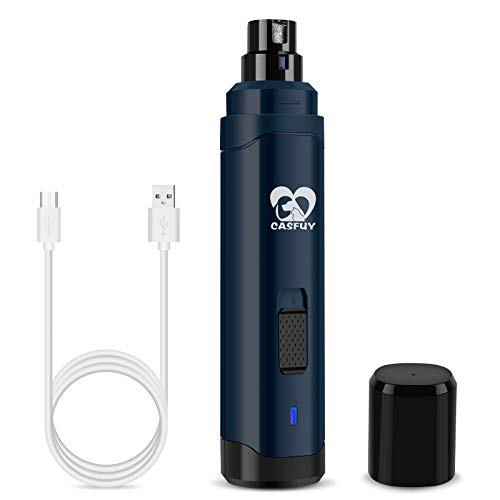
For owners who want a straightforward way to try grinding, Casfuy’s upgraded two-speed model keeps the buying decision focused. The verified listing here is the dark blue two-speed grinder, not the orange six-speed version reviewed below. Casfuy’s official grinder information identifies a diamond drum bit, while the authenticated product listing confirms the two-speed electric format. Together, those details describe a dedicated nail-care tool with fewer adjustments to learn. I would consider it for someone who wants to practice turning the grinder on, positioning it, and stopping it confidently before approaching a dog’s nails. Keeping those movements predictable can help you concentrate on the dog’s body language. The rechargeable, cordless format is also convenient when your preferred practice area is away from an outlet. Charge it before a session so you can concentrate on handling rather than interrupting a calm moment to find power.
Casfuy markets this version as quiet, but that is a manufacturer claim rather than a result from our own sound testing. Your dog will experience both the motor sound and the additional sound when the bit touches a nail. Introduce those stages separately, starting with the lower speed and a relaxed dog. The manufacturer’s grooming guidance calls for brief contact and small amounts of removal; maintaining contact to finish faster can build heat and make the experience unpleasant. Two speeds may be all you need for light maintenance, but they leave less room to adjust than six settings. That is the main reason to consider the orange model instead, especially when you want more choices between a slow introduction and later routine care. Do not assume either version will remove thick nails equally comfortably for your dog. Keep the purchase tied to a workable training plan, and stop if your dog repeatedly withdraws the paw.
My Recommendation
This is my pick when you want rechargeable operation and uncomplicated controls. The main compromise is its small range of settings. I would move to the six-speed Casfuy for more adjustment, rather than expecting this two-speed version to cover every nail and tolerance level.
3. Casfuy 6-Speed Grinder, Orange

What We Like
- Six speed settings
- Cord-free positioning
- Rechargeable power
- Lower-setting starting point
What We Don’t Like
- More controls to learn
- Extra settings do not prevent fear
More speed choices can be useful when your dog accepts a grinder but you are still finding a comfortable pace. The orange Casfuy six-speed model provides six settings, giving it a different role from the simpler dark blue version. Its authenticated listing confirms that it is a rechargeable electric grinder, so you can position yourself beside your dog without planning around a power cord. I would consider it when two settings feel restrictive and you want more adjustment for routine nail maintenance. The advantage is choice rather than an automatic increase in safety. You still need to observe how the dog responds and how quickly material is being removed. Before handling a paw, learn the controls with the tool away from your dog and work out how to return to the lowest setting. That small preparation makes it easier to pause promptly instead of searching for a button during a nervous moment.
The listing describes this grinder as quiet, but we have not independently measured its noise or compared it with the other picks under identical conditions. I would not choose it because six speeds supposedly make it quieter than two; the number of settings alone cannot establish that. Instead, buy it when you will actually use the adjustment and can keep a consistent handling routine. Begin with the lowest appropriate setting, then increase only when your dog is comfortable and the manufacturer’s instructions support that use. Moving to a faster setting because a dog is becoming restless can make the session harder rather than easier. For a dog with thin nails who only needs occasional smoothing, the additional controls may offer little practical benefit over a simple model. For a household that wants more choices, they can make the tool more adaptable. In either case, keep nail contact brief and avoid treating a higher speed as permission to remove more nail in one pass.
My Recommendation
Choose this Casfuy when adjustable speed is your priority and you are willing to learn the controls. Its tradeoff is added complexity. For a first grinder that will mostly stay on one low setting, the simpler two-speed option may be easier to manage.
4. Dremel PawControl 7760-PGK

What We Like
- Included paw-guide attachment
- Variable-speed control
- Cordless USB charging
- Documented accessory options
- Detailed grooming instructions
What We Don’t Like
- Attachment setup required
- High speeds need extra care
The PawControl’s main appeal is the combination of adjustable speed and a dedicated grooming attachment. This review links to the verified 7760-PGK kit; it does not substitute a newer deluxe kit with a similar name. Dremel’s documentation for this version includes a paw guide, sanding accessories, and USB charging. The guide provides a more structured approach to positioning than working entirely freehand, which may appeal if you feel unsure about the angle of contact. It does not identify the quick for you or make over-grinding impossible. I would read the assembly directions before the first session and practice operating the tool without your dog nearby. Once you can handle the controls comfortably, introduce the assembled grinder at a distance your dog accepts. Cordless operation lets you choose a calm indoor practice area while still using good lighting and a stable position.
Variable speed needs thoughtful use on a nervous dog. Dremel’s PawControl manual recommends the lowest setting for most pet-grooming applications and warns that higher speeds can cause heat buildup and injury. That makes this a tool to use conservatively, not a reason to rush through thick nails. Keep the recommended accessories correctly assembled and avoid borrowing a speed setting from a general-purpose rotary-tool tutorial. The guide and accessory setup also add preparation compared with a basic dedicated grinder. Some owners will welcome that structure; others will prefer fewer parts and a simpler routine. I would choose PawControl when the documented grooming attachment and adjustable controls solve a specific handling concern for you. If your dog is primarily frightened by the motor, those features will not replace sound conditioning. Work through the introduction gradually, monitor comfort throughout, and finish the session before your dog becomes overwhelmed. Controlled, brief contact is more useful than completing every nail at once.
My Recommendation
I would choose the 7760-PGK for an owner who wants a documented paw-guide system and is comfortable setting up accessories. The tradeoff is more preparation and a speed range that requires care. For sound-sensitive beginners, compare a simpler dedicated grinder first.
5. Andis 66750 Cord/Cordless Grinder

What We Like
- Corded or cordless use
- Two motor speeds
- Slim documented dimensions
- Steady-control design
What We Don’t Like
- Cord needs managing when plugged in
- Fewer settings than Casfuy six-speed
Power flexibility is the strongest reason to put the Andis 66750 on your shortlist. Its manufacturer confirms both corded and cordless operation, along with a two-speed motor. That distinguishes it from grinders you must recharge before using. For a nervous dog, I would still favor the cordless arrangement when it lets you sit comfortably without a cable near the paws. The plugged-in option is a practical backup for another appropriate session, rather than a reason to extend a trim when your dog needs a break. Andis describes the tool as designed for controlled nail shaping and smoothing, and its published dimensions show a slim body. Those details can help you compare the form with your own grip preferences. They cannot establish that it will feel better in every hand, so check the shape carefully before deciding that this is the easiest tool for you to maneuver.
The two speeds keep the adjustment simpler than the six-speed Casfuy, but offer fewer choices if you want small changes in working pace. I would use the lower setting for the introduction and follow the current Andis instructions for the grinding accessories. We do not have a comparable, independently measured noise result for this model, so it is not our first choice solely on the basis of sound sensitivity. Its place in the comparison is its power arrangement and handling format. Think about the full setup: where you will sit, how you will support the paw, and whether a cord would complicate that position. If you use it plugged in, route the cable away from your dog and your working area. If you use it cordless, prepare the tool before bringing your dog over. The best arrangement is the one that lets you release the paw and stop promptly, without making the session depend on finishing an entire set of nails.
My Recommendation
Choose Andis when both plugged-in and cordless operation have a useful place in your grooming routine. The main tradeoff is cable management when connected to power. If your only goal is finding a model marketed for low noise, start with LuckyTail instead.
6. Dremel 7350-PET Grinder
What We Like
- Single-speed operation
- Rechargeable lithium-ion power
- Micro-USB charging
- Sanding-band grooming format
What We Don’t Like
- No lower-speed adjustment
- Basic kit lacks the PawControl guide
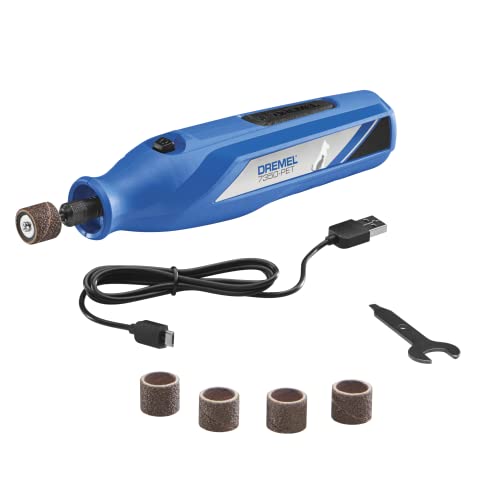
Once your dog is comfortable with nail grinding, a simple maintenance tool may be more appealing than a wide selection of controls. The Dremel 7350-PET is that kind of option: Dremel’s model comparison lists a single operating speed and a sanding-band grooming format. The verified Amazon listing here is the 7350-PET kit, so check that model name rather than assuming all current Dremel basic kits have identical accessories. Its integrated rechargeable battery and Micro-USB charging support a cordless routine. I would consider it for an owner who already knows their dog accepts a grinder and wants to keep the operating steps straightforward. One speed means fewer decisions at the controls, but it also means you cannot choose a gentler starting setting on this model. That distinction is especially relevant if your dog is encountering motorized nail care for the first time.
The absence of speed adjustment is why this is a conditional pick for nervous dogs rather than my first recommendation for a sound-sensitive beginner. If the fixed setting unsettles your dog, you cannot simply turn it down. You would need to return to easier training steps or consider an adjustable model. The basic 7350-PET kit also does not provide the same included paw-guide arrangement as PawControl, so its simpler format comes with a different accessory setup. Follow its own instructions rather than transferring attachment advice from the 7760-PGK. For a dog that already tolerates grinding, this can be a sensible choice for small, regular touch-ups and smoothing sharp edges. For a dog that panics at the motor, the simpler controls do not solve the underlying reaction. I would decide between this model and PawControl based on whether you value a single-speed routine or need adjustment and a guide. In both cases, keep the working area dry, use brief contact, and avoid removing more material than you can safely judge.
My Recommendation
I would reserve the 7350-PET for dogs already accustomed to grinding and owners who want uncomplicated controls. Its limitation is the fixed speed. Choose an adjustable grinder when a lower starting setting is an important part of your introduction plan.
What Matters Most for a Nervous Dog?
Sound and vibration
“Quiet” does not mean silent. Published decibel claims can use different distances, speeds, and conditions, and the sound changes when the grinding surface touches a nail. Use the claim as a starting point for comparison, then introduce the tool gradually. If your dog cannot relax while the motor runs at a distance, nail contact is too big a next step.
A useful lower setting
Speed adjustment gives you choices, but the lowest number is not a guarantee of comfort. Start with the manufacturer’s recommended setting for nail care. Avoid pushing harder to make a slow setting remove more material. If your dog already accepts a fixed-speed tool, a simpler model can be appropriate; for a first introduction, adjustment usually offers a more flexible plan.
Visibility and a secure grip
Lighting helps you see the contact area. A guard or guide can help with positioning. Neither tells you exactly how much nail is safe to remove, especially on dark nails. Choose a shape you can hold steadily and keep the paw supported without squeezing. For the separate clipper and dark-nail buying decision, see our black-nail clipper comparison. Grinder guards still require careful use.
How to Introduce a Grinder Without Rushing
- Practice paw handling separately. Reward a brief, comfortable touch, then release the paw.
- Show the switched-off tool. Let your dog investigate without bringing it toward a nail.
- Introduce sound from a distance. Pair a brief motor sound with a valued reward at a distance where your dog remains relaxed.
- Move closer gradually. Repeat an easy stage until your dog is comfortable before increasing the challenge.
- Add nail contact carefully. Follow the tool’s instructions and try a brief, light touch on one nail only when your dog accepts the earlier stages.
- End while things are going well. One comfortable nail touch can be enough for a session.
If your dog freezes, repeatedly pulls away, growls, or stops accepting a normally valued reward, pause and return to an easier stage. Do not hold the paw harder to finish. A groomer, veterinarian, or qualified behavior professional can help when fear prevents necessary care. Sudden sensitivity, a broken nail, bleeding, or apparent pain warrants veterinary advice before more grinding.
Avoid Heat, Tangled Fur, and Over-Grinding
Secure long hair away from rotating parts, keep your own hair and loose clothing clear, and use the manufacturer’s recommended eye protection. Grind in brief touches with pauses; sustained pressure or higher speed can build heat. Remove small amounts and inspect between passes. Stop before the quick, the sensitive tissue inside the nail. A light, cap, or guide does not remove that risk. If you cannot judge a safe stopping point, have a professional demonstrate on your dog.
FAQs
What is the best dog nail grinder for nervous dogs?
LuckyTail is my starting suggestion when quiet-operation claims, lighting, and simple speed choices match your priorities. Casfuy’s six-speed option offers more adjustment, while PawControl adds a guide. The right choice depends on your dog’s response; none guarantees a calm trim.
Are grinders less scary than clippers?
Some dogs accept gradual grinding more comfortably than clipping, while others dislike the motor sound and vibration. Introduce either tool gently and observe your dog. A grinder is not automatically the better option for every fearful dog.
Can I grind black nails without hitting the quick?
You still need to remove very small amounts and inspect frequently. Dark nails make judgment harder, and a light or guard cannot guarantee protection. Ask a groomer or veterinarian to show you a safe stopping point if you are unsure.
How long should a first session last?
Let your dog’s comfort set the limit. A first session may involve only seeing the switched-off tool or hearing it briefly from a distance. Work toward nail contact gradually instead of setting a deadline to finish every paw.
What if my dog panics even with a quiet grinder?
Stop and seek help with handling and behavior. A different tool may help, but severe fear can require a tailored veterinary or behavior plan. Do not force a trim or give a sedative without veterinary direction.
Final Verdict
Start with LuckyTail if a simple grinder marketed for low noise and vibration fits your needs. Choose Casfuy two-speed for uncomplicated rechargeable use, or its six-speed model for more adjustment. Dremel PawControl suits owners who want a guide and detailed accessory instructions. Andis offers corded/cordless flexibility; the Dremel 7350-PET suits dogs already accustomed to a single-speed routine.
My priority is a tool you can use steadily alongside gradual training. Buy for a specific handling need, introduce it patiently, and stop when your dog needs a break. The best dog nail grinder for nervous dogs supports a careful routine; it cannot replace one.