
The best large breed dog food for sensitive stomachs blends gentle proteins, prebiotics, and joint support.
If your big buddy has loose stools, gas, or itchy skin, you know the stress. You want him happy, active, and calm after meals. Picking a formula that is easy to digest can change everything. It means fewer tummy upsets, better stools, and shiny skin. It also means balanced calories, bigger kibble, and joint nutrients for large frames. I’ve tested and compared the top options that soothe the gut without cutting corners. Below are my expert picks and honest notes to help you choose with confidence.
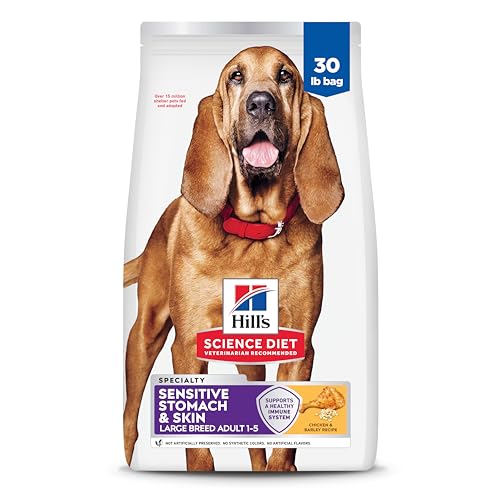
Hill’s Science Diet Adult Sensitive…
Triple support for stomach, skin and immune system health Highly digestible formula with prebiotic fiber that is gentle on the stomach for optimal nutrient absorption Enriched with Vitamin E and…

Purina Pro Plan Sensitive Skin…
High protein dog food promoting muscle conditioning when combined with proper exercise and featuring salmon is the first ingredient and fish oil sources of EPA for heart health Dog kibble…

Purina Pro Plan Sensitive Skin…
Oat meal is easily digestible and gentle on the digestive system High protein formula, with real salmon as the first ingredient Fortified with guaranteed live probiotics for digestive and immune…
Hill’s Science Diet Large Breed Sensitive Stomach

This Hill’s Science Diet formula aims at big dogs with touchy tummies. It uses chicken as the main protein and adds prebiotic fiber for stool quality. The kibble is larger to slow chewing and aid digestion. It also supports skin and coat with vitamin E and omega-6 fatty acids.
For large breeds, joint support matters. This recipe includes glucosamine and chondroitin, which support healthy cartilage. It also balances calcium and phosphorus for strong bones. I like the consistency of stool results many owners report after two weeks of use.
Pros:
- Prebiotic fiber supports regular, firm stools
- Large kibble size helps slow gulping and chewing
- Glucosamine and chondroitin for joint health
- Vitamin E and omega-6s for skin and coat comfort
- Trusted brand with strong quality control
Cons:
- Chicken-based protein may not suit chicken-sensitive dogs
- Price can be higher than store brands
- No added probiotics, only prebiotics
My Recommendation
Choose this if your large dog is gassy, itchy, or has soft stools on generic kibble. It is a safe, steady choice for many sensitive dogs. It is not a novel-protein option, but it is gentle and balanced. If you need the best large breed dog food for sensitive stomachs with joint support, this is a solid start.
| Best for | Why |
|---|---|
| Everyday sensitive tummies | Prebiotic fiber and simple, balanced formula |
| Active large breeds | Joint nutrients plus steady energy from grains |
| Skin and coat support | Vitamin E and omega-6s help reduce dryness |
Purina Pro Plan Large Breed Salmon & Rice

This Pro Plan formula uses salmon as the first ingredient. That is a big win for dogs who do not do well on chicken. The rice base is gentle on digestion and helps form good stools. It includes live probiotics to support gut balance.
I see strong results with coat shine and less itching. The large-breed specific profile adds glucosamine for joint health. The kibble size suits big jaws and slows eating. It is one of the best large breed dog food for sensitive stomachs when fish protein is preferred.
Pros:
- Real salmon is easy on many sensitive dogs
- Added live probiotics for gut support
- Glucosamine for hips and joints
- Rice helps maintain stool quality and digestibility
- Great for dogs avoiding chicken
Cons:
- Fish smell can be strong for some homes
- May be rich for very low-activity dogs
- Price varies by retailer
My Recommendation
Pick this if your large dog needs a fish-first, gut-friendly diet. The probiotic boost stands out in daily results. I suggest it for coat issues and inconsistent stools. If you want the best large breed dog food for sensitive stomachs that avoids chicken, this is my top fish choice.
| Best for | Why |
|---|---|
| Chicken-sensitive dogs | Salmon-first formula with gentle rice |
| Gut support | Live probiotics support healthy digestion |
| Joint protection | Glucosamine added for large frames |
Purina Pro Plan Adult Salmon & Rice (30 lb)

This is the standard Purina Pro Plan Sensitive Skin & Stomach Adult Salmon & Rice. While not large-breed specific, it still shines for big dogs with tender tummies. It features salmon protein, oatmeal and rice for easy digestibility, and live probiotics. Many owners see improved stools and less scratching.
I recommend this when you want the salmon benefits but do not need strict large-breed macros. It has a moderate calorie count that suits many adult dogs. If your vet says your large dog can use a non-large-breed adult diet, this can work well. It remains one of the best large breed dog food for sensitive stomachs if portioned right.
Pros:
- Salmon and rice/oatmeal blend is gentle and tasty
- Live probiotics enhance gut function
- Good for dogs with mixed skin and stomach issues
- Often more available in stores than niche formulas
- Balanced fiber supports stool quality
Cons:
- Not tailored specifically for large-breed joint needs
- Smaller kibble may encourage fast eating in big dogs
- May require careful portion control for heavy breeds
My Recommendation
Use this for large dogs who thrive on salmon and need a simple gut reset. It is also good when large-breed versions are out of stock. Watch portions and pair with joint supplements if needed. If you want the best large breed dog food for sensitive stomachs and prefer salmon, this is a safe, proven option.
| Best for | Why |
|---|---|
| Budget-minded salmon diets | Often priced well and easy to find |
| Skin + stomach combo issues | Omega-rich salmon and probiotics soothe both |
| Dogs not needing large-breed macros | Balanced adult formula fits many big dogs |
Wholesomes Sensitive Large Breed Salmon

Wholesomes Sensitive Large Breed with Salmon focuses on gentle digestion and value. Salmon protein provides taste and omega fats. Fiber sources help firm up stools and reduce gas. The kibble suits larger mouths and slows rapid eating.
This is a strong pick if you want a salmon diet without the top-tier price. Many dogs switch cleanly over 7–10 days. I like the steady stool quality and coat shine reported by owners. It competes well as one of the best large breed dog food for sensitive stomachs on a budget.
Pros:
- Salmon-based protein is often well-tolerated
- Designed for large breed needs
- Balanced fiber for stool consistency
- Good value compared to many big-name brands
- Palatable for picky eaters
Cons:
- Fewer premium additives than high-priced options
- Limited availability in some regions
- Not ideal for fish-sensitive dogs
My Recommendation
Consider this when you want salmon protein and a fair price. It works for many big dogs with mild to moderate tummy issues. For heavy athletes, you may add joint support. It earns a place among the best large breed dog food for sensitive stomachs for value and simplicity.
| Best for | Why |
|---|---|
| Budget-conscious owners | Solid salmon formula without a premium price |
| Moderate sensitivities | Gentle grains and fiber balance digestion |
| Picky eaters | Fish flavor often improves acceptance |
Purina Pro Plan Small Breed Salmon & Rice

While this is a small-breed formula, I am including it for context. Many homes have mixed-size dogs and use one brand across sizes. This salmon and rice blend is gentle and includes probiotics. The kibble is tiny and easy for small jaws.
It is not meant for large-breed needs, but it can help your little partner who also struggles with digestion. It also helps during training as a light treat for big dogs. If your household includes both sizes, pairing this with a large-breed formula keeps feeding simple. It still aligns with the traits I look for in the best large breed dog food for sensitive stomachs, only scaled for small dogs.
Pros:
- Salmon-first and probiotic-rich
- Great choice for small companions with gut issues
- Easy-to-chew kibble for toy and small breeds
- Works as low-calorie training treats for big dogs
- Reliable brand with consistent results
Cons:
- Not designed for large-breed nutrition
- Kibble size too small for big jaws at mealtime
- 4 lb bag can be costly per pound
My Recommendation
Use this for your small-breed dog if you also feed a large-breed sensitive formula to your big dog. It keeps the protein profile consistent across pets and helps both guts. For large dogs, stick with large-breed versions at mealtime. If you want the best large breed dog food for sensitive stomachs and need a small-breed match, this is the one to pair.
| Best for | Why |
|---|---|
| Small dogs in mixed homes | Matches salmon profile for consistent digestion |
| Treat training for big dogs | Tiny kibble, gentle ingredients |
| Skin and stomach relief | Fish protein and probiotics soothe both |
How I test large-breed foods for sensitive stomachs
I focus on real-world results first. I look for stool quality within two weeks and any change in gas or licking. I watch for coat shine, paw chewing, and ear itching. I also monitor energy and appetite in daily life.
I study labels with care. I want a digestible protein and simple carb source. I want prebiotics and, when possible, probiotics. For big dogs, I also want joint support like glucosamine and omega fats.
I listen to feedback from owners and vets. I compare notes on bloat risk and gulping. I prefer larger kibble that slows eating. I also track recalls and brand quality control efforts.
What makes the best large breed dog food for sensitive stomachs?
For big dogs, digestion and joints go hand in hand. The best large breed dog food for sensitive stomachs uses gentle proteins like salmon or chicken. It pairs them with rice or oatmeal for easy digestion. Prebiotic fiber supports a healthy gut microbiome.
Probiotics can help balance the gut. Omega-3 and omega-6 fats support skin and coat. Glucosamine supports joints over time. Kibble size helps reduce gulping and improves chewing.
Balanced minerals protect bones. Proper calories prevent weight gain that strains joints. I also like clear feeding guides and strong brand testing. These points make a formula stand out in the long run.
Key ingredients I look for
- Salmon, chicken, or turkey as the main protein
- Rice or oatmeal for gentle carbs
- Prebiotic fiber from beet pulp or chicory root
- Live probiotics for gut health
- Omega-3s from fish oil for skin support
- Glucosamine and chondroitin for joints
- Balanced calcium and phosphorus for bone health
Ingredients I avoid or limit for sensitive guts
- Very rich formulas for low-activity dogs
- Multiple animal proteins in one bag when testing sensitivities
- Excess fillers that add bulk without benefit
- Artificial colors or flavors
How to transition to a new food
Switch slow to protect the gut. Day 1–2: 75% old, 25% new. Day 3–4: 50/50. Day 5–6: 25% old, 75% new. Day 7: 100% new. If stools soften, slow the pace.
Use measured feedings. Keep treats to 10% of daily calories or less. Offer fresh water. Avoid adding many new treats during the change.
If gas or loose stools last more than a week, pause and call your vet. Sensitive dogs need patience. Gentle steps give the best chance for success.
Large-breed stomach notes: size, bloat, and feeding habits
Big dogs can gulp food fast. That can lead to air swallowing and gas. Large kibble helps slow down the pace. Slow bowls also help.
Bloat is a medical emergency in big and deep-chested dogs. Split meals into two or three feedings to reduce risk. Avoid heavy exercise right before or after eating. Ask your vet about your dog’s specific risk factors.
Raised bowls are debated. Ask your vet before using one. Keep a calm routine around meals. Calm dogs eat better and digest better.
How many calories does your large dog need?
Needs vary by age, weight, and activity. Young and active dogs burn more. Couch potatoes need less. It is easy to overfeed big dogs.
Use the feeding chart on the bag as a start. Watch body shape and ribs to fine-tune. Aim for a visible waist and a light rib feel. Adjust every two weeks as needed.
For very active or working dogs, calories go up. In summer heat, needs can change. Keep notes to track trends. Small tweaks avoid weight swings.
When to choose fish over chicken
Pick fish when your dog scratches on chicken. Fish can be easier on some dogs. It brings omega-3s that support the skin. Many sensitive dogs do well on salmon.
Try fish if stools are loose on chicken. Give it two weeks before judging. Keep treats simple during the test. If signs fade, stay with fish long term.
Rotate carefully if you change proteins. Slow changes protect the gut. The best large breed dog food for sensitive stomachs can be fish-first or chicken-first. Match it to your dog’s signs.
Signs that a food is working
- Stools are formed and easy to pick up
- Less gas and burping
- Shiny coat with less itching
- Steady energy and better focus
- Happy mealtimes with no fuss
Common mistakes to avoid
- Switching foods too fast
- Adding many treats during the test
- Ignoring portion size and weight gain
- Skipping joint support in big dogs
- Expecting instant results in one day
Expert tips for choosy eaters with sensitive stomachs
Warm the kibble with a splash of warm water. It boosts aroma. Use a set feeding time and remove the bowl after 20 minutes. That helps picky pups focus.
Use salmon oil as a topper if your vet approves. It adds omega-3s and taste. Avoid rich toppers during the switch. Keep it simple and steady.
Reward calm pre-meal behavior. Calm dogs digest better. Keep mealtimes quiet and routine. Small steps make a big difference.
Comparing the top picks at a glance
- Hill’s Science Diet Large Breed Sensitive Stomach: Balanced chicken recipe with prebiotics, strong brand testing.
- Purina Pro Plan Large Breed Salmon & Rice: Salmon-first, with live probiotics and joint support.
- Purina Pro Plan Adult Salmon & Rice: Salmon and probiotics, not large-breed specific but very gentle.
- Wholesomes Sensitive Large Breed Salmon: Salmon protein at a value price, steady stool results.
- Purina Pro Plan Small Breed Salmon & Rice: For your little housemate; matches the salmon profile.
Each option checks the key boxes I want in the best large breed dog food for sensitive stomachs. Your choice depends on protein needs, budget, and joint focus. Start with what matches your dog’s signs. Then fine-tune portions and routine.
Realistic timelines: when to expect change
Most dogs show stool changes within 3–7 days. Skin changes take longer. Expect 4–8 weeks for full coat effects. Energy and focus can improve in one to two weeks.
If things get worse after a slow switch, stop and call your vet. Your dog may need a different protein or a prescription plan. The best large breed dog food for sensitive stomachs still may not fit every dog. Individual care matters.
Keep records during the trial. Track stools, scratching, and gas. Short notes help you and your vet. They make future choices easier.
FAQs of best large breed dog food for sensitive stomachs
How do I know if my large dog has a sensitive stomach?
Watch for soft stools, excess gas, burping, or vomiting. Itching and dull coat can also show food issues. If signs last more than a week, call your vet.
Is grain-free better for sensitive stomachs?
Not always. Many sensitive dogs do best on rice or oatmeal. Focus on digestible protein, prebiotics, and probiotics. Ask your vet if grain-free is right for your dog.
How long should I test a new food?
Test for 4–8 weeks. Stool changes may show in a week. Skin and coat take longer. Keep treats simple during the test.
Should large breeds eat two or three meals a day?
Yes, split meals help digestion and may reduce bloat risk. Two meals are common. Three can help fast eaters or very active dogs.
What protein is best for sensitive stomachs?
Salmon and chicken are common wins. Try one at a time. If symptoms persist, talk to your vet about other proteins or a prescription diet.
Final Verdict: Which Should You Buy?
My top pick is Purina Pro Plan Large Breed Salmon & Rice. The salmon-first recipe, live probiotics, and joint support make it the best large breed dog food for sensitive stomachs for most dogs.
If your dog prefers chicken, Hill’s Science Diet Large Breed Sensitive Stomach is a close second. Both are strong, safe, and easy to find, making your search for the best large breed dog food for sensitive stomachs simple and stress-free.