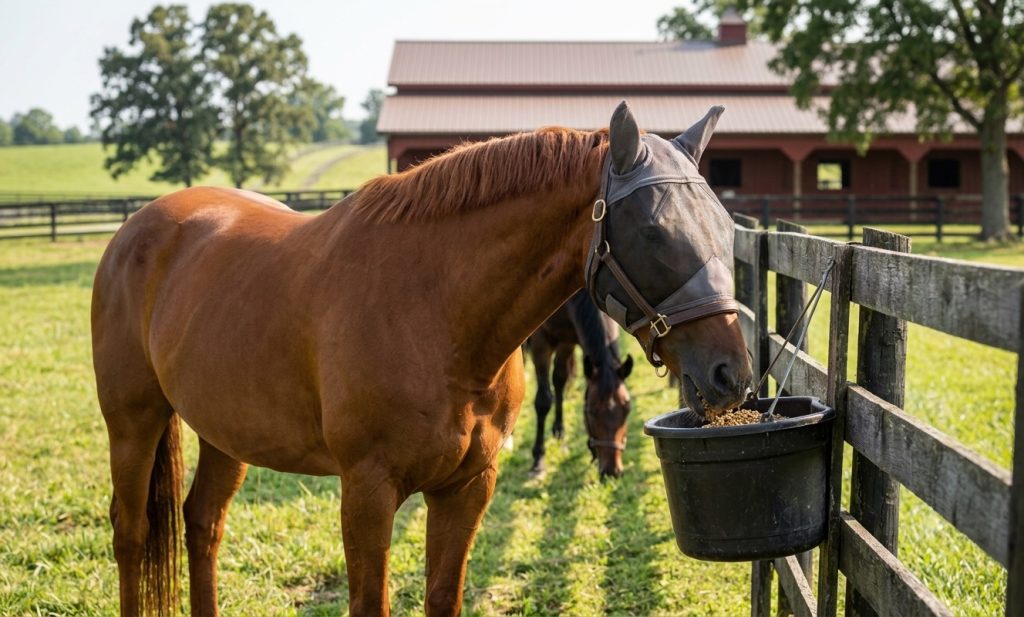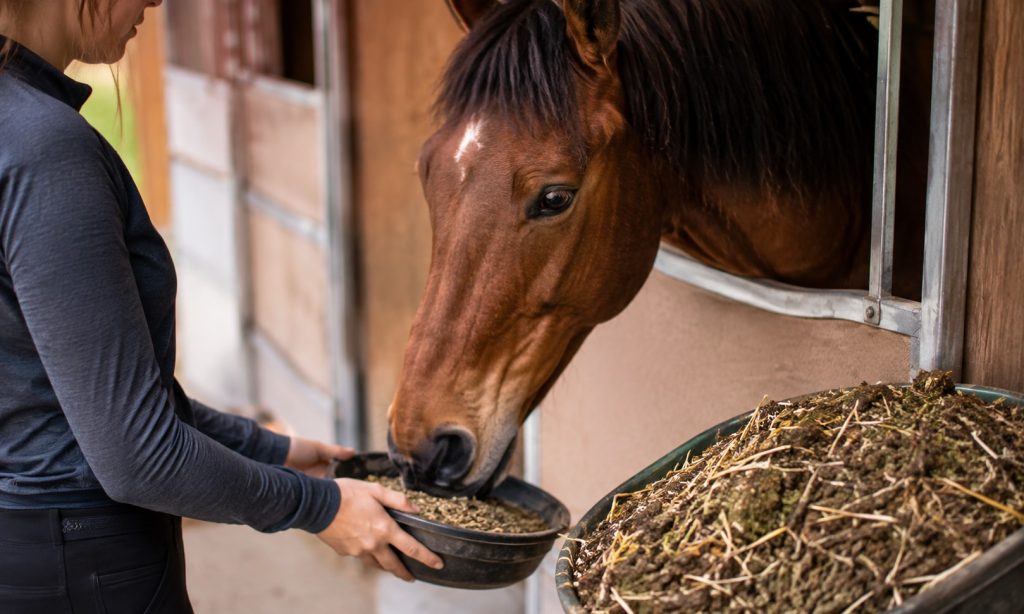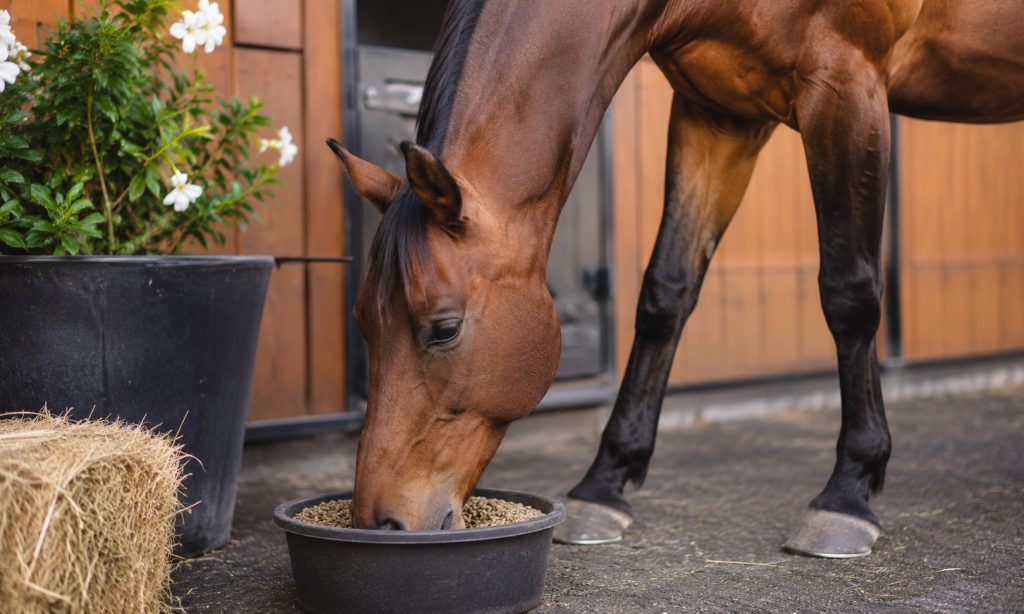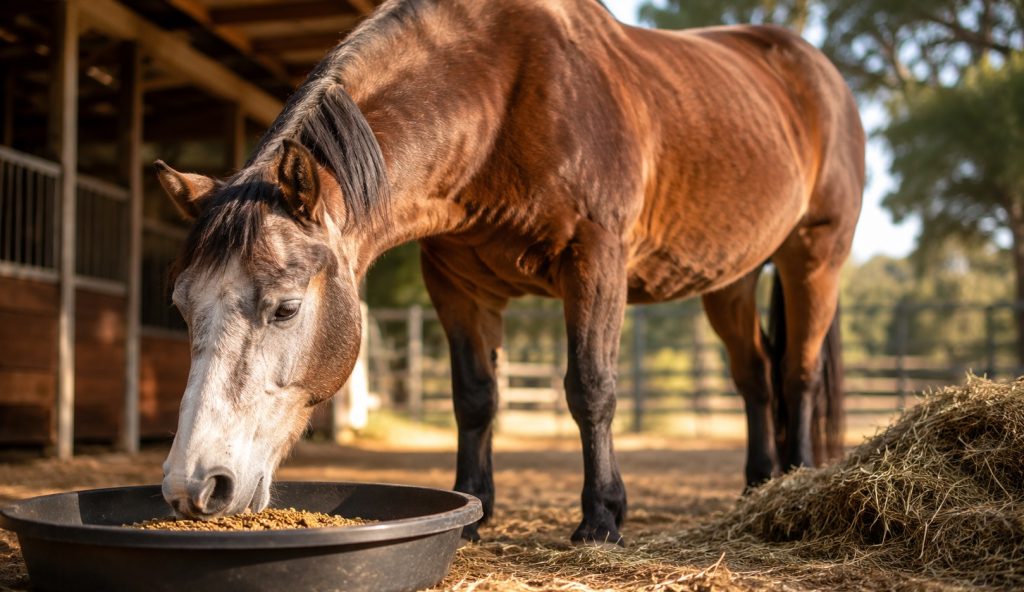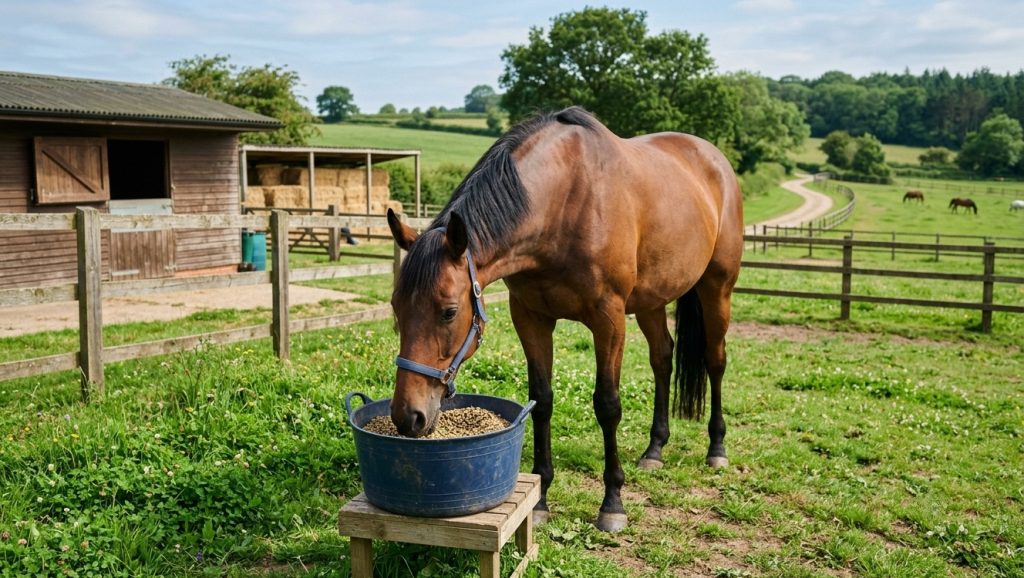
Choosing the best senior horse feed supplement can be confusing because a complete senior feed and a ration balancer are not interchangeable. Some older horses need a softer meal, some need a balanced feed in a small portion, and others may maintain condition on forage with minimal additions. Start with a veterinary check and a review of teeth, body condition, forage, activity, and the full ration. UMN Extension’s senior-horse guidance recommends regular dental care and a diet matched to individual needs. These seven options offer different formats and roles—not one universal solution.
If calorie support is the main need, compare this feed roundup with our separate guide to fat supplements for senior horses. Forage quality also matters, and our guide to winter hay for horses covers another part of the feeding picture.
Quick Picks
| Product | Best For | Key Advantage | Buy | |
|---|---|---|---|---|
| Triple Crown Senior Horse Feed | Comparing a high-fat, high-fiber senior feed | Beet pulp-based; listing says it can be made into a mash | View on Amazon | Jump to Review |
| Triple Crown Senior Gold | Active older horses needing a textured feed | Soy oil, rice bran, and flaxseed listed as fat sources | View on Amazon | Jump to Review |
| Purina Active Senior | Pelleted senior feed for active horses | Pellet format in a 50-pound listing | View on Amazon | Jump to Review |
| Tribute Maturity Textured | Textured senior feed with listed digestible fiber | No-corn formula with amino acids and organic minerals listed | View on Amazon | Jump to Review |
| New Country Organics Loyalty Senior Pellets | Corn-free and soy-free senior pellets | Listing describes 16% protein and soakable pellets | View on Amazon | Jump to Review |
| Purina Enrich Plus Senior | Balancing a forage-based ration | Senior ration balancer with concentrated vitamins and minerals listed | View on Amazon | Jump to Review |
| Purina Equine Senior | Comparing a formulated senior feed with soakable pellets | Easy-soak pellets and high-fat nugget listed | View on Amazon | Jump to Review |
How to Choose Senior Horse Feed
First decide what the feed needs to do. A complete senior feed may provide a substantial part of the ration and can replace forage only when its current label specifically permits that use and the feeding directions are followed. A ration balancer is fed at its stated rate to supply concentrated nutrients alongside forage; it may not provide enough calories for an underweight horse. A calorie supplement adds energy but is not a complete diet. Check the label for minimum feeding rates, nutrient analysis, soaking instructions, and whether forage must remain in the ration. Ask an equine veterinarian or nutritionist to match the product to body condition, dental function, hay quality, activity, and metabolic history.
For an older horse that chews slowly, drops feed, or struggles with hay, arrange a dental assessment and ask whether a soakable feed or forage alternative is appropriate. Do not assume that every product labeled “senior” is easy to chew or suitable as a complete feed; formulas and palatability differ. Make changes gradually, observe appetite and manure, and monitor body condition. Routine dental care and veterinary follow-up matter alongside the feed choice. If joint comfort is also a concern, see our guide to joint supplements for senior horses; feeds and supplements have different roles and should be evaluated together as part of the overall plan.
1. Triple Crown Senior Horse Feed
What We Like
- High-fat, high-fiber positioning
- Beet pulp-based formula per listing
- Can be mixed with water per listing
- Listing describes complete-feed use for some horses
What We Don’t Like
- Complete-feed suitability depends on the exact label and feeding plan
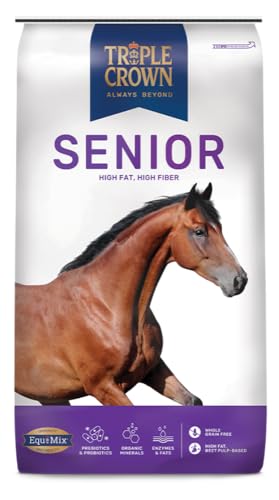
Triple Crown Senior is listed as a high-fat, high-fiber senior feed with a beet pulp-based formula. The Amazon product information also says it can be mixed with water to make a mash and may be used as a sole ration for horses unable to eat hay or pasture. Those points make it important to distinguish this kind of feed from a small-dose supplement: feeding amount and whether it can serve as the main ration depend on the label and the horse’s needs. Check the current bag instructions, nutrient analysis, and any forage directions before deciding whether it fits your horse.
This option may be worth comparing when a senior horse needs a chewable, energy-supporting feed or has difficulty maintaining condition. The listing’s claims do not establish that every older horse should receive it, and a feed that can serve as a complete ration for one situation is not automatically appropriate for every horse. A veterinarian or equine nutritionist can help review teeth, body condition, forage intake, activity, and the rest of the diet. If the horse still chews hay comfortably, keep the forage plan in view. If hay is difficult, ask whether soaking or a complete-feed approach is appropriate, then transition gradually and follow the product directions. Routine dental checks are useful even when the horse appears to eat normally, because chewing comfort can change with age. Use the horse’s actual condition to guide selection.
My Recommendation
A useful feed to compare when a senior needs a softer or more energy-dense meal. Verify whether its complete-feed instructions fit your horse before changing forage.
2. Triple Crown Senior Gold

What We Like
- Textured feed format
- Multiple fat sources listed
- Whey protein listed
- Can be mixed with water per listing
What We Don’t Like
- Textured form may not suit every horse or feeding plan
Triple Crown Senior Gold is described in the current listing as a textured feed for mature and performance horses, with fat sources including soy oil, rice bran, and flaxseed. Its product information also lists whey protein and says the feed can be mixed with water to form a mash. That makes it one of the more energy-focused options in this roundup, while the textured form differs from plain pellets. Confirm the current label, recommended feeding rate, and suitability for your horse rather than relying on marketing phrases or a product name.
This feed may suit an active older horse or a horse whose nutrition plan calls for added energy and a textured meal. It may not be the best match if the horse needs a tightly controlled ration or does poorly with textured feed. Although the listing mentions gastric buffering, do not treat this feed as ulcer therapy; ask a veterinarian about any suspected gastric disease. Review the complete ration for overlapping vitamins, minerals, fat sources, and concentrates before adding or switching products. When a softer texture is needed, ask your veterinarian whether the feed should be soaked and how to manage the transition. Reassess body condition and eating comfort instead of increasing amounts quickly. Keep the feed’s role clear: a formulated senior feed and a targeted supplement are different tools for different ration needs. Ask the feed professional to confirm the intended feeding role.
My Recommendation
Consider it when the horse’s plan calls for a textured senior feed with added energy. Ask your veterinarian about suspected ulcers rather than relying on feed claims.
3. Purina Active Senior

What We Like
- Pelleted format
- Identified for active senior horses
- 50-pound bag listing
- Easy to measure alongside the ration
What We Don’t Like
- Creators data returned limited feature detail; verify the current label
Purina Active Senior is a pelleted feed listing intended for active senior horses. The Amazon Creators data returned limited product features, so the product comparison here stays focused on its verified identity and pellet format rather than assuming a specific nutrient profile. Before choosing it, read the current manufacturer label for feeding rate, energy, protein, fiber, and any instructions about forage or use as a complete feed. This is especially important when changing from a different senior formula or when the horse has a medical or metabolic condition.
A pelleted senior feed can be a practical format for consistent measuring and mixing, but pellets are not automatically easy for every older horse to chew. Watch for quidding, dropping feed, slow eating, or reluctance, and ask your veterinarian or equine dental professional to assess the mouth if those signs appear. Confirm whether soaking is permitted and how it changes preparation. This option may be a reasonable comparison for an active older horse whose current diet has been evaluated, but it should not be selected solely because the horse has reached a certain age. Match its label to the full ration and make changes gradually, tracking appetite, manure, body condition, and comfort. Ask the manufacturer or your nutrition professional for the latest analysis if the product label available to you differs from an online listing. Use label directions to confirm the current feeding role.
My Recommendation
A straightforward item to compare for an active older horse. Check the current nutrient analysis and feeding role directly on the bag before purchase.
4. Tribute Maturity Textured
What We Like
- Textured format
- No-corn formula per listing
- Digestible fiber listed
- Amino acids and organic minerals listed
What We Don’t Like
- Current complete-feed directions should be checked before replacing forage
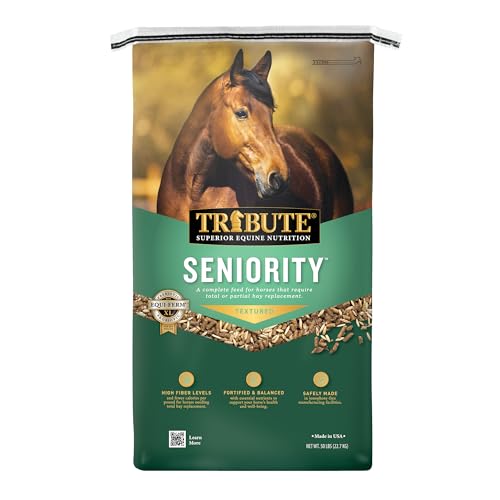
Tribute Maturity Textured is listed as a 50-pound senior horse feed. Product information describes a no-corn formula with lower sugar and starch, digestible fiber, amino acids, organic minerals, and a microencapsulated yeast ingredient. The listing also says the feed can be used as a complete feed. Because that is a meaningful distinction, verify the current bag instructions and feeding rate before treating it as a forage replacement or the main part of a ration. The textured form may also influence how a particular horse accepts and sorts its meal.
This may be a candidate for owners who want to compare a textured senior formula with pelleted choices. The listing’s ingredient profile can help guide questions for a nutrition professional, but it does not establish that a lower sugar or starch product is right for a horse with a particular condition. Ask your veterinarian or equine nutritionist to evaluate forage, activity, body condition, and metabolic history. Check the current analysis rather than assuming the formula remains unchanged. Make the transition over the period recommended by the professional, follow the bag directions, and monitor whether the horse eats the full meal. If your horse needs a soaked or complete-feed plan, verify that exact use on the label. Textured feeds can be sorted by some horses, so observe the meal and check that the intended portion is actually eaten. Keep a transition and observation log during the change.
My Recommendation
Compare it if a textured senior feed matches your routine. Confirm the exact complete-feed directions and transition guidance on the current product label.
5. New Country Organics Loyalty Senior Pellets

What We Like
- Corn-free and soy-free per listing
- Flax oil listed
- Can be soaked per product information
- 40-pound bag listing
What We Don’t Like
- Bag and label information should be checked for latest analysis
New Country Organics Loyalty Senior Pellets are described as a corn-free, soy-free senior formula, with flax oil and 16% protein in the listing. The product page says the pellets may be soaked to make them easier for horses with chewing difficulty and describes them as organic and non-GMO. Those are label and manufacturer claims that you should confirm on the current bag or product page. Its 40-pound bag size may be easier to handle than larger feed bags, depending on your storage and feeding routine.
The pellet-and-soak option may be useful to discuss when a senior horse struggles with ordinary hay or hard feed. Soaking does not by itself establish that a product is suitable as a complete ration, so check feeding directions carefully and ask your veterinarian or equine nutritionist how it fits with forage and other feeds. Compare the guaranteed analysis with the horse’s actual needs, not just age. The product listing mentions a senior target age, but dental health and body condition vary widely among horses. Introduce a new feed gradually, prepare it as directed, and remove any uneaten wet feed promptly according to safe barn practices. Organic certification and ingredient preferences may matter to your buying decision, but they do not replace checking nutrient adequacy and feeding directions. Store the bag dry and follow its use instructions. Confirm storage and feeding instructions on the current bag.
My Recommendation
This may fit owners looking for a soakable pellet with specific ingredient preferences. Confirm its role in the total ration with an equine nutrition professional.
6. Purina Enrich Plus Senior

What We Like
- Ration-balancer format
- High-quality protein listed
- Concentrated vitamins and minerals
- Easy-soak pellet feature
What We Don’t Like
- Not a high-volume calorie feed for every underweight horse
Purina Enrich Plus Senior is listed as a senior ration-balancing feed rather than a conventional high-volume calorie feed. The product data describes concentrated vitamins and minerals, high-quality protein, an easy-soak pellet, and proprietary technologies named on the label. Ration balancers are designed for a different feeding role than full-feed senior diets, so compare the prescribed amount and nutrient contribution with the horse’s forage and other feed. Use the manufacturer’s current label to determine whether the product fits the ration and whether soaking is recommended for your horse.
This is worth considering when you need to balance a forage-based diet and do not want to add a large amount of concentrate, but it may not supply the calorie volume needed by a horse that is underweight. The label’s nutrient concentration also means careful measuring matters. Ask an equine nutritionist to compare the feed with hay analysis, body condition, workload, and any medical restrictions. If chewing is difficult, confirm the soaking method and feeding instructions rather than assuming every pellet is appropriate. Make one change at a time and keep a record of what is fed. A ration balancer can complement a suitable forage plan, but it cannot diagnose or correct a health problem causing weight loss. Compare the minimum feeding rate with what you can realistically feed each day; feeding below label directions can change the nutrient balance. Review the complete nutrient profile before switching feeds.
My Recommendation
Choose a ration balancer when the goal is balancing a forage-based diet, not replacing a complete feed or adding large amounts of calories. Check minimum feeding directions.
7. Purina Equine Senior

What We Like
- Easy-soak pellet feature
- High-fat nugget listed
- Controlled sugar and starch listed
- Prebiotic technology identified in listing
What We Don’t Like
- Suitability as a complete feed must be confirmed on the current label
Purina Equine Senior is listed as a senior horse feed in a 50-pound bag. The Amazon product information describes easy-soak pellets, a high-fat nugget, controlled sugar and starch, and prebiotic and gastric-support technologies. Those features may make it a candidate for comparison when an older horse needs a softer meal or a formulated senior diet. Verify current labeling and feeding directions before relying on a claimed complete-feed role or changing the horse’s forage routine. The correct feeding rate depends on the horse’s size, condition, and the rest of its diet.
This option may appeal to owners who want a senior feed that can be softened with water and provides more than a basic ration balancer. The product’s listed features are not a substitute for individualized veterinary guidance, especially if the horse has a metabolic condition, suspected ulcers, or persistent weight loss. Ask whether the feed is suitable as a complete feed for your horse and what minimum amount is required for that use. If the horse can still eat forage, continue to account for it in the ration. Transition gradually, follow the label, and monitor intake and body condition. Compare it with the other senior feeds based on the role it plays in the diet, not only the word “senior.” Senior status alone is not a diagnosis. A body-condition check and routine veterinary care help determine whether a diet change is needed.
My Recommendation
This is a broad senior-feed option to discuss when the horse needs a softened meal or specialized feeding role. Use the label and professional advice to determine whether it is complete for your horse.
My Recommendation
There is no single best senior feed for every horse. Triple Crown Senior, Senior Gold, Tribute Maturity, and the Purina Equine Senior options are formulated senior feeds with different formats and label directions. Loyalty Senior offers a soakable pellet and stated ingredient preferences. Enrich Plus Senior is a ration balancer, which has a different role from a complete senior feed. Choose according to the horse’s dental comfort, body condition, forage intake, and nutrient needs, with professional guidance.
Read the current feed label, follow the stated minimum and transition instructions, and keep notes on what the horse eats and how its condition changes. For older horses whose plan specifically needs added fat, revisit our guide to senior horse fat supplements after you have established the feed’s role.
Frequently Asked Questions
What is the best feed for an older horse?
The best choice depends on dental health, body condition, forage intake, activity, and the rest of the ration. Have a veterinarian or equine nutritionist review the horse’s needs and the product label.
Is a senior feed the same as a senior ration balancer?
No. A complete or higher-volume senior feed and a ration balancer are designed for different feeding roles. Check the label and feeding rate, and avoid substituting one for another without guidance.
Can senior horse feed be soaked?
Some products include soaking directions, but not all feeds are prepared the same way. Check the current package instructions and ask your veterinarian if swallowing or chewing is difficult.
Should older horses stop eating hay?
Age alone is not a reason to remove forage. If teeth make chewing difficult or the horse cannot maintain condition, ask a veterinarian about safe forage alternatives and whether a complete feed is appropriate.
How often should a senior horse’s teeth be checked?
UMN Extension advises at least yearly dental checks for senior horses; your veterinarian may recommend more frequent exams based on the horse’s condition.
Compare current product labels and feeding directions before buying. Amazon listings can change.