

Finding a tick in your cat’s coat can turn a routine check into a stressful moment. A dedicated removal tool may help you work with control. Your choice depends on the tick’s location, your visibility, and whether your cat can stay still. We compared seven current Amazon listings for tool type, grip, storage, and included components. No remover guarantees a risk-free result, and a kit cannot replace veterinary advice. Read directions before use, avoid squeezing the tick’s body, and contact your veterinarian if removal is difficult or your cat seems unwell. We also note how storage and handling features fit a small cat-care kit.
| Product | Best For | Key Advantage | Buy | |
|---|---|---|---|---|
| TickCheck Tick Remover Value 3-Pack | A compact hook-style set | Three sizes plus a tick identification card | View on Amazon | Jump to Review |
| Homesake Three-Piece Tick Remover Kit | A keychain-ready travel tool | Three tools with a keychain hole and ID card | View on Amazon | Jump to Review |
| Hoxxu Eight-Piece Tick Removal Kit | A boxed set with several tool types | Multiple tweezers, a magnifier, and a storage case | View on Amazon | Jump to Review |
| Amnivagus Ten-in-One Tick Removal Set | A mixed kit for several tick sizes | Hooks, tweezers, a card, and a storage pouch | View on Amazon | Jump to Review |
| VENOMKILLER Six-in-One Tick Remover Kit | A travel-ready multi-tool | Stainless-steel tweezers, hooks, a card, and a case | View on Amazon | Jump to Review |
| JOTOVO Three-Pack Tick Remover Tools | A small basic tool set | Three portable pieces for pet or household kits | View on Amazon | Jump to Review |
| MEDUWEDU Three-in-One Stainless-Steel Tick Kit | A compact kit with three tool styles | Tweezers, a fork, and a dual-head clamp | View on Amazon | Jump to Review |
1. TickCheck Tick Remover Value 3-Pack

What We Like
- Three remover sizes
- Pocket-size format
- Includes tick ID card
- Storage pouch included
What We Don’t Like
- Hook method may take practice
- Small parts need secure storage
TickCheck’s value set centers on three compact tick-remover hooks in different sizes. The listing says they are lightweight and pocket-sized, with a small identification card and a resealable storage pouch. That combination can fit in a home pet-care kit or a travel bag for outdoor trips. A choice of sizes may help you match the tool to the tick, although visibility and access through fur still matter. Use a bright light and move the fur aside before positioning a hook.
The manufacturer describes a hook method that catches a tick without pressing on its body. The included instructions should guide positioning and removal. Read them ahead of time; fumbling beside a moving cat can make a small job harder. The ID card is a reference aid, not a diagnostic tool. It cannot establish whether a tick carries a disease or whether your cat needs follow-up care. Keep the card with the tools so its reference stays available.
The small parts are easy to store but also easy to misplace, so keep the set in its pouch and check it before a trip. Some owners may find a hook less intuitive than fine-point tweezers. Dense fur or a tick near the eye or ear can add difficulty. Ask a veterinarian to help if you cannot see or safely reach the tick. Do not rely on a tool claim as a guarantee of painless removal. Practice opening the pouch before you need to reach its contents.
My Recommendation
This is a practical first choice if you want a small kit with more than one hook size. Keep the card and pouch together, and learn the supplied instructions before a tick is attached. For a cat that will not stay still, ask a veterinary professional to remove it rather than struggling with a tool.
2. Homesake Three-Piece Tick Remover Kit

What We Like
- Three compact remover tools
- Keychain attachment hole
- Tick identification card
- Designed for pet and human use
What We Don’t Like
- Tiny tools may be difficult to handle
- Keep out of children’s reach
Homesake’s kit includes three compact tick-removal tools and an identification card. A small opening lets it attach to a key ring or gear loop. The product listing describes it for cats, dogs, and people, making it a multipurpose option for a household kit. Its small size is designed for portability, though a tiny tool can be harder to control than a full-sized pair of tweezers. Attach the set securely so a tool cannot fall loose during travel.
The keychain format may help keep a remover available in a backpack or pet travel pouch. The listing’s twist-and-lift description is manufacturer guidance, so follow the package directions and your veterinarian’s advice rather than improvising if removal is difficult. The card can help with reference, but it does not confirm a species or assess health risk by itself. Keep the tool clean and inspect the ends before use. Good lighting helps you part the coat and see the tick clearly.
This set is best for owners who value compact storage and want several small pieces available. Those with reduced hand strength or poor visibility may prefer a larger tool with a more substantial grip. A cat that is struggling can make close work unsafe; do not force restraint or repeatedly probe the skin. If you cannot remove the tick promptly and cleanly, contact your veterinarian and keep the kit for less challenging situations. Store the identification card flat to prevent it from bending.
My Recommendation
Choose this kit if portability matters and you want a tool close at hand during walks or travel. The keychain-style format can be convenient, but confirm you can grip it steadily before using it on a cat. If the tick is in a delicate area or the cat is distressed, a clinic is the safer place to get help.
3. Hoxxu Eight-Piece Tick Removal Kit

What We Like
- Eight components listed
- Includes magnifier
- Several tweezer shapes
- Storage box for organization
What We Don’t Like
- More parts to keep track of
- Instructions should be checked before use
Hoxxu’s listing describes eight pieces. They include three tweezers in different sizes, a spring-style tweezer, two double tweezers, a magnifying glass, a comb, and a storage box. The selection gives you more than one way to approach a tick check. A magnifier can support visual inspection, but it does not replace good lighting or a clear view of the skin. A clear work surface makes it easier to return each piece to its case.
The storage case is useful because it keeps the small pieces together between outings. The product information describes different removal styles and suggests working slowly. Treat its instructions as product guidance, not a substitute for veterinary advice. When choosing a tool, prioritize steady control and a clear grasp near the tick’s attachment point. Avoid squeezing the tick body or digging into the skin. Use the magnifier only when it improves your view without delaying care.
A multi-piece assortment suits someone who wants options at home, in a car, or in a travel kit. Its main drawback is complexity: more pieces can slow you down if you have not identified the right one ahead of time. Practice handling the components before a tick is present, and make sure the cat remains calm enough for safe contact. If the tick is embedded in a sensitive location, get professional help instead of switching tools repeatedly. Choose one method in advance rather than changing tools mid-removal.
My Recommendation
This kit is for an owner who prefers multiple tool styles and a storage box. The magnifier may help you see a small tick, but a larger kit is not automatically easier to use. Sort the pieces before an emergency and follow veterinary instructions for the chosen tool.
4. Amnivagus Ten-in-One Tick Removal Set

What We Like
- Several tool types in one set
- Options for different tick sizes
- Compact storage pouch
- Made for pets and people
What We Don’t Like
- Ten-piece count may be more than needed
- Product claims need careful interpretation
Amnivagus lists a ten-in-one set with stainless-steel tweezers, hooks, a tick card, and a comb, along with a pouch for storage. The product page describes multiple sizes for different ticks and use on cats, dogs, and people. The range may help households with outdoor exposure. Check the current listing for exact contents and instructions before purchase. Keep the pouch closed between uses to protect the smaller components.
A set that combines a hook and tweezer styles gives you a choice, but no single design is right for every location. A tick hidden under fur or near a sensitive area may be hard to reach safely. Use enough light, part the hair, and follow veterinary guidance for removal. The included card may help identify a tick visually, but it cannot tell you whether the cat was exposed to a pathogen. A stable grip matters more than the number of attachments included.
The pouch can keep the components together in a home first-aid area or travel bag. The tradeoff is that ten pieces may add clutter if you only need one dependable tool. Keep the kit out of reach of children and check that reusable components are clean and intact. If a tick breaks, remains attached, or the cat reacts strongly, stop and ask a veterinary professional what to do next. Check the instructions each time the model or packaging changes.
My Recommendation
This broad kit may suit homes that want several removal styles in one pouch. Its variety helps you choose a tool for the situation, but the number of pieces can be excessive for occasional use. Read the directions, select one appropriate tool, and avoid switching methods while the tick is attached.
5. VENOMKILLER Six-in-One Tick Remover Kit
What We Like
- Several tool types in one case
- Stainless-steel tweezers
- Multi-size hooks and removal card
- Compact storage case
What We Don’t Like
- More gear than a basic home kit needs
- Leather case requires care
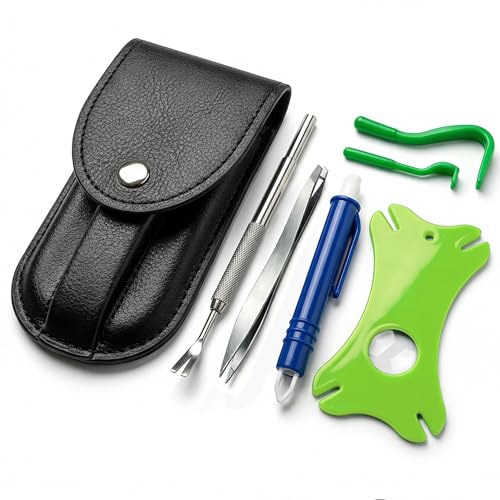
VENOMKILLER’s six-in-one kit is listed with stainless-steel tweezers, several hook sizes, a slim tick card, and a case. It is marketed for cats, dogs, and people, so owners can keep one compact set for household outdoor activities. Hooks and tweezers offer alternatives. The right choice depends on the tick’s size and position, and how clearly you can reach it. The case can be kept beside other pet travel essentials for access.
The product details emphasize a grip-and-pull approach and describe tools for small and larger ticks. These are product claims, not independent tests. For safe use, follow reliable veterinary directions and the package instructions; do not squeeze the tick’s body or dig at the skin. A kit cannot prevent tick exposure, and its ID card does not determine whether the cat needs medical attention. Inspect the tool tips so rough edges do not contact the cat’s skin.
The case can keep the pieces together in a first-aid drawer, hiking bag, or car kit. A kit with many shapes may be reassuring, but it asks you to learn the tools in advance. Check the case and components periodically and clean reusable parts after use. If you are unsure or your cat will not stay still, contact a veterinarian. They can remove the tick and advise on monitoring afterward. A clear plan helps reduce handling time for a nervous cat.
My Recommendation
This kit is a reasonable pick if you want both tweezers and hooks and plan to carry them outdoors. Its case helps organize the components, though the extra options are only useful when you know how to use them. Follow the current product directions and your veterinarian’s removal advice.
6. JOTOVO Three-Pack Tick Remover Tools

What We Like
- Three tools in one pack
- Portable size
- Suitable for pets and people
- Simple kit for travel
What We Don’t Like
- Listing provides few construction details
- Limited information about exact tool shapes
JOTOVO’s three-pack is presented as a portable tick-removal option for pets and people. The returned product details are brief. They describe an emergency and daily-use outdoor tool but do not specify its components or materials. That limited information makes this a less transparent choice than kits that list each hook or tweezer in detail. The short listing makes the photos especially important to inspect before buying. Keep the tools where you can find them after returning home.
The compact pack can fit with travel supplies. Learn which tool to use before a tick is attached. Review the current listing photos and instructions to confirm the tool type and how it should be used. Do not assume that three pieces represent three different removal methods; the available item data does not establish that. Store the pack in a dry place and check the pieces periodically. Do not judge risk from an attached tick’s size alone.
JOTOVO may appeal when portability and a simple package are your priorities. However, shoppers who want a magnifier, identification card, material details, or a larger grip may prefer another option in this guide. Inspect the tools for damage and use a method recommended by your veterinarian. If the tick is difficult to grasp or your cat will not stay still, stop. Seek professional help instead of testing an unfamiliar tool on the skin. Pause if your cat turns, flinches, or resists the handling. A quick coat check afterward can help you notice irritation early.
My Recommendation
This pack may work for an owner who wants a basic portable set, but the listing provides fewer specifics than other candidates. Review the product photos and instructions before choosing it. If you prefer detailed specifications or need a particular grip style, select a more clearly described alternative.
7. MEDUWEDU Three-in-One Stainless-Steel Tick Kit
What We Like
- Three distinct tools listed
- Stainless-steel construction
- Leather storage pouch
- Portable for trips
What We Don’t Like
- Small components need careful handling
- Follow reliable removal guidance
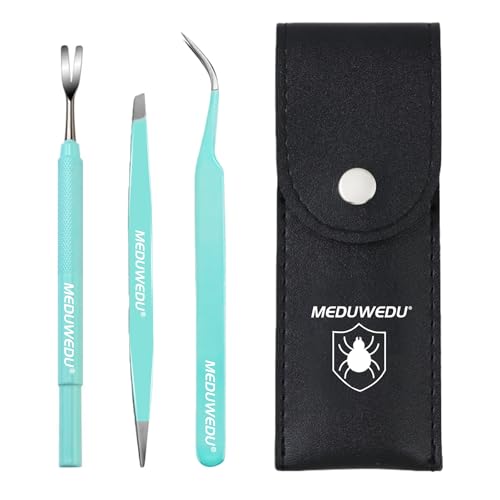
MEDUWEDU lists a three-in-one kit with a tick tweezer, fork, and dual-head clamp, all stored in a leather pouch. The product details specify stainless-steel construction and describe use for cats, dogs, and people. Naming the components makes it easier to understand what is included than a listing that only gives a piece count. Check the clasp and pouch before travel so loose pieces do not fall out. Keep the pouch in a cool, dry place between outings.
Different tool shapes can be useful when access varies, but they do not remove the need for steady handling and clear visibility. Part the cat’s fur and follow the tool’s instructions alongside veterinary guidance. The product page promotes pulling rather than twisting. Tool methods vary, so follow the instructions and do not apply force if it does not release smoothly. Avoid squeezing the tick’s body. Choose the tool that gives you the clearest, steadiest approach. Clear instructions matter more than having several tool shapes.
The pouch is a practical feature for travel, and three components are easier to organize than a very large kit. Still, small pieces may be hard to hold if you have limited dexterity. Keep the tools clean and accessible before outdoor trips. A tick-removal kit is a readiness aid, not prevention. Check your cat after outdoor exposure and ask a veterinarian about ongoing protection and signs that need follow-up. Leave difficult removals to a veterinary professional rather than forcing it. Avoid repeated attempts if the tick does not release.
My Recommendation
This compact set stands out for listing three distinct tool styles rather than a large assortment of similar pieces. It may suit an owner who wants options in a travel pouch. Read the instructions before use and follow veterinary guidance, especially if your cat has a tick in a difficult or sensitive location.
How to Choose a Tick Removal Tool for Cats
A useful tick tool is one you can position accurately and use calmly. Before choosing a kit, consider access through your cat’s fur and how easy each tool is to grip. Decide whether you want one tool or several styles.
Pick a tool you can control
Listings may include hooks, fine-point tweezers, cards, clamps, or several of these. A small hook can be convenient, and tweezers may offer a familiar grip. Do not choose either solely because a listing promises effortless removal. Look for clear instructions, a handle or body you can hold steadily, and a tool size that suits the animal and tick. Good lighting and having another adult calmly steady the cat can matter as much as the kit itself. If the tick is near the eye, inside the ear, or in another difficult spot, ask a veterinarian to remove it.
Check the whole kit and storage
A multi-piece set can provide options and a pouch or case can keep them together. At the same time, extra parts can make it harder to find the right tool when you are worried. Read the included directions in advance and keep the pieces clean, intact, and away from children. If the listing is vague about materials or tool shapes, review its product details carefully. Do not assume what the set contains.
Try handling the tool and reading its instructions before a trip. Knowing how each component feels can help you choose a size when a tick is difficult to see. Store small pieces in the case or pouch so they are ready when needed.
Use safe removal and follow-up practices
The American Veterinary Medical Association advises promptly and properly removing ticks, and describes using tweezers close to the animal’s skin. Follow reliable veterinary instructions and the tool’s directions; avoid squeezing the tick’s body or burning it. After removal, clean the area and tool according to veterinary guidance, and note any concerning skin reaction or change in your cat’s behavior. Our guide to tick-removal tools for dogs shows related kit styles. For other parasite questions, see our guide to flea signs and itchy skin in cats and cat flea-spray safety checks. Ask a veterinarian about prevention suited to your cat’s age, health, and lifestyle.
FAQs
What is the best way to remove a tick from a cat?
Use a proper tick-removal tool and follow veterinary instructions. If you cannot grasp the tick safely, contact a veterinary clinic.
Can I use human tweezers on my cat?
Ask your veterinarian which tool and method to use. If using tweezers under veterinary guidance, avoid squeezing the tick’s body.
Should I twist a tick off?
Follow the tool’s directions and veterinary guidance. Methods differ by tool, so do not twist or pull in a way its instructions discourage.
Can I use a tick-removal tool near my cat’s eye?
Do not attempt removal if you cannot work safely. A veterinarian can handle ticks in delicate locations.
Does a tick-removal kit prevent ticks?
No. A removal tool is for an attached tick. Ask your veterinarian about preventive products appropriate for your cat.
Final Verdict
For most owners, a compact kit with clearly described tools and usable instructions is the best starting point. TickCheck offers three sizes and a storage pouch; MEDUWEDU lists three distinct tool types; larger kits provide more options but need more preparation. Keep your choice accessible and learn its directions ahead of time. Seek veterinary help if visibility, placement, or your cat’s behavior makes removal uncertain.
As an Amazon Associate, PetAdvisorPro earns from qualifying purchases. If you buy through links in this article, we may receive a commission at no additional cost to you.