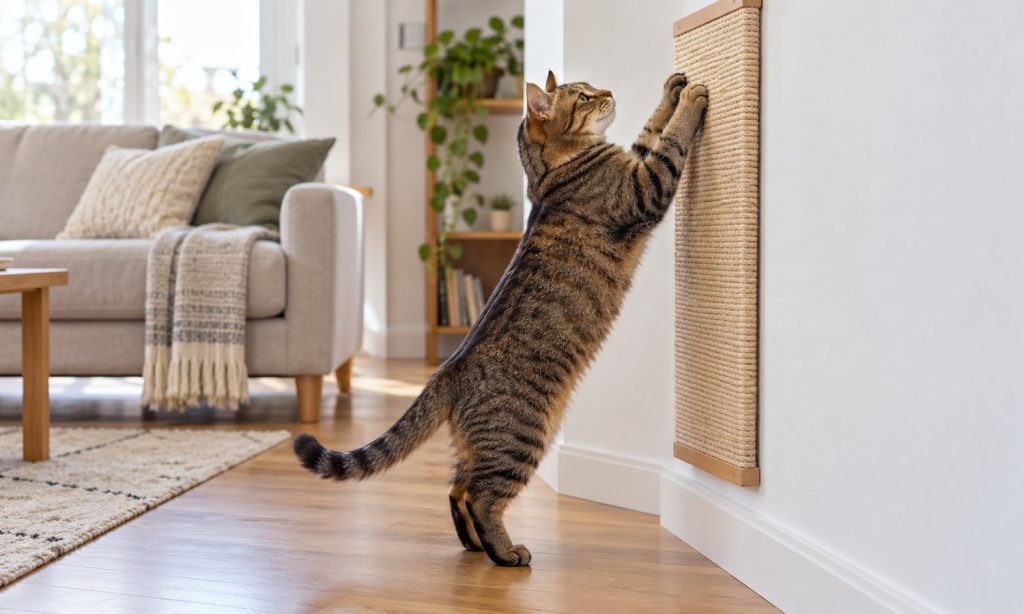
A vertical scratcher gives a cat room to reach up, but the style can range from a narrow wall post to a wide angled board. Installation and surface preference matter as much as height. We compared seven verified upright scratchers, with wall-mounted, sloped, and wall-leaning options made from sisal, wood, or cardboard. Measure your cat’s full stretch, check the mounting method, and place the surface near a spot your cat already scratches. The goal is a stable surface that suits your cat’s own scratching style. If you are deciding between a wall panel and a freestanding post, our large-cat scratching post guide covers a different, heavier-base format.
Quick Picks
| Product | Best For | Key Advantage | Buy | |
|---|---|---|---|---|
| xympo 34-Inch Wall-Mounted Sisal Scratcher | Full-body vertical stretch | 34-inch sisal post with included wall hardware | View on Amazon | Jump to Review |
| PETKARAY 105-Degree Wall Scratch Pad | Angled scratching position | Wood-backed sisal pad with a 105-degree angle | View on Amazon | Jump to Review |
| CHEERHOME PETS Adjustable Sisal Scratcher Ramp | Flexible angle and placement | Tilts from floor-level ramp to upright L shape | View on Amazon | Jump to Review |
| LSAIFATER Wooden Wall or Floor Sisal Scratcher | Dual floor and wall placement | Sisal mat with framed edges for varied positioning | View on Amazon | Jump to Review |
| PowerKing 32-Inch Rotating Wall Scratcher | Space-saving tall post | Rotates 360 degrees to expose fresh sisal | View on Amazon | Jump to Review |
| 32-Inch Adjustable Sisal Scratcher with Ball | Angled sisal panel | Foldable 32 × 11.8-inch board with a built-in ball | View on Amazon | Jump to Review |
| Conlun 23-Inch L-Shaped Cardboard Vertical Scratcher | Cardboard texture | 23 × 12-inch vertical wall-leaning board | View on Amazon | Jump to Review |
How to choose a vertical scratcher for cats
The right upright scratch surface lets your cat stretch and pull without wobbling, slipping, or getting in the way. Decide how you can mount it before choosing a material or finish.
Measure your cat’s reach and the surface
Watch your cat stretch against furniture, then measure the height and width of the area it actually uses. A tall narrow post offers a different grip from a broad panel, and an angled board gives a sloped surface rather than a straight wall. Compare the scratching area—not the full frame—with your cat’s reach. If the product includes a platform, ball, or resting ledge, treat those as extras and check that they do not reduce the usable sisal or cardboard. Cats that are large or long-bodied may need a wider, taller surface, while a smaller cat may prefer a lower angle it can easily approach.
Choose a mounting style and material
Wall-mounted scratchers save floor space but require suitable anchors and secure installation. Confirm what hardware is included and whether it matches your wall type; test the fixture before letting the cat pull on it. Freestanding angled boards avoid drilling, but they need a non-slip base and enough room to stay in position. Sisal and jute provide a rough rope texture, while cardboard offers a different feel and wears as the cat scratches. If your cat has a consistent texture preference, use it to guide your choice. For apartment layouts, our small-apartment cat furniture guide covers placement and footprint considerations.
Position it where scratching already happens
A scratcher is more likely to be used when it is near a doorway, resting area, or piece of furniture your cat already targets. Keep the area around it clear so your cat can stand upright and stretch. Secure loose cords and remove nearby objects that could fall if bumped. Check brackets, hinges, ropes, cardboard edges, and attached toys regularly; stop use if the surface shifts, sheds excessively, or exposes sharp parts. Rotate or reposition a board only as directed, and replace worn material when the cat no longer gets a stable grip. If your cat likes to climb as well as scratch, compare a full cat tree with the simpler vertical board.
The Best Vertical Scratchers for Cats
1. xympo 34-Inch Wall-Mounted Sisal Scratcher

What We Like
- 34-inch vertical scratching surface
- Natural sisal listed
- Mounting hardware included
- Aluminum brackets described
- Wall-mounted format frees floor space
What We Don’t Like
- Requires secure wall installation
- A narrow post may not suit every scratching style
The xympo scratcher is a tall, narrow sisal post designed to mount vertically on a wall. The listing gives its height as 34 inches and says the package includes installation hardware. A wall-mounted surface can encourage a cat to stretch upward while keeping the base of a freestanding post off the floor. The sisal provides a familiar rough texture for cats that prefer rope or woven fibers. Check the chosen mounting height against your cat’s full stretch, and install into a suitable wall structure using the supplied hardware. A 34-inch post is not automatically tall enough for every cat, but it gives you a clear dimension to compare with your cat’s reach.
The listing describes aluminum brackets and a durable natural-sisal surface. Installation is the main tradeoff: use the hardware correctly and make sure the wall can support repeated pulling and pawing. Do not mount the post above fragile furniture, near a doorway, or where the cat could strike a sharp edge if it loses footing. Check the brackets periodically and tighten them only as directed. Some cats prefer a horizontal surface or a broader panel, so watch whether your cat uses the post before treating it as a complete furniture-protection solution. If the sisal loosens or a bracket shifts, take it out of service until repaired. This is a wall-mounted scratch surface, not a climbable shelf or a substitute for a stable cat tree.
My Recommendation
Choose xympo if your cat likes an upright sisal surface and you can install a 34-inch post securely at a useful height. Its natural fiber and included brackets are convenient, while the wall-mounted design saves floor space. It offers less area than a broad scratch panel and requires proper installation. Measure your cat’s stretch and check the brackets regularly. Confirm the top edge is reachable and the wall accepts the supplied hardware.
2. PETKARAY 105-Degree Wall Scratch Pad

What We Like
- 105-degree scratching angle listed
- Natural sisal surface
- Sturdy wood base described
- Plush mouse toy included
- Wall-mounted upright format
What We Don’t Like
- Angle may not match every cat’s preference
- Requires a stable installation point
The PETKARAY scratch pad is an angled vertical board rather than a straight post. Its listing describes a 105-degree profile, a natural sisal surface, and a sturdy wood base. That slight slope may suit a cat that enjoys scratching against a surface with some give instead of a completely upright wall. A plush mouse toy is included to invite investigation, though your cat’s interest will vary. Check the board’s width and length against your cat’s reach and the available wall or corner space. The product is marketed as a vertical post alternative, so it can be considered when a bulky cat tree or floor post would take up too much room.
The wood base and sisal are intended to withstand daily scratching, but the verified details do not specify how the unit attaches or what wall materials are supported. Confirm its mounting method and use an appropriate anchor before allowing a cat to pull on it. A board that shifts can make cats avoid it or damage the wall. Place it near a location where your cat already scratches and reward calm investigation rather than physically forcing the paws onto the surface. Inspect the included toy and remove it if it frays or comes loose. The 105-degree angle is a preference-specific feature; if your cat likes an entirely flat or fully upright surface, a conventional post or horizontal pad may be more appealing.
My Recommendation
This pad is a good candidate for a cat that scratches at a slight angle and prefers sisal over cardboard. Its wood backing and included mouse add practical detail to the design. Confirm how it mounts and whether the angle suits your cat before installing. A flat scratch mat is better if your cat avoids angled surfaces. Confirm a secure mounting method, then observe whether your cat likes the sloped surface.
3. CHEERHOME PETS Adjustable Sisal Scratcher Ramp

What We Like
- Adjustable angles for different use positions
- Natural sisal rope and wood frame
- Hanging ball adds a play element
- Can lie flat or sit near a corner
- Compact footprint listed in product details
What We Don’t Like
- Moving parts need a stable setup
- Hanging ball may be ignored or chewed
The CHEERHOME PETS scratcher uses a wooden frame and natural sisal rope on an adjustable panel. The listing says it can be set at multiple angles, from flat on the floor to an L-shaped ramp, so you can test which position your cat prefers. That flexibility may help when a cat scratches upward but also likes to lounge or stretch against a sloped surface. A hanging ball sits above the scratch area and adds a play feature, though the scratcher can be used without expecting every cat to engage with the toy. Place it near a corner or familiar scratching location and check that the frame rests securely in the selected position.
The angle adjustment is useful only if the hinges or supports stay steady under pawing. Inspect the frame and moving parts after setup, and avoid placing the board where it can slide across a smooth floor. The product details describe sisal and wood, but do not establish replacement parts or how to repair worn sections. Monitor the hanging ball and remove it if it becomes loose or damaged. The scratcher is not wall-mounted, so it is a better option for renters or people who do not want to drill, although it still needs floor space. If your cat forcefully climbs rather than scratches, a wall-mounted post or stable cat tree may be a safer match. Check the frame position before each session.
My Recommendation
Consider this ramp if you want to test several scratching angles without fixing a panel to the wall. Its sisal, wood frame, and optional hanging ball provide a varied setup. The movable design needs a stable floor position, and you should inspect the ball. A rigid wall mount is preferable if the board slips during use. This is strongest for cats who like to scratch on a slope; a fixed wall panel is more secure.
4. LSAIFATER Wooden Wall or Floor Sisal Scratcher

What We Like
- Natural sisal mat with wood frame
- Can be used on floor or mounted on wall
- Edges tucked beneath frame
- Works in vertical or horizontal positions
- Simple scratch surface without loose toys
What We Don’t Like
- Mounting hardware details need confirmation
- Smaller pad offers less stretch area than a post
The LSAIFATER scratcher is a framed sisal mat intended for placement on the floor or mounting on a wall. The product information says the sisal edges are attached beneath the wooden frame, which helps keep the border covered rather than exposed for pulling. That construction can make the board feel more finished and allow a cat to scratch in a vertical or horizontal position depending on setup. It suits homes where the same surface may be moved between locations, or where a cat scratches low against a wall. Check the board dimensions and mounting instructions before deciding; the verified item details do not give a full installation specification.
The product listing describes natural sisal and wood as the principal materials. Its relatively simple surface does not add a perch, toy, or tall climbing structure, so it is best viewed as a dedicated scratching surface. Confirm the anchors and wall type if you mount it vertically, and test for movement before your cat begins pulling. When used on the floor, add a stable, nonslip base if needed, following the manufacturer’s instructions. The pad may be too small for a cat that wants a full-body reach, so compare it with the dimensions of your cat’s usual stretch. Inspect the sisal for loosened fibers and the frame for cracks, and replace or reposition it when it no longer stays flat. Check the exact board dimensions before purchase.
My Recommendation
This board is a versatile pick if you want a framed sisal surface that can be positioned on a floor or wall. Its tucked edges and natural materials are practical features. The mounting details and exact size need checking, and a small pad may not provide a full stretch. Choose a taller post if your cat reaches high. Confirm both the floor setup and wall anchors so the board will not shift under repeated scratching.
5. PowerKing 32-Inch Rotating Wall Scratcher
What We Like
- 32-inch wall-mounted vertical post
- 3.35-inch diameter listed
- 360-degree rotating scratch surface
- Natural jute rope described
- Wall mounting saves floor space
What We Don’t Like
- Needs a secure wall mount
- Post diameter may feel narrow to cats that prefer broad panels
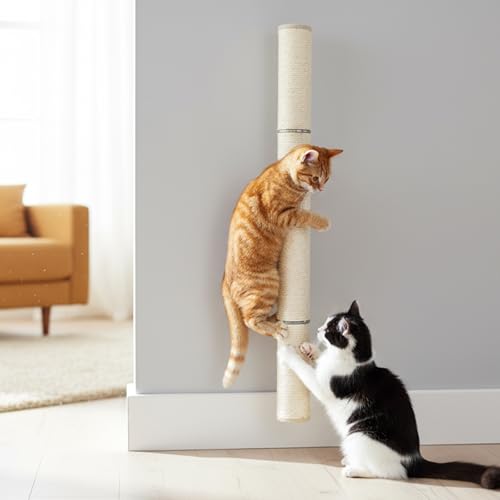
The PowerKing scratcher is a 32-inch vertical post that mounts to a wall and rotates to expose another side of its scratching surface. The product listing gives a diameter of 3.35 inches and describes a natural jute rope wrapping. A rotating post can extend use of the available surface before you replace it, while the wall-mounted design avoids a heavy floor base. The height gives a cat room to reach up, but compare the post with your cat’s actual stretch and preferred grip. Cats that like a wide board may prefer a panel, while cats that grasp around a post may enjoy this narrower cylindrical shape.
The post needs to be installed securely because scratching creates repeated outward force. Follow the mounting instructions, use suitable hardware for your wall, and check the bracket after the first few sessions. The listing describes a 360-degree rotation, but confirm how the post locks in place so it does not turn unexpectedly while your cat is pulling. Keep the area beneath it clear and avoid mounting it over sharp furniture edges. Inspect the jute for loose strands and stop use if the post or bracket shifts. As with any vertical scratcher, place it near the location your cat already targets. A new position can take time to accept, so introduce it gradually and keep an alternative scratch surface nearby. Check the post’s rotation lock before use.
My Recommendation
Choose PowerKing if your cat likes cylindrical surfaces and you want a wall-mounted post that can rotate as one side wears. Its 32-inch height and stated diameter are useful fit checks. The mount must be solid, and the narrow post may not suit cats that prefer broad boards. Confirm its locking mechanism before use. Choose a wider panel if your cat prefers to spread its paws across a broad surface.
6. 32-Inch Adjustable Sisal Scratcher with Ball

What We Like
- 32 × 11.8-inch size listed
- 180-degree adjustable foldable design
- Natural sisal scratching surface
- Built-in spinning ball toy
- Can angle to fit corners or open floor
What We Don’t Like
- Foldable frame needs a firm position
- Ball component requires inspection
This 32-inch scratcher combines a wide sisal panel with a foldable frame that the listing says adjusts between 60 and 180 degrees. Its dimensions are given as 32 by 11.8 inches, making it broader than a narrow wall post and suitable for cats that stretch along a panel. A built-in spinning ball adds a play element, but the main function is the sisal surface. The angle can be changed to fit a corner or an open floor area, letting you test a sloped position without permanent installation. Check the panel’s full width and the room it needs when opened before choosing it for an apartment.
The adjustable joints need a stable floor and should be checked after repositioning. The product listing describes natural sisal and an interactive ball; it does not establish replacement parts or a long-term service life, so inspect the board, hinges, and ball regularly. Keep the scratcher away from narrow walkways where it could tip or catch a foot. If your cat pulls hard on the surface, ensure the panel does not slide. Introduce it near an existing scratch area and use the same texture your cat already enjoys where possible. The foldable form is more flexible than a fixed wall mount but takes up floor space and may need to be repositioned as the cat’s preferred angle becomes clear. Check the opened footprint before buying. Use on level flooring.
My Recommendation
This is a useful option if your cat prefers a wide panel and you want to adjust its angle rather than drill into a wall. The 32-by-11.8-inch surface and built-in ball are its main draws. The frame must sit firmly, and the ball should be inspected. A fixed wall panel saves more floor space. It is a better fit for cats that use both scratch and play features, provided the foldable frame remains steady.
7. Conlun 23-Inch L-Shaped Cardboard Vertical Scratcher

What We Like
- 23 × 12 × 10-inch L-shaped design
- 1.2-inch-thick cardboard listed
- Works vertically or horizontally
- Can lean against a wall or furniture
- Resting surface doubles as a lounge spot
What We Don’t Like
- Cardboard wears faster than sisal for some cats
- Leaning design can shift without support
The Conlun scratcher uses a 23-inch L-shaped cardboard board that can be placed vertically against a wall or laid horizontally. The listing gives dimensions of 23 by 12 by 10 inches and describes a 1.2-inch-thick corrugated surface. The upright position gives a cat an opportunity to scratch upward, while the horizontal arrangement can double as a lounge surface. This format is a lower-cost way to test whether your cat likes a vertical scratch before installing a wall-mounted post. Because the board leans rather than attaching permanently, choose a stable spot with no gap where it could slide behind furniture.
The product details describe high-density, non-toxic cardboard and say the scratcher can handle frequent use, though cardboard is a consumable surface and will wear with scratching. Check for loose scraps and replace the board when it becomes unstable or sheds excessively. The L shape may provide more positions than a flat pad, but it is not as secure as a bolted wall fixture. Use it where the cat cannot knock it into glass, electronics, or a narrow path. If you want to encourage vertical scratching, place it near the sofa or wall the cat already targets. A cat that pulls hard or climbs on top may need a fixed wall-mounted scratcher with appropriate hardware instead. Keep the area in front of it clear. Measure the area before placing the board and check room dimensions before buying.
My Recommendation
Choose Conlun if you want to try an upright scratch surface without drilling and your cat likes cardboard. Its 23-inch size, thick board, and dual vertical-horizontal use add flexibility. The leaning design can shift, and cardboard wears over time. Place it securely and replace it when the surface becomes loose or unstable. This is a practical starter surface for a cat that likes cardboard and wall-leaning furniture, but it needs a firm position.
Frequently Asked Questions
How tall should a vertical cat scratcher be?
Compare the usable scratching height with your cat’s full stretch. A taller surface is useful only if the cat can reach it comfortably and the fixture is securely mounted.
Are wall-mounted scratchers safe?
They can be used when installed with hardware suitable for the wall and checked for movement. Follow the mounting instructions and test the fixture before allowing your cat to scratch.
Should I choose sisal or cardboard?
Cats have individual texture preferences. If possible, observe which surfaces your cat already scratches and choose a similar material and orientation.
How do I get my cat to use a new scratcher?
Place it near an existing scratching spot and allow your cat to investigate it. Avoid forcing the cat’s paws onto the surface; reposition it if the cat consistently ignores it.
How often should I replace a cat scratcher?
Inspect it regularly and replace it when the surface no longer provides a stable grip, the material is loose, or the frame becomes damaged.
Final Verdict
The best vertical scratcher for cats depends on where you can install it and which surface your cat likes to pull against. xympo and PowerKing offer tall wall-mounted posts; PETKARAY and CHEERHOME provide angled sisal surfaces; LSAIFATER gives a framed board for floor or wall placement; and the adjustable sisal and cardboard models add more flexible positioning. Measure your cat’s reach, secure every wall fixture properly, and keep the scratcher near a familiar target. If the surface shifts or your cat cannot use it comfortably, try another angle or material.
Affiliate disclosure: This article contains Amazon affiliate links. If you purchase through them, PetAdvisorPro may earn a commission. As an Amazon Associate I earn from qualifying purchases.