
You know that look your cat gives you when you walk past the kitchen? The “Hey, I could totally eat right now” look? Yeah… cats are pros at making us feel guilty. But before you let those big eyes trick you into refilling the bowl again, let’s talk about how much food to give your cat — for real this time.
This isn’t just about stuffing them until they roll around like a fluffy burrito. Feeding your cat the right amount keeps them healthy, happy, and less likely to plot your demise at 3 AM. I’ve had cats for years, and trust me — nailing the right feeding schedule is a game changer.
So, let’s break it down together with this complete guide and cat feeding chart.
Feeding Your Cat Properly
Feeding your cat isn’t just tossing some kibble in a bowl and hoping for the best. It’s about knowing what, when, and how much. Sounds simple, right? Well… kind of.
What, When and How?
So, what’s the big deal with feeding? You’re giving them food, right? Well, yes, but the type of food, the timing, and the method all play a huge role in their overall health.
For example, a kitten’s needs are vastly different from a senior cat’s. A cat that spends all day lounging on the couch needs less food than a feline acrobat who’s always running and jumping. We’ll get into the nitty-gritty of all this, but first, let’s talk about the vibe.
Eat in Peace
Ever tried eating with someone staring at you like you owe them your soul? Yeah, that’s your cat when they’re hungry. Give them a quiet, clean space to eat. No loud noises, no cat trying to steal their food, and definitely no vacuum cleaner ambushes.
Factors That Affect What Type of Food to Feed Your Cat
Not all cats are created equal. Some are picky eaters, others will eat your sandwich if you blink too long. Here’s what affects their food choices:
- Age: Kittens need more protein and fat. Seniors need fewer calories.
- Health: Diabetic? Allergic? Overweight? Choose food that supports their condition.
- Lifestyle: Indoor cats burn fewer calories than outdoor adventurers.
- Preference: Some cats hate wet food. Others act like dry food is punishment.
Pro tip: Try a mix of wet and dry food to balance hydration and dental health.

Factors That Determine the Amount of Food to Feed Your Cat
This is the big one, the question that keeps us up at night. How much food should to give your cat? The answer isn’t a simple number, unfortunately. It depends on several factors, and anyone who says differently is probably selling something. The main things to consider are:
- Age: Kittens have different energy needs than adult cats, and senior cats have their unique requirements.
- Weight: An overweight cat needs a different diet than one at a healthy weight.
- Activity Level: Is your cat a couch potato or a tiny athlete? This makes a huge difference.
- Metabolism: Just like people, cats have different metabolic rates. Some can eat all day and stay slim, while others pack on the pounds easily.
- Type of Food: The amount of food you give them will vary depending on whether you’re feeding them wet food, dry food, or a mix of both.
How Much Food Should I Feed My Cat?
Here’s the juicy part-actual numbers. Because “just a handful” isn’t a unit of measurement, Karen.
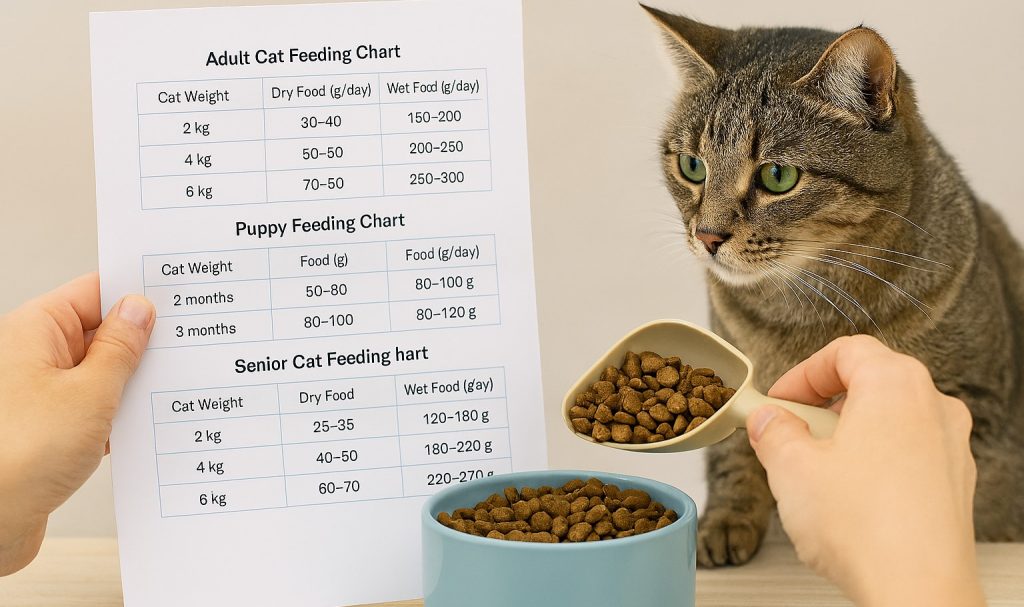
Adult Cat Feeding Chart
Cat Weight | Dry Food (g/day) | Wet Food (g/day) |
2 kg | 30–40 g | 150–200 g |
4 kg | 50–60 g | 200–250 g |
6 kg | 70–80 g | 250–300 g |
Note: These are general guidelines. Always check your food packaging for specific recommendations.
Puppy Feeding Chart
Yes, you spotted it. I know this is a cat article, but some folks have both cats and puppies, and honestly, feeding charts get mixed up. So here’s a quick one for puppies because someone will ask.
How many grams of kibble should a 2-month-old puppy eat?
- Small breeds: 50–80 g/day
- Medium breeds: 80–120 g/day
How many grams of kibble should a 3-month-old puppy eat?
- Small breeds: 80–100 g/day
- Medium breeds: 120–160 g/day
And how much food should you give your cat from 5 months onwards?
Kittens at 5 months should get 3–4 meals/day, slowly transitioning toward 2 meals/day by adulthood.
- 5–6 months: 60–80 g/day (dry), 200–250 g/day (wet)
- 7–12 months: Transition to adult feeding chart
Senior Cat Feeding Chart
Older cats often have slower metabolisms, so they need fewer calories but higher protein.
Example: A 10 lb senior cat might only need 50–60 g of dry food or 180–200 g of wet food daily.
Cat Weight | Dry Food (g/day) | Wet Food (g/day) |
2 kg | 25–35 g | 120–180 g |
4 kg | 40–50 g | 180–220 g |
6 kg | 60–70 g | 220–270 g |
How Much Dry Food Should Your Cat Eat?
Dry food, or kibble, is a popular choice for many cat owners. It’s convenient, cost-effective, and helps clean a cat’s teeth. The amount you should feed your cat depends on the calorie density of the food, so you must check the bag. As a general rule:
- A 5-pound cat needs about 1/4 to 1/3 cup per day.
- A 10-pound cat needs about 1/2 to 2/3 cup per day.
- A 15-pound cat needs about 3/4 cup per day.
Remember, these are just rough estimates. Your cat’s unique needs might require a different amount. Also, if you’re mixing wet and dry food, you’ll need to adjust the quantities accordingly.
And how much wet food?
Wet food is a fantastic way to ensure your cat stays hydrated, which is super important for their kidney health. It’s often more appealing to picky eaters, and Luna goes absolutely bonkers for her daily dose. The amount of wet food you give them depends on the size of the can and the calorie count.
- A standard 5.5 oz can of wet food typically contains between 150-200 calories. Most cats need about 20-30 calories per pound, so a 10-pound cat needs about 200-300 calories.
- A single 5.5 oz can might be enough for an average-sized cat, but you might need to supplement with a bit of dry food or a second can.
It’s a good idea to split the total daily amount into a few smaller meals. This keeps them from getting too hungry and helps prevent them from scarfing it all down at once.

How Often Should You Feed Your Cat?
Should you give them one big meal, a few small meals, or just let them graze throughout the day? The best method for you and your cat depends on your schedule and their personality.
Scheduled Feeding
This method involves giving your cat specific meals at specific times. This is my preferred method for Luna, as she thrives on routine. She knows when to expect breakfast and dinner, and she holds me accountable.
This approach is great for managing weight and monitoring how much your cat is eating. It can also help if you have multiple cats, as you can ensure everyone is getting their fair share.
Once a Day Feeding
Some people swear by giving their cat one big meal a day. It works for some cats, especially those who are good at self-regulating. However, for many cats, this can lead to overeating and a long period of hunger in between meals.
IMO, it’s not the best approach for most cats, as it doesn’t mimic their natural eating habits.
Free-feeding
This is a popular choice for busy pet owners. You leave a bowl of dry food out all day, and the cat eats whenever they want. For cats who don’t overeat, this can be effective.
This is probably not the best option, though, if your cat has a tendency to gain weight. Furthermore, it can be difficult to keep track of how much they are truly eating.
Why It’s Important to Feed Your Cat the Right Amount
Have you ever seen a feline that resembles a fluffy bowling ball? Yes, that is the result of not paying attention to portion sizes. Obesity from overfeeding can result in several health complications, including diabetes, joint problems, and a shortened lifespan. It’s quite a serious problem. Conversely, malnutrition and a lack of energy can result from underfeeding.
Striking the correct balance is essential. Simply put, a cat that is fed well is a happy cat. Their eyes are bright, their coat is shiny, and their purr is so loud it could shake a room. It all comes down to giving them a well-balanced diet that meets their requirements.
When to Feed Your Cat More or Less
Your cat’s feeding needs aren’t static. There will be times when you need to adjust their portions. If your cat is pregnant or nursing, they need a significant calorie increase.
I once had a cat who had a litter of kittens, and she was eating like a horse. She needed the extra energy to produce milk and care for her babies.
On the other hand, if your vet tells you your cat needs to lose a few pounds, it’s time to reduce their food intake. A slow, steady weight loss is always better than a crash diet. You should also adjust their food if you notice a change in their activity level.
For example, if you move to a smaller apartment where they have less room to run, you’ll need to reduce their daily intake to prevent weight gain.
How Much Homemade Food to Give to the Cat?
Cats have very specific nutritional needs, and a homemade diet must be carefully balanced to ensure they get all the vitamins and minerals they need.
If you’re going the DIY chef route:
- Use vet-approved recipes
- Feed 2–3% of your cat’s body weight per day in fresh food
- Balance proteins, fats, and essential nutrients — no random tuna-only diet (sorry, Whiskers)
Frequently Asked Questions
Can I feed my cat human food?
Some, yes. Cooked chicken, plain pumpkin, or scrambled eggs are fine. No onions, garlic, or chocolate — ever.
Is wet food better than dry food?
Wet food hydrates and is easier on the kidneys. Dry food is convenient and good for teeth. A mix often works best.
How do I know if my cat is overweight?
You should feel ribs but not see them. If you can’t feel them… time to cut back.
Should kittens eat adult cat food?
Nope. Kitten food has extra calories and nutrients for growth.
My cat begs all the time — should I give in?
Nope. They’re master manipulators. Offer toys or playtime instead.
Final Words
Feeding your cat isn’t rocket science—but it’s not a guessing game either. With the right info, a solid feeding chart, and a little trial and error, you’ll nail it. Just remember: every cat is different. What works for one might not work for another. So stay flexible, stay observant, and most importantly—don’t let the cat guilt-trip you into second breakfast. 😉
Got questions or funny feeding stories? Drop them in the comments. Let’s swap cat tales (pun 100% intended). 🐈⬛💬




Pingback: Cat Nutrition: Your Guide to Cat Nutrition