An interactive toy can give a dog something to explore when you step out, but no toy is automatically safe or enjoyable for every dog. One dog may work calmly at a food puzzle; another may chew it apart or ignore it once the door closes. This guide to how to choose the right interactive toy for dogs home alone focuses on your dog’s play style, chewing habits, size, food needs, and ability to settle. You will learn how to test a toy while you are present, check it for hazards, and decide whether it is appropriate for unsupervised use. A toy can add enrichment, but it cannot replace a suitable care plan or resolve distress by itself. For an overview of specific options, see our review of an interactive toy for dogs home alone; this article explains how to judge suitability.
What “interactive” means for a dog at home
Interactive dog toys invite a dog to sniff, nudge, lick, chew, roll, or solve a simple food puzzle. Some work without a person; others are designed for shared play or require supervision. That difference matters when you are choosing something to leave out while you are away. A toy that is fun when you are holding it may not be suitable for independent use.
Enrichment can let dogs use natural behaviors such as smelling, searching, chewing, and playing. A toy is one part of a daily routine that can also include walks, social contact, rest, and training. Our guide to dog mental stimulation and enrichment offers more ways to add variety.
Start by deciding what you want the toy to do. Are you hoping to make a quiet departure more predictable, provide a small food puzzle, or give a dog who enjoys chewing an appropriate activity? Different goals call for different designs. No toy can guarantee that a dog will stay occupied or calm throughout an absence.
Match the toy to how your dog plays
Watch your dog with familiar toys before choosing a new one. Some dogs nose, paw, or roll objects. Others carry them, lick them, or chew persistently. A dog that enjoys sniffing for kibble may prefer a simple food puzzle, while a dog who quickly tears plush toys may need a different activity or closer supervision. Do not assume that a toy’s label predicts how your individual dog will use it.
Consider your dog’s size, jaw strength, age, and experience. A toy should be large enough that it cannot be swallowed whole, but still manageable for your dog to pick up or work with. Very small pieces, loose parts, and toys that split into fragments can create a choking or ingestion hazard. If your dog tends to swallow objects, speak with your veterinarian about safer enrichment options before leaving toys unattended.
Think about the dog’s interest level. A very difficult puzzle may frustrate a beginner, while a simple toy may be finished quickly by a practiced puzzle solver. Begin with an easy challenge. If your dog stays relaxed and engaged, you can adjust the difficulty later. If the dog paws frantically, growls, guards the toy, or gives up, simplify the activity or choose another way to provide enrichment.
Compare toy types by the activity they invite
Food puzzles and treat-dispensing toys
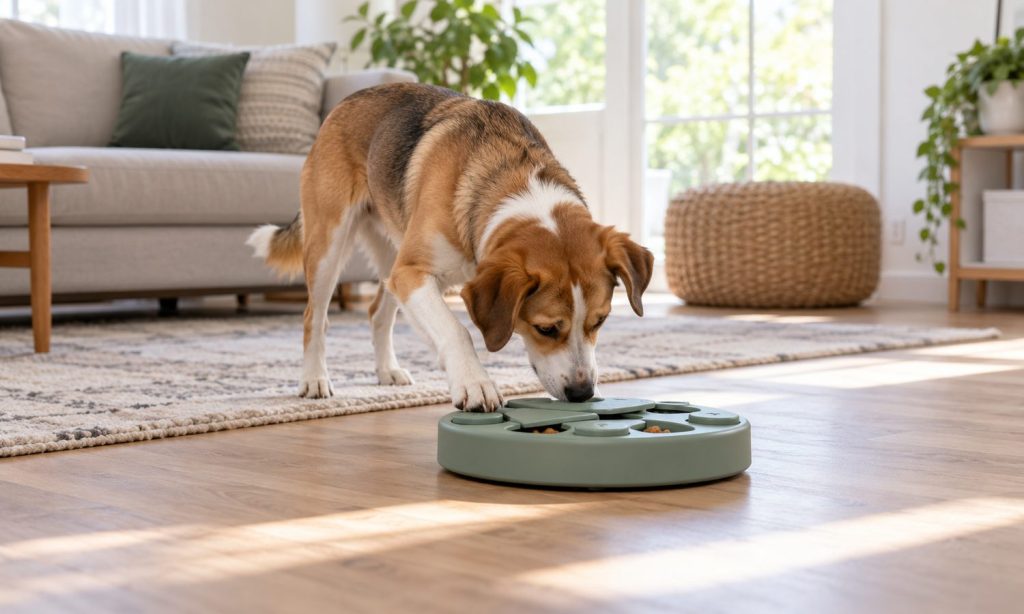
Food puzzles make a dog work to find or release kibble or treats. They can encourage sniffing, nudging, and problem solving. Choose a design that is simple enough for your dog to use without forceful biting. Check whether moving pieces can detach and whether the toy is easy to clean. If the toy dispenses food through openings, make sure the openings are appropriate for the food size and do not trap the dog’s mouth or paws.
Use a portion of your dog’s regular food when it suits the dog’s diet. Count treats and food in toys toward the day’s overall intake. If you want to understand timed or automatic food release, our separate guide to automatic treat dispensers for dogs covers that category. The key choice here is whether an unattended device is appropriate for your dog and home.
Lick and chew activities
Licking or chewing can occupy some dogs, but an item’s suitability depends on how the dog handles it. A dog who gnaws gently may use a durable, correctly sized toy differently from a dog who bites off and swallows pieces. Follow the toy’s current instructions, check the material, and remove it if it becomes cracked, split, or small enough to swallow.
Electronic or motion-based toys
Some toys move, light up, make sounds, or respond to a dog’s actions. These features may interest certain dogs and worry or overexcite others. Look for accessible batteries, loose panels, small attachments, cords, or any moving part that could pinch or catch. Test sounds and motion while you are present. Do not leave a powered toy with a dog unless you have confirmed that it is designed for that use and your dog interacts with it safely.
Check construction and possible hazards
Inspect the whole toy before each use. Look for weak seams, cracks, rough edges, loose pieces, fraying, damaged wiring, exposed batteries, or parts that could be pulled off. Choose an item that can withstand the way your dog actually plays. “Durable” is not a guarantee, so observe the dog and replace a worn toy.
Avoid toys with small components that can come loose, long strings or cords that could tangle, or openings that could trap a jaw, paw, or tongue. Remove packaging, tags, and attachments before use. If food is involved, check ingredient suitability and storage directions. Do not use a food item that is unsafe for your dog or conflicts with a veterinary diet.
Supervision is especially important when a toy is new, when your dog chews hard, or when a toy has multiple parts. Pet-safety guidance recommends choosing the right size and removing damaged items. A toy that has passed a few supervised sessions may still need regular checks. If you are uncertain about a design, keep it for play when you are home and choose a simpler, proven activity for short absences.
Test a toy before leaving your dog alone with it
Introduce the toy while you are present. Let your dog investigate it without pressure, then watch how they use it. Check whether the dog licks, sniffs, nudges, chews, or tries to tear it apart. Observe the toy after the session for damage, missing pieces, or food trapped where it cannot be cleaned.
Repeat the test over several calm sessions. A toy is not ready for independent use just because it survived one short play period. Notice whether your dog can stop and leave it alone when finished, whether they become possessive, and whether they show signs of frustration. Keep first trials short and easy.
Next, test a brief separation while you remain close enough to check on your dog. If possible, use a camera to observe what happens after you leave the room or step outside. Some dogs stop using a toy when their person is away; others become more agitated rather than engaged. The useful question is not whether the toy looks appealing to you, but whether your dog can use it safely and settle afterward.
If your dog ignores a toy when alone, do not keep buying more in the hope that one will solve the problem. Try a different type of enrichment when you are home, or offer a familiar activity only if your dog has used it safely. Individual owner experiences vary, so use direct observation of your dog rather than assuming that another dog’s favorite will suit yours.
Consider food, cleanup, and your home setup
Food-filled toys should match your dog’s regular diet and any veterinary guidance. Avoid adding ingredients that may not suit your dog. Use a measured portion to avoid unintentionally adding too many calories, and account for the toy’s food in the daily feeding plan. Wash food-contact surfaces according to the manufacturer’s directions and let them dry before storing.
Think about where your dog will use the toy. Choose a clear, dog-proofed area away from cords, trash, small household objects, and items the dog might chew. A soft mat can keep a rolling toy from traveling under furniture, but remove the mat if your dog chews fabric. Leave fresh water accessible and make sure the toy does not block a doorway or resting spot.
A toy may be most useful before you leave or during a short practice separation, rather than for the full time you are away. Plan for the dog’s needs beyond play, including a chance to exercise, eliminate, rest, and receive appropriate care. If an absence is longer than your dog can comfortably manage, enrichment alone is not a substitute for a suitable break or caregiver.
When a toy is not the right answer
A toy may not help if your dog is distressed when alone. Barking, pacing, drooling, attempts to escape, destruction near exits, or inability to settle can indicate a problem beyond boredom. A dog may also ignore food when worried. Veterinary behavior guidance recommends observing a dog while alone, because behavior that happens after departure may not be visible when you return.
If you see distress or unsafe chewing, remove the toy and avoid leaving your dog with it unsupervised. Contact your veterinarian or a qualified, reward-based behavior professional for individualized help. Do not punish behavior that occurs while you are away; the dog may be frightened or unable to cope, and punishment does not explain what is causing it.
If the dog simply prefers resting, that can be normal. A home-alone toy is optional. Provide safe choices, notice what your dog enjoys, and let calm rest count as a valid way to spend time. Enrichment should support your dog’s well-being rather than create pressure to keep them busy every minute.
Common mistakes to avoid
- Leaving a new toy without a trial: First watch how your dog uses it while you are present.
- Assuming “interactive” means safe alone: Some toys need supervision or a person to operate them.
- Ignoring chewing style: A dog who destroys toys may need safer, supervised activities.
- Making the puzzle too difficult: Start with an easy task and adjust based on your dog’s response.
- Using food without accounting for it: Count toy rewards as part of your dog’s daily food.
- Expecting a toy to fix separation distress: Watch your dog’s behavior and seek professional advice if distress appears.
Frequently Asked Questions
Can I leave any interactive toy with my dog while I am away?
No. Test a toy under supervision first and leave it only if your dog uses it safely, the item is designed for that use, and it remains intact. Some toys are for supervised play only.
Are food puzzles good for dogs home alone?
They may suit some dogs, especially if the dog already uses the puzzle calmly. Start with an easy design, use an appropriate food portion, and observe your dog before relying on it during an absence.
What if my dog ignores the toy when I leave?
Your dog may prefer resting, may not understand the toy, or may feel uneasy when alone. Observe what happens and do not assume that a more complex toy will solve distress.
How do I know if a toy is too small?
If your dog can fit the toy fully in their mouth or swallow it, it may be too small. Follow size guidance, supervise use, and remove toys that break or shrink as they wear.
Can a toy help with separation anxiety?
A familiar food toy may enrich a calm departure for some dogs, but it does not treat separation anxiety. If your dog shows distress when alone, talk with your veterinarian or a qualified behavior professional.
Final Words
Choose an interactive toy by watching how your dog plays, checking the toy’s size and construction, and testing it under supervision before considering any alone-time use. Keep food portions sensible, inspect the item regularly, and make sure the room and the dog’s broader care plan are safe. If the dog becomes distressed or destroys the toy, stop using it alone and seek individualized guidance. To compare specific options, visit our review of the interactive toy options for dogs home alone.