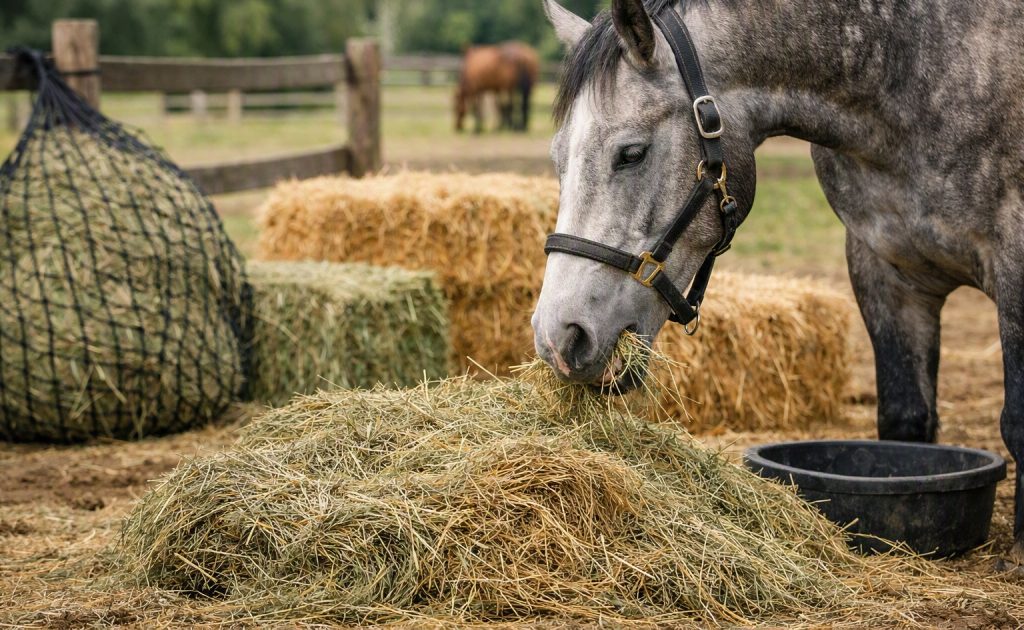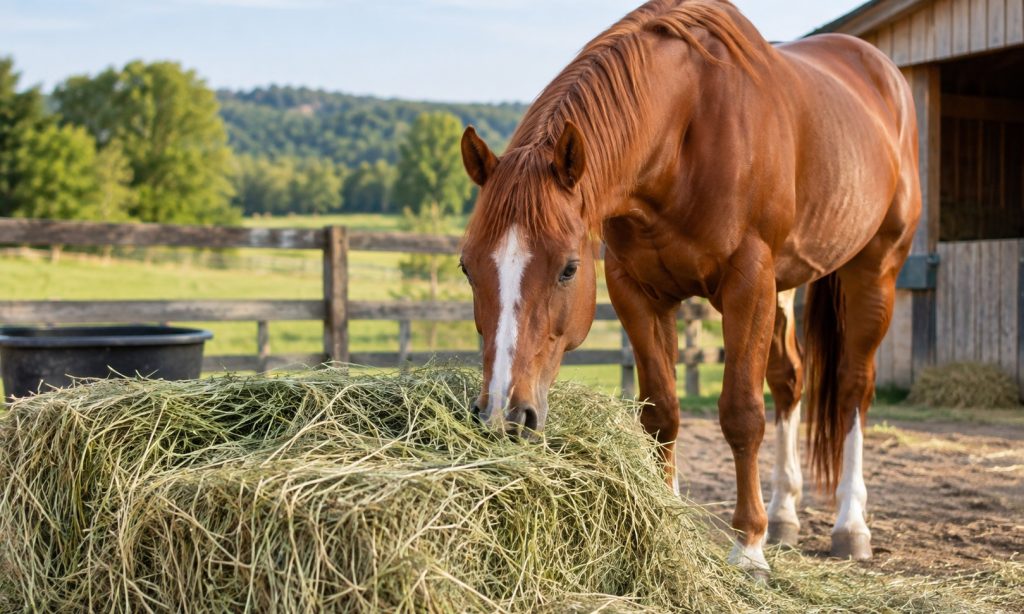
Hay portions are easier to estimate when you use a scale instead of counting flakes. Bale size, density, and moisture vary, so one flake from one stack may weigh very differently from a flake in another. A useful starting point is to estimate forage as a percentage of the horse’s body weight, then adjust the plan for body condition, workload, health, pasture access, and hay analysis. Ask your veterinarian or equine nutritionist for a target if your horse is overweight, underweight, insulin resistant, growing, or has a medical condition. If you are planning hay for horses in winter, daily portion estimates also help you calculate how much to store. Here is a simple way to measure a ration and check whether it is meeting the horse’s needs.
Estimate a starting daily amount
Many adult horses eat forage in the range of about 1.5 to 2.5 percent of body weight per day on a dry-matter basis, but the correct amount varies. Some horses need a smaller or larger amount, and some need pasture or other forage counted as part of the total. Do not treat a general range as an individual prescription. A veterinarian or qualified equine nutritionist can set a safe target based on weight, body condition, work, and health.
For a simple example, a 1,100-pound horse at a hypothetical 2 percent target would consume 22 pounds of forage dry matter per day: 1,100 × 0.02 = 22. If the hay is 90 percent dry matter, divide 22 by 0.90 to estimate the as-fed weight: about 24.4 pounds of that hay. This is an example of the calculation, not a recommendation for every 1,100-pound horse.
Weigh flakes and measure actual intake
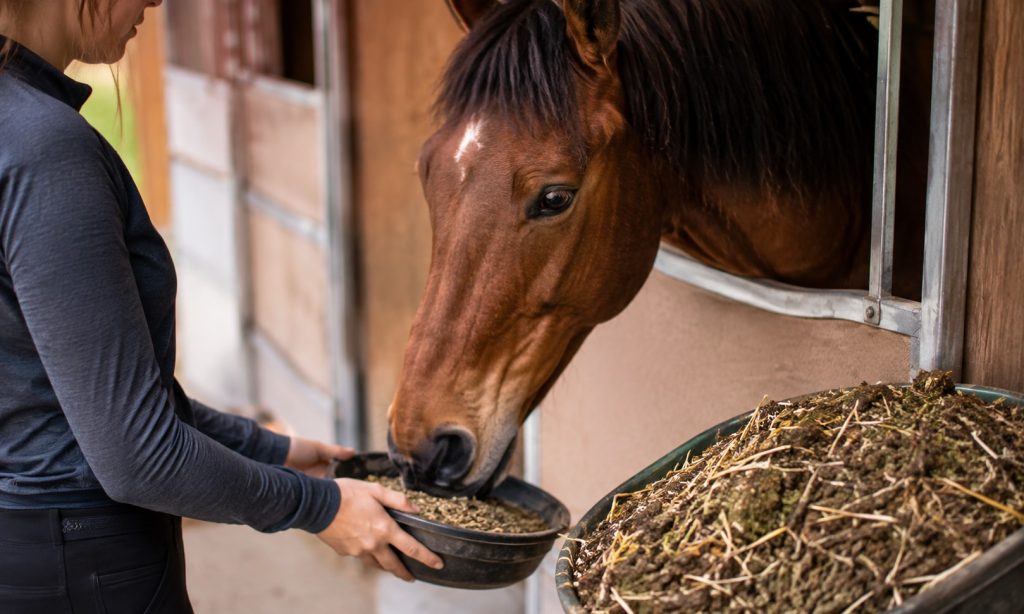
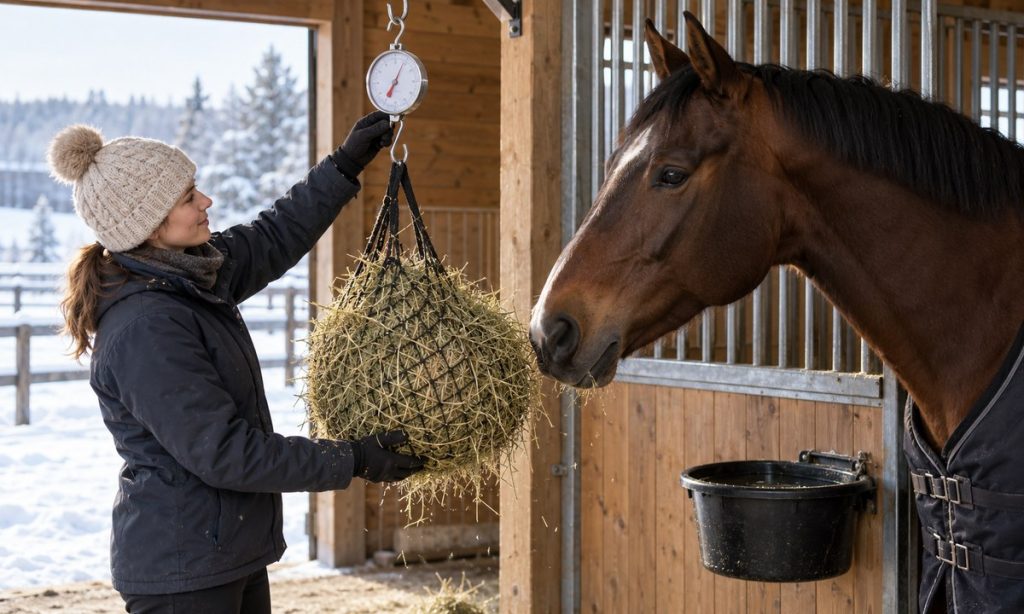
Place a hanging scale or platform scale where it can be used safely. Zero the scale with the empty hay net, bucket, or container attached. Weigh several flakes from the bale or stack and calculate their average. For example, if three flakes weigh 4, 5, and 6 pounds, together they weigh 15 pounds; the average flake is 5 pounds. A portion of about 20 pounds would be roughly four average flakes, but weigh the actual ration when accuracy matters.
Repeat the measurement when hay sources change. Flake sizes can vary within a bale, between bales, and between suppliers. If you feed by net or bag, weigh the full bag as loaded and subtract the empty bag’s weight. Mark the empty tare weight on the container if you use it often.
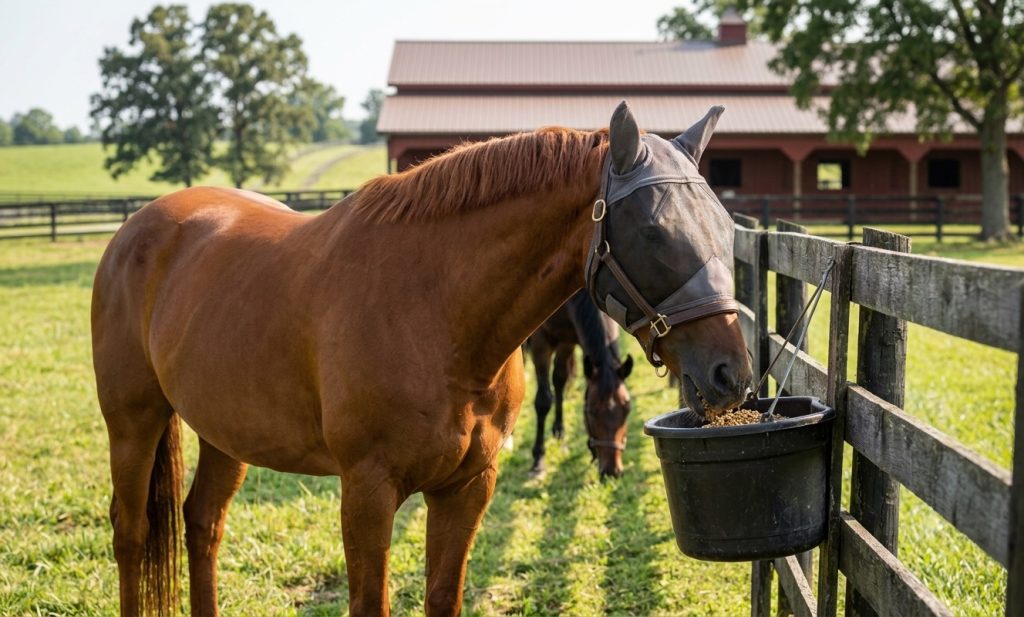
Track what the horse is offered and what remains uneaten. Hay scattered on the ground, pulled through a net, or shared with a pasture mate can make the actual intake unclear. If horses share a feeder, consider feeding separately or using a setup that lets you monitor each horse’s portion. Do not assume that the amount delivered is the amount consumed.
Count pasture and other forage
Pasture contributes to the daily forage total, although exact intake is difficult to measure. A horse grazing for several hours may consume substantial forage depending on grass availability, season, turnout, and individual behavior. Discuss how to estimate pasture intake if you are balancing hay with grazing, particularly for an easy keeper or a horse with metabolic concerns.
Include hay cubes, hay pellets, chopped forage, and complete feeds that are intended to replace forage. Read the label and ask whether the product should be counted by weight or dry matter. Keep a list of everything offered so a nutrition professional can review the entire diet instead of looking at hay alone.
Use hay analysis and body condition to refine the plan
A hay analysis can show moisture, energy, protein, fiber, minerals, and sometimes sugar and starch. The results help determine whether the hay fits the horse’s needs, but the analysis must be interpreted in context. Ask which values matter for your horse and whether a ration balancer or another source of nutrients is needed. A low-calorie hay may not provide enough of a particular nutrient, while energy-dense hay can contribute to weight gain.
Check body condition regularly and record changes over time. Look at the ribs, neck, withers, topline, and tailhead rather than relying on appearance from one angle. A weight tape can help track trends, but it is an estimate. If weight changes unexpectedly, appetite falls, manure changes, or the horse appears unwell, contact a veterinarian.
Make ration changes gradually. Sudden changes in hay type or amount can upset normal feeding routines and make it hard to know what caused a problem. Ask your veterinarian how quickly to transition, especially when moving between very different forage types or when the horse has a history of digestive or metabolic disease.
Adjust for winter and storage planning
Cold weather, wind, shelter, coat condition, and workload can affect energy needs. Hay may supply additional calories during colder periods, but do not automatically increase portions without checking body condition and the horse’s total ration. Keep fresh, unfrozen water available and monitor intake, since horses may drink less when water is very cold.
Once you have an estimated daily amount, multiply it by the number of days you are planning for. If a horse is expected to receive 24 pounds a day for 120 days, that is 2,880 pounds before accounting for waste or changes in intake. Storage conditions and hay quality matter; keep bales dry, ventilated, and away from contamination. Add a reasonable buffer for unavoidable losses, but avoid buying more than you can store safely.
Frequently Asked Questions
How many flakes of hay should I feed each day?
It depends on the weight of each flake and the horse’s individual target. Weigh representative flakes and calculate portions by pounds rather than relying on a flake count.
Is the daily percentage based on hay weight or dry matter?
Feeding guidelines may be expressed on a dry-matter basis. Hay contains moisture, so the as-fed weight may be higher. Use a hay analysis or ask a nutrition professional to convert the target.
Should pasture count toward a hay portion?
Yes, pasture contributes forage, although intake is difficult to measure precisely. Turnout duration and grass availability matter; discuss an estimate for your horse’s situation.
Can I reduce hay for a horse that needs to lose weight?
Do not make a large restriction without veterinary or nutrition guidance. The horse still needs adequate forage and a safe feeding schedule; your veterinarian can set a gradual target.
How much extra hay should I buy for winter?
Multiply the estimated daily amount by the number of days, then account for storage losses and the horse’s needs. Hay requirements can change with weather and condition, so monitor the horse and adjust with professional advice.
Final Words
To estimate daily hay portions, start with the horse’s body weight and a professional feeding target, then weigh real portions and track what is actually eaten. Count pasture and forage replacements, use hay analysis where helpful, and monitor body condition as seasons change. For winter planning, use the daily estimate to calculate storage needs and keep hay dry. When choosing hay for horses in winter, compare quality and suitability for your horse rather than choosing by bale appearance alone.