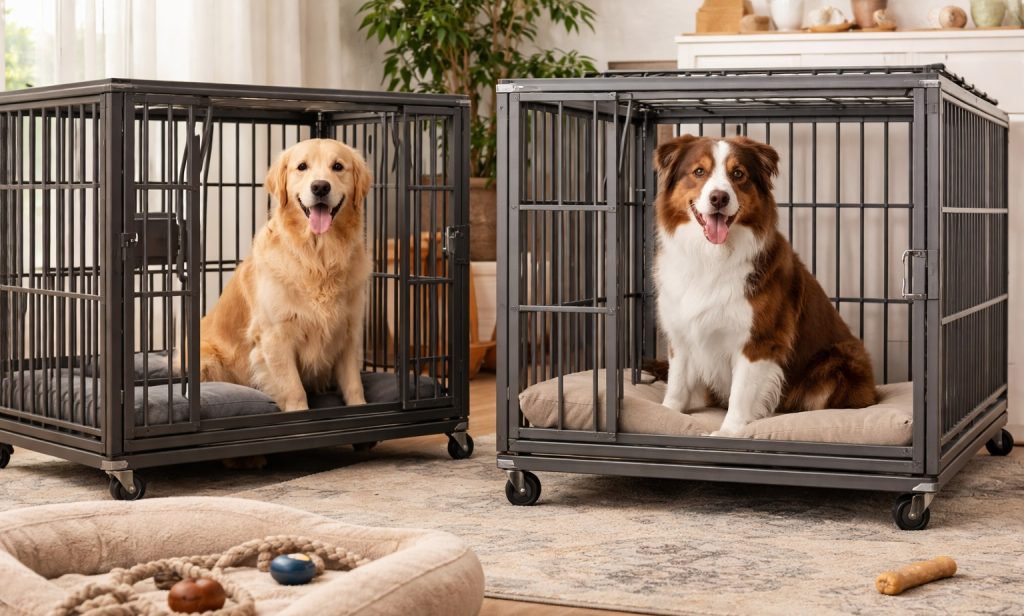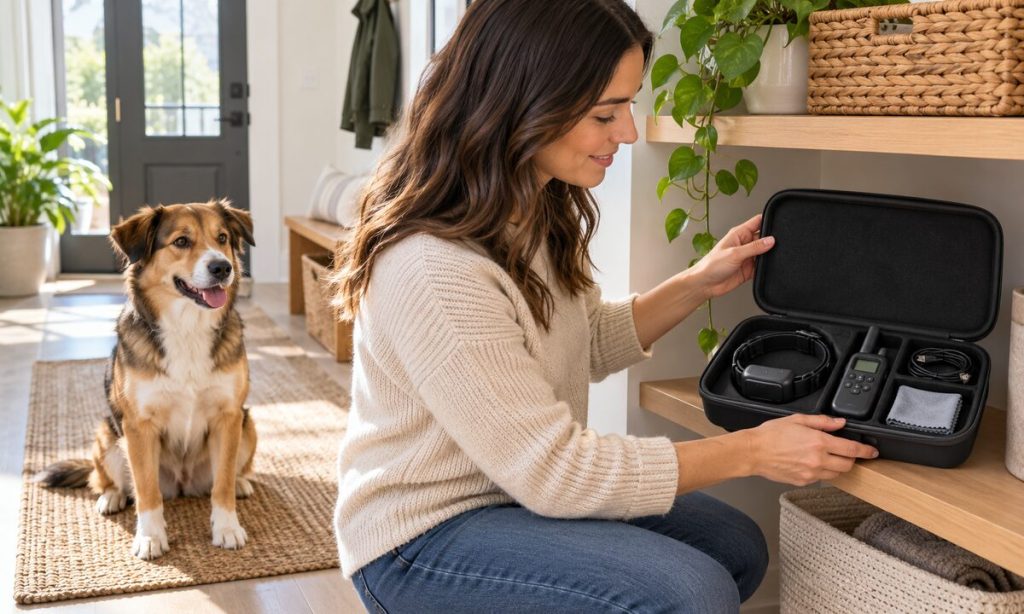
Knowing how to store a training collar for stubborn dogs safely starts with identifying the device and following its care directions. Keep equipment clean, dry, charged as directed, and out of reach of pets and children. If you use a training collar for stubborn dogs, first identify what kind you own: a flat buckle collar, head collar, vibration or sound device, spray trainer, or remote electronic collar. The parts and care instructions differ. This guide focuses on storing equipment between sessions, not selecting a correction method. Keep the manufacturer’s manual with the device, turn off electronic components before putting them away, protect charging ports and straps, and inspect everything before the next use. If a dog’s behavior is difficult to manage, a qualified reward-based trainer or veterinarian can help address the cause without relying on punishment or a device alone.
Identify every component before storing it
Lay out the receiver or collar unit, strap, handheld remote, charging cable, contact points or spray reservoir, and any removable battery. Check the model number and locate its manual on the manufacturer’s support page if the paper copy is missing. Instructions are model-specific: one device may be water resistant while its remote is not; one battery may be removable while another should stay in place; charging and long-term storage requirements can vary.
Separate the parts only as the manual allows. Keep the charger and any proprietary tools together in a labeled pouch or box so they are not confused with household electronics. Store the manual or a saved PDF beside the set. For an electronic device, write down the model and serial number and keep purchase or warranty information separately in a dry location.
Do not assume “waterproof” means that every part can be submerged, pressure-washed, or stored while wet. Follow the limits for the exact receiver and remote. Keep the device’s own manual with the set or save a copy from the manufacturer so the care, charging, and storage directions remain available.
Clean and dry the equipment after use
Turn off the receiver and remote before cleaning. Remove mud, hair, and surface dirt with the cloth or brush permitted by the manual. Many manuals call for a soft damp cloth and caution against harsh cleaners, abrasive brushes, or soaking. Use only a small amount of mild soap if the manufacturer allows it, and keep moisture away from buttons, seams, speakers, charging contacts, battery compartments, and ports.
Wipe the strap and buckle separately if they can be cleaned that way. If a spray trainer uses a reservoir, empty, rinse, or replace it only as the instructions specify. Do not improvise with household sprays or oils. After cleaning, let all pieces air-dry completely in a well-ventilated place before charging or closing them in a case. Avoid hair dryers, heaters, and direct sun unless the manufacturer explicitly permits them.
Inspect for frayed webbing, cracked plastic, loose fasteners, corrosion, residue around contact points, a damaged charging cable, or a swollen battery. Stop using a damaged component and contact the manufacturer for repair or replacement guidance. Do not tape over a split strap or attempt to open a sealed battery pack.
Prepare batteries for short or long storage
For ordinary overnight storage, switch the receiver and transmitter off and lock the keypad if the device has a lock function. This helps prevent accidental activation and unnecessary battery drain. Put the remote away from the receiver if pressing buttons could activate the collar. Keep charging cables unplugged when not in use unless the instructions say otherwise.
For several weeks or months of storage, follow the specific battery directions. Depending on the model, the manufacturer may recommend a partial charge, a full charge, removing disposable batteries, or periodic charging. Do not apply a universal percentage or calendar interval to all devices. Check the manual before charging after a long idle period and use only the specified charger and power source.
Never store a rechargeable unit with a depleted battery if the manual warns against it, and do not leave batteries in a device where leakage could damage the contacts. Keep loose batteries away from metal objects, heat, moisture, and children. Dispose of damaged or spent batteries through an appropriate local collection program; do not burn them or put a swollen battery in household trash.
Choose a safe storage place
Put the equipment in a cool, dry place away from direct sunlight, radiators, freezing temperatures, damp bathrooms, and vehicles. Extreme heat or cold can harm electronics, straps, and batteries. Avoid locations where a dog may chew the strap or cable, or where a child may find and press the controls. A labeled plastic case or fabric pouch can keep dust off, but do not seal damp equipment in an airtight container.
Coil the charging cable loosely rather than bending it tightly around the plug. Fasten straps without sharp creases and keep contact points covered if the device came with a protective cap. Store small accessories in a separate compartment so they do not scratch the receiver or become a choking hazard. Keep any remote trainer separate from everyday walking gear to avoid accidentally attaching a leash to hardware that is not designed to bear leash tension.
Check the collar before the next session
Before use, inspect the strap, buckle, receiver housing, battery status, and charging port. Test functions according to the manual, away from the dog, using any test light or test mode supplied by the manufacturer. Do not place a malfunctioning or untested device on your dog. Confirm that the collar fits and is used only for the period and purpose stated in its instructions. Remove it when the session ends; do not leave a training device on an unattended dog.
Look at your dog’s neck and behavior when removing any worn collar. If you notice redness, soreness, hair loss, or distress, stop using the device and speak with a veterinarian. For a dog described as stubborn, repeated escalation may make fear or frustration worse. Work on clear cues, reward timing, and manageable distractions with a qualified professional. A collar is not a substitute for supervision or a training plan.
Frequently Asked Questions
Should I leave a training collar turned on between sessions?
No. Turn off electronic units when not in use and follow the manual’s instructions for locking controls or disabling the receiver. This reduces battery drain and accidental activation.
Can I store a training collar in the bathroom?
A damp bathroom is usually a poor storage location for electronics and batteries. Choose a dry, temperature-stable place and follow the model’s storage directions.
Can I use any USB charger with a remote collar?
Use only the charger and power source approved in the device manual. Connector fit alone does not confirm electrical compatibility.
Do I need to charge the battery before putting the collar away?
Check your model’s manual. Battery storage recommendations differ, and some manufacturers give special instructions for longer periods without use.
What should I do if a dog’s neck looks irritated?
Remove the device and stop using it. Contact your veterinarian if redness, sores, discomfort, or other changes persist or concern you, and seek qualified training support before resuming.
Final Words
To store a training collar for stubborn dogs safely, identify the model, follow its own cleaning and battery instructions, dry it fully, switch off electronic parts, and keep the set away from heat, moisture, children, and chewing pets. Inspect and test it before another session, and stop using damaged equipment or any device that appears to distress or irritate your dog. Pair equipment with patient, humane training guidance tailored to your dog’s behavior.