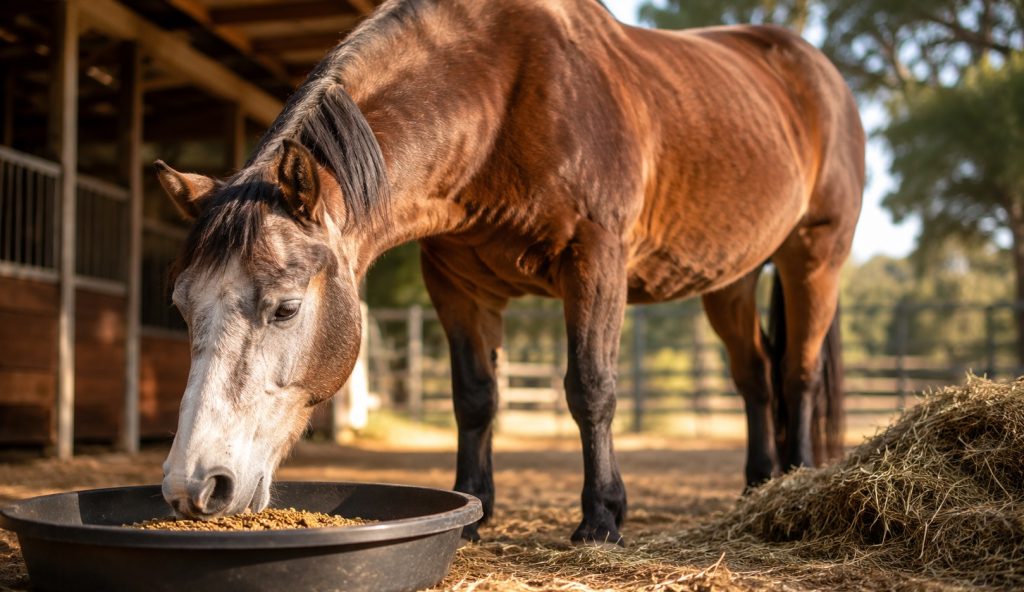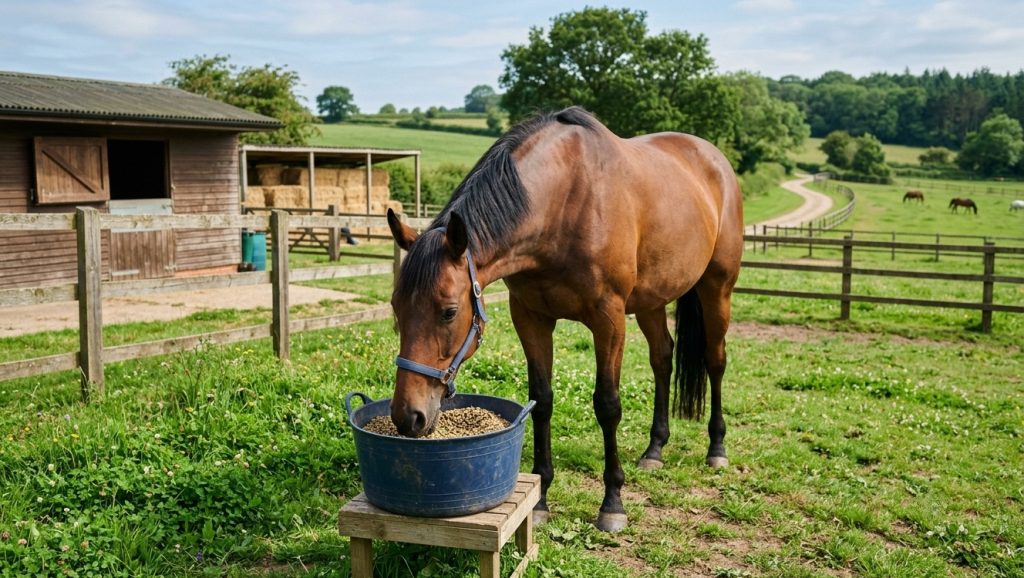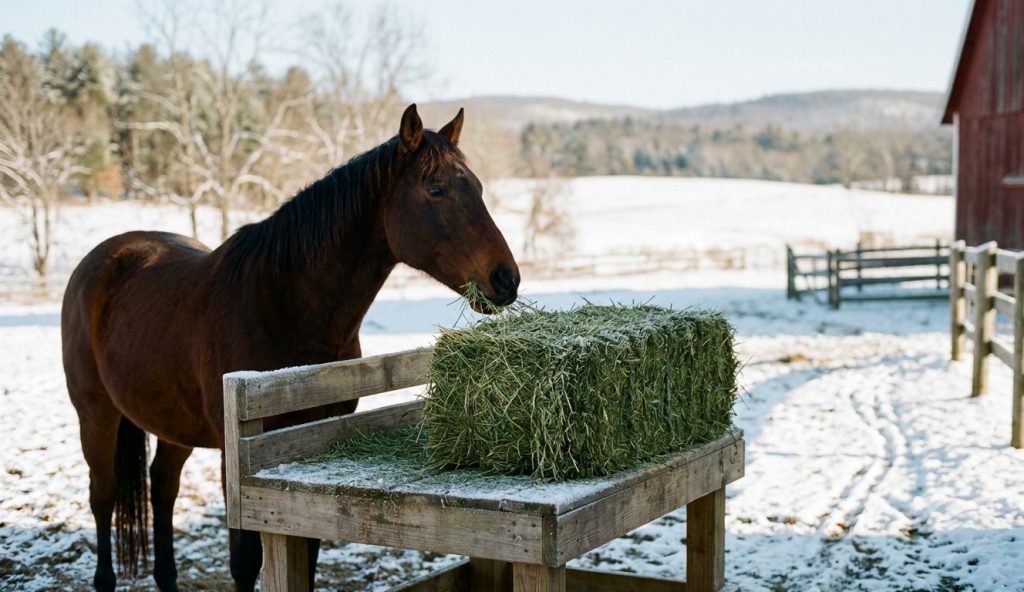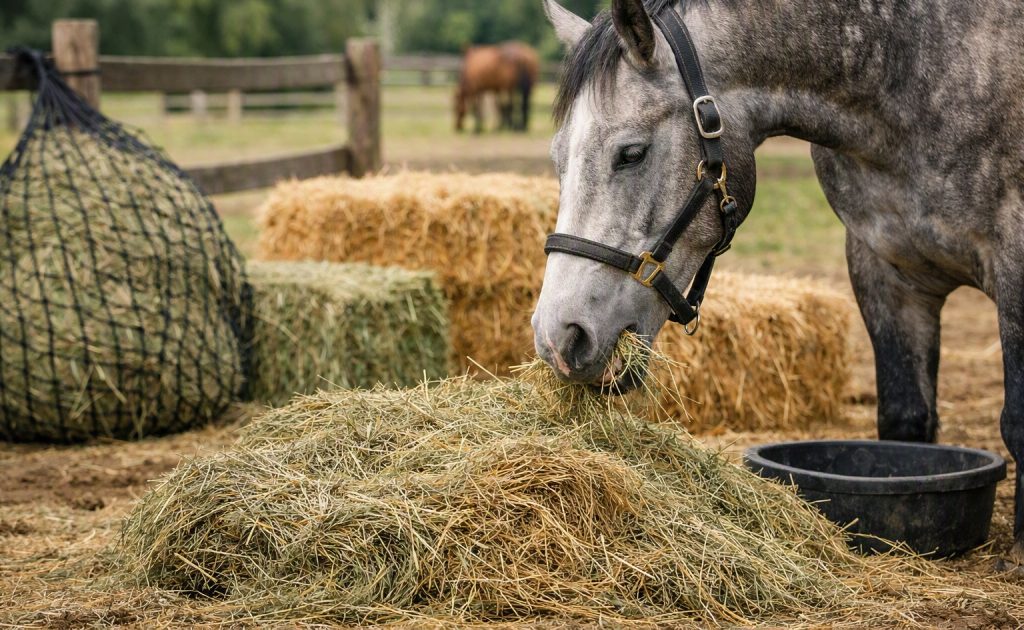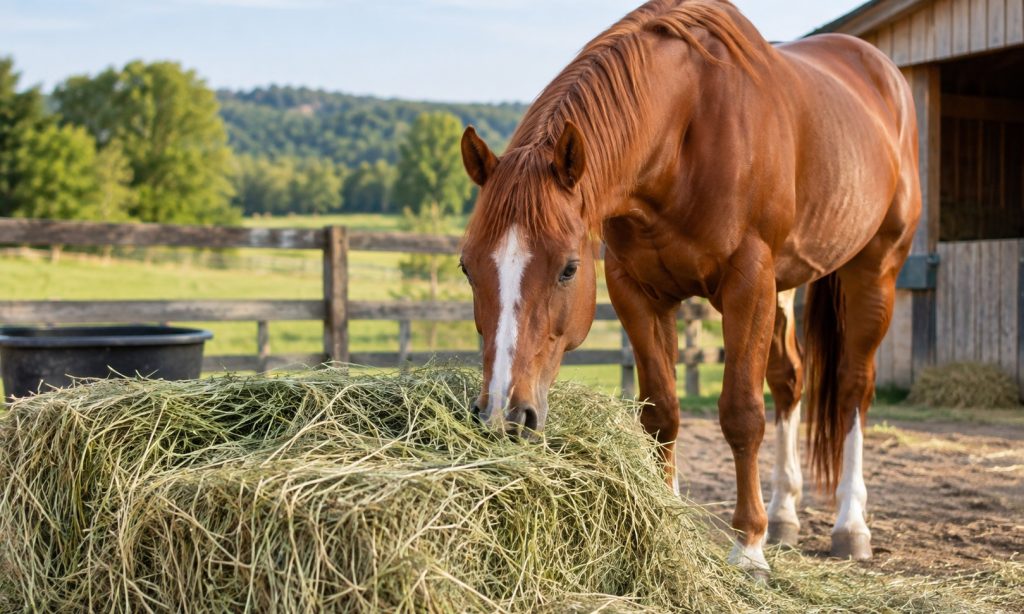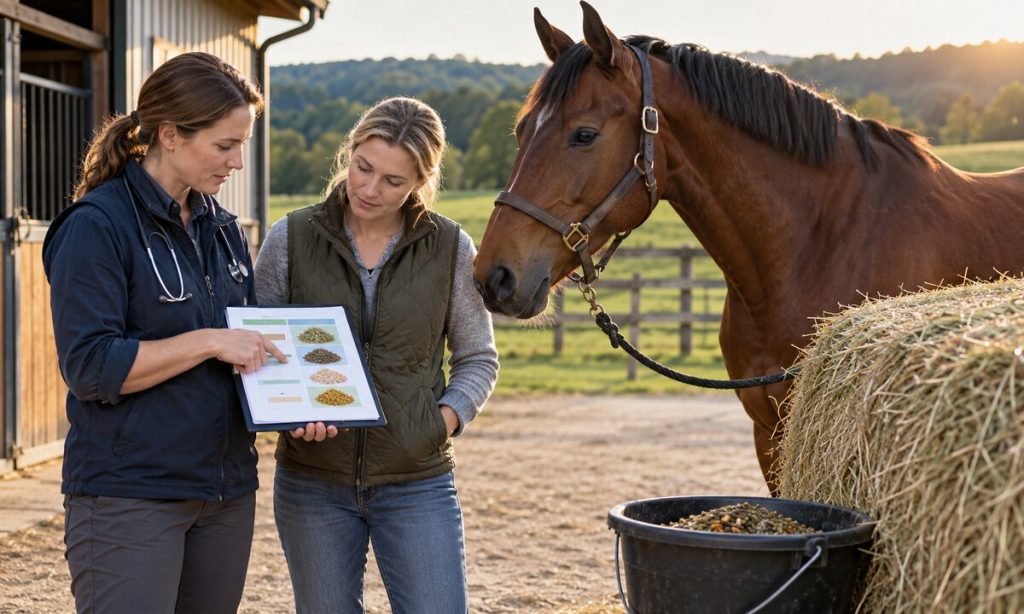
Winter can change the amount and type of forage available, but switching a horse to a new hay or feed should be planned around the individual horse rather than the calendar alone. A gradual transition gives you time to observe appetite, manure, body condition, and comfort while the horse adjusts to a different forage. The change may be from pasture to hay, one hay lot to another, or a current ration to a winter plan. If you are learning about hay for horses in winter, remember that quality, nutrient needs, health history, and access to water matter alongside season. This guide explains how to organize a measured change and when to involve your veterinarian or equine nutrition professional. A written transition schedule can help everyone feeding the horse stay consistent.
Plan before the current forage runs out
Whenever possible, obtain the replacement hay while a supply of the familiar forage remains. Compare the lots and record when the old hay will run out. Hay can differ in plant species, maturity, texture, moisture, smell, and nutrient profile, even when it looks similar. If the horse has a metabolic condition, a history of laminitis or colic, difficulty chewing, or a special feeding plan, discuss the specific hay and transition schedule with the veterinarian before changing it.
Ask whether a hay analysis or ration review would help. The correct amount and type depend on the horse’s size, age, workload, body condition, health, and the forage’s nutrient content. Avoid assuming every horse needs more grain when the weather turns cold; feeding plans are individual. Do not make a restrictive diet change for a horse with a medical condition without professional advice.
Check storage, delivery, and feeding logistics too. Keep the new hay dry and protected from mold, dust, manure, and pests. Make sure the horse has clean water that remains accessible in cold weather and enough suitable forage throughout the transition.
Introduce the new forage in small steps
Follow the schedule provided by the horse’s veterinarian or nutrition professional. A common general approach is to replace only a portion of the current forage at a time over a week or longer, but the right pace depends on how different the hays are and the horse’s health. If the new hay is very unlike the old one, or the horse has a sensitive history, ask whether the change should be slower.
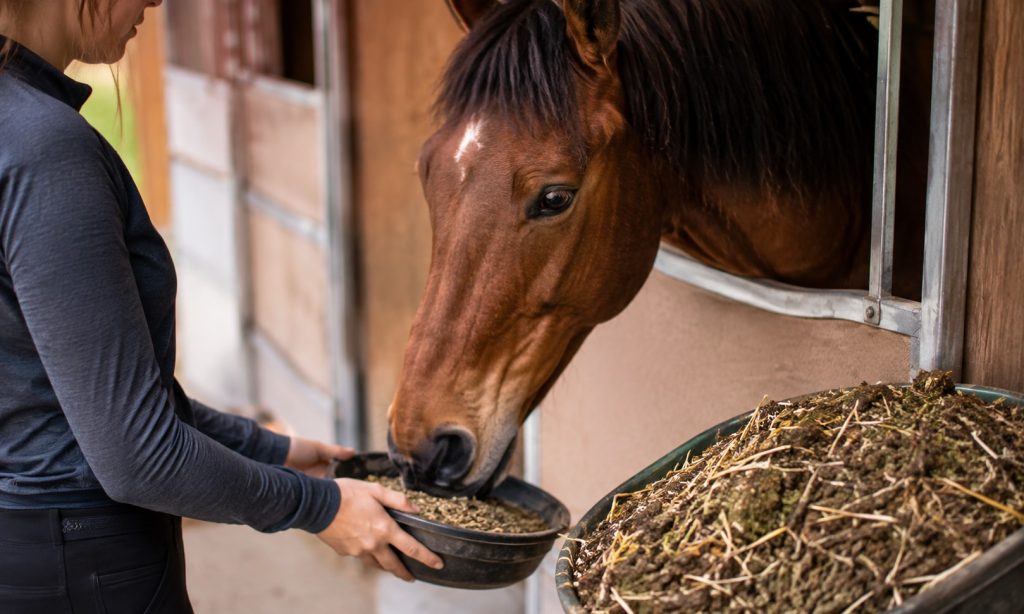
Measure portions consistently rather than estimating by flake count when bales differ in size and density. If you cannot weigh each portion, use the same method and container each day and keep notes. Increase the new hay while reducing the old one according to the agreed plan. Do not suddenly remove all familiar forage because a new delivery arrived.
If moving from pasture to hay, start offering the new hay while pasture is still available, when practical, and adjust turnout as directed. Seasonal pasture growth, access, and nutritional content vary. Do not leave a horse without forage while waiting for a transition to finish; ask the veterinarian how to maintain safe forage access.
Keep other changes steady where possible
During the transition, avoid introducing several unrelated changes at once. If the horse also needs a new concentrate, supplement, turnout schedule, or workload, coordinate the timing with the veterinarian. Sometimes changes cannot be avoided, such as a sudden hay shortage; document what happened so the care team can interpret later signs.
Do not mix a new hay with a feed or supplement in a way that hides refusal. Check that the horse actually eats the intended amount. In a group setting, monitor each horse separately where possible, since dominant herd mates may take forage or leave a horse with less access.
Monitor the horse each day
Record how much of each forage was offered and eaten, appetite, manure consistency and frequency, water access, activity, and behavior. Note any new coughing, nasal discharge, or dust sensitivity around hay, and stop feeding visibly moldy or contaminated forage. Observe the horse at consistent times and describe what you see rather than diagnosing the cause.
Check body condition regularly, especially in winter when a heavy coat can hide weight loss or gain. Use the same method each time and keep dated notes or photos from the same angle. A weight tape can help track direction but is an estimate. If weight change is a concern, share the record with the veterinarian rather than adjusting the ration substantially on your own.
Keep a transition log with the date, proportions of old and new forage, any other ration changes, and observed signs. This is more useful than relying on memory if appetite or manure changes several days later.
Respond to problems safely
If the horse refuses the new hay, develops a persistent change in manure, or seems uncomfortable, contact the veterinarian for advice about whether to slow, pause, or modify the transition. Do not assume every change is caused by the hay; weather, water intake, turnout, dental problems, illness, and other feed changes may also matter.
Treat colic signs, severe diarrhea, marked appetite loss, weakness, or rapid deterioration as reasons for prompt veterinary contact. Follow the veterinarian’s instructions and do not wait for the transition schedule to end. Keep the hay label, lot information, and any feed analysis available for discussion.
If the horse cannot chew hay comfortably or leaves long stems behind, do not simply switch to a different texture without checking the cause. Dental assessment or an alternative forage plan may be needed. For horses with insulin resistance, laminitis, or other medical concerns, confirm that the winter forage still fits the established plan.
Frequently Asked Questions
How quickly should I change a horse to new hay?
Use the schedule from your veterinarian or nutrition professional. Many changes are made gradually over a week or longer, with a slower pace if the horse or hay warrants it.
Can I switch hay when the old supply is gone?
If a shortage forces an abrupt change, contact your veterinarian for guidance and monitor the horse closely. Plan ahead when possible.
Should I change grain at the same time as hay?
Avoid multiple changes unless the care plan calls for them. Coordinate timing with the veterinarian so you can track the horse’s response.
What should I monitor during the transition?
Record appetite, forage intake, manure, water access, body condition, and any change in comfort or behavior.
When should I call the veterinarian?
Call promptly for colic signs, severe or persistent diarrhea, marked appetite loss, weakness, or any rapidly worsening condition.
Final Words
Plan the new forage before the old supply runs out, change it in measured steps, and keep notes on what the horse eats and how it responds. Maintain access to water and appropriate forage, and involve your veterinarian when health conditions or concerning signs are present. When choosing hay for horses in winter, match the plan to the individual horse and the actual forage rather than applying a one-size-fits-all ration. A careful transition makes it easier to notice changes early and discuss them with the care team.
References
- Ten things you should know about feeding the mature horse, University of Minnesota Extension.
- Caring for your horse in the winter, University of Minnesota Extension.
- 10 Tips for Preventing Colic, American Association of Equine Practitioners.