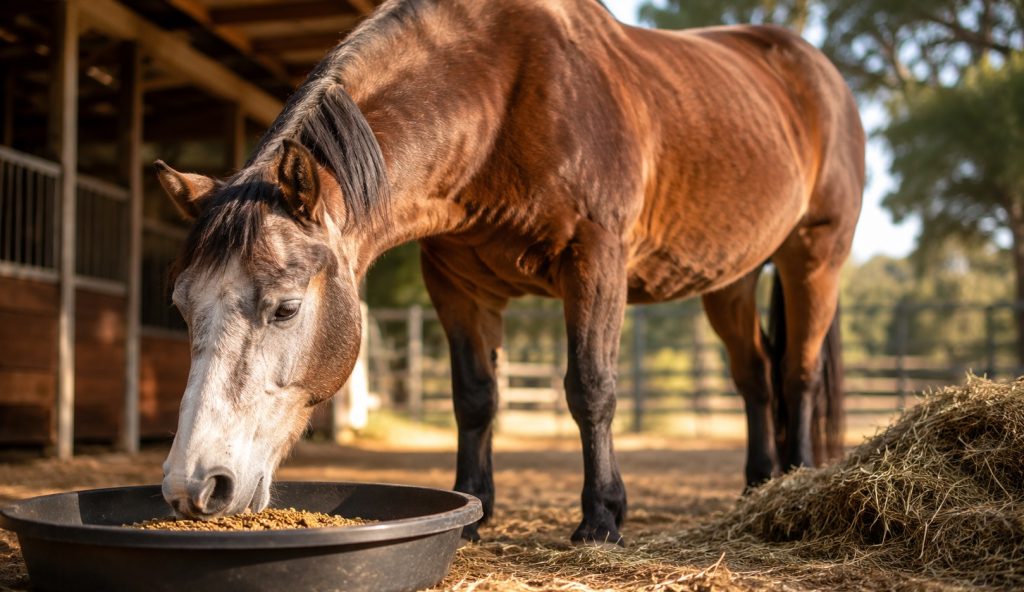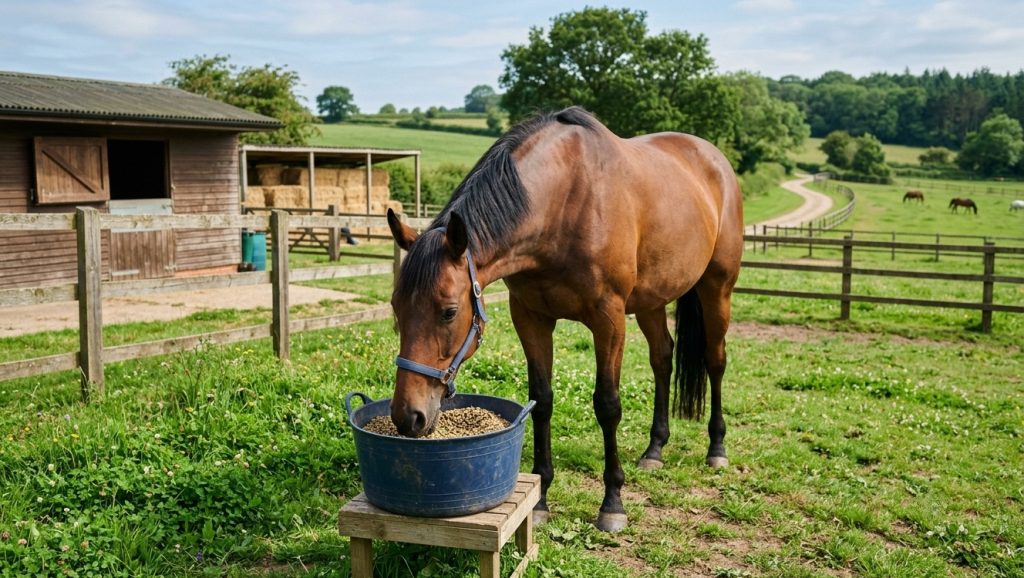
When a horse starts a gut health supplement, the first few days can feel full of small signals: appetite, manure, water intake, attitude, or willingness to eat a meal. A consistent record helps you and your veterinarian distinguish a meaningful pattern from normal day-to-day variation. It also keeps the supplement from becoming a substitute for evaluating a horse with pain, diarrhea, weight loss, or other concerning signs. If you are reviewing a gut health supplement for horses, treat the label and veterinary plan as the starting point, then monitor the whole horse over time. This guide offers a simple, practical way to track changes after a veterinarian discussion, while recognizing that a diary cannot diagnose digestive disease or prove that a supplement caused an improvement.
Agree on a baseline and a review date
Before the first serving, write down why the supplement was discussed and what the veterinarian hopes to learn or support. Ask which signs matter for this horse, how long to observe, and when to check back. A product may be considered for a specific diet or management context, but evidence for equine digestive supplements varies by ingredient and use. Avoid setting a promise such as “the manure will normalize in a week” unless your veterinarian has given that expectation for this case.
Record a baseline for several ordinary days if your veterinarian says it is safe to wait. Use the same notes each day: appetite, usual forage and concentrate amounts, water access and intake if measurable, manure consistency and frequency, activity, and any relevant behavior. Also note turnout, workload, travel, weather, medications, dental care, and changes in hay or pasture. These details matter because multiple factors can influence digestion and attitude.
If the horse is already unwell, do not delay a veterinary call to complete a baseline. A diary is useful alongside care, not a gate you must pass before contacting the veterinarian.
Record the supplement exactly as given
Save or photograph the full label, ingredient panel, lot number, and directions. Record the date it was introduced, the amount actually offered, whether the horse ate it, and any missed or changed servings. Do not change the amount, combine products, or stop prescribed treatment based on a diary entry without checking with the veterinarian. If the label gives a storage instruction, follow it and keep the container away from feed contamination, moisture, and children.
Keep the rest of the ration and routine as stable as practical during the observation period. Do not withhold needed forage or water to make a result easier to interpret. If management must change, note what changed and when. If more than one diet or supplement change is made at once, it becomes harder to tell which change may be related to a later observation.
Track a small set of consistent signs
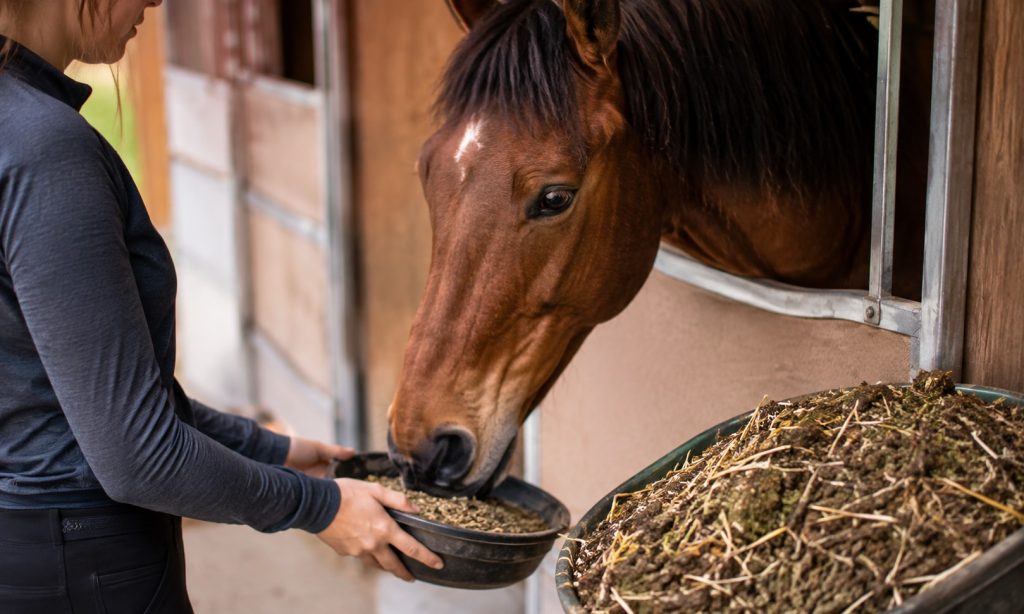
Choose measures you can observe reliably. For example, note how much of each meal was eaten, whether the horse finishes normally, and whether appetite differs from baseline. Describe manure in plain, consistent terms, such as formed, softer than usual, watery, unusually dry, or reduced in amount. Avoid trying to diagnose a specific condition from manure appearance alone.
Record water availability and any noticeable change in drinking. If you can measure water safely and consistently, note the amount and conditions; otherwise write “normal for this horse,” “less noticed,” or “uncertain.” Include energy, comfort, interest in work, and any change in behavior around meals. Keep entries factual: “left half of breakfast” is more useful than “seemed off.”
A weekly weight or body-condition record may be helpful if weight change is part of the veterinarian’s goal. Use the same method each time and avoid overinterpreting daily fluctuations. Photos from the same angle and distance can support visual comparison, but they do not replace an examination or objective measurements requested by the veterinarian.
Use a simple log and look for patterns
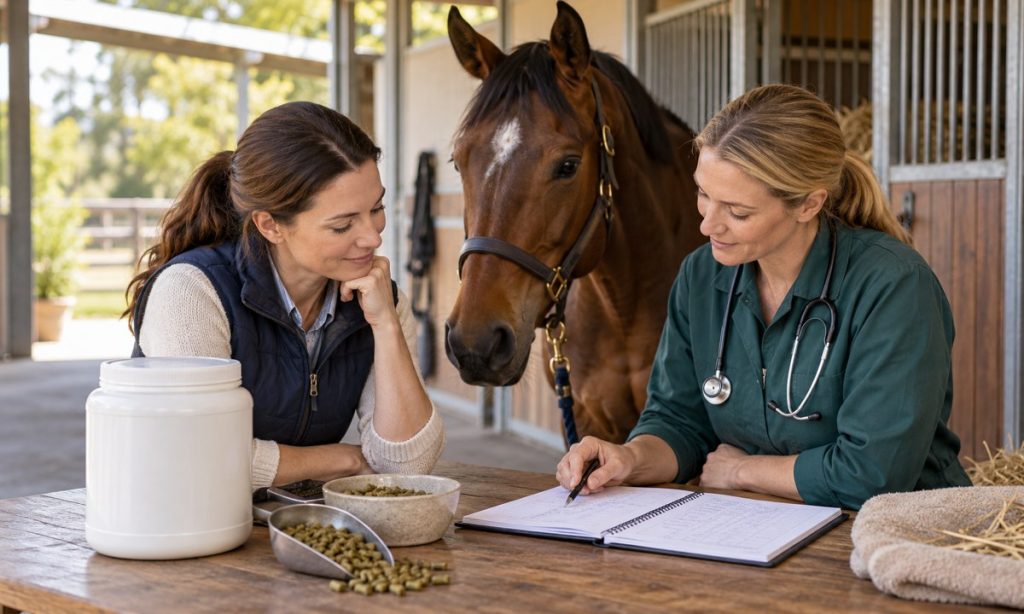
A notebook or spreadsheet is enough. Make one row per day and keep the headings consistent: date, supplement offered and eaten, feed changes, appetite, manure, water, activity, behavior, and notes. Use short entries and mark unusual events such as hauling, a new turnout group, a deworming treatment, or a storm. Bring the log to the planned follow-up rather than relying on memory.
Review trends over several observations instead of reacting to one isolated day. Ask whether a change is repeated, whether it began before or after the supplement, and whether another event could explain it. Public owner discussions about digestive products often describe different timelines and perceived effects; those are personal experiences, not controlled evidence. The research literature also notes that evidence and outcomes differ among products and study settings.
Do not label a change as a supplement effect simply because it followed introduction. The horse may have experienced a feed, workload, seasonal, medication, or social change at the same time. Your veterinarian can help interpret whether the pattern is meaningful and whether the plan needs adjustment.
Know which changes need prompt veterinary advice
Contact your veterinarian promptly if the horse develops colic signs, persistent diarrhea, markedly reduced appetite, fever, weakness, dehydration concerns, or a sudden decline. Follow any emergency instructions already given for this horse. Do not wait for the planned supplement review if signs are severe or worsening.
Also contact the veterinarian if you suspect an adverse reaction, the horse refuses the supplement, or you are unsure whether to continue it. Keep the package and note the dose and time given. Do not add another digestive product to counter a problem without veterinary guidance. If the horse receives medication or has a diagnosed gastrointestinal condition, tell the veterinarian about every supplement and ration change.
Review the plan with your veterinarian
At follow-up, bring the log, product label, and a list of all feed, supplements, and medications. Ask whether the observed changes fit the original goal, whether the observation period is adequate, and whether any other assessment is needed. Discuss what to do if there is no clear change, if a symptom improves and returns, or if the horse’s routine changes again.
Your veterinarian may recommend continuing, changing, or stopping the supplement, or focusing on another part of the horse’s management. Follow that direction rather than extending a trial indefinitely. If the horse is part of a boarding or training program, coordinate the notes with the people who feed or handle the horse so the record reflects what actually happened.
Frequently Asked Questions
How long should I track a gut health supplement?
Ask the veterinarian who discussed it. The appropriate observation window depends on the reason, product, and horse.
Should I change the feed at the same time?
Only as directed. Keeping other factors stable can make observations easier to interpret, but do not delay a needed diet change.
What should I write down each day?
Record what was offered and eaten, appetite, manure, water, activity, behavior, and any changes in routine or health.
Can a log show that the supplement worked?
A log can show timing and patterns, but it cannot prove cause. Your veterinarian can interpret the record with the horse’s history and examination.
When should I call the veterinarian before the review date?
Call promptly for colic signs, persistent diarrhea, reduced appetite, weakness, or any severe or worsening change.
Final Words
Start with a clear baseline, record the exact product and routine, and track a few consistent signs rather than relying on memory. Keep notes factual, include other changes, and contact your veterinarian about concerning symptoms or uncertainty. A measured record can make a follow-up discussion more useful, but it cannot identify the cause of a digestive problem on its own. When considering a gut health supplement for horses, use the veterinarian’s goal and review date to guide what you monitor and what you do next.
References
- Probiotic Use in Horses: What Is the Evidence for Their Clinical Efficacy?, Journal of Veterinary Internal Medicine.
- Pre, Pro, and Postbiotics: Supplementing the Gut Microbiome, Penn State Extension.
- The Safety, Tolerability and Efficacy of Probiotic Bacteria for Equine Use, review article indexed by PubMed.