If you have shared your home with cats for any length of time, you already know that your daily routine includes an unsettling amount of litter box inspection. In my 15 years of keeping pets—caring for everything from hyperactive kittens to slow-moving seniors—I have spent more time analyzing cat litter than I care to admit. You check for stool size, consistency, and daily frequency. So when your usually punctual feline suddenly stops leaving their daily deposits, panic sets in quickly.
Cat constipation is a widespread issue, ranging from a minor digestive hiccup to a life-threatening crisis. The single most important question every pet owner eventually asks is: When Is Cat Constipation an Emergency?
Knowing the difference between a temporary sluggish bowel and knowing cat constipation when to worry can save your cat’s life. Below, I break down the exact red flags, physical signs, underlying causes, and practical solutions I have learned over a decade and a half of living alongside cats.
Understanding Feline Constipation: What Is Normal?
Before identifying an emergency, we need to establish what healthy feline bowel habits look like. A normal adult cat passes stool once or twice every 24 hours. Healthy feline stool is dark brown, firm yet pliable (like firm modeling clay), and formed into neat segments.
Constipation occurs when waste material moves too slowly through the colon. As the colon continues to extract water from the stool, the waste becomes dry, hard, and painful to evacuate.
Mild Constipation vs. Obstipation vs. Megacolon
Understanding the progression of feline constipation helps you gauge the urgency of the situation:
| Condition Stage | Clinical Definition | Colon Status | Risk Level |
| Mild Constipation | Infrequent or difficult passage of stool over 24–36 hours. | Stool is hardened, but gut movement continues. | Low to Moderate (Requires monitoring) |
| Obstipation | Severe blockage where the cat cannot pass fecal matter independently. | Colon is packed with dry, immovable fecal mass. | High (Requires immediate vet intervention) |
| Megacolon | Chronic dilation where colon muscles lose ability to contract. | Irreversible nerve/muscle damage to the colon wall. | Critical (Requires long-term medical or surgical care) |
If your cat skips a single day but remains energetic, eats eagerly, and acts normally, it is usually not a full emergency yet. However, your monitoring duty begins immediately.
Key Signs of Constipation in Cats
Cats are masters at masking pain. It is an evolutionary defense mechanism to prevent predators from spotting vulnerability. Because of this, the signs of constipation in cats are often easy to miss until the condition worsens.
FYI, if you spot your cat displaying any of the following symptoms, their digestive tract is already struggling:
-
Repeated Litter Box Trips: Stepping into the box, circling, posturing, and stepping back out without leaving anything.
-
Small, Dry Pellets: Dropping hard, marble-like nuggets instead of smooth, moist logs.
-
Crying or Vocalizing: Meowing, yowling, or growling while attempting to pass stool.
-
Unusual Posturing: Hunching with obvious abdominal strain for several minutes at a time.
-
Over-Grooming Hindquarters: Licking the tail base or perineal region excessively due to local pressure and discomfort.
Cat Constipation When to Worry: Mild vs. Emergency Comparison
Determining cat constipation when to worry depends heavily on accompanying physical signs. A cat that hasn’t pooped in 24 hours but is playing with toys is in a very different position than a cat that hasn’t pooped in 48 hours and is vomiting.
Use this standard comparison table to assess your cat’s current condition:
| Clinical Metric | Mild Discomfort (Watch & Wait) | Emergency Red Flag (Go to ER Vet) |
| Time Without Stool | 24 to 36 hours | 48+ hours |
| Appetite Status | Eating normally or slightly picky | Complete loss of appetite (Anorexia) |
| Energy & Behavior | Active, alert, greeting family | Hiding, lethargic, weak, or unresponsive |
| Vomiting | None | Repeated vomiting of food, bile, or foam |
| Abdominal Touch | Soft, non-painful abdomen | Hard, swollen, or tense abdomen; cries when touched |
| Urination Ability | Passing clear, normal urine streams | Straining with no urine output (Urinary Emergency!) |
When Is Cat Constipation an Emergency? The Critical Checklist
When asking when is cat constipation an emergency?, look beyond the litter box itself. If constipation is paired with systemic illness, you must seek veterinary care right away.
1. The Urinary Blockage Trap (Life-Threatening Risk)
This is the single most dangerous situation for male cats. A cat suffering from a urethral obstruction postures in the litter box in a way that looks identical to a cat trying to poop. They strain, cry, and hunch over.
Critical Warning: If you see your cat straining in the litter box and you cannot verify whether they are passing urine, treat it as an immediate urethral blockage emergency. A blocked urinary tract can cause fatal kidney failure or bladder rupture within 24 to 48 hours.
2. Repeated Vomiting and Retching
If your cat strains to pass stool and begins throwing up, their intestinal tract is backed up. Vomiting alongside constipation signals severe blockage, toxin accumulation, or intestinal obstruction.
3. Complete Anorexia (Loss of Appetite)
Cats that stop eating for more than 24 to 48 hours face a rapid risk of hepatic lipidosis (fatty liver disease). If your cat turns away from their favorite food while constipated, the situation has crossed into emergency territory.
4. Severe Lethargy and Hiding
When a cat retreats under a bed, stops responding to your voice, or appears weak, their body is overwhelmed by pain or systemic inflammation caused by impacted waste.
5. Blood or Mucus in the Litter Box
While small streaks of bright red blood can happen from straining tears, significant blood, dark tarry stools, or heavy mucus indicate severe inflammation, ulceration, or internal trauma.
Whenever these combined signs show up, asking when is cat constipation an emergency has an obvious answer: right now. Take your cat to an emergency vet clinic immediately.
Primary Causes of Feline Constipation
In my 15 years of caring for pets, I have seen that constipation rarely occurs without an underlying cause. Identifying the root trigger helps prevent recurring crises.
| Primary Cause | How It Causes Constipation | Common Risk Factors |
| Chronic Dehydration | The body draws water out of the colon, drying out waste. | Exclusive dry kibble diet, low water intake. |
| Dietary Fiber Deficit | Stool loses bulk and moisture-retention ability. | Low-quality diets lacking soluble/insoluble fiber. |
| Hairballs & Ingestion | Accumulated fur creates physical blockages in the gut. | Long-haired breeds, excessive grooming, eating string. |
| Kidney Disease (CKD) | Causes excessive urination, leading to body-wide dehydration. | Senior cats, metabolic conditions, diabetes. |
| Arthritis & Joint Pain | Squatting in the litter box becomes physically painful. | Aging cats, high-sided litter boxes. |
| Stress & Environmental Anxiety | Nervous system tension slows natural gut movement (peristalsis). | New home, household changes, dirty litter boxes. |
What to Expect at the Veterinary Clinic
When you realize that cat constipation when to worry applies to your situation and head to the veterinary clinic, the medical team will follow a structured evaluation process:
-
Abdominal Palpation: The vet feels the abdomen to evaluate how firm, full, and painful the colon has become.
-
Diagnostic Radiographs (X-Rays): X-rays confirm the mass of trapped fecal matter, check for foreign objects, and evaluate the colon size for megacolon.
-
Blood Panel & Urinalysis: Tests assess hydration levels, kidney function, and electrolyte balance.
Clinical Treatments
| Medical Procedure | Purpose | How It Works |
| Fluid Therapy | Rehydrates the body from within | Subcutaneous or intravenous fluids soften stool naturally. |
| Veterinary Enemas | Lubricates the lower colon | Warm water or Lactulose enemas break down hard fecal mass. (Never use human Fleet enemas—they are toxic to cats). |
| Manual De-obstipation | Clears severe blockages | The cat is placed under general anesthesia so the vet can manually extract impacted waste. |
At-Home Prevention & Long-Term Solutions
Once your cat returns home from the vet, your primary goal is long-term prevention. Over my years of pet parenting, I have implemented a straightforward routine to maintain regular digestion.
1. Increase Daily Hydration
Cats naturally have a low thirst drive because their wild ancestors obtained most of their water directly from prey.
-
Switch to Canned Wet Food: High-quality wet cat food contains around 70% to 80% moisture, compared to roughly 10% in dry kibble. Making this transition solved my senior cat’s chronic digestive slowdowns years ago.
-
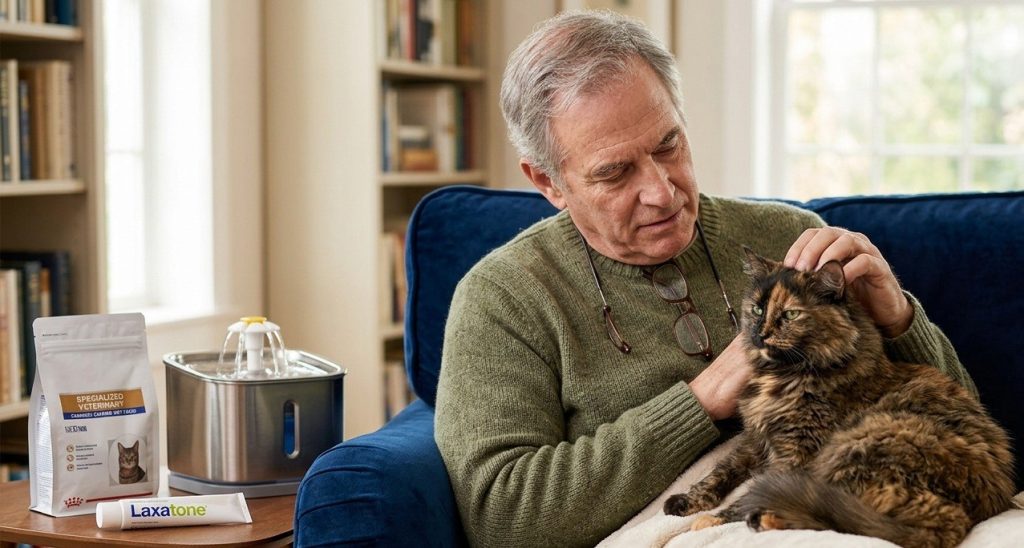
Provide Pet Water Fountains: Cats prefer running water over standing water. Stainless steel or ceramic water fountains encourage cats to drink more frequently throughout the day.
2. Fiber Additions & Hairball Control
-
Canned Pure Pumpkin: Adding a small spoonful of 100% pure canned pumpkin (not pumpkin pie mix!) provides soluble fiber that draws moisture into the stool.
-
Hairball Relief Pastes: Products like Laxatone use gentle lubricants to help ingested fur slide through the digestive tract smoothly. IMO, keeping a tube of hairball paste in your pet cabinet is essential for long-haired cats.
3. Optimize Litter Box Setup
-
Provide one more litter box than the number of cats in your household.
-
Scoop waste daily. A dirty litter box prompts cats to hold their bowel movements, worsening constipation.
-
Switch to low-entry boxes for senior cats so squatting is comfortable and pain-free.
5 Frequently Asked Questions
1. How long can a cat safely go without pooping?
A cat can safely go 24 to 36 hours without passing stool. If your cat reaches the 48-hour mark without a bowel movement, contact your veterinarian. If accompanied by vomiting or lethargy, seek emergency care immediately regardless of the timeframe.
2. Can I give my cat human laxatives like Miralax?
Miralax (polyethylene glycol 3350) is frequently recommended by veterinarians for feline constipation, but you should never administer it without exact dosage instructions from your vet. Human laxatives containing added chemicals or xylitol are toxic to pets.
3. How do I tell if my cat is constipated or has a urinary blockage?
A constipated cat may still pass small amounts of urine or liquid stool. A cat with a urinary blockage strains continuously, produces no urine, licks their genital area excessively, and cries in pain. Treat any unconfirmed straining as a urinary emergency.
4. Is olive oil effective for feline constipation?
While a tiny drop of olive oil might act as a mild lubricant, it is absorbed in the upper digestive tract long before reaching the colon, making it largely ineffective for severe blockages. High oil intake can also trigger pancreatitis. Stick to vet-approved fiber and hydration methods instead.
5. Why does my senior cat get constipated so often?
Constipation in senior cats is often secondary to Chronic Kidney Disease (CKD) or arthritis. CKD causes chronic dehydration, while arthritis makes squatting in the litter box painful. A veterinary checkup can help diagnose and manage these underlying conditions.
Final Words
Staring into a litter box waiting for results is never fun, but being an attentive pet owner means catching digestive issues before they escalate.
Knowing when is cat constipation an emergency comes down to observing the full picture: if your cat is happy, eating well, and just slightly slow, focus on hydration and fiber. But if straining is paired with vomiting, lethargy, or pain, do not wait. Skip home remedies and head directly to your emergency vet clinic. Acting quickly keeps your companion comfortable, happy, and purring by your side for years to come.