
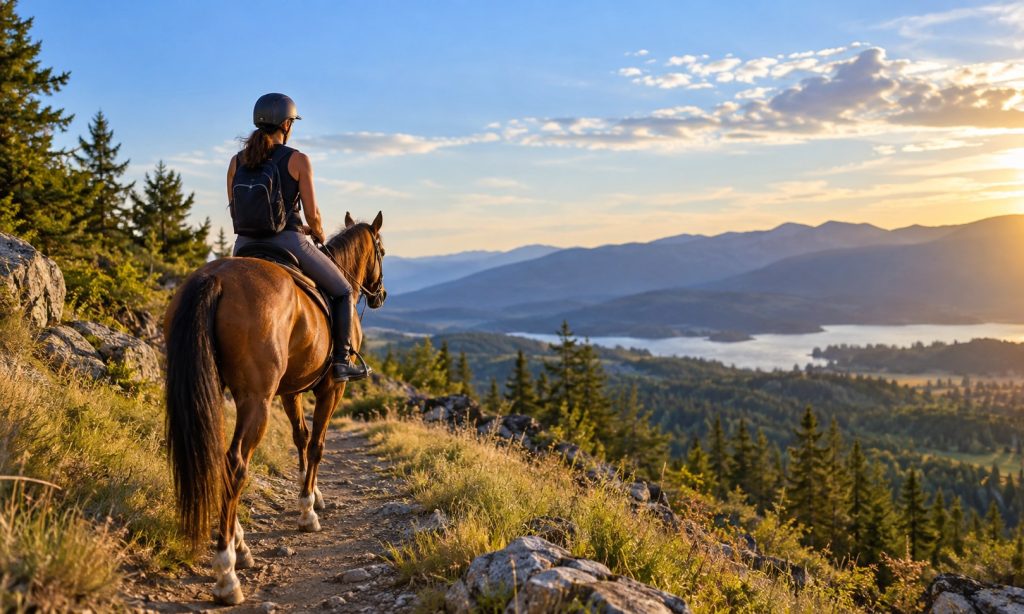
If you spend enough time around barn aisles or campfire trail stops, you will hear all kinds of wild claims about horse endurance. Some folks speak as if horses are machines capable of trotting across state lines without a breather, while others get nervous the second their mount breaks a sweat past the five-mile mark.
So, how far a horse can travel with a rider on a single outing?
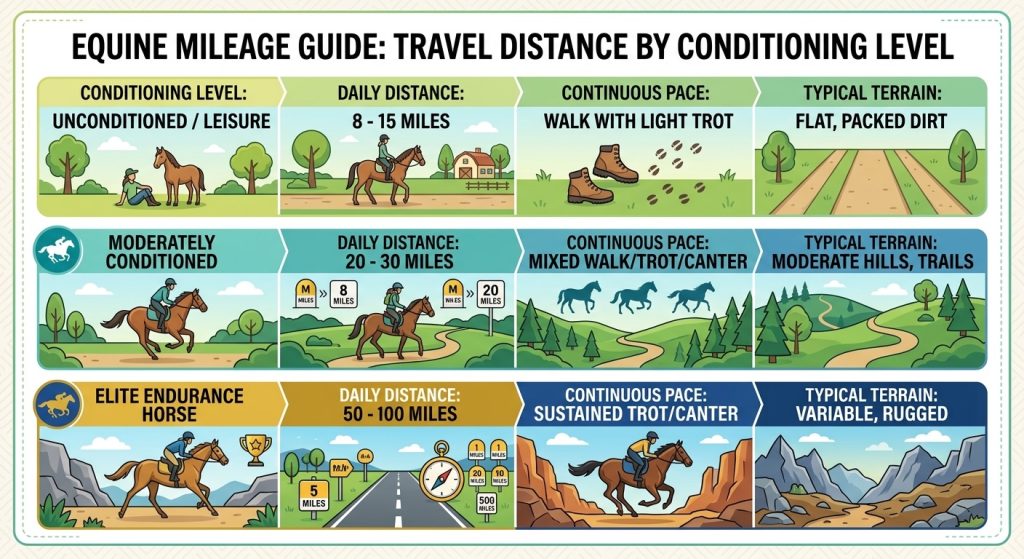
On average, a healthy, moderately conditioned pleasure horse can comfortably travel 25 to 30 miles per day at a walking pace with periodic trotting, provided they receive regular water breaks and gentle terrain. An unconditioned backyard horse should stick to 8 to 15 miles, whereas elite mounts built for extreme endurance can cover 50 to 100 miles in a single 24-hour window under strict veterinary supervision.
Determining how far a horse can travel with a rider depends heavily on conditioning, rider weight, trail surface, and weather. Pushing a horse past their physical preparation is a fast track to metabolic distress, lameness, or severe muscle tying-up.
Key Factors That Dictate Trail Mileage
You cannot answer how far a horse can travel with a rider without assessing the horse standing in front of you. Just like human marathon runners, equine capacity varies wildly based on several core variables.
1. Fitness Level and Conditioning
Conditioning is the single biggest factor governing distance. A horse that spends six days a week lounging in a lush pasture isn’t ready for a 20-mile mountain loop on Saturday. Equine muscles, tendons, lungs, and cardiovascular systems require months of progressive buildup to handle distance safely.
When planning long rides, remember that cardio fitness builds faster than bone density and tendon strength. A horse might feel eager and high-spirited at mile ten, but their legs could be taking a beating if they haven’t built up structural stamina.
2. The 20% Rider Weight Rule
Rider weight load directly impacts energy expenditure and joint stress. As a standard rule of thumb, a horse should not carry more than 20% of its total body weight, including the rider, saddle, tack, and saddlebags.
-
1,000 lb Quarter Horse: Maximum total load = 200 lbs.
-
1,200 lb Draft Cross: Maximum total load = 240 lbs.
Carrying a heavy load over steep inclines significantly reduces how far a horse can travel with a rider before muscle fatigue sets in. If your tack setup is heavy or you are packing overnight gear, scale back your distance goals accordingly.
3. Terrain and Trail Conditions
Ten miles on flat, sandy soil is vastly different from ten miles of rocky, vertical single-track in the mountains. Deep mud, loose gravel, steep climbs, and slick rock surfaces demand far more energy per stride.
If you ride barefoot, rough rocks will slow your pace and tire your horse’s hooves quickly. Using well-fitted trail boots or high-quality protective shoes helps maintain a steady stride over punishing terrain.
4. Heat, Humidity, and Climate
Heat and humidity act as silent energy drains. The Thermal Heat Index (THI)—calculated by adding temperature (°F) and relative humidity (%)—tells you how hard your horse’s cooling system will have to work.
-
THI under 130: Ideal riding conditions.
-
THI 130 to 150: Monitor sweat loss and increase water breaks.
-
THI over 150: Reduce distance substantially; cooling mechanisms are compromised.
-
THI over 180: Do not ride. Pushing a horse in these conditions risks heatstroke.
Horse Travel Without Rest: Safe Continuous Mileage Limits
A common point of confusion for new trail riders is calculating safe horse travel without rest. How many consecutive miles can you cover before you are required to pull the saddle back, loosen the girth, or offer a drink?
In general, a horse should not be asked to travel more than 5 to 7 miles continuously at a working trot or mixed gait without a brief stop to let their heart rate drop. At a plain walking pace on flat ground, a horse can cover 10 to 12 miles before needing a short break.
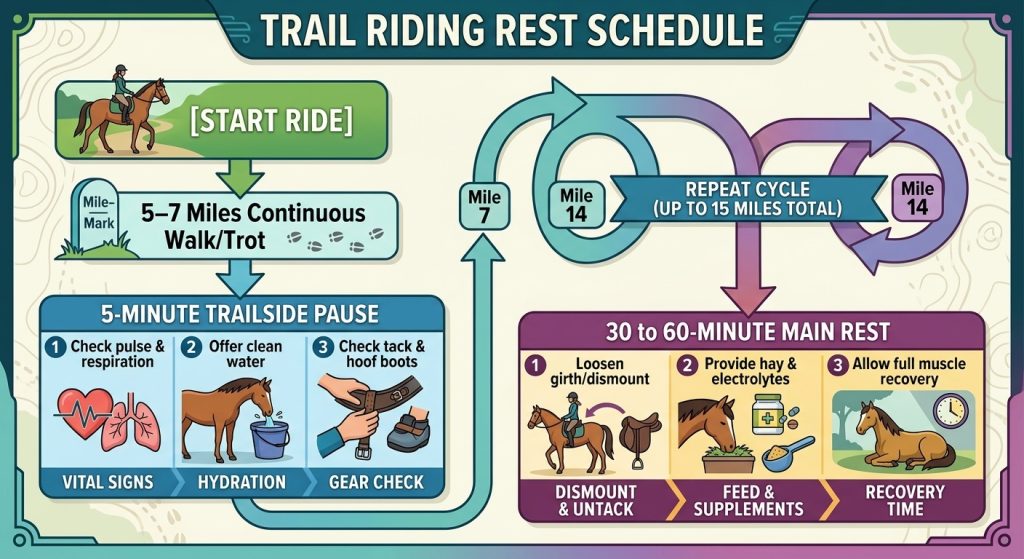
When evaluating how far a horse can travel with a rider without long pauses, keep these resting guidelines in mind:
-
Short Breaks (Every 45–60 minutes): Stop for 5 minutes. Allow the horse to drop its head, catch its breath, and grab a few bites of grass if safe.
-
Long Rest Stops (Every 12–15 miles): Dismount for 30 to 60 minutes. Loosen the girth, pull off the saddle if shade is available, offer water, and let the horse stretch out.
Allowing a horse to drink whenever water is available on the trail is critical. The old myth that a hot horse shouldn’t drink cold water has been thoroughly debunked by modern veterinary science. Suppressing thirst leads directly to dehydration and impaction colic.
Endurance Horse Distance vs. Everyday Pleasure Trail Riding
To understand the upper threshold of how far a horse can travel with a rider, look at competitive endurance riding. Events like the famous 100-mile Tevis Cup showcase what specialized training can achieve.
The Science Behind Endurance Champions
Arabians and Arabian crosses dominate endurance horse distance competitions due to their higher proportion of slow-twitch muscle fibers, efficient metabolic cooling, and naturally low resting heart rates.
However, these horses do not just wake up and trot 100 miles. Their conditioning regimens mirror those of Olympic human athletes:
-
Base Building: Months of long, slow distance (LSD) work at a walk and trot to strengthen subchondral bone and tendons.
-
Interval Training: Controlled spurts of high-heart-rate work followed by active recovery periods.
-
Veterinary Checkpoints (Vet Checks): During a 50- or 100-mile ride, horses undergo mandatory vet checks every 15 to 25 miles. If a horse’s heart rate does not drop below 64 beats per minute (BPM) within 30 minutes, or if they show the slightest sign of lameness, they are pulled from the ride immediately.
For average pleasure riders, attempting to mirror endurance horse distance without structured training will result in severe injury. Know your horse’s limits, IMO, pushing for extra mileage isn’t worth a week in the equine clinic.
Essential Gear That Extends Your Horse’s Range
Equipping your horse with properly fitted gear prevents friction sores, hoof wear, and metabolic drain, allowing you to safely stretch your distance.
-
Fitted Trail Saddles & Ergonomic Pads: A saddle that pinches or bridges will cause tissue damage long before your horse runs out of breath. High-density felt or gel trail pads help distribute rider weight evenly over long miles.
-
Protective Hoof Boots: If your horse is barefoot or riding over sharp rocks, protective boots cushion sole impact and prevent bruising.
-
Hydration Packs & Collapsible Buckets: Carrying a lightweight, packable cloth bucket lets you scoop water from trail streams for your horse to drink easily.
-
Electrolyte Supplements: On hot days, horses lose essential salts (sodium, potassium, chloride) through sweat. Adding equine electrolyte pastes or powder to water during long stops helps prevent muscle cramping and dehydration.
-
Equine First-Aid Kit: Always carry vet wrap, antiseptic spray, a thermometer, bandaging materials, and a multi-tool for trail repairs.
Recognizing Overexertion: When to Stop Immediately
Safety must always come first. Understanding how far a horse can travel with a rider means knowing how to spot signs of exhaustion before a medical emergency occurs.
Critical Warning Signs of Extreme Fatigue
If you observe any of the following symptoms on the trail, stop riding, seek shade, dismount, and begin active cooling:
-
Elevated Respiratory & Heart Rate: If your horse’s breathing remains rapid, shallow, or labored 20 minutes after stopping, they are overexerted.
-
Absence of Gut Sounds: A healthy horse’s gut constantly gurgles and rumbles. A silent abdomen is a major red flag for dehydration and impending colic.
-
Poor Skin Turgor (Pinch Test): Pinch a fold of skin on the horse’s neck. If it takes longer than 2 seconds to snap back flat, your horse is significantly dehydrated.
-
Delayed Capillary Refill Time (CRT): Press your thumb firmly against your horse’s upper gum for two seconds and release. The pink color should return in under 2 seconds. If it stays pale or white for 3 to 4 seconds, systemic circulation is failing.
-
Anhidrosis or Excessive “Thick” Sweat: A horse that stops sweating entirely on a hot day is in heatstroke danger. Conversely, heavy, lathered foam between the hind legs indicates severe exertion.
FYI: Never ignore a sudden change in your horse’s gait or willingness to move forward. Horses are naturally inclined to hide pain, so if they show blatant reluctance, respect what they are telling you.
Recovery and Post-Ride Protocol
What you do after a long trail ride dictates how quickly your horse bounces back and how far they can travel on their next outing.
Step 1: Gentle Cool Down
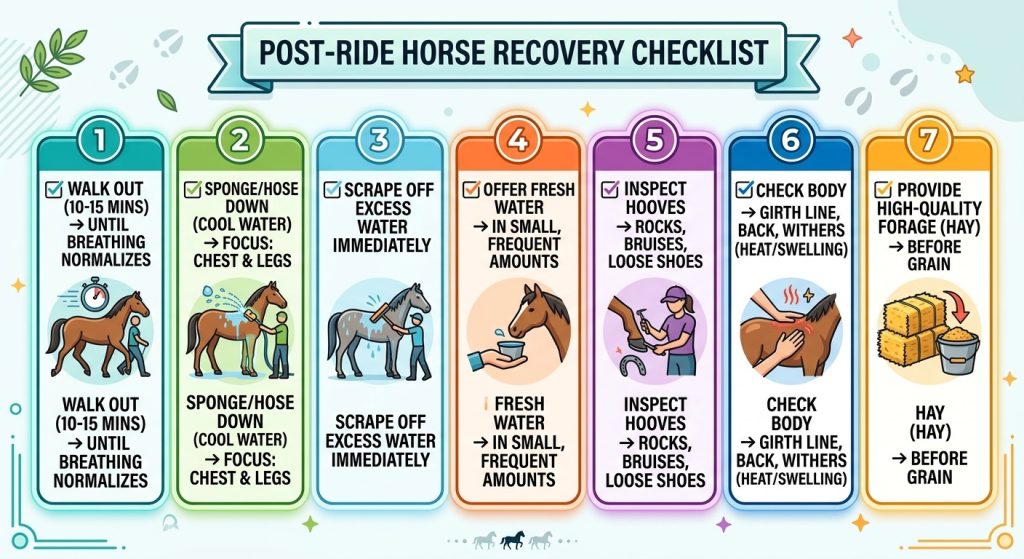
Do not pull the saddle off immediately after a strenuous ride while the horse is hot and winded. Walk them slowly for 10 to 15 minutes until their respiratory rate returns to normal.
Step 2: Hose or Sponge Down
Apply cool water to areas with large surface blood vessels: the neck, chest, and lower legs. Scrape off excess water immediately with a sweat scraper—trapped water acts as an insulator and keeps heat in.
Step 3: Replenish Fluids and Fiber
Provide free-choice fresh water and clean grass hay. Avoid feeding concentrated grains or heavy mashes immediately after a hard ride; let the digestive system settle with fiber first.
Step 4: Allow Adequate Rest
A horse that completed a challenging 20-plus mile ride needs at least 2 to 3 full days of light turnout and rest before being asked to work hard again.
Frequently Asked Questions
How far can a horse travel in a day at a walking pace?
At an average walking speed of 3 to 4 miles per hour, a healthy trail horse can comfortably travel 15 to 20 miles in a day, assuming 5 to 6 hours of total movement with intermittent rest and water breaks.
Can a horse ride 50 miles in one day?
Yes, but only if the horse is specially conditioned, fed, and hydrated for endurance riding. Attempting a 50-mile ride on an unconditioned horse will cause severe muscle damage, heat exhaustion, or lameness.
How often should you give a horse a water break on trail rides?
Offer water every 30 to 45 minutes or whenever you cross a clean water source. Horses should be allowed to drink as frequently as they want while working on the trail.
How much weight can an average horse carry comfortably?
An average 1,000-pound horse can carry up to 200 pounds total, including the rider, saddle, saddle pad, and gear. Exceeding this 20% ratio increases fatigue and limits total distance capacity.
What is the average speed of a horse on a long trail ride?
Most trail riders maintain an average moving pace of 4 to 6 miles per hour, combining a steady walk with short trots on favorable ground.
Final Thoughts on Trail Mileage Limits
So, how far can a horse travel with a rider? The true answer is that your horse will tell you—if you pay close attention to their signals.
While a well-conditioned mount can cover 25 to 30 miles in a day without missing a beat, building up to those distances takes patience, proper gear, and careful conditioning. Keep your saddle balanced, offer water frequently, monitor the weather, and always prioritize your horse’s comfort over hitting an arbitrary mile marker on a map 🙂
Happy trails!









