
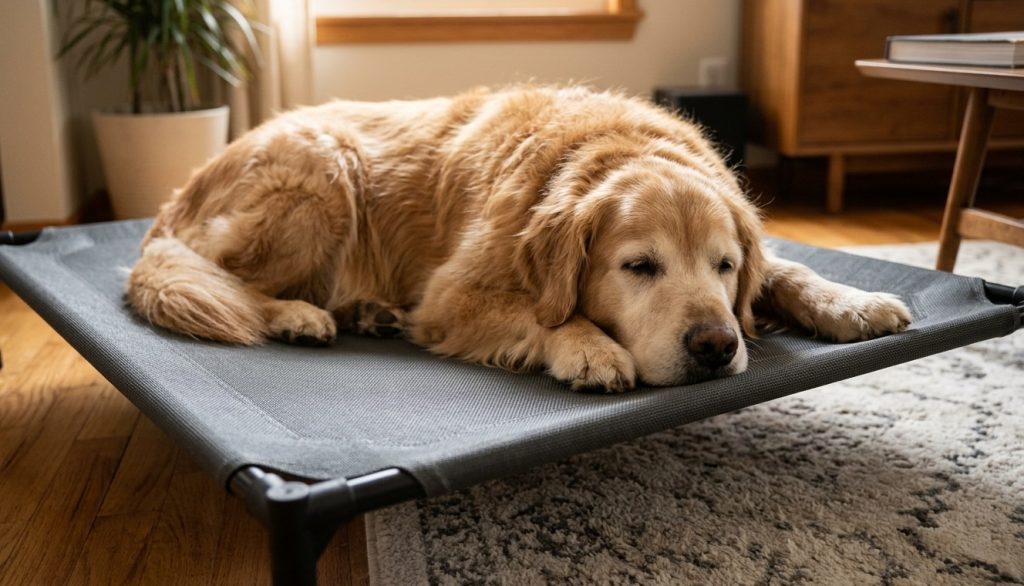
If you share your home with a 70-pound Golden Retriever or a 110-pound German Shepherd, you already know the unique struggle of pet furniture. Traditional plush beds start out looking like fluffy clouds, but within three months, they usually transform into flat, lumpy pancakes that smell suspiciously like wet grass and corn chips. Even worse, watching your big guy struggle to push himself up from a pancake-flat floor cushion after a long nap is enough to break any dog parent’s heart.
This daily reality is why so many pet owners start searching for the best elevated dog bed for large dogs. Raised off the ground like a sturdy mini-cot, an elevated bed offers orthopedically supportive air suspension, cooling ventilation, and a clean space above floor drafts. But picking the right one isn’t as simple as grabbing the first cot you see online. A bed built for a 20-pound Beagle will snap or sag the moment a Great Dane takes a flying leap onto it.
Knowing how to choose the right elevated dog bed for large dogs requires understanding frame strength, fabric tension, sizing, and your dog’s personal sleep style. Let’s break down everything you need to know to pick a durable, comfortable raised bed that keeps your big pup resting easy.
What is an Elevated Dog Bed and How Does It Work?
An elevated dog bed—often called a dog cot or raised dog bed—consists of a rigid outer frame holding a durable fabric mesh tightly suspended above the ground. Instead of relying on poly-fill stuffing or foam layers to absorb your dog’s weight, it uses tensioned suspension.
When a heavy dog steps onto a standard cushion bed, their heaviest body parts—specifically their hips, shoulders, and elbows—sink straight down until they press against the hard floor beneath. Elevated beds eliminate that bottoming-out effect completely. By keeping your dog 6 to 9 inches off the ground, the taut mesh evenly distributes their body weight, floating their joints in mid-air.
Signs Your Big Pup Needs a Raised Bed
Not sure if your dog actually needs a cot setup? Large dogs usually give us pretty clear signals when their current sleeping arrangements aren’t cutting it:
-
Frequent position shifting: If your dog gets up every 20 minutes to find a cool spot on the hardwood or tile, their stuffed bed is trapping way too much body heat.
-
Stiffness in the morning: If your senior pup groans, wobbles, or takes a minute to stretch out stiff legs after sleeping, floor pressure is likely bothering their joints.
-
Dirty, flattened beds: If you find yourself tossing out flattened, smelly pillow beds every six months, your dog’s weight is overpowering standard fill materials.
-
Heavy shedding and skin irritation: Dogs with dense double coats often overheat on memory foam, leading to hot spots from trapped moisture and warmth.
Health & Comfort Impact: Why Elevation Matters for Large Breeds
Big dogs carry a lot of frame on their joints. Breeds like Labrador Retrievers, Rottweilers, Mastiffs, and Boxers are naturally predisposed to hip dysplasia, elbow dysplasia, and arthritis as they age.
Joint Relief and Weight Distribution
When a 90-pound dog lies down on a hard surface or a collapsed pillow, localized pressure points build up at the bony prominences of their hips and elbows. Over time, this constant friction can cause painful hygromas (fluid-filled sacs on the elbows) or exacerbate arthritic inflammation. An elevated bed acts like a hammock with firmer tension: it contours around those bony joints without letting them hit a hard sub-surface.
Temperature Regulation and Airflow
Large dogs produce a staggering amount of body heat. Standard foam beds trap that heat directly underneath the dog’s body, creating a warm microclimate that forces them off the bed and onto your bare living room floor. An elevated bed allows 360-degree airflow around and underneath your pet. As ambient air circulates under the mesh fabric, it continuously pulls heat away, keeping your dog cool during humid summer months.
Easier Mobility for Seniors
As dogs get older, the act of standing up from a flat floor level requires significant effort from their hindquarters and core. An elevated bed places your dog at a raised stance. They don’t have to push themselves all the way up from ground level—they simply extend their legs and step right off, taking a huge load off aging hips and knees.
What to Look For in Elevated Dog Bed for Large Dogs
Shopping for a giant breed means you can’t skimp on build quality. If a bed flexes excessively or wobbles when your dog steps on it, they’ll feel insecure and refuse to use it. Here are the core factors to evaluate before making your decision:
1. Frame Material & Structural Integrity
The frame is the backbone of any raised bed. For dogs weighing over 50 pounds, frame material is non-negotiable:
-
Aircraft-Grade Aluminum or Steel: Metal frames offer maximum rigidity and weight capacity. They will not bend, bow, or snap under sudden impact (like when your dog swoops in for a landing after hearing a treat bag crinkle).
-
Heavy-Duty PVC: High-grade, thick-walled PVC can work well for medium-to-large dogs up to around 70-80 pounds, but ensure the corner connectors are reinforced. Avoid thin plastic tubing, which snaps easily under heavy loads.
-
Corner Design: Look for chew-proof corner legs where the fabric sleeves hide inside or wrap around the frame without leaving exposed fabric edges that invite chewing.
2. Fabric Strength and Breathability
The fabric surface carries your dog’s full weight, so fabric density and weave matter immensely:
-
High-Density Polyethylene (HDPE) or PVC-Coated Mesh: These breathable synthetic fabrics allow air to flow through while resisting tears from long claws.
-
Ballistic Nylon or Heavy Canvas: If your dog is a nesting fan who loves to dig frantically before settling down, breathable mesh might get shredded. Heavy ballistic nylon offers maximum puncture and claw resistance, though it trades off a bit of airflow.
-
UV and Mildew Resistance: If you plan to leave the bed outdoors on a deck or patio, pick fabrics treated for weather resistance so sunlight doesn’t degrade the fibers over time.
3. Real Weight Capacity vs. Dimensions
Never buy a bed based on the “Large” or “Extra Large” label alone, as sizing varies wildly between manufacturers. Always check two specific metrics:
-
Static Weight Limit: Ensure the bed is rated for at least 30-50 pounds more than your dog’s actual weight to handle dynamic jumping movement.
-
Sleeping Area Dimensions: Measure your dog from the tip of their nose to the base of their tail while they are stretched out sleeping. Add 6 to 8 inches to that measurement. Your dog’s head and paws shouldn’t hang awkwardly over metal side bars unless they intentionally like using the frame as a pillow.
Material & Sizing Quick Guide for Large Breeds
To help narrow down the specs your big dog needs, refer to this handy breakdown based on weight class:
How to Match the Bed to Your Dog’s Sleeping Style
Every dog has their own weird, charming way of sleeping. Figuring out how to choose the right elevated dog bed for large dogs requires observing how your dog relaxes during their deepest naps:
The Sprawler
If your dog sleeps flat on their side with all four legs extended straight out like a fallen timber, they need maximum open surface area. Look for a simple, flat elevated cot without raised bolsters or side bumpers so their limbs can stretch freely without hitting frame walls.
The Curled-Up Doughnut
Some big dogs prefer tucking their paws under and curling into a tight, neat ball. These dogs often love elevated beds that feature integrated side bolsters or cushioned rims. The bolsters give them a cozy sense of enclosure while still keeping their belly cool and elevated off the floor.
The Headrest Lover
Does your dog constantly rest their chin on your foot, the couch armrest, or the bottom coffee table rung? Look for an elevated bed design with a built-in padded bolster along one edge so they can elevate their head and keep an eye on household activity.
Potential Drawbacks: When an Elevated Bed Might NOT Be Ideal
While raised beds are fantastic for many dogs, they aren’t a universal solution for every single pet. IMO, keeping expectations realistic saves you money and frustration.
-
Extremely Nervous or Anxious Dogs: The slight flex or springiness of a suspended mesh bed can frighten timid dogs who dislike unstable footing.
-
Severe Mobility Impairments: If your senior dog has severe neurological issues or advanced hind-leg weakness, stepping up 7–8 inches onto a floating surface might cause them to trip or slip.
-
Dogs Who Demand Plush Softness: Some pets simply refuse to sleep on anything that isn’t a deep, pillow-soft cushion. (If your dog demands to be pamper-wrapped like royalty, a firm mesh cot might get snubbed completely 🙂 ).
-
Drafty Cold Winters: In unheated rooms or freezing winter climates, bottom airflow can actually make a dog cold. During winter, you’ll need to throw a warm fleece blanket or thin pad over the mesh surface to block drafts.
Step-by-Step: How to Train Your Big Dog to Use an Elevated Bed
If your dog has spent their whole life sleeping on plush rugs or soft sofas, a taut mesh cot might look suspicious to them at first. Don’t worry if they sniff it and walk away initially—you can teach them to love it in a few simple steps.
Maintenance & Hygiene: Keeping a Raised Cot Fresh
One of the absolute best perks of elevated dog beds is how effortless they are to keep clean compared to traditional fabric cushions.
-
Daily/Weekly Cleaning: Simply wipe down the mesh surface with a damp cloth or vacuum up loose hair that settles under the bed. Hair doesn’t weave itself into mesh fibers the way it does with sherpa or fleece bedding.
-
Deep Cleaning: Take the bed outside to your yard or driveway, spray it down with a garden hose, scrub with mild dish soap and a soft brush, and rinse thoroughly.
-
Drying: Because synthetic mesh doesn’t hold water like foam or fiberfill, elevated beds air-dry in direct sunlight within 30 to 60 minutes.
How Often Should You Use or Replace an Elevated Dog Bed for Large Dogs?
A high-quality elevated bed should easily last anywhere from 2 to 5 years under normal daily use, but large dogs subject furniture to serious wear and tear.
Daily Usage Recommendations
You can use an elevated dog bed every single day, both indoors and outdoors. Many pet parents keep one cot on the outdoor patio for sunny afternoons and another in the living room as a designated “place” bed during family meal times.
Key Indicators It’s Time for a Replacement
Inspect your dog’s bed frame and fabric fabric every few months for these safety warning signs:
-
Center Sagging: If the mesh stretches out to the point where your dog’s body sags down and touches the floor or lower crossbars, the suspension benefit is gone. It’s time to tighten or replace the fabric cover.
-
Frayed Seams or Stitching: Heavy dogs put immense stress on perimeter seams. Frayed stitching around corner sleeves indicates imminent tearing.
-
Bent or Cracked Frame Rungs: Metal fatigue or cracked PVC fittings compromise structural safety and can collapse suddenly under a heavy dog.
-
Brittle Mesh from Sun Exposure: If an outdoor bed fabric feels stiff, crunchy, or faded from UV exposure, the fibers have weakened and could tear under impact.
Alternative Bedding Options for Large Breeds
If you’re weighing whether an elevated cot is the right choice versus other bed styles, here is how raised cots compare to popular alternatives:
-
Orthopedic Memory Foam Beds: Superior for dogs needing dense, pillow-soft contouring, but significantly harder to clean and notorious for trapping heat during warm weather.
-
Nest or Donut Beds: Excellent for anxious dogs who love burrowing against high padded walls, but often lack structural frame support for heavy breeds over 80 pounds.
-
Crate Pads & Matts: Thin and portable, making them great for travel or crate lining, but offering minimal joint protection on hard flooring.
When to Consult Your Veterinarian
While choosing a supportive bed is a great step toward home comfort, elevated cots are not a medical cure for underlying joint or mobility problems. FYI, if you notice any of the following symptoms in your large dog, consult your veterinarian for a comprehensive evaluation:
-
Persistent limping, favoring one leg, or bunny-hopping when running.
-
Audible groaning, whining, or behavioral hesitation before standing up or climbing stairs.
-
Visible swelling, heat, or thick hairless calluses around joint elbow points.
-
Licking or chewing at hips, legs, or paws repeatedly after waking up.
Your vet can recommend tailored medical management, joint supplements, or physical therapy alongside supportive home bedding arrangements.
Frequently Asked Questions
Are elevated beds bad for a dog’s back?
No, elevated beds are generally excellent for a dog’s spine and back alignment. The flexible mesh hammock support conforms naturally to your dog’s spinal curve, eliminating hard pressure points. However, ensure the frame is wide enough so your dog doesn’t have to sleep in an unnatural, contorted shape.
Can I use a raised bed outdoors in winter?
Yes, but you should add insulation. While mesh airflow is a lifesaver during hot summers, winter drafts coming up from underneath can chill your dog. Lay a thick thermal blanket, sheepskin pad, or insulated mat across the mesh surface during cold months to block cold airflow.
How high off the ground should an elevated bed be for a large dog?
Most quality elevated beds for large breeds sit between 6 and 9 inches off the ground. This height provides ample clearance to prevent sagging down to the floor while keeping the bed low enough for senior or stiff dogs to step onto easily without jumping.
Will my dog’s nails puncture the mesh fabric?
High-density, PVC-coated polyester or heavy HDPE mesh is specially engineered to resist claw punctures and scratching. However, keeping your dog’s nails routinely trimmed and filed prevents sharp edges from snagging perimeter seams over time.
What if my heavy dog exceeds the bed’s listed weight capacity?
Never exceed the manufacturer’s stated weight limit. Exceeding weight ratings causes fabric stretching, seam failure, or bent frame legs, which can lead to a sudden collapse and startle or injure your dog. Always choose a bed with a safety margin above your dog’s weight.
Final Words
Finding the best elevated dog bed for large dogs comes down to balancing structural durability with your dog’s unique comfort habits. By prioritizing rigid metal frames, high-density breathable fabrics, and proper dimensions, you provide your big companion with a supportive, cool, and comfortable retreat that protects their joints for years to come.
Take a few minutes to measure your dog’s sleeping sprawl, check the weight specs, and introduce the new cot with plenty of positive praise. Once your pup discovers how good it feels to float off the hard floor, that old flat floor cushion will be a thing of the past! 🙂









